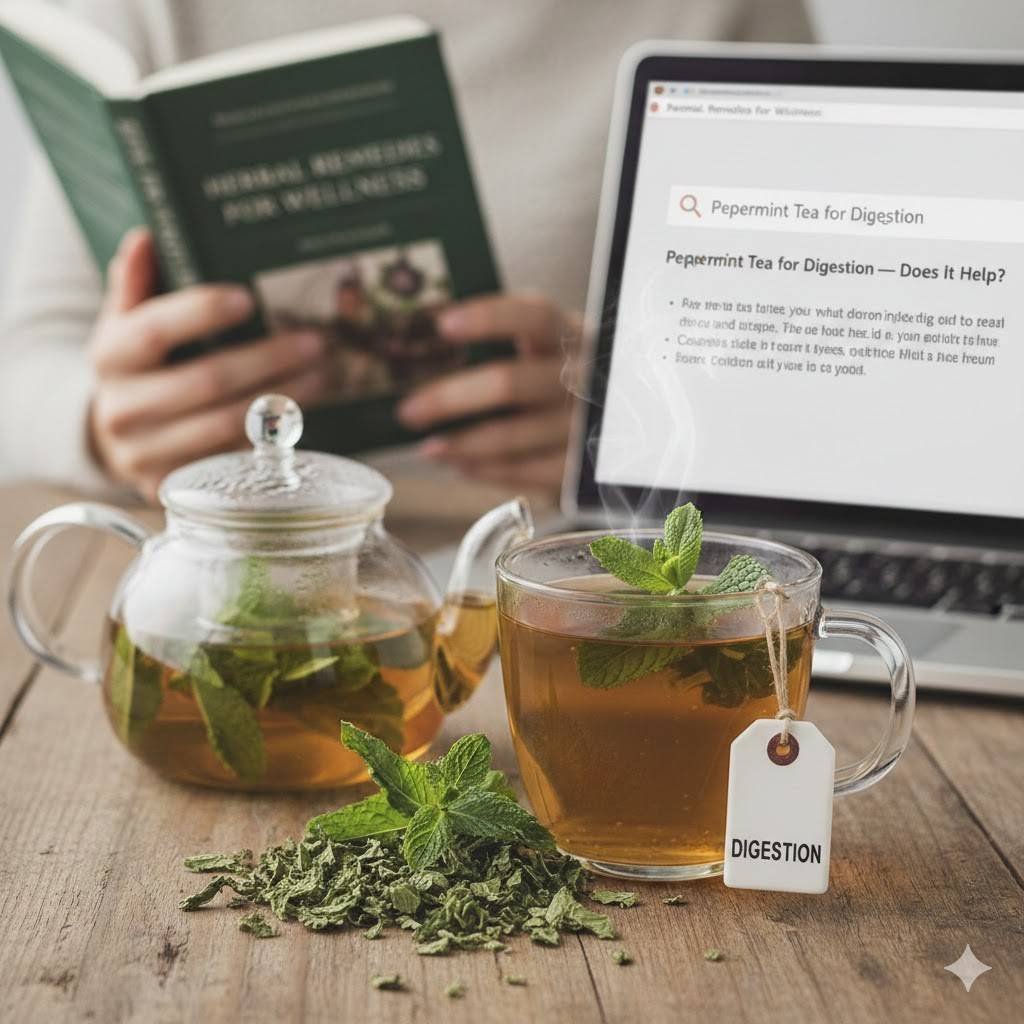
Peppermint tea has long been considered a natural remedy for digestive discomfort. From soothing bloating after a heavy meal to calming stomach cramps, this refreshing herbal tea is often recommended by wellness experts and traditional healers alike. But does it truly help digestion, or is its reputation mostly based on tradition?
In this in-depth guide, you’ll discover the science behind tea, how it affects your gut, its potential benefits and risks, and whether it deserves a place in your daily routine.
What Is Peppermint Tea?
Peppermint tea is an herbal infusion made from the leaves of the peppermint plant (Mentha piperita), a hybrid of watermint and spearmint. Unlike black or green tea, peppermint tea is naturally caffeine-free, making it a popular choice for evening relaxation and digestive support.
Its key active compound is menthol, which gives peppermint its cooling sensation and therapeutic properties.
Peppermint has traditionally been used to treat:
- Indigestion
- Gas
- Bloating
- Nausea
- Abdominal discomfort
Modern research is now exploring whether these traditional uses are supported by evidence.
How Digestion Works (And Why It Sometimes Fails)
Before understanding peppermint tea’s role, it helps to know what happens during digestion.
Your digestive system:
- Breaks food into nutrients
- Moves it through the intestines
- Absorbs vitamins and minerals
- Eliminates waste
Problems occur when muscles in the digestive tract spasm, food moves too slowly, or excess gas builds up.
Common digestive complaints include:
- Bloating
- Constipation
- Irritable bowel syndrome (IBS)
- Acid reflux
- Stomach cramps
This is where peppermint may help.
The Science Behind Peppermint and Digestion
Although peppermint tea itself hasn’t been widely studied, peppermint oil — a more concentrated form — has strong clinical research supporting its digestive benefits.
Studies show that peppermint can relax the digestive tract and reduce pain. Animal research suggests peppermint helps relax smooth muscles and prevent gut spasms.
A review of nine studies involving 726 people with IBS found peppermint provided significantly better symptom relief than a placebo.
Clinical guidelines from the American College of Gastroenterology even recommend peppermint to help relieve global IBS symptoms, though the quality of evidence is considered low.
However, there is an important caveat:
Peppermint tea itself has not been directly studied for digestion, but researchers believe it may provide benefits similar to peppermint oil.
In short — the evidence is promising, but not definitive.
How Peppermint Tea May Improve Digestion
Let’s explore the mechanisms that explain why peppermint tea is often associated with gut relief.
1. Relaxes Digestive Muscles
Menthol acts as an antispasmodic, meaning it relaxes the smooth muscles in your digestive tract.
This can help:
- Reduce cramps
- Ease abdominal pain
- Improve food movement
Dietitians note that peppermint oil relaxes digestive muscles, making it effective for relieving IBS symptoms like gas, bloating, and abdominal pain.
2. Helps Gas Pass More Easily
Trapped gas is one of the most uncomfortable digestive issues.
Peppermint may help by:
- Relaxing intestinal muscles
- Reducing pressure
- Allowing gas to move naturally
Experts say tea can relax digestive muscles via menthol, aiding gas passage and easing discomfort.
3. May Reduce IBS Symptoms
IBS affects millions worldwide and often causes:
- Chronic bloating
- Pain
- Irregular bowel movements
Research indicates peppermint oil ranks highly for improving global IBS symptoms based on multiple trials, though uncertainty remains due to study limitations.
Another study showed peppermint oil improved abdominal pain significantly, although benefits were temporary.
Translation: Peppermint can help — but it’s not a miracle cure.
4. Could Ease Nausea
Peppermint aroma has been shown to reduce nausea severity in certain settings, including medical treatments.
While tea is less concentrated, many people report similar mild relief.
5. Supports Overall Gut Comfort
Peppermint is widely used for digestive discomfort and contains antibacterial and anti-inflammatory properties, though more human research is needed.
These properties may contribute to a healthier gut environment.
But Does Peppermint Tea Really Work?
Here’s the honest answer:
Yes — but with nuance.
What we know:
✔ Strong evidence supports peppermint oil
✔ Traditional use supports tea
✔ Experts often recommend it for bloating
What we don’t know:
❌ Direct large-scale studies on peppermint tea
❌ Long-term digestive effects
So while tea is not a medically proven treatment, it is considered a low-risk supportive remedy for many people.
Who Should Try Peppermint Tea?
You may benefit if you frequently experience:
- Post-meal heaviness
- Mild bloating
- Occasional cramps
- Gas
- IBS symptoms
Many dietitians consider 1–3 cups daily safe and helpful for digestion.
Who Should Avoid Peppermint Tea?
Despite its benefits, peppermint isn’t for everyone.
People With Acid Reflux or GERD
Peppermint can relax the lower esophageal sphincter, potentially worsening heartburn.
It is generally advised that people with chronic heartburn or hiatal hernia avoid peppermint products.
Pregnant or Breastfeeding Individuals
Culinary amounts are usually safe, but concentrated forms should be avoided without medical advice.
Those With Gallbladder or Liver Issues
Consult a healthcare professional before using peppermint regularly.
People Taking Certain Medications
Peppermint oil may affect drug metabolism and absorption.
Possible Side Effects of Peppermint Tea
Peppermint is generally well tolerated in food amounts, but excessive use or concentrated forms can cause:
- Heartburn
- Stomach irritation
- Mouth or throat irritation
- Allergic reactions (rare)
Heartburn is one of the most commonly reported adverse events in peppermint oil studies.
Peppermint Tea vs Peppermint Oil — Which Is Better?
| Feature | Peppermint Tea | Peppermint Oil |
|---|---|---|
| Strength | Mild | Highly concentrated |
| Research | Limited | Strong clinical evidence |
| Safety | Generally safe | Higher risk of side effects |
| Best For | Everyday digestion | IBS under guidance |
Think of tea as gentle support — and oil as targeted therapy.
How to Make Peppermint Tea for Digestion
Making peppermint tea is incredibly simple.
Ingredients:
- 7–10 fresh peppermint leaves or 1 tea bag
- 1 cup (250 ml) boiling water
Steps:
- Pour boiling water over the leaves.
- Steep for about 10 minutes.
- Strain and enjoy.
This is the preparation recommended in digestive tea guides.
Best Time to Drink Peppermint Tea
For digestive benefits:
✅ After meals — helps reduce bloating
✅ Before bed — caffeine-free relaxation
✅ Midday — prevents post-lunch sluggishness
Avoid drinking it right before lying down if you are prone to reflux.
How Long Does It Take to Work?
Many people feel relief within 15–30 minutes, especially for gas or cramps. (Anecdotal, but widely reported.)
For chronic conditions like IBS, benefits may require consistent use.
Peppermint Tea vs Other Digestive Teas
Here’s how it compares:
Ginger Tea: Stimulates digestion and reduces inflammation.
Chamomile Tea: Anti-inflammatory and helpful for stress-related bloating.
Water: Prevents constipation and supports GI muscle function.
👉 Peppermint stands out for its muscle-relaxing effects.
Is Peppermint Tea Good for Bloating?
Yes — peppermint is often recommended among foods that help prevent bloating and gas because it soothes the gut and relieves abdominal pain.
However:
Persistent bloating should always be evaluated by a healthcare professional.
The Anti-Inflammatory Angle
Peppermint tea contains bioactive compounds that help modulate inflammatory and oxidative stress pathways, supporting gut health.
Chronic inflammation is linked to digestive disorders, making this a promising benefit.
How Much Peppermint Tea Is Too Much?
There is no universal dosage, but moderation is key.
Safe range for most people:
👉 1–3 cups daily.
Drinking excessive amounts may increase the risk of heartburn or irritation.
Tips to Maximize Digestive Benefits
✔ Drink it warm, not scalding
✔ Avoid pairing with very heavy meals
✔ Choose high-quality leaves
✔ Stay consistent
✔ Combine with a fiber-rich diet
Remember — tea supports digestion; it doesn’t replace healthy habits.
Common Myths About Peppermint Tea
Myth 1: It Works Instantly for Everyone
Reality: Gut health is highly individual.
Myth 2: More Is Better
Reality: Too much may trigger reflux.
Myth 3: It Can Cure IBS
Reality: It may reduce symptoms — not cure the condition.
When to See a Doctor
Don’t rely solely on herbal remedies if you experience:
- Severe abdominal pain
- Unexplained weight loss
- Blood in stool
- Chronic constipation
- Persistent bloating
Tea is supportive — not diagnostic.
Final Verdict: Does Peppermint Tea Help Digestion?
Yes — for many people, peppermint tea can be a gentle, effective digestive aid.
What makes it worth trying:
✅ Muscle relaxation
✅ Gas relief
✅ Potential IBS support
✅ Anti-inflammatory effects
✅ Naturally caffeine-free
But remember:
⚠ Evidence for tea is indirect
⚠ Not ideal for reflux sufferers
⚠ Not a replacement for medical care
Bottom line:
Peppermint tea isn’t magic — but it’s one of the safest, simplest ways to support digestive comfort naturally.
If your stomach often feels unsettled after meals, this refreshing herbal drink might become your new favorite ritual.
FAQs — Peppermint Tea for Digestion
1. Does peppermint tea really help digestion?
Yes, peppermint tea may help digestion by relaxing the muscles of the gastrointestinal tract. This can reduce bloating, gas, and stomach cramps, making digestion smoother for many people.
2. Is peppermint tea good for bloating?
Peppermint tea is commonly used to relieve bloating because it helps trapped gas move through the intestines more easily. Drinking a warm cup after meals may provide quick comfort.
3.When is the best time to drink peppermint tea for digestion?
The best time is after meals, especially heavy ones, to prevent discomfort. Many people also drink it before bed since it is naturally caffeine-free and gentle on the stomach.
4.How many cups of peppermint tea can I drink daily?
Most people can safely drink 1–3 cups per day. However, excessive consumption may lead to heartburn in some individuals.
5.Can peppermint tea help with IBS symptoms?
Peppermint is known for its antispasmodic properties, which may reduce IBS symptoms like abdominal pain and gas. While peppermint oil has stronger evidence, the tea may still provide mild relief.
6.Who should avoid peppermint tea?
People with acid reflux (GERD) or frequent heartburn should limit peppermint tea, as it can relax the esophageal sphincter and worsen symptoms. If you have a medical condition, consult a healthcare professional first.
7.Does peppermint tea have any side effects?
Peppermint tea is generally safe, but some people may experience:
Heartburn
Mild stomach irritation
Allergic reactions (rare)
Moderation is key.
8.Is peppermint tea better than ginger tea for digestion?
Both support digestive health but in different ways. Peppermint relaxes digestive muscles, while ginger stimulates digestion and may reduce nausea. Many people keep both in their wellness routine.
9.Can I drink peppermint tea on an empty stomach?
Yes, most people tolerate it well on an empty stomach. However, if you are prone to acidity, it may be better to drink it after eating.
10.How long does peppermint tea take to work?
For mild bloating or gas, some people notice relief within 15–30 minutes. Regular drinkers often report better overall digestive comfort over time.
11.Is peppermint tea safe to drink every day?
Yes, daily consumption is generally safe for healthy adults when taken in moderate amounts. It can even become a relaxing ritual that supports long-term gut health.
12.Can peppermint tea help with nausea?
The natural menthol in peppermint has a calming effect that may reduce feelings of nausea and settle the stomach.
Also Read: