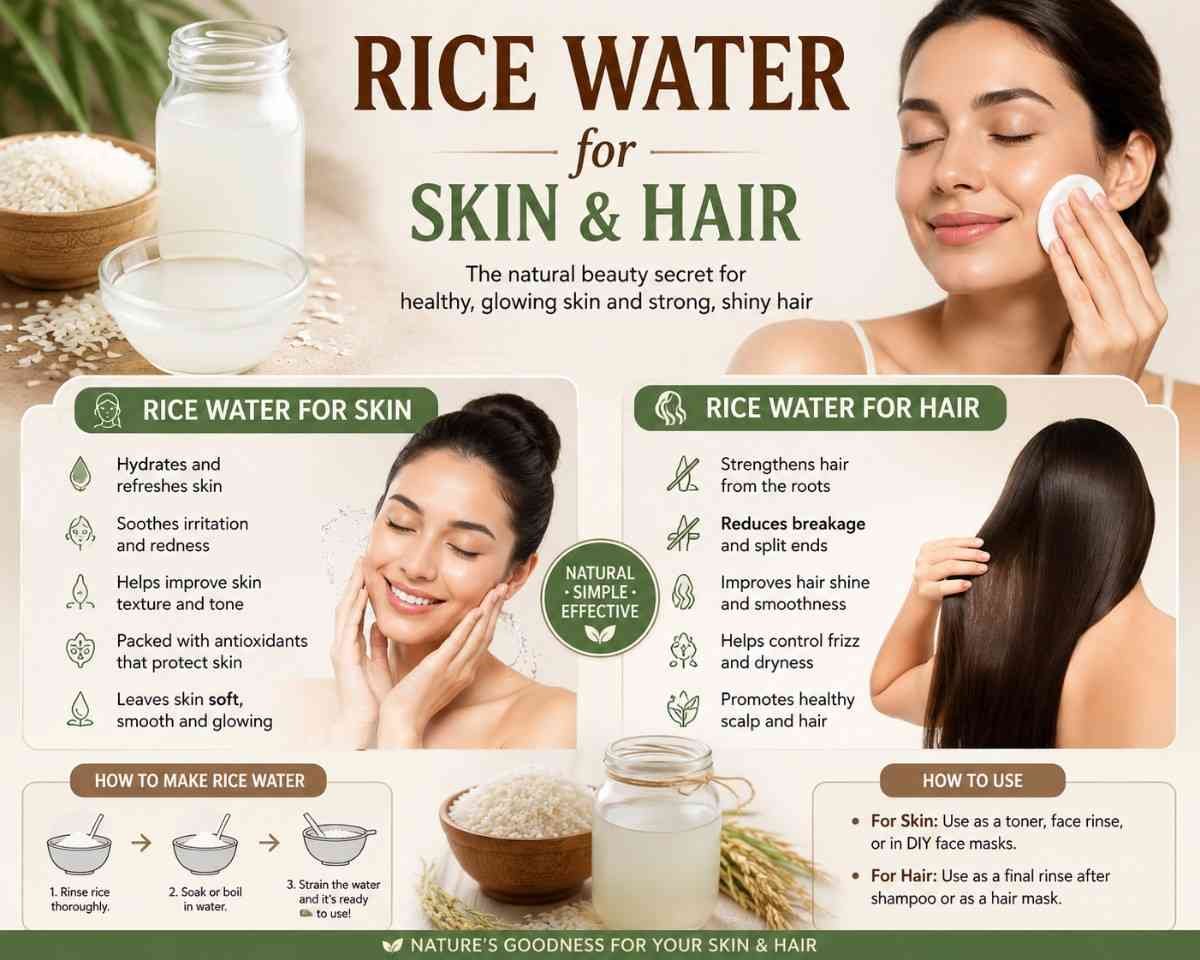
Rice Water for Skin and Hair: Rice Water has become one of the most popular natural beauty trends in recent years. From skincare enthusiasts and beauty influencers to traditional wellness communities, many people use Rice Water as a simple home remedy for healthy-looking skin and hair.
Made from soaking, boiling, or fermenting rice in water, Rice Water contains starch, vitamins, minerals, and plant compounds that are believed to support hair texture, scalp care, skin hydration, and overall beauty routines.
Rice Water has been used in traditional Asian beauty practices for centuries. Historical beauty traditions from countries such as Japan, China, and Korea often included Rice Water in hair and skincare rituals because of its gentle and nourishing properties.
Today, Rice Water continues trending across social media platforms and wellness blogs because it is affordable, easy to prepare, and simple to include in natural beauty routines.
But what exactly is Rice Water? How is it prepared? What are its possible benefits for skin and hair? And are there any side effects associated with regular use?
In this complete guide, you will learn everything about Rice Water for skin and hair, including its nutritional properties, preparation methods, beauty benefits, uses, side effects, myths, and why it remains one of the most talked-about natural beauty remedies.
What Is Rice Water?
Rice Water is the starchy liquid left behind after soaking, boiling, or fermenting rice in water.
This cloudy liquid contains small amounts of nutrients and plant compounds released from rice during the preparation process.
Rice Water is commonly used for:
- Hair rinses
- Face cleansing
- Skin toners
- Hair masks
- Beauty treatments
Rice Water is also called:
- Fermented rice water
- Rice rinse water
- Rice beauty water
- Rice starch water
Nutritional Components of Rice Water
Rice Water contains several compounds that contribute to its popularity in beauty care routines.
Key Components Found in Rice Water
- Amino acids
- Starch
- Antioxidants
- B vitamins
- Minerals
- Trace proteins
- Plant compounds
The exact nutrient content depends on:
- Type of rice
- Preparation method
- Fermentation process
Types of Rice Water
Rice Water for Skin and Hair: There are different ways to prepare Rice Water.
1. Soaked Rice Water
This is the simplest method.
Rice is soaked in water for several hours before straining the liquid.
2. Boiled Rice Water
Rice is boiled in extra water, and the remaining liquid is collected after cooking.
This method often produces thicker Rice Water.
3. Fermented Rice Water
Rice Water is left at room temperature for one or two days to ferment naturally.
Fermented Rice Water is especially popular in beauty communities because fermentation may increase certain compounds.
How to Make Rice Water
Rice Water for Skin and Hair: Rice Water is easy to prepare at home.
Basic Rice Water Recipe
Ingredients
- ½ cup rice
- 2–3 cups water
Instructions
- Rinse rice to remove dirt.
- Add rice to water.
- Soak for 30 minutes.
- Stir gently.
- Strain the liquid into a container.
- Store in the refrigerator if needed.
How to Make Fermented Rice Water
Instructions
- Prepare regular Rice Water.
- Leave it at room temperature for 24–48 hours.
- Refrigerate after fermentation.
- Dilute before use if necessary.
Rice Water for Hair
Rice Water for Skin and Hair: Rice Water is widely used in natural hair care routines.
Many people apply it as:
- Hair rinse
- Scalp treatment
- Hair mask ingredient
- Leave-in treatment
Rice Water Benefits for Hair
Rice Water is associated with several possible hair care benefits.
1. May Help Improve Hair Smoothness
Many people report that Rice Water helps hair feel smoother and softer after rinsing.
The starch and amino acids may help coat hair strands temporarily.
2. May Support Hair Shine
Rice Water is often used to improve hair appearance and natural shine.
Some users claim it makes hair look healthier and less dull.
3. May Help Reduce Hair Friction
Some studies suggest rice extracts may reduce surface friction on hair, making it easier to manage.
4. May Support Hair Strength
Rice Water contains amino acids and nutrients that may help support hair structure.
Some people use it regularly to help reduce breakage.
5. May Support Scalp Hydration
Hydration is important for maintaining a healthy scalp environment.
Rice Water may help support scalp moisture when used in moderation.
6. May Improve Hair Manageability
Some users find that Rice Water helps detangle hair and improve softness.
7. Popular in Natural Hair Care
Rice Water has become especially popular among people interested in:
- Curly hair care
- Natural beauty routines
- Traditional hair remedies
Rice Water for Skin
Rice Water for Skin and Hair: Rice Water is also widely used in skincare routines.
It is commonly applied as:
- Facial rinse
- Face mist
- Toner
- Face mask ingredient
Rice Water Benefits for Skin
8. May Support Skin Hydration
Rice Water may help provide temporary hydration and moisture support for the skin.
Hydration is important for maintaining healthy-looking skin.
9. May Help Soothe Skin
Some people use Rice Water because it feels gentle and cooling on the skin.
It is often applied after sun exposure or skin irritation.
10. May Support Smooth Skin Appearance
Rice Water is commonly used in beauty routines focused on softer and smoother-looking skin.
11. Contains Antioxidants
Rice contains antioxidant compounds that may help protect the skin from environmental stress.
12. May Help Reduce Temporary Redness
Some users report soothing effects after applying Rice Water to irritated skin.
Scientific evidence remains limited.
13. May Support Bright-Looking Skin
Rice Water is popular in skincare routines focused on achieving a fresher and more radiant appearance.
14. Lightweight and Gentle
Rice Water is lightweight and easy to apply, making it popular in simple skincare routines.
15. Affordable Natural Beauty Option
One reason Rice Water remains popular is because it is inexpensive and easy to prepare at home.
How to Use Rice Water for Hair
Hair Rinse Method (Rice Water for Skin and Hair)
- Shampoo hair normally.
- Pour Rice Water onto hair and scalp.
- Massage gently.
- Leave for 5–20 minutes.
- Rinse thoroughly.
How Often Should You Use Rice Water on Hair?
Many people use Rice Water:
- Once a week
- Two times weekly
- Occasionally as needed
Excessive use may cause dryness in some hair types.
How to Use Rice Water for Skin
Facial Toner Method
- Apply Rice Water with cotton or spray bottle.
- Leave for several minutes.
- Rinse if desired.
Rice Water Face Mask
Rice Water for Skin and Hair: Some people combine Rice Water with:
- Aloe vera
- Honey
- Yogurt
- Oatmeal
for DIY skincare masks.
Rice Water for Acne
Rice Water for Skin and Hair: Some people use Rice Water for acne-prone skin because it feels gentle and lightweight.
However:
- Scientific evidence is limited
- Severe acne requires professional care
- Patch testing is important
Rice Water for Curly Hair
Rice Water is especially popular in curly and textured hair communities.
Potential claims include:
- Improved curl definition
- Better manageability
- Reduced frizz
Results vary depending on hair type.
Rice Water for Damaged Hair
Rice Water for Skin and Hair: Some people use Rice Water to support dry or damaged hair because of its conditioning properties.
However, overuse may cause stiffness in some individuals.
Side Effects of Rice Water
Rice Water is generally considered safe for most people when used properly.
However, side effects may occur.
Possible Side Effects
1. Hair Dryness
Too much Rice Water may make some hair types feel dry or stiff.
2. Product Buildup
Excessive use may leave residue on hair or scalp.
3. Skin Irritation
Sensitive skin may react to fermented Rice Water or prolonged exposure.
4. Unpleasant Smell
Fermented Rice Water may develop a strong sour smell.
Who Should Be Careful?
People with:
- Sensitive skin
- Scalp conditions
- Allergies
- Very dry hair
should test Rice Water carefully before regular use.
Rice Water Myths
Myth 1: Rice Water Instantly Grows Hair
Hair growth is influenced by many factors including genetics, nutrition, and overall health.
Myth 2: More Rice Water Means Better Results
Excessive use may cause dryness or buildup.
Moderation is important.
Myth 3: Rice Water Works for Everyone
Different hair and skin types respond differently.
Myth 4: Rice Water Replaces Professional Hair Care
Rice Water may support beauty routines but should not replace proper hair and skincare practices.
Can You Use Rice Water Daily?
Rice Water for Skin and Hair: Daily use may not be ideal for everyone.
Most people prefer using Rice Water:
- 1–2 times weekly
- Occasionally as needed
Balance and moderation are important.
Scientific Research on Rice Water
Rice Water for Skin and Hair: Researchers continue studying rice compounds and beauty-related properties.
Some research suggests rice extracts may help support:
- Hair surface smoothness
- Skin barrier support
- Antioxidant protection
However, more scientific evidence is still needed.
Is Rice Water Worth Trying?
Rice Water for Skin and Hair: Rice Water remains popular because it is:
- Affordable
- Easy to prepare
- Traditional
- Natural
- Versatile
For many people, it can be a simple addition to beauty and wellness routines.
FAQs
What is Rice Water?
Rice Water is the starchy liquid left after soaking, boiling, or fermenting rice in water. It contains small amounts of vitamins, minerals, amino acids, and plant compounds that are commonly used in natural skin and hair care routines.
Is Rice Water good for hair?
Many people use Rice Water to support smoother, shinier, and more manageable hair. It is especially popular in natural hair care routines because it may help improve hair texture and reduce dryness when used properly.
Can Rice Water help skin?
Rice Water may support hydration and soothing effects for some skin types. Many people use it as a gentle facial rinse or toner to help support softer and fresher-looking skin.
How often should I use Rice Water?
Most people use Rice Water once or twice weekly. Excessive use may lead to dryness or buildup on certain hair and skin types.
Does Rice Water grow hair faster?
Scientific evidence is limited regarding direct hair growth effects, although some users report positive results such as reduced breakage and healthier-looking hair over time.
Can Rice Water damage hair?
Excessive use of Rice Water may cause dryness, stiffness, or protein buildup in some hair types. Using it in moderation is usually recommended.
Is fermented Rice Water better?
Some people believe fermentation increases beneficial compounds in Rice Water, making it more effective for hair and skin care. However, results can vary depending on individual hair and skin types.
Does Rice Water smell bad?
Fermented Rice Water may develop a sour or strong smell if stored for too long. Refrigeration and proper storage can help reduce unpleasant odors.
Conclusion
Rice Water for Skin and Hair has become one of the most popular natural beauty remedies because of its simplicity, affordability, and traditional use in skincare and hair care routines. From smoother hair and scalp hydration to gentle skin support, many people enjoy using Rice Water as part of their beauty practices.
Although scientific evidence remains limited for some claims, Rice Water contains nutrients, starches, and plant compounds that may contribute to its growing popularity. When used in moderation, it appears relatively safe for most hair and skin types.
However, no single beauty remedy works the same for everyone. Healthy skin and hair also depend on balanced nutrition, hydration, sleep, stress management, and proper beauty care habits.
Also read:
Cumin Water (Jeera Water) 15 Benefits, Uses, Side Effects & Nutrition