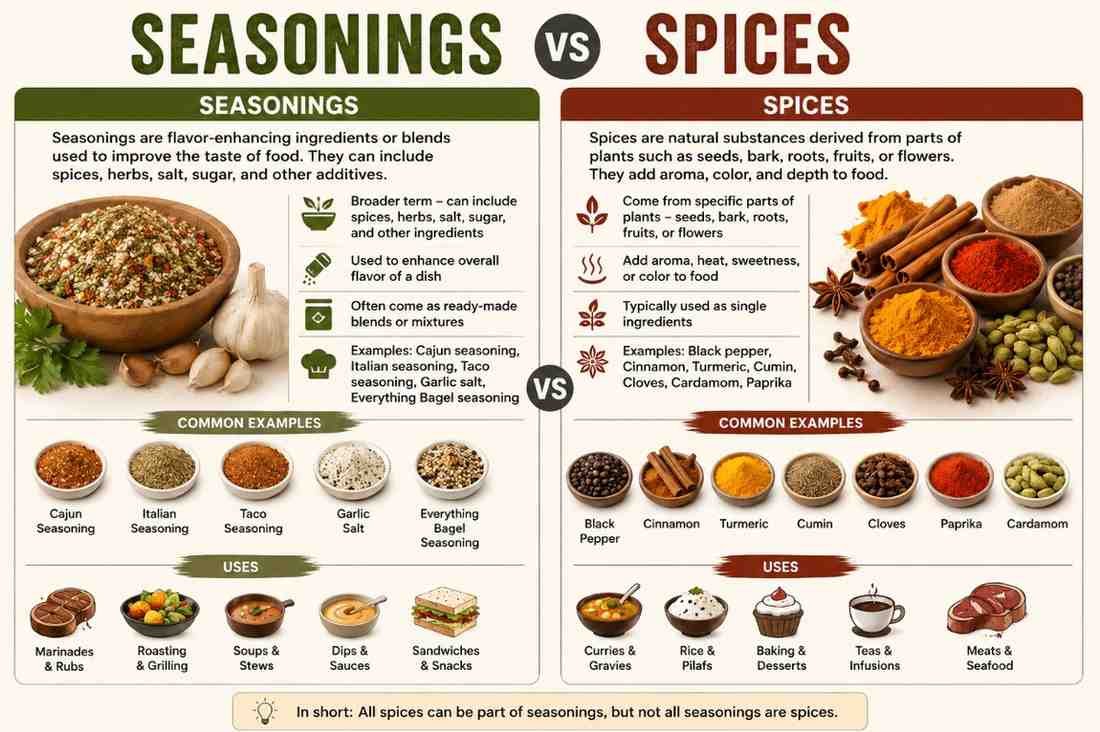
Seasonings vs Spices : Seasonings and spices are essential parts of cooking and food culture around the world. They add flavor, aroma, color, texture, and depth to dishes, transforming simple ingredients into delicious meals. Although many people use the terms “seasonings” and “spices” interchangeably, they are not exactly the same.
Understanding the difference between seasonings and spices is important for home cooks, professional chefs, food bloggers, and anyone interested in culinary arts. While spices usually come from dried plant parts such as seeds, bark, roots, or fruits, seasonings are broader mixtures or ingredients used to enhance flavor.
Today, both seasonings and spices are available in countless varieties ranging from traditional regional blends to modern gourmet mixes. They play major roles in cuisines from India, Mexico, Thailand, China, Italy, the Middle East, and many other parts of the world.
Modern interest in seasonings and spices continues to grow due to global food trends, healthy cooking movements, restaurant culture, social media recipes, and increasing awareness about natural ingredients.
What are Spices?
Spices are natural flavoring substances obtained from specific parts of plants. They are primarily used to add aroma, flavor, heat, sweetness, or color to food.
Seasonings vs Spices: Spices usually come from:
- Seeds
- Bark
- Roots
- Fruits
- Flower buds
- Rhizomes
Unlike herbs, which generally come from leafy green parts of plants, spices are derived from other plant components.
Common Examples of Spices
Some of the most popular spices include:
- Black pepper
- Cinnamon
- Turmeric
- Cloves
- Nutmeg
- Cardamom
- Cumin
- Coriander
- Paprika
- Saffron
- Ginger
- Cayenne pepper
- Star anise
Spices can be used whole, crushed, roasted, or ground into powder.
What are Seasonings?
Seasonings are ingredients or blends added to food to improve flavor. A seasoning can contain spices, herbs, salt, sugar, flavor enhancers, dried vegetables, or other taste-enhancing ingredients.
Seasonings may be:
- Simple single ingredients
- Mixed spice blends
- Herb combinations
- Dry rubs
- Marinades
- Liquid flavorings
Seasonings are broader in definition because they include many flavor-enhancing substances beyond spices alone.
Common Examples of Seasonings
Popular seasonings include:
- Cajun seasoning
- Taco seasoning
- Italian seasoning
- Everything Bagel seasoning
- Lemon pepper seasoning
- Garlic salt
- Ranch seasoning
- BBQ rub
- Curry powder
- Chaat masala
- Steak seasoning
Many seasonings contain multiple spices mixed together.
Main Difference Between Seasonings and Spices
Seasonings vs Spices: The primary difference lies in their purpose and composition.
| Spices | Seasonings |
|---|---|
| Single plant-derived ingredients | Flavor-enhancing mixtures or ingredients |
| Usually natural plant parts | Can include spices, herbs, salt, sugar, and additives |
| Add aroma, heat, or color | Improve overall flavor |
| Examples: cinnamon, cumin | Examples: Cajun seasoning, taco seasoning |
| Often used as ingredients in seasonings | Often made using multiple spices |
In simple terms:
- A spice is usually one individual ingredient.
- A seasoning is often a blend used to season food.
History of Spices
Spices have played an important role in human civilization for thousands of years. Ancient cultures valued spices not only for flavor but also for medicine, preservation, religion, and trade.
Ancient Spice Trade
Spices such as cinnamon, black pepper, cloves, and nutmeg were once extremely valuable and traded across continents.
The spice trade connected regions including:
- India
- China
- Southeast Asia
- The Middle East
- Europe
Spices were considered luxury items in ancient times.
History of Seasonings
Seasonings vs Spices: Seasonings developed as cooks began combining spices, herbs, and salts to create balanced flavor blends.
Regional cuisines created unique seasoning combinations based on local tastes and available ingredients.
Examples include:
- Garam masala from India
- Cajun seasoning from Louisiana
- Chinese five spice from China
- Za’atar from the Middle East
- Italian seasoning from Mediterranean cuisine
Today, seasoning blends are used globally in homes and restaurants.
Types of Spices
1. Hot Spices
These spices add heat and pungency.
Examples:
- Cayenne pepper
- Black pepper
- Chili powder
2. Sweet Spices
Used in desserts and sweet dishes.
Examples:
- Cinnamon
- Nutmeg
- Cardamom
3. Earthy Spices
Provide deep and warm flavors.
Examples:
- Cumin
- Turmeric
- Coriander
4. Aromatic Spices
Known for strong fragrance.
Examples:
- Cloves
- Star anise
- Saffron
Types of Seasonings
1. Dry Seasonings
Powdered or dried blends sprinkled onto foods.
Examples:
- Taco seasoning
- Cajun seasoning
- BBQ rub
2. Liquid Seasonings
Liquid flavor enhancers.
Examples:
- Soy sauce
- Worcestershire sauce
- Fish sauce
3. Salt-Based Seasonings
Contain salt combined with herbs or spices.
Examples:
- Garlic salt
- Seasoned salt
4. Herb Seasonings
Primarily herb-based blends.
Examples:
- Italian seasoning
- Herbs de Provence
Culinary Uses of Spices
Spices are used in nearly every cuisine.
Common Uses:
- Flavoring curries
- Baking desserts
- Marinating meats
- Preparing soups
- Enhancing rice dishes
- Making sauces
- Brewing teas
Different spices create unique taste profiles.
Culinary Uses of Seasonings
Seasonings vs Spices: Seasonings are commonly used to quickly enhance meals.
Common Uses:
- Grilling meats
- Roasting vegetables
- Flavoring snacks
- Making dips
- Seasoning pasta
- Preparing sandwiches
- Enhancing fast food
Seasonings provide convenience and consistency.
Health Benefits of Spices
Many spices contain beneficial plant compounds.
1. Rich in Antioxidants
Spices such as turmeric, cinnamon, and cloves contain antioxidants.
2. May Support Digestion
Ginger, cumin, and coriander are traditionally used for digestive support.
3. Anti-Inflammatory Properties
Certain spices contain compounds associated with reduced inflammation.
4. Supports Flavorful Healthy Cooking
Spices allow cooks to reduce excess fat and sugar while maintaining flavor.
Health Benefits of Seasonings
Seasonings can support healthy eating when used properly.
Benefits:
- Add flavor without extra calories
- Encourage vegetable consumption
- Improve meal satisfaction
- Help reduce blandness in healthy diets
Low-sodium seasoning blends are especially popular.
Spices Around the World
India
India is famous for spices such as turmeric, cumin, cardamom, and garam masala.
Mexico
Mexican cuisine uses chili powder, cumin, paprika, and taco seasonings.
China
Chinese cuisine features star anise, Sichuan pepper, and five spice blends.
Middle East
Za’atar and sumac are widely used.
Europe
Mediterranean cuisines rely heavily on herbs and seasonings.
Most Popular Spices in the World
Some globally loved spices include:
- Black pepper
- Turmeric
- Cinnamon
- Paprika
- Cumin
- Ginger
- Cardamom
- Cloves
- Nutmeg
- Saffron
Most Popular Seasonings in the World
Popular seasoning blends include:
- Cajun seasoning
- Taco seasoning
- Italian seasoning
- Curry powder
- Everything Bagel seasoning
- Ranch seasoning
- Lemon pepper seasoning
- Chaat masala
- Chinese five spice
- BBQ seasoning
Spice Blends vs Seasonings
Not all spice blends are considered seasonings, but many seasonings contain spice blends.
For example:
- Curry powder is a spice blend.
- Taco seasoning is a seasoning blend containing spices and other ingredients.
Herbs vs Spices vs Seasonings
| Herbs | Spices | Seasonings |
|---|---|---|
| Leafy plant parts | Other plant parts | Flavor-enhancing blends |
| Examples: basil, oregano | Examples: cinnamon, cumin | Examples: Cajun seasoning |
| Usually green | Often aromatic powders | Can include herbs and spices |
How Spices are Produced
Seasonings vs Spices: Spices are harvested from plants and processed through:
- Drying
- Grinding
- Roasting
- Packaging
The quality of spices depends on freshness and storage.
How Seasonings are Produced
Seasonings vs Spices: Seasonings are created by mixing:
- Spices
- Herbs
- Salt
- Dried vegetables
- Flavor compounds
Commercial blends are carefully balanced for consistent flavor.
Fresh Spices vs Ground Spices
| Fresh Whole Spices | Ground Spices |
|---|---|
| Longer shelf life | Easier to use |
| Stronger aroma when freshly ground | Convenient |
| Require grinding | Ready for cooking |
Whole spices usually retain flavor longer.
Homemade Seasonings vs Store-Bought Seasonings
Homemade Seasonings(Seasonings vs Spices)
Advantages:
- Customizable
- Fresh ingredients
- Lower sodium
- No preservatives
Store-Bought Seasonings
Advantages:
- Convenient
- Consistent flavor
- Easy to find
Both options are widely used.
Side Effects of Excessive Spice Consumption
Seasonings vs Spices: Although spices are generally safe, overconsumption may cause issues.
Possible Side Effects:
- Acid reflux
- Stomach irritation
- Allergic reactions
- Excessive heat sensitivity
Moderation is important.
Side Effects of Excessive Seasoning Consumption
Seasonings vs Spices: Some commercial seasonings contain:
- High sodium
- Artificial additives
- Preservatives
Excessive sodium intake may contribute to high blood pressure.
How to Store Spices and Seasonings
Seasonings vs Spices: Proper storage helps maintain flavor and freshness.
Storage Tips:
- Keep in airtight containers
- Avoid sunlight
- Store in cool dry places
- Avoid moisture exposure
Ground spices generally lose flavor faster than whole spices.
Why Spices and Seasonings are Important in Cooking
They help:
- Enhance flavor
- Improve aroma
- Add color
- Increase meal variety
- Create regional cuisines
- Improve food enjoyment
Without spices and seasonings, many foods would taste bland.
Modern Food Trends in Spices and Seasonings
Seasonings vs Spices: Current trends include:
- Organic spices
- Low-sodium seasonings
- Global fusion flavors
- Homemade spice blends
- Vegan seasonings
- Gourmet salts
- Spicy food trends
Social media has greatly increased interest in seasoning blends.
Spices and Seasonings in Healthy Cooking
Seasonings vs Spices: Many people use spices and seasonings to:
- Reduce sugar
- Lower fat usage
- Replace heavy sauces
- Add flavor naturally
Healthy cooking often depends on balanced seasoning.
Future of Spices and Seasonings
Seasonings vs Spices: The global market for spices and seasonings continues to grow due to:
- Increased international cuisine popularity
- Rising home cooking trends
- Demand for convenient flavoring
- Interest in natural ingredients
- Growing restaurant industry
New seasoning blends and gourmet spice combinations are constantly emerging.
FAQs
What is the main difference between spices and seasonings?
Spices are usually single plant-derived ingredients such as cinnamon or cumin, while seasonings are flavor-enhancing blends that may contain spices, herbs, salt, and other ingredients.
Are all spices considered seasonings?
Spices can be used as seasonings, but not all seasonings are spices because many seasoning blends contain multiple ingredients.
Is salt a spice or seasoning?
Salt is considered a seasoning because it enhances flavor but is not derived from plants like spices.
Can seasonings contain herbs?
Yes, many seasoning blends include herbs along with spices and salt.
What are examples of spice blends?
Examples include garam masala, curry powder, Chinese five spice, and pumpkin spice.
Why are spices important in cooking?
Spices improve flavor, aroma, color, and depth in food while also contributing to cultural and regional cuisines.
Do spices have health benefits?
Many spices contain antioxidants and plant compounds that may support overall wellness when consumed in moderation.
Conclusion Seasonings vs Spices
Seasonings vs Spices: Although the terms seasonings and spices are often used interchangeably, they have distinct meanings in cooking and food culture. Spices are individual plant-derived ingredients used to add aroma, heat, sweetness, or color, while seasonings are broader flavor-enhancing blends that may contain spices, herbs, salt, and other ingredients.
Both Seasonings vs Spices are essential in global cuisine and play major roles in creating delicious meals. From traditional Indian curries and Mexican tacos to Italian pasta and Cajun dishes, these flavoring ingredients define culinary traditions around the world.
Understanding Seasonings vs Spices can help cooks make better choices in the kitchen, improve recipes, and explore new flavors confidently. Whether using single spices or complex seasoning blends, both contribute greatly to the taste, aroma, and enjoyment of food.
Also read:
Everything Bagel Seasoning: Benefits, Ingredients, Uses & Recipe