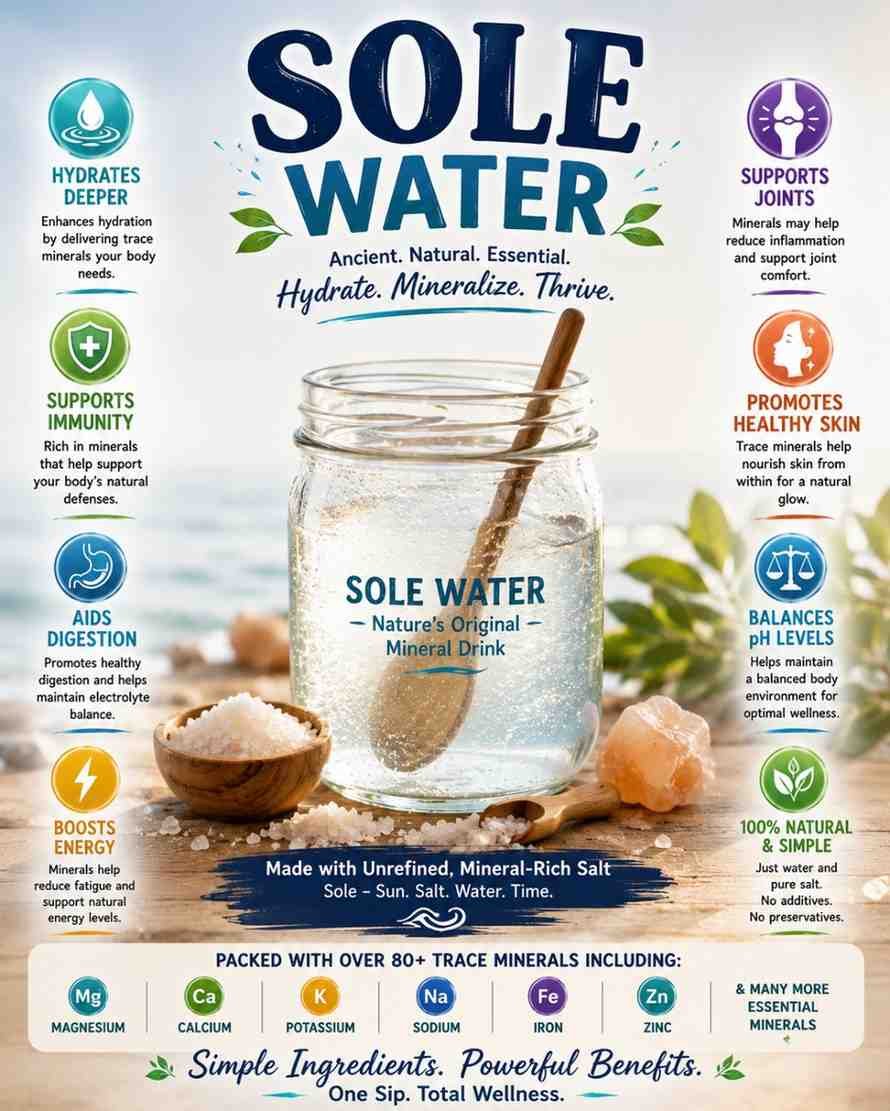
Sole Water has become a popular wellness beverage among individuals interested in natural hydration and mineral-rich drinks. Made from a concentrated solution of natural salt and water, Sole Drink is often consumed as part of morning wellness routines.
The word “sole” is pronounced “so-lay” and comes from a traditional term used to describe a fully saturated salt-water solution. Advocates of Sole Drink appreciate it for its mineral content and simplicity, while others enjoy it as an alternative hydration beverage.
In recent years, wellness communities have increasingly discussed Sole Drink as part of broader trends involving natural hydration, electrolyte intake, and mineral-rich beverages.
In this comprehensive guide, you’ll learn everything about Sole Drink, including its history, preparation methods, nutrition profile, benefits, side effects, and frequently asked questions.
What Is Sole Water?
Sole Water is a beverage prepared by mixing a small amount of concentrated salt solution with regular drinking water.
The concentrated solution is typically made by dissolving natural salt in water until the water can no longer absorb additional salt.
Common salts used include:
- Pink Himalayan Salt
- Sea Salt
- Celtic Sea Salt
- Natural Mineral Salt
These salts contain sodium and trace minerals that contribute to the composition of Sole Drink.
How Is Sole Water Made?
Sole Drink begins with a saturated salt solution.
Preparation Process
- Fill a glass jar partially with natural salt.
- Add filtered water.
- Allow the mixture to sit overnight.
- Once some salt remains undissolved, saturation has been reached.
- Add a small amount of the saturated solution to a glass of water before drinking.
This diluted beverage is commonly referred to as Sole Drink.
History of Sole Water
Natural salts have been valued throughout human history.
Ancient civilizations used mineral-rich salts not only for food preservation but also as important dietary resources.
Traditional wellness systems often recognized natural salts as valuable sources of minerals.
In modern wellness culture, Sole Water gained popularity through interest in:
- Natural hydration
- Mineral supplementation
- Electrolyte balance
- Alternative wellness practices
- Morning wellness routines
Today, Sole Drink remains a widely discussed mineral-rich beverage.
Nutritional Profile of Sole Water
The exact nutrient content depends on the salt used and dilution level.
Potential minerals include:
Major Minerals
- Sodium
- Potassium
- Calcium
- Magnesium
Trace Minerals
- Zinc
- Iron
- Copper
- Manganese
Other Components
- Electrolytes
- Trace mineral compounds
Sodium remains the primary mineral found in Sole Drink .
Top 20 Benefits of Sole Water
1. Supports Hydration
Water contributes to normal hydration and fluid balance.
2. Contains Electrolytes
Sole Drink naturally provides electrolytes derived from mineral salts.
3. Source of Sodium
Sodium plays an important role in fluid regulation.
4. Contains Trace Minerals
Natural salts often contain small amounts of various minerals.
5. Popular Morning Beverage
Many people include Sole Drink in morning wellness routines.
6. Simple Preparation
Requires only water and natural salt.
7. May Support Active Lifestyles
Electrolytes are important during physical activity.
8. Alternative to Sugary Sports Drinks
Provides minerals without added sugar.
9. Naturally Calorie-Free
Contains virtually no calories.
10. Supports Fluid Balance
Electrolytes help regulate hydration status.
11. Convenient Wellness Drink
Easy to prepare at home.
12. Contains Natural Mineral Sources
Uses minimally processed salt varieties.
13. Fits Various Diet Plans
Can be incorporated into many lifestyles.
14. Naturally Caffeine-Free
Contains no stimulants.
15. Refreshing Hydration Option
Many people enjoy it as a hydration beverage.
16. May Support Outdoor Activities
Hydration remains important during physical exertion.
17. Contains Magnesium Traces
Some natural salts provide magnesium.
18. Long Historical Use of Mineral Salts
Salt has been used for thousands of years.
19. Supports Daily Water Intake
Encourages hydration habits.
20. Simple Ingredient List
Made from only salt and water.
Sole Water vs Regular Water
| Feature | Sole Water | Regular Water |
|---|---|---|
| Sodium | Present | Minimal |
| Electrolytes | Present | Varies |
| Calories | Zero | Zero |
| Minerals | Higher | Lower |
| Hydration | Yes | Yes |
Both beverages contribute to hydration, but Sole Drink contains added minerals and sodium.
Sole Water vs Sports Drinks
| Feature | Sole Water | Sports Drinks |
| Added Sugar | None | Often Present |
| Electrolytes | Yes | Yes |
| Calories | Zero | Higher |
| Artificial Ingredients | Usually None | May Be Present |
| Cost | Lower | Often Higher |
How to Make Sole Water at Home
Ingredients
- Pink Himalayan Salt or natural sea salt
- Filtered water
- Glass jar
Directions
- Fill one-quarter of a glass jar with salt.
- Add filtered water.
- Leave overnight.
- Ensure some salt remains undissolved.
- Add one teaspoon of the concentrated solution to a glass of water.
- Stir and drink.
Lemon Sole Water Recipe
Ingredients
- Sole Drink
- Fresh lemon juice
Mix together for additional flavor.
Mint Sole Water
Ingredients
- Sole Drink
- Fresh mint leaves
Serve chilled.
Best Time to Drink Sole Water
Many people consume Sole Drink :
- Early morning
- Before workouts
- During hot weather
- After physical activity
- During travel
Personal preference often determines timing.
Sole Water for Athletes
Athletes often focus on hydration and electrolyte intake.
Sole Drink may provide:
- Sodium
- Trace minerals
- Hydration support
- Electrolytes
Hydration strategies vary based on activity level and individual needs.
Sole Water and Electrolytes
Electrolytes are minerals that help regulate:
- Fluid balance
- Nerve signaling
- Muscle function
- Hydration status
Sodium is the primary electrolyte found in Sole Drink .
Potential Side Effects of Sole Water
Although Sole Drink is popular in wellness communities, moderation is important.
Possible side effects may include:
- Excess sodium intake
- Increased thirst
- Digestive discomfort
- Fluid retention in sensitive individuals
People with:
- High blood pressure
- Kidney conditions
- Heart conditions
- Sodium-restricted diets
should consult a healthcare professional before consuming Sole Drink regularly.
Who Should Drink Sole Water?
Sole Drink may appeal to:
- Wellness enthusiasts
- Active individuals
- Athletes
- Travelers
- Outdoor workers
- Individuals interested in mineral-rich beverages
However, it may not be appropriate for everyone.
Storage Tips
To maintain quality:
- Store saturated solution in a sealed glass container.
- Keep away from contaminants.
- Use clean utensils.
- Store at room temperature.
- Avoid plastic containers when possible.
FAQs
What is Sole Water?
Sole Drink is a diluted beverage made from a saturated salt-water solution.
How do you pronounce Sole Water?
It is pronounced “so-lay water.”
What salt is used to make Sole Drink?
Pink Himalayan salt, sea salt, and other natural mineral salts are commonly used.
Can I drink Sole Water every day?
Some people include it in daily routines, but moderation is important because it contains sodium.
Does Sole Water contain electrolytes?
Yes, sodium and trace minerals function as electrolytes.
Is Sole Water the same as regular salt water?
Not exactly. Sole Drink uses a saturated mineral salt solution diluted into drinking water.
Does Sole Water contain calories?
No, Sole Drink is generally calorie-free.
Can athletes drink Sole Drink?
Some athletes use it as a source of electrolytes and hydration support.
Does Sole Water contain potassium?
Natural salts may contain small amounts of potassium and other trace minerals.
Who should avoid Sole Water?
Individuals on sodium-restricted diets or those with certain medical conditions should seek professional advice before regular consumption.
Conclusion
Sole Water is a mineral-rich beverage made from natural salt and water that has gained popularity in wellness communities worldwide. Its simplicity, electrolyte content, and association with hydration have made it a favorite among individuals seeking alternatives to sugary sports drinks and artificial beverages.
While Sole Water provides sodium and trace minerals, it should be consumed responsibly and as part of a balanced lifestyle. Whether you’re interested in natural hydration, electrolyte support, or exploring wellness trends, Sole Drink offers a unique approach to mineral-enhanced hydration.
Also read: