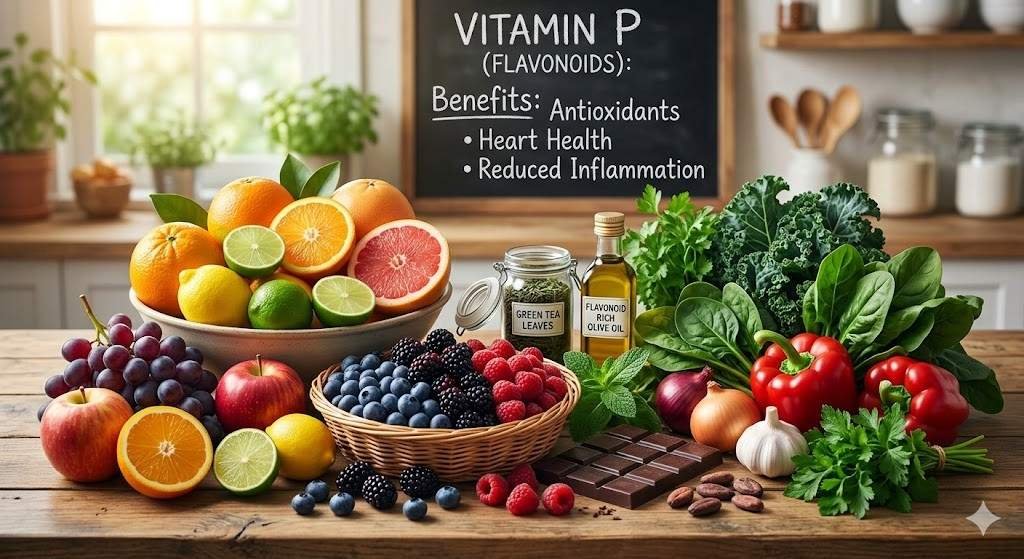
Flavonoid is often referred to as Vitamin P, although it is not officially classified as a true vitamin today. The term was originally used to describe a group of plant compounds known as flavonoids that help improve blood vessel strength and support nutrient absorption, especially alongside vitamin C.
Scientists first became interested in Vitamin P when they observed that certain citrus extracts improved capillary health and reduced bleeding better than vitamin C alone. Later research identified flavonoids as the active compounds responsible for those effects.
Today, Vitamin P is understood as a collection of bioactive plant nutrients found in fruits, vegetables, tea, cocoa, herbs, and colorful plant foods. These compounds are highly valued because they provide antioxidant protection, support circulation, reduce inflammation, and may lower long-term disease risk.
Although Vitamin P is not listed with standard vitamins like A, B, C, D, or E, nutrition experts continue to emphasize flavonoid-rich foods because of their major role in overall wellness.
This complete guide explains what Vitamin P is, how it works, health benefits, food sources, deficiency concerns, and practical ways to include more flavonoids in your daily diet.
What Is Vitamin P?

Vitamin P is an older nutritional term used mainly for flavonoids, a large family of plant compounds naturally present in colorful foods.
The letter P originally referred to permeability, because researchers found these compounds helped regulate capillary permeability and blood vessel integrity.
Vitamin P includes compounds such as:
- Rutin
- Quercetin
- Hesperidin
- Catechins
- Anthocyanins
- Bioflavonoids
These compounds work as antioxidants and support multiple systems in the body.
Why Vitamin P Is Not an Official Vitamin
Unlike essential vitamins, flavonoids are not classified as essential because severe deficiency does not cause one single recognized disease.
However, they are considered highly beneficial because they:
- Enhance nutrient protection
- Support cell defense
- Improve vascular health
- Assist long-term disease prevention
This is why many nutrition experts still discuss Vitamin P in wellness education.
Main Nutritional Role of Vitamin P
Vitamin P helps plant compounds interact positively with human physiology.
Major functions include:
- Protecting blood vessels
- Supporting circulation
- Helping vitamin C function effectively
- Neutralizing free radicals
- Reducing inflammation
1. Supports Strong Blood Vessels
One of the earliest known benefits of Vitamin P is improved capillary strength.
Flavonoids help:
- Maintain capillary flexibility
- Reduce fragility
- Support healthy circulation
This may help reduce minor bruising and improve vascular resilience.
2. Works Together with Vitamin C
Vitamin C and Vitamin P often work together.
Flavonoids may help:
- Improve vitamin C stability
- Support absorption
- Enhance antioxidant protection
That is why citrus fruits naturally combine both nutrients.
3. Powerful Antioxidant Protection
Vitamin P compounds protect cells from oxidative stress caused by free radicals.
This may support:
- Healthy aging
- Lower inflammation
- Reduced cellular damage
Antioxidants are especially important in modern diets exposed to pollution and stress.
4. Supports Heart Health
Flavonoid-rich diets are often associated with cardiovascular support.
Potential benefits include:
- Improved blood vessel relaxation
- Better circulation
- Reduced oxidative stress in arteries
Foods rich in flavonoids are often recommended in heart-friendly diets.
5. May Help Reduce Inflammation
Inflammation is linked to many chronic health concerns.
Vitamin P compounds may help moderate inflammatory pathways.
This can support:
- Joint comfort
- Tissue recovery
- Metabolic balance
6. Supports Brain Function
Certain flavonoids may improve blood flow to the brain.
Possible benefits:
- Better focus
- Cognitive support
- Healthy aging of brain tissue
Tea and berries are commonly studied for these effects.
7. Supports Skin Health
Vitamin P helps protect collagen structures and skin cells.
Benefits include:
- Antioxidant skin defense
- Support for elasticity
- Reduced oxidative aging
Colorful fruits naturally support skin through these compounds.
8. May Support Eye Health
Anthocyanins, a flavonoid group, may support retinal health.
These compounds are found heavily in:
- Blueberries
- Blackberries
- Purple grapes
9. Supports Immune Balance
Flavonoids help reduce oxidative stress and support immune cell function.
This contributes to:
- Better immune resilience
- Lower oxidative burden
Best Food Sources of Vitamin P
Citrus Fruits

Rich sources include:
- Orange
- Lemon
- Grapefruit
- Tangerine
Much of the flavonoid content is near the peel.
Berries
- Blueberries
- Strawberries
- Blackberries
- Raspberries
Anthocyanins provide deep color.
Tea
Green tea contains catechins, one of the most researched flavonoids.
Also found in:
- Black tea
- White tea
Dark Chocolate
Dark chocolate provides cocoa flavonoids.
Higher cocoa percentage means stronger flavonoid content.
Apples
Apple skin contains quercetin.
Grapes
Purple grapes contain anthocyanins and resveratrol-related compounds.
Onions
Red onions are rich in quercetin.
Herbs
- Parsley
- Thyme
- Dill
Types of Flavonoids in Vitamin P
Flavonols
Examples:
- Quercetin
- Kaempferol
Flavanones
Examples:
- Hesperidin
- Naringin
Catechins
Found in tea and cocoa.
Anthocyanins
Found in dark berries.
Isoflavones
Found mainly in soy foods.
Signs of Low Flavonoid Intake
There is no formal deficiency disease, but low intake may reduce dietary protection.
Possible signs of poor intake:
- Low fruit consumption
- Low vegetable variety
- Low antioxidant intake
Vitamin P and Modern Nutrition
In modern nutrition, Vitamin P is valued because many everyday diets lack enough natural plant compounds due to heavy use of processed foods. While people may meet calorie needs, they often consume fewer flavonoid-rich foods than recommended.
Why It Matters Today
Modern eating habits often include:
- Refined snacks
- Sugary drinks
- Low fruit intake
- Limited vegetable variety
This can reduce daily antioxidant protection.
Role of Vitamin P in Today’s Diet
Flavonoids help modern diets by supporting:
- Antioxidant defense
- Heart health
- Blood vessel protection
- Inflammation balance
- Cellular protection
Best Modern Sources
Easy foods that fit modern lifestyles include:
- Orange
- Apple
- Green tea
- Dark chocolate
- berries
- onions
Nutrition Trend
Today, nutrition experts increasingly focus on phytonutrients like flavonoids, not just vitamins and minerals, because they strongly support long-term wellness
Daily Intake Guidance
There is no official recommended daily allowance (RDA) for Vitamin P because flavonoids are not classified as essential vitamins. However, health experts recommend eating a variety of flavonoid-rich foods every day for long-term wellness.
Practical Daily Intake Goal
A balanced daily intake can include:
- 1 citrus fruit such as Orange
- 1 serving of berries
- 1 cup of Green tea
- 1 apple or grapes
- Leafy herbs or colorful vegetables in meals
Estimated Flavonoid Intake
Many healthy diets naturally provide 200 to 500 mg of flavonoids daily, depending on fruit and vegetable intake.
Best Advice
The best way to meet Vitamin P needs is to eat different colorful plant foods throughout the day rather than rely on supplements
Simple Rule
More natural color on your plate usually means more flavonoids.
Easy Ways to Increase Vitamin P Intake
- Add citrus to breakfast
- Drink green tea
- Eat berries daily
- Include herbs in meals
- Choose colorful vegetables
Vitamin P vs Vitamin C
| Feature | Vitamin P | Vitamin C |
|---|---|---|
| Type | Flavonoids | Essential vitamin |
| Main Role | Antioxidant support | Collagen + immunity |
| Sources | Plants | Fruits + vegetables |
They work best together.
Can Supplements Replace Food?
Food sources are usually preferred because they provide multiple synergistic nutrients.
Supplements exist but whole foods remain best.
Vitamin P for Men and Women
For Men
- Supports circulation
- Helps antioxidant recovery
For Women
- Supports skin
- Helps vascular balance
Why Colorful Foods Matter Most
Colorful foods are naturally rich in Flavonoid, the group of plant compounds often referred to as Vitamin P. The vibrant pigments in fruits and vegetables are usually signals of bioactive compounds that provide powerful antioxidant and anti-inflammatory benefits.
Key Reasons Colorful Foods Are Important
- Rich in Flavonoids
- Deeply colored fruits and vegetables, like berries, red grapes, and purple cabbage, contain high levels of flavonoids such as anthocyanins, quercetin, and catechins.
- These compounds help protect cells from oxidative stress and support blood vessel health.
- Supports Antioxidant Protection
- The pigments in colorful foods often indicate antioxidants that neutralize free radicals, reducing inflammation and supporting long-term health.
- Better Nutrient Variety
- Eating multiple colors ensures you get a broad spectrum of vitamins, minerals, and phytonutrients that work synergistically in the body.
- Promotes Heart and Brain Health
- Red, blue, and purple fruits contain compounds that improve circulation and support cognitive function.
- Citrus fruits (orange and yellow) provide flavanones that strengthen blood vessels and enhance vitamin C absorption.
- Enhances Visual Appeal and Eating Enjoyment
- Colorful plates encourage higher consumption of fruits and vegetables, which naturally increases Vitamin P intake.
Examples of Colorful Flavonoid-Rich Foods
- Red/Orange: Citrus fruits, tomatoes, red peppers
- Blue/Purple: Blueberries, blackberries, purple grapes
- Green: Broccoli, kale, spinach
- Yellow: Lemons, yellow peppers
- Dark Brown/Black: Dark chocolate, black beans
Simple Tip: Try to include 3–5 different colors on your plate every day. The more colors, the more flavonoids, and the greater the protective health benefits
Frequently Asked Questions (FAQs)
1.Is Vitamin P a real vitamin?
It is an older term for flavonoids, not an official vitamin.
2.What foods contain Vitamin P?
Citrus fruits, berries, tea, cocoa, apples, onions.
3.Does Vitamin P help immunity?
Yes, through antioxidant support.
4.Is Vitamin P the same as bioflavonoids?
Yes, bioflavonoids are commonly included.
5.Can I take Vitamin P supplements?
Yes, but food is preferred.
6.Does Vitamin P help skin?
Yes, antioxidants support skin cells.
7.Is Vitamin P important daily?
A flavonoid-rich diet is highly beneficial daily.
8.What is another name for Vitamin P?
Vitamin P is not a true vitamin. It is another name for a group of plant compounds called bioflavonoids (or simply flavonoids). These are powerful antioxidants that support blood vessel health and help the body absorb vitamin C more effectively.
9.Where can I find Vitamin P?
Vitamin P (bioflavonoids) is found naturally in many fruits, vegetables, and plant-based foods, especially those that are colorful. Common sources include:
- Citrus fruits (oranges, lemons, grapefruit)
- Berries (blueberries, strawberries, blackberries)
- Apples
- Grapes
- Onions
- Green tea
- Dark chocolate
- Leafy greens
10.What is the best source of Vitamin P?
The best sources of Vitamin P are citrus fruits, especially the peel and white inner layer (pith), which contain the highest concentration of bioflavonoids like hesperidin and rutin.
Other top sources include:
- Blueberries (rich in anthocyanins)
- Blackberries
- Green tea
- Red grapes
11.What is rutin (vitamin P) used for?
Rutin is a bioflavonoid (often called “vitamin P”) found in many plants. It’s mainly used for its antioxidant and blood vessel–protecting properties.
12.What are the benefits of rutin?
Rutin supports health in several ways:
- Strengthens blood vessels – Helps reduce fragility of capillaries and improves circulation
- Reduces swelling – May help with conditions like varicose veins and leg swelling
- Powerful antioxidant – Protects cells from damage caused by free radicals
- Supports heart health – Helps improve blood flow and may reduce inflammation
- Helps vitamin C work better – Enhances absorption and effectiveness of vitamin C
Final Thoughts
Vitamin P may not appear on official vitamin charts, but its importance in nutrition is substantial. Flavonoids help protect blood vessels, support immunity, strengthen antioxidant defenses, and improve overall dietary quality.
The easiest way to benefit from Vitamin P is simple: eat more colorful plant foods every day
Also read :