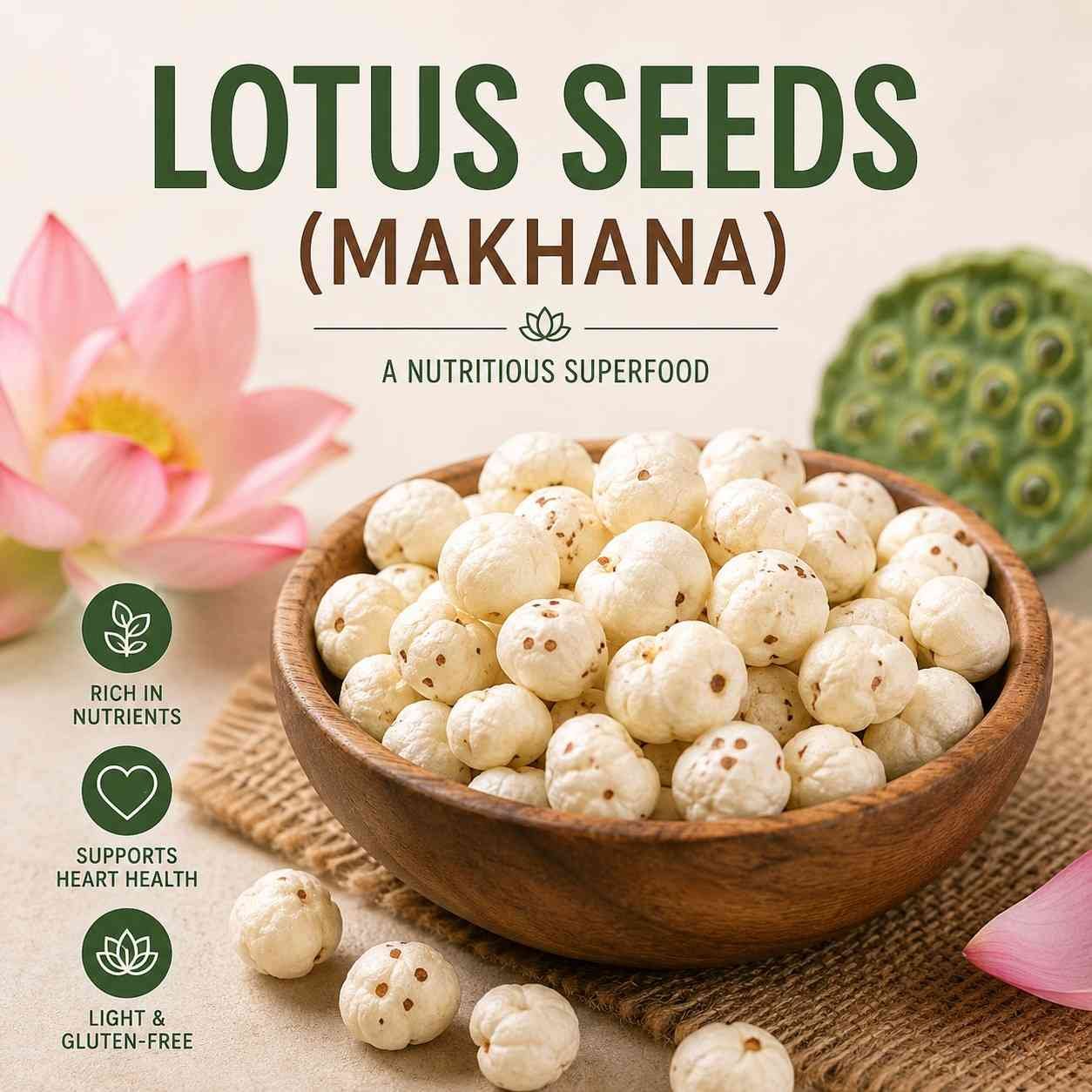
Lotus seeds, commonly known as makhana or fox nuts, have been enjoyed for centuries in Asian cuisines and traditional wellness practices. These light, crunchy seeds come from the lotus plant (Nelumbo nucifera) and are prized for their mild flavor, impressive nutritional profile, and versatility in both sweet and savory dishes.
In recent years, makhana has gained worldwide popularity as a healthy snack because it is naturally gluten-free, low in saturated fat, and a good source of protein, fiber, magnesium, phosphorus, and antioxidants. Whether you’re looking for a wholesome snack, a weight-friendly food, or an alternative to fried chips, roasted makhana is an excellent choice.
From supporting heart health and digestion to providing sustained energy and essential minerals, lotus seeds offer numerous health benefits when included as part of a balanced diet. Pair roasted makhana with walnuts to enjoy a nutrient-rich snack packed with healthy fats, protein, and antioxidants.
In this comprehensive guide, you’ll learn everything you need to know about lotus seeds, including their nutrition facts, health benefits, best ways to eat them, recommended serving size, and possible side effects.
What Are Lotus Seeds (Makhana)?
Lotus seeds are the edible seeds of the lotus flower (Nelumbo nucifera). They are harvested from the seed pods of mature lotus plants that grow in freshwater ponds and lakes.
After harvesting, the seeds are cleaned, dried, roasted, and popped to create the crunchy snack commonly known as makhana or fox nuts. Although they are often called “nuts,” lotus seeds are not true nuts. Botanically, they are seeds.
Because of their light texture and neutral flavor, makhana absorbs seasonings well, making it suitable for both savory and sweet recipes.
How Is Makhana Made?
The production of makhana involves several traditional steps:
1. Harvesting
Mature lotus seed pods are collected from freshwater ponds.
2. Drying
The seeds are naturally dried to reduce moisture.
3. Roasting
Dried seeds are roasted over controlled heat.
4. Popping
The roasted seeds are gently cracked and popped, producing the familiar white, fluffy makhana.
5. Seasoning
They may be lightly seasoned with herbs, spices, or a small amount of healthy oil before packaging.
Lotus Seeds (Makhana) Nutrition Facts
Serving Size: 100 grams (plain, roasted)
| Nutrient | Amount |
|---|---|
| Calories | 347 kcal |
| Carbohydrates | 77 g |
| Protein | 9.7 g |
| Fat | 0.1–0.5 g |
| Dietary Fiber | 7–8 g |
| Calcium | 60 mg |
| Iron | 1.4 mg |
| Magnesium | 67 mg |
| Phosphorus | 200 mg |
| Potassium | 500 mg (approx.) |
| Sodium | Very Low |
Nutrition values are approximate and may vary depending on processing methods.
Why Lotus Seeds Are Considered a Superfood
Lotus seeds contain a combination of nutrients that support overall health.
They provide:
- Plant-based protein
- Dietary fiber
- Magnesium
- Phosphorus
- Potassium
- Calcium
- Iron
- Antioxidants
- Complex carbohydrates
They are also naturally:
- Gluten-free
- Low in saturated fat
- Low in sodium
- Cholesterol-free
1. Rich Source of Plant-Based Protein
Protein is essential for building and repairing body tissues, maintaining muscle mass, and supporting many biological functions.
Lotus seeds (Makhana) provide a moderate amount of plant-based protein, making them a smart snack choice for vegetarians and anyone looking to increase their protein intake.
Pairing makhana with yogurt, milk, or legumes can help create a more protein-rich meal.
2. Supports Healthy Weight Management
Makhana is often recommended as a healthy snack because it is:
- Filling
- Rich in fiber
- Low in saturated fat
- Naturally crunchy
Fiber helps increase feelings of fullness, which may reduce unnecessary snacking between meals.
Replacing fried snacks with roasted lotus seeds (Makhana) may help lower overall calorie intake as part of a balanced eating plan.
3. Supports Digestive Health
Lotus seeds (Makhana) contain dietary fiber that supports healthy digestion.
Fiber helps:
- Promote regular bowel movements
- Support beneficial gut bacteria
- Improve digestive comfort
- Increase satiety
Drinking enough water alongside high-fiber foods is important for digestive health. Along with eating fiber-rich foods like lotus seeds, these Best Morning Drinks for Gut Health can help support a healthy digestive system.
4. Rich in Antioxidants
Lotus seeds (Makhana) contain natural antioxidant compounds that help protect the body’s cells from oxidative stress.
Antioxidants help neutralize free radicals, which are unstable molecules produced during normal metabolism and exposure to environmental factors.
A diet rich in antioxidant-containing foods supports overall wellness and healthy aging.
5. Supports Heart Health
Makhana contains nutrients associated with cardiovascular health, including:
- Magnesium
- Potassium
- Fiber
Potassium helps maintain normal blood pressure by balancing sodium levels, while fiber supports healthy cholesterol levels as part of an overall heart-friendly diet.
Replacing salty processed snacks with roasted lotus seeds may also reduce sodium intake.
6. May Help Maintain Healthy Blood Pressure
Potassium plays an important role in maintaining normal blood pressure.
Because lotus seeds are naturally low in sodium and contain potassium, they can be included in dietary patterns that support heart health.
7. Good Source of Magnesium
Magnesium is involved in hundreds of biochemical reactions in the body.
It contributes to:
- Muscle function
- Nerve function
- Energy production
- Bone health
- Normal heart rhythm
Including magnesium-rich foods like lotus seeds can help meet your daily nutrient needs.
8. Supports Bone Health
Lotus seeds provide several minerals important for healthy bones, including:
- Calcium
- Phosphorus
- Magnesium
These nutrients work together to support bone structure and maintenance.
For optimal bone health, pair makhana with other calcium-rich foods and engage in regular weight-bearing exercise.
9. Naturally Gluten-Free
People with celiac disease or gluten sensitivity can safely enjoy plain lotus seeds (Makhana) because they are naturally gluten-free.
Always check flavored or packaged varieties to ensure no gluten-containing ingredients have been added during processing.
10. Provides Long-Lasting Energy
Lotus seeds (Makhana) contain complex carbohydrates that digest more slowly than refined sugars.
This gradual digestion may help provide steady energy, making makhana a great snack between meals or before light physical activity.
Unlike sugary snacks that can cause rapid spikes and crashes in energy, lotus seeds (Makhana) offer a more balanced source of fuel.
11. A Healthier Alternative to Fried Snacks
Many packaged snacks are high in:
- Saturated fat
- Sodium
- Added flavors
- Refined carbohydrates
Roasted lotus seeds (Makhana) offer a lighter alternative while still delivering a satisfying crunch.
Season them with herbs and spices instead of excessive salt or butter for an even healthier snack.
12. Supports Healthy Blood Sugar Management
Lotus seeds(Makhana) have a relatively low fat content and provide complex carbohydrates along with fiber, which may help slow digestion and promote steadier energy release. When eaten in appropriate portions as part of a balanced diet, makhana can be a smart snack option.
People with diabetes should choose plain roasted makhana without added sugar or excessive salt and monitor portion sizes according to their healthcare provider’s advice.
13. Helps You Feel Fuller for Longer
The combination of protein, fiber, and complex carbohydrates makes lotus seeds (Makhana) a satisfying snack.
Feeling full for longer may help:
- Reduce unnecessary snacking
- Control portion sizes
- Support healthy eating habits
- Manage daily calorie intake
14. May Support Healthy Cholesterol Levels
Fiber-rich foods play an important role in heart health.
Including lotus seeds (Makhana)as part of a diet rich in fruits, vegetables, whole grains, legumes, nuts, and seeds may help support healthy cholesterol levels.
15. Supports Healthy Aging
Lotus seeds(Makhana) contain antioxidant compounds that help protect cells from oxidative stress.
A diet rich in antioxidant-containing foods may support healthy aging by helping reduce cellular damage over time.
16. Good Snack for Active Lifestyles
Whether you’re heading to work, school, or the gym, roasted makhana is a convenient snack because it is:
- Lightweight
- Portable
- Filling
- Naturally crunchy
- Easy to carry
It provides sustained energy without the excess saturated fat found in many processed snack foods.
17. Supports Muscle Recovery
The protein found in lotus seeds (Makhana) contributes to muscle maintenance and repair.
Although makhana isn’t as protein-rich as legumes or dairy products, it can still be part of a post-workout snack when paired with foods like Greek yogurt, milk, or soy milk.
18. Naturally Low in Fat
One of the biggest nutritional advantages of lotus seeds (Makhana) is their naturally low fat content.
This makes them suitable for people looking for lighter snack options while still enjoying a satisfying crunch.
19. Easy to Include in Everyday Meals
Lotus seeds(Makhana) fit into many eating patterns because they are versatile and easy to prepare.
You can enjoy them:
- Roasted
- In trail mix
- With yogurt
- In breakfast bowls
- In curries
- In desserts
- In soups
- As a crunchy salad topping
20. Convenient Shelf-Stable Snack
Unlike many fresh snacks, roasted lotus seeds(Makhana):
- Require no refrigeration
- Have a long shelf life
- Travel well
- Are easy to portion
They are ideal for lunch boxes, office snacks, and road trips.
Lotus Seeds for Weight Loss
Makhana has become popular among people trying to lose weight.
Why It May Help
- High in fiber
- Contains plant-based protein
- Naturally low in saturated fat
- Satisfying crunch helps reduce cravings
- Can replace fried snacks
Tips
- Choose dry-roasted varieties.
- Avoid heavily buttered or sugary flavors.
- Stick to recommended serving sizes.
If you’re looking for filling snack options, pairing lotus seeds (Makhana) with Pumpkin Seeds can provide extra protein and fiber to help keep you satisfied between meals.
Are Lotus Seeds Good for Diabetes?
Plain roasted makhana can be included in a diabetes-friendly eating plan when eaten in moderation.
Helpful Tips
- Eat measured portions.
- Pair with protein-rich foods.
- Avoid caramel-coated or sweetened versions.
- Check blood sugar response if advised by your healthcare provider.
Are Lotus Seeds Good During Pregnancy?
Yes. Lotus seeds (Makhana) can be a nutritious snack during pregnancy when consumed as part of a balanced diet.
They provide:
- Protein
- Magnesium
- Phosphorus
- Iron
- Complex carbohydrates
Pregnant women should consult their healthcare provider for personalized dietary guidance.
Best Time to Eat Lotus Seeds (Makhana)
There isn’t one perfect time, but many people enjoy makhana:
Morning
A light, nutritious breakfast addition.
Mid-Morning Snack
Helps satisfy hunger until lunch.
Evening Snack
A healthier alternative to fried snacks.
Before Exercise
Provides steady energy from complex carbohydrates.
How Much Makhana Should You Eat Daily?
A typical serving is:
- Adults: 25–35 grams (about 2–3 cups of popped makhana)
- Children: Smaller portions depending on age
Portion sizes may vary depending on individual calorie and nutritional needs.
Healthy Ways to Eat Lotus Seeds
Try lotus seeds(Makhana) in:
- Roasted snacks
- Homemade trail mix
- Yogurt bowls
- Oatmeal
- Smoothies
- Salads
- Vegetable stir-fries
- Curry dishes
- Kheer (traditional pudding)
- Energy bars
Easy Roasted Makhana Recipe
Ingredients
- 3 cups plain makhana
- 1 teaspoon olive oil or ghee
- Pinch of turmeric
- Black pepper
- Paprika or chili powder (optional)
- Pinch of salt
Instructions
- Heat oil or ghee in a pan.
- Add the makhana.
- Roast over low heat for 8–10 minutes, stirring regularly.
- Add seasonings.
- Cool slightly before serving.
Lotus Seeds vs. Popcorn
| Feature | Lotus Seeds | Air-Popped Popcorn |
|---|---|---|
| Calories | Moderate | Lower |
| Protein | Higher | Lower |
| Fiber | Good | Very Good |
| Fat | Very Low | Very Low |
| Gluten-Free | Yes | Yes |
| Crunch | Light & Crispy | Crunchy |
Both are healthier than fried chips. Lotus seeds (Makhana) provide more protein, while popcorn generally contains more fiber.
Possible Side Effects
Although lotus seeds (Makhana) are healthy for most people, excessive intake may cause:
- Extra calorie consumption
- Digestive discomfort if eaten in very large amounts
- High sodium intake if consuming heavily salted varieties
- Allergic reactions (rare)
Moderation is key.
How to Buy Good-Quality Lotus Seeds
Choose products that are:
- White or cream-colored
- Crisp and dry
- Free from moisture
- Uniform in size
- Fresh-smelling
Avoid stale or oily products.
How to Store Lotus Seeds
To keep makhana fresh:
- Store in an airtight container.
- Keep in a cool, dry place.
- Avoid humidity.
- Refrigerate only in very humid climates if needed.
FAQ
Are lotus seeds and makhana the same?
Yes. Makhana is the common name for popped lotus seeds (Makhana).
Are lotus seeds actually nuts?
No. They are seeds, not tree nuts.
Can I eat makhana every day?
Yes. Moderate daily intake can be part of a healthy diet.
Is roasted makhana healthier than fried chips?
Yes. Plain roasted makhana is generally lower in unhealthy fats and sodium than many fried snacks.
Is makhana suitable for children?
Yes. It can be a healthy snack for children when prepared appropriately and served in age-appropriate portions.
Is makhana vegan?
Yes. Plain roasted lotus seeds (Makhana) are naturally vegan.
Is makhana keto-friendly?
Makhana contains more carbohydrates than many nuts, so it may not fit strict ketogenic diets. Those following keto should monitor carbohydrate intake carefully.
Conclusion
Lotus seeds (makhana) are a nutritious, versatile, and naturally gluten-free snack that can easily fit into a healthy lifestyle. Rich in plant-based protein, fiber, magnesium, phosphorus, antioxidants, and complex carbohydrates, they support digestion, heart health, bone health, and long-lasting energy.
When enjoyed in moderation, roasted makhana makes an excellent alternative to highly processed snack foods. Whether you enjoy it plain, lightly seasoned, or mixed into trail mixes and breakfast bowls, it offers a delicious way to increase your intake of wholesome, nutrient-rich foods.
For an even more balanced diet, pair lotus seeds with other nutritious foods like Pistachio Nutrition Facts, and Watermelon Seeds to boost your intake of healthy fats, vitamins, minerals, and antioxidants. If you’re interested in supporting healthy aging through nutrition, be sure to read our guide on Best Anti-Aging Ingredients for more science-backed dietary tips.
By choosing plain roasted lotus seeds and eating them in recommended portions, you can enjoy their many health benefits while supporting your overall wellness journey.
About the Author
Hitasha is a health and wellness writer at Trendyopedia, creating simple, research-based content on nutrition, healthy eating, superfoods, dry fruits, nuts, seeds, and natural wellness.
Our articles are based on information from trusted medical organizations, government health agencies, and peer-reviewed scientific research. Every article is written to help readers make informed lifestyle and nutrition choices using accurate, up-to-date, and easy-to-understand information.
Disclaimer
This article is for informational purposes only and is not a substitute for medical advice, diagnosis, or treatment. The nutritional information and health benefits discussed are intended for general education. Individual nutritional needs and medical conditions vary. Always consult your doctor, registered dietitian, or qualified healthcare professional before making significant dietary changes, especially if you are pregnant, breastfeeding, have diabetes, food allergies, or any chronic medical condition.