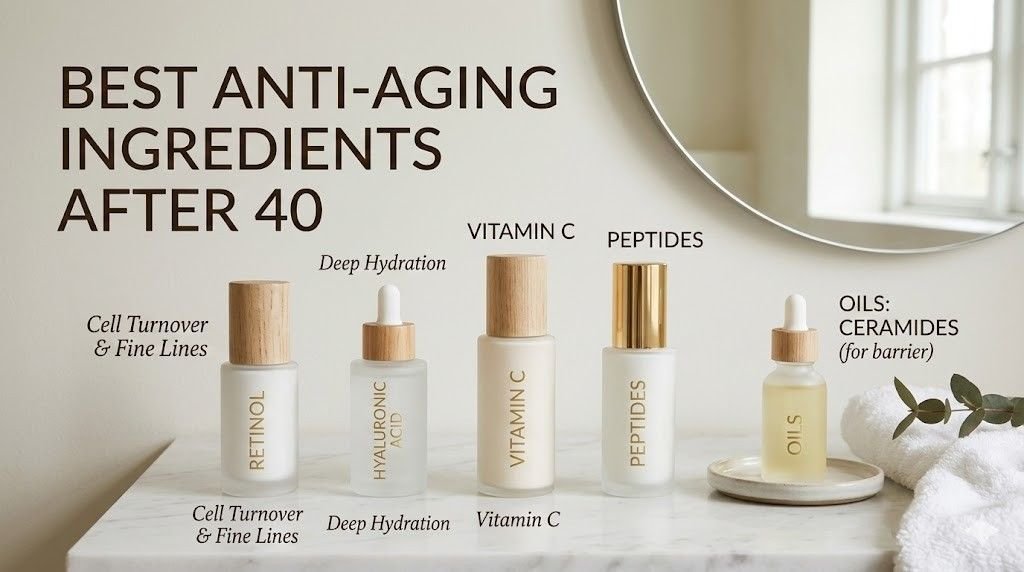
Aging is a natural part of life, but taking care of your skin after 40 can make a noticeable difference in maintaining a youthful, radiant appearance. After 40, the skin undergoes changes such as loss of elasticity, thinning, dryness, and fine lines. To combat these signs of aging, using the right anti-aging ingredients is essential.
This comprehensive guide will cover the best anti-aging ingredients after 40, how they work, how to use them, and tips for building a skincare routine that keeps your skin healthy and glowing.
Why Skin Changes After 40
After the age of 40, the skin experiences several changes due to decreased collagen production, hormonal changes, and environmental factors.
Common Skin Changes After 40:
- Loss of collagen and elastin → wrinkles and sagging
- Decreased natural oils → dryness and dullness
- Slower cell turnover → uneven texture and pigmentation
- Sun damage accumulation → age spots and hyperpigmentation
Understanding these changes helps in choosing the right ingredients and products to address them effectively.
How Anti-Aging Ingredients Work
Anti-aging ingredients target the root causes of skin aging, including collagen breakdown, free radical damage, and dryness. Some ingredients:
- Stimulate collagen production
- Hydrate and plump the skin
- Reduce inflammation
- Protect against UV damage
- Promote cell turnover
A combination of active ingredients tailored to your skin type can help maintain youthful, healthy skin after 40.
1. Retinoids (Retinol, Retinal, Retinoic Acid)
Retinoids are considered the gold standard for anti-aging.
Benefits:
- Stimulate collagen production
- Reduce fine lines and wrinkles
- Improve skin texture and firmness
- Fade age spots and pigmentation
How to Use:
- Start with a low-strength retinol (0.25–0.5%)
- Apply at night after cleansing
- Use 2–3 times a week initially, then gradually increase
- Always pair with sunscreen during the day
Note: Retinoids may cause irritation, redness, or peeling initially. Always introduce gradually.
2. Hyaluronic Acid
Hyaluronic acid is a hydrating powerhouse that attracts and retains water in the skin.
Benefits:
- Plumps and smooths fine lines
- Improves skin elasticity
- Provides deep hydration
- Helps skin look youthful and radiant
How to Use:
- Apply on slightly damp skin
- Can be layered under moisturizer
- Suitable for all skin types
Tip: Pair hyaluronic acid with antioxidants or peptides for enhanced anti-aging effects.
3. Vitamin C (Ascorbic Acid)
Vitamin C is a powerful antioxidant that combats free radicals from sun exposure and pollution.
Benefits:
- Brightens dull skin
- Reduces dark spots and hyperpigmentation
- Promotes collagen synthesis
- Protects against oxidative stress
How to Use:
- Apply in the morning under sunscreen
- Look for stable forms like magnesium ascorbyl phosphate or L-ascorbic acid
- Start with 10–15% concentration and gradually increase
4. Peptides
Peptides are small chains of amino acids that signal the skin to produce collagen and elastin.
Benefits:
- Firm and plump skin
- Reduce the appearance of wrinkles
- Improve skin barrier function
- Support skin repair
How to Use:
- Can be applied morning or night
- Look for serums or creams with matrixyl, copper peptides, or palmitoyl peptides
- Often used alongside hyaluronic acid or antioxidants
5. Niacinamide (Vitamin B3)
Niacinamide is a versatile, anti-inflammatory ingredient suitable for all skin types.
Benefits:
- Reduces fine lines and wrinkles
- Minimizes pores and improves texture
- Strengthens the skin barrier
- Fades hyperpigmentation and age spots
How to Use:
- Apply in serums or moisturizers
- Can be used morning and night
- Combine with antioxidants like vitamin C for better results
6. Alpha Hydroxy Acids (AHAs)
AHAs are chemical exfoliants derived from fruit or milk acids (like glycolic or lactic acid).
Benefits:
- Promote cell turnover
- Smooth rough texture
- Reduce fine lines and pigmentation
- Brighten dull, aging skin
How to Use:
- Start with low concentrations (5–10%)
- Use 1–2 times per week if new to AHAs
- Apply at night and always follow with sunscreen
7. Antioxidants (Vitamin E, Green Tea, Ferulic Acid)
Antioxidants neutralize free radicals that accelerate aging.
Benefits:
- Prevent oxidative damage
- Reduce inflammation
- Support collagen health
- Improve skin tone and texture
How to Use:
- Apply in serums or moisturizers
- Often combined with vitamin C for maximum protection
8. Ceramides
Ceramides are lipids that help restore and maintain the skin barrier.
Benefits:
- Lock in moisture
- Reduce dryness and flakiness
- Protect against environmental stress
- Improve skin elasticity
How to Use:
- Look for creams or moisturizers containing ceramides
- Can be used morning and night
- Especially helpful for dry or mature skin
9. Sunscreen
While not an ingredient per se, sunscreen is the most important anti-aging product.
Benefits:
- Prevents UV damage and photoaging
- Reduces wrinkles and age spots
- Protects against skin cancer
- Keeps skin youthful longer
How to Use:
- Apply daily, even on cloudy days
- Use broad-spectrum SPF 30 or higher
- Reapply every 2 hours when outdoors
10. Growth Factors and Stem Cell Extracts
Growth factors and plant stem cells are advanced ingredients that stimulate skin regeneration.
Benefits:
- Improve elasticity and firmness
- Reduce fine lines
- Support collagen and elastin production
- Promote skin repair and healing
How to Use:
- Typically found in serums or creams
- Use nightly for best results
Building a Skincare Routine After 40
As we age, our skin undergoes several natural changes. After the age of 40, collagen production slows down, skin loses elasticity, and moisture levels decrease, which can lead to wrinkles, dryness, and uneven texture. While aging is natural and beautiful, adopting a well-structured skincare routine can help maintain healthy, radiant, and youthful-looking skin.
Building an effective skincare routine after 40 does not require dozens of products. Instead, it focuses on hydration, protection, and targeted treatments that address the most common skin concerns during this stage of life.
In this guide, you’ll learn how to create a simple and effective skincare routine that supports your skin’s needs after 40.A well-rounded anti-aging routine should combine hydration, protection, and targeted treatments.
Morning Routine:
- Gentle cleanser
- Antioxidant serum (Vitamin C, E, or green tea)
- Moisturizer with ceramides
- Sunscreen SPF 30+
Night Routine:
- Gentle cleanser
- Retinol or peptide serum
- Moisturizer with hyaluronic acid and ceramides
- Optional: growth factor serum 1–2 times per week
Weekly Treatments:
- 1–2 times per week: AHA exfoliation or hydrating masks
Lifestyle Tips to Complement Anti-Aging Skincare
- Stay hydrated – drink plenty of water
- Eat a balanced diet rich in antioxidants and omega-3s
- Get enough sleep – 7–8 hours a night
- Exercise regularly – improves circulation and skin health
- Manage stress – chronic stress accelerates aging
- Avoid smoking and excessive alcohol
Anti-aging skincare is not just about using expensive creams or trendy ingredients. True skin health comes from a combination of effective skincare and healthy lifestyle habits.
By focusing on:
- Quality sleep
- Hydration
- Balanced nutrition
- Sun protection
- Stress management
- Regular exercise
you can enhance the benefits of your skincare routine and maintain healthy, youthful, and radiant skin for years to come.
Taking care of your skin from both inside and outside is the most powerful strategy for slowing the aging process naturally.
Common Mistakes to Avoid After 40
- Skipping sunscreen
- Using harsh products that irritate aging skin
- Over-exfoliating
- Neglecting hydration
- Expecting instant results – anti-aging skincare works gradually
Final Thoughts
After 40, skincare should focus on hydration, protection, and targeted anti-aging ingredients. Incorporating retinoids, hyaluronic acid, peptides, antioxidants, and sunscreen can significantly improve your skin’s texture, tone, and elasticity.
Consistency is key. By following a well-planned routine and supporting your skin with a healthy lifestyle, you can maintain youthful, radiant skin for years to come.
Frequently Asked Questions (FAQs)
1. What are the best anti-aging ingredients after 40?
The most effective ingredients include retinoids, hyaluronic acid, peptides, vitamin C, niacinamide, antioxidants, ceramides, and growth factors. These ingredients help improve elasticity, reduce wrinkles, and maintain skin hydration.
2. Can anti-aging products reverse wrinkles?
Anti-aging products cannot completely reverse aging, but they can reduce fine lines, improve skin texture, boost collagen, and make skin appear firmer and more youthful over time.
3. How often should I use retinol after 40?
Start with 2–3 times per week at night and gradually increase frequency as your skin adjusts. Always apply sunscreen during the day, as retinol can make skin more sensitive to UV rays.
4. Is sunscreen really necessary even if I use anti-aging products?
Yes. Sunscreen is the most important anti-aging product because UV rays accelerate aging, cause pigmentation, and damage collagen. Daily SPF 30 or higher is essential.
5. Can I combine multiple anti-aging ingredients?
Yes, but introduce them gradually. A common combination is:
- Morning: Vitamin C + moisturizer + sunscreen
- Night: Retinol + moisturizer + peptides or growth factor serum
Hydrating ingredients like hyaluronic acid can be layered as needed.
6. How long does it take to see results from anti-aging skincare?
Visible improvements usually appear in 4–8 weeks, with continued benefits over several months when products are used consistently.
7. Can anti-aging ingredients help with age spots and hyperpigmentation?
Yes. Ingredients like vitamin C, niacinamide, retinoids, and AHAs help brighten skin, fade pigmentation, and improve overall tone.
8. Are peptides and growth factors safe for mature skin?
Yes, peptides and growth factors are gentle and effective, promoting collagen production and skin repair without irritation.
9. Can men use anti-aging ingredients after 40?
Absolutely. Anti-aging skincare is gender-neutral. Men can benefit from retinoids, antioxidants, hyaluronic acid, and proper hydration just like women.
10. Do I need to change my skincare routine after 40?
Yes. After 40, skin changes such as loss of collagen, dryness, and slower cell turnover require more targeted anti-aging ingredients and hydration-focused products.
Also read :
Minimalist Skincare Routine: A Simple Approach to Healthy Skin