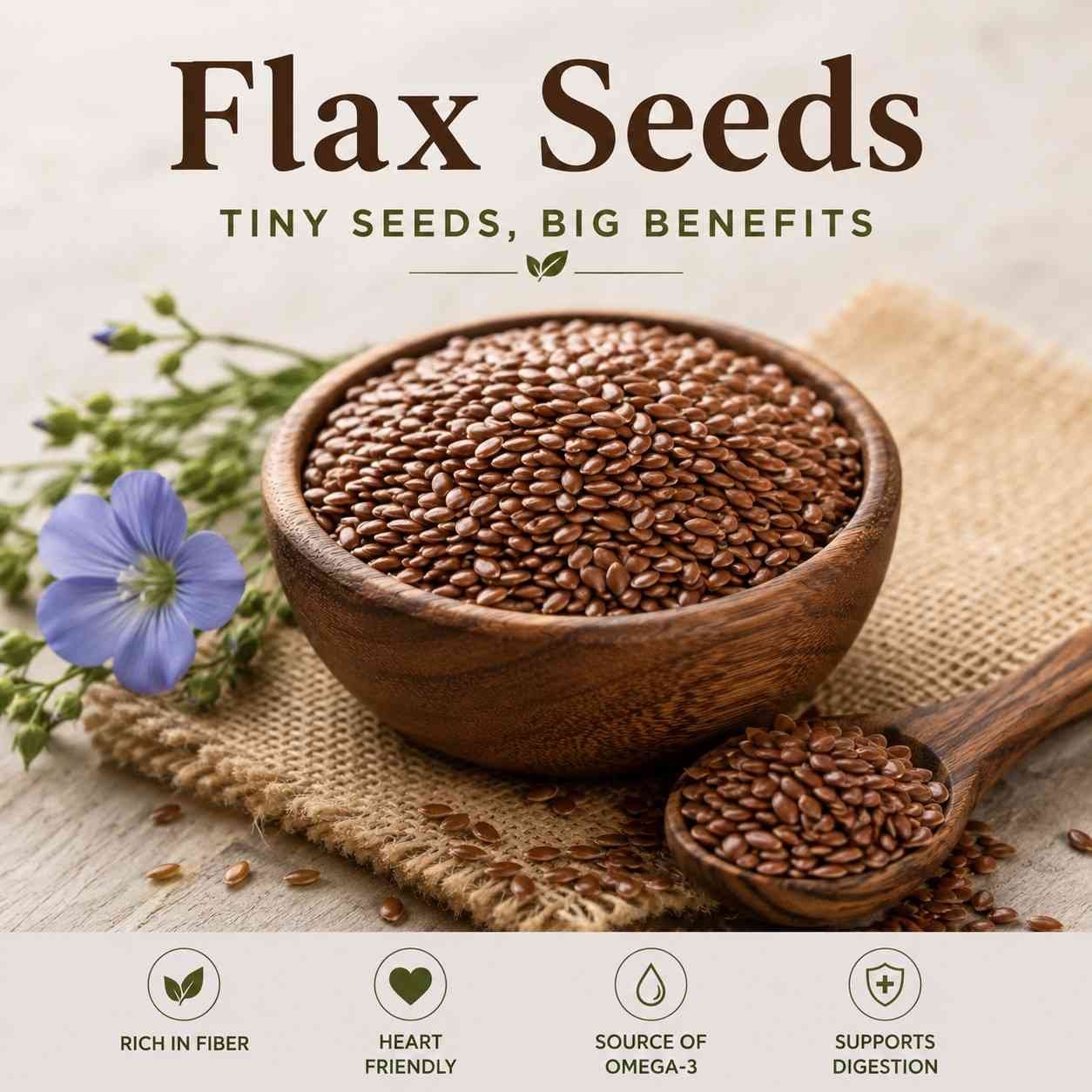
Flax seeds are among the oldest cultivated crops in the world and are widely recognized as one of the most nutrient-dense seeds available. These tiny golden or brown seeds are packed with plant-based omega-3 fatty acids, dietary fiber, protein, lignans, vitamins, and essential minerals that support overall health.
Whether sprinkled over oatmeal, blended into smoothies, mixed into yogurt, or used in baking, flax seeds are a versatile ingredient that can easily become part of a healthy diet. Their impressive nutritional profile has made them popular among people looking to improve heart health, digestive wellness, weight management, and overall nutrition.
If you’re exploring healthy seeds, be sure to read our guides on Pumpkin Seeds, Watermelon Seeds, and Lotus Seeds (Makhana) to discover more nutrient-rich foods that complement this Super Seeds in a balanced diet.
According to the Harvard T.H. Chan School of Public Health – The Nutrition Source, consuming a variety of plant-based foods, including seeds, whole grains, fruits, and vegetables, is an important part of a healthy eating pattern.
What Are Flax Seeds?
Flax seeds are the edible seeds of the flax plant (Linum usitatissimum). They have been cultivated for thousands of years and are prized for their rich nutritional value.
These small, shiny seeds are available in two common varieties:
- Brown flax seeds
- Golden flax seeds
Both varieties provide similar nutritional benefits and can be enjoyed in many recipes.
Brown vs. Golden Flax Seeds
| Feature | Brown Flax Seeds | Golden Flax Seeds |
|---|---|---|
| Color | Dark Brown | Golden Yellow |
| Flavor | Nutty | Mild |
| Fiber | High | High |
| Omega-3 | Excellent | Excellent |
| Protein | Similar | Similar |
| Best Uses | Baking, Smoothies | Salads, Yogurt |
Both types are highly nutritious, and the choice usually comes down to personal preference.
Whole Flax Seeds vs. Ground Flax Seeds
Ground this Super Seeds are generally easier for the body to digest than whole seeds.
| Whole Flax Seeds | Ground Flax Seeds |
|---|---|
| Longer shelf life | Easier to digest |
| Crunchy texture | Smooth texture |
| May pass through the digestive tract undigested | Better nutrient absorption |
| Good for baking | Great for smoothies and oatmeal |
Many nutrition experts recommend consuming ground flaxseed to improve nutrient availability.
Flax Seeds Nutrition Facts
Serving Size: 100 grams
| Nutrient | Amount |
|---|---|
| Calories | 534 kcal |
| Protein | 18.3 g |
| Fat | 42.2 g |
| Omega-3 (ALA) | 22.8 g |
| Carbohydrates | 28.9 g |
| Dietary Fiber | 27.3 g |
| Calcium | 255 mg |
| Magnesium | 392 mg |
| Potassium | 813 mg |
| Iron | 5.7 mg |
| Zinc | 4.3 mg |
Nutrition values are approximate and based on USDA FoodData Central.
Why Flax Seeds Are Considered a Superfood
Flax seeds are rich in several nutrients that contribute to overall health.
They provide:
- Plant-based omega-3 fatty acids (ALA)
- Dietary fiber
- Plant protein
- Lignans
- Magnesium
- Potassium
- Iron
- Zinc
- Antioxidants
They are also naturally:
- Gluten-free
- Cholesterol-free
- Low in sugar
- Suitable for vegan diets
1. Rich in Plant-Based Omega-3 Fatty Acids
Flax seeds are one of the richest plant sources of alpha-linolenic acid (ALA), an omega-3 fatty acid.
Omega-3 fats support:
- Heart health
- Brain health
- Normal cell function
Including ALA-rich foods as part of a balanced diet contributes to overall wellness.
2. Excellent Source of Dietary Fiber
Flax seeds contain both soluble and insoluble fiber.
Fiber helps:
- Promote regular bowel movements
- Support healthy gut bacteria
- Increase feelings of fullness
- Support healthy cholesterol levels
According to the Mayo Clinic, adequate fiber intake plays an important role in digestive health.
3. Supports Digestive Health
The combination of soluble and insoluble fiber helps maintain a healthy digestive system.
Regular fiber intake may:
- Improve bowel regularity
- Support beneficial gut bacteria
- Promote digestive comfort
For even better digestive health, pair this Super Seeds with our 15 Best Morning Drinks for Gut Health.
4. Supports Heart Health
Flax seeds provide omega-3 fatty acids, fiber, and lignans that are associated with cardiovascular health.
According to the American Heart Association, replacing saturated fats with healthier plant-based foods supports heart health.
5. May Help Maintain Healthy Blood Pressure
Potassium and omega-3 fatty acids contribute to normal cardiovascular function.
Including this Super Seeds as part of a balanced diet may support healthy blood pressure alongside other heart-healthy lifestyle habits.
6. Rich in Lignans
Flax seeds are one of the richest dietary sources of lignans.
Lignans are plant compounds with antioxidant properties that help protect cells from oxidative stress.
7. Supports Healthy Cholesterol Levels
The soluble fiber in this Super Seeds may help support healthy cholesterol levels when consumed as part of a balanced diet.
Replacing processed snacks with flax seed-based recipes can improve overall diet quality.
8. Good Source of Plant Protein
Flax seeds provide plant-based protein that helps support muscle maintenance and overall nutrition.
They are especially useful in vegetarian and vegan diets.
9. Supports Healthy Skin
Healthy fats, antioxidants, and vitamins found in this Super Seeds contribute to maintaining healthy skin.
A balanced diet rich in nutrient-dense foods supports skin health from within.
10. May Promote Healthy Hair
Flax seeds contain omega-3 fatty acids, protein, zinc, and antioxidants that contribute to healthy hair.
Nutrition plays an important role in maintaining healthy hair. For more natural hair care tips, read our guide on Horsetail for Hair.
11. Supports Immune Function
Flax seeds contain antioxidants and essential nutrients that contribute to normal immune function.
Although no single food can prevent illness, a healthy eating pattern rich in nutrient-dense foods supports overall immune health.
12. Supports Healthy Weight Management
Flax seeds can be a valuable addition to a weight-management plan because they are rich in fiber and healthy fats.
Why Flax Seeds May Help
- High in dietary fiber
- Helps increase feelings of fullness
- Supports healthy digestion
- May reduce cravings between meals
- Easy to add to healthy meals
Enjoy flax seeds in moderation as part of a calorie-balanced diet. Pairing this Super Seeds with a Sugar-Free Diet can help reduce your intake of added sugars while increasing fiber and healthy fats, making it easier to maintain a balanced eating pattern.
13. Supports Healthy Blood Sugar Management
The soluble fiber in this Super Seeds slows the digestion of carbohydrates, which may help support healthy blood sugar levels when included in a balanced meal.
People with diabetes should:
- Choose plain flax seeds.
- Add them to high-fiber meals.
- Follow portion recommendations.
- Consult a healthcare professional for personalized advice.
14. Supports Healthy Gut Bacteria
Flax seeds contain prebiotic fiber that helps nourish beneficial gut bacteria.
A healthy gut microbiome contributes to:
- Better digestion
- Improved nutrient absorption
- Healthy immune function
- Overall digestive wellness
15. Rich in Antioxidants
Flax seeds contain lignans and other antioxidant compounds that help protect cells from oxidative stress.
Research published in the journal Nutrients highlights the role of antioxidant-rich foods in supporting overall health.
16. Supports Healthy Aging
The antioxidants found in this Super Seeds help protect the body’s cells from free radical damage.
Eating a diet rich in fruits, vegetables, nuts, and seeds may support healthy aging.
17. Supports Brain Health
Alpha-linolenic acid (ALA), the primary omega-3 fat in this Super Seeds, contributes to normal brain function as part of a healthy diet.
18. Supports Bone Health
Flax seeds provide several minerals involved in maintaining healthy bones, including:
- Magnesium
- Phosphorus
- Calcium
The National Institutes of Health (NIH) explains that these minerals play important roles in bone health.
19. Convenient Everyday Superfood
Flax seeds are simple to include in daily meals.
Try adding them to:
- Oatmeal
- Smoothies
- Yogurt
- Salads
- Soups
- Homemade bread
- Muffins
- Energy balls
20. Naturally Gluten-Free
Plain this Super Seeds are naturally gluten-free, making them suitable for people following a gluten-free eating pattern.
Always check product labels for possible cross-contamination if you have celiac disease.
21. Supports Plant-Based Diets
Flax seeds are an excellent addition to vegetarian and vegan diets because they provide plant protein, healthy fats, and essential minerals.
They are also a staple ingredient in a Raw Vegan Diet, where ground this Super Seeds are commonly used in smoothies, raw crackers, energy bites, and desserts because they provide plant-based omega-3 fatty acids, fiber, and protein.
22. May Help Improve Meal Nutrition
Adding a tablespoon of ground flaxseed to meals can increase your intake of:
- Fiber
- Omega-3 fats
- Protein
- Magnesium
Without significantly changing the flavor of your food.
23. Easy Egg Replacement for Baking
Ground flaxseed mixed with water creates a “flax egg.”
Basic Flax Egg Recipe
- 1 tablespoon ground flaxseed
- 3 tablespoons water
Mix and let stand for 5–10 minutes before using in baking recipes.
24. Supports Overall Healthy Eating
Replacing processed snacks with nutrient-dense foods like This Super Seeds may improve overall dietary quality.
25. Easy to Store and Use
Flax seeds have a long shelf life when stored properly and can be used in countless recipes throughout the week.
Flax Seeds for Weight Loss
Flax seeds may support weight management because they contain:
- Dietary fiber
- Healthy fats
- Plant protein
Tips
- Sprinkle over oatmeal.
- Blend into smoothies.
- Add to yogurt.
- Mix into homemade energy bites.
Are Flax Seeds Good for Diabetes?
This Super Seeds can be part of a diabetes-friendly eating plan because they provide fiber and healthy fats.
The American Diabetes Association recommends emphasizing fiber-rich foods as part of healthy eating.
Are Flax Seeds Good During Pregnancy?
Flax seeds provide fiber, omega-3 fatty acids, and essential minerals.
However, pregnant women should speak with their healthcare provider before consuming large amounts or taking flaxseed supplements.
Best Time to Eat Flax Seeds
This Super Seeds can be enjoyed at any time of the day.
Morning
Mix into oatmeal or smoothies.
Breakfast
Add to yogurt or cereal.
Before Exercise
Blend into a smoothie.
Evening
Sprinkle over soup or salad.
How Much Flax Seed Should You Eat Per Day?
For most healthy adults:
1–2 tablespoons (10–20 grams) of ground flaxseed daily is a commonly recommended amount.
Increase intake gradually and drink plenty of water to help your digestive system adjust.
Healthy Ways to Eat Flax Seeds
Enjoy this Super Seeds in:
- Smoothies
- Yogurt
- Oatmeal
- Overnight oats
- Pancakes
- Muffins
- Bread
- Salads
- Soups
- Homemade granola
Simple Flaxseed Smoothie Recipe
Ingredients
- 1 banana
- 1 cup milk or plant-based milk
- 1 tablespoon ground flaxseed
- ½ cup berries
- Ice cubes (optional)
Instructions
- Add all ingredients to a blender.
- Blend until smooth.
- Serve immediately.
Possible Side Effects
Eating excessive amounts of this Super Seeds may cause:
- Bloating
- Gas
- Digestive discomfort
- Loose stools if intake increases too quickly
People taking medications or who have certain medical conditions should consult a healthcare professional before making significant dietary changes.
How to Buy Quality Flax Seeds
Choose this Super Seeds that are:
- Fresh-smelling
- Uniform in color
- Free from moisture
- Sold in airtight packaging
Ground flaxseed should be refrigerated after opening.
How to Store Flax Seeds
- Store whole flax seeds in an airtight container.
- Keep them in a cool, dry place.
- Refrigerate or freeze ground flaxseed to maintain freshness.
FAQs
Are flax seeds healthy?
Yes. this Super Seeds are rich in omega-3 fatty acids, dietary fiber, protein, lignans, and essential minerals. They can support heart health, digestive wellness, and overall nutrition when eaten as part of a balanced diet.
Is it better to eat whole or ground flax seeds?
Ground this Super Seeds are generally easier to digest and may allow your body to absorb more nutrients than whole flax seeds.
Can I eat flax seeds every day?
Yes. Most healthy adults can safely enjoy 1–2 tablespoons of ground flaxseed daily as part of a balanced eating pattern.
Are flax seeds good for weight loss?
This Super Seedsmay support weight management because their fiber and healthy fat content can help increase feelings of fullness. They work best alongside a healthy diet and regular physical activity.
Are flax seeds safe for people with diabetes?
Yes, many people with diabetes can include this Super Seeds in moderation as part of a balanced meal plan. Consult your healthcare provider for personalized advice.
Are flax seeds gluten-free?
Yes. Plain this Super Seeds are naturally gluten-free. Check packaged products for possible cross-contamination if you have celiac disease.
Can flax seeds replace eggs in baking?
Yes. A flax egg made from ground flaxseed and water is a popular vegan substitute for eggs in many baking recipes.
Conclusion
Flax seeds are a nutrient-dense superfood packed with omega-3 fatty acids, dietary fiber, protein, lignans, vitamins, and minerals. Adding them to smoothies, yogurt, oatmeal, or baked goods is an easy way to boost your daily nutrition. For even greater health benefits, pair flax seeds with Walnut Benefits, Pistachio Nutrition Facts .Including a variety of nutrient-rich seeds and dry fruits in your diet can help support long-term health and overall well-being.
About the Author
Hitasha is a health and wellness writer at Trendyopedia who creates evidence-based content on nutrition, healthy eating, dry fruits, nuts, seeds, superfoods, and natural wellness. Her goal is to share clear, reliable information that helps readers make healthier choices.
Disclaimer
This article is for informational purposes only and is not a substitute for medical advice. Please consult a qualified healthcare professional before making major dietary changes.