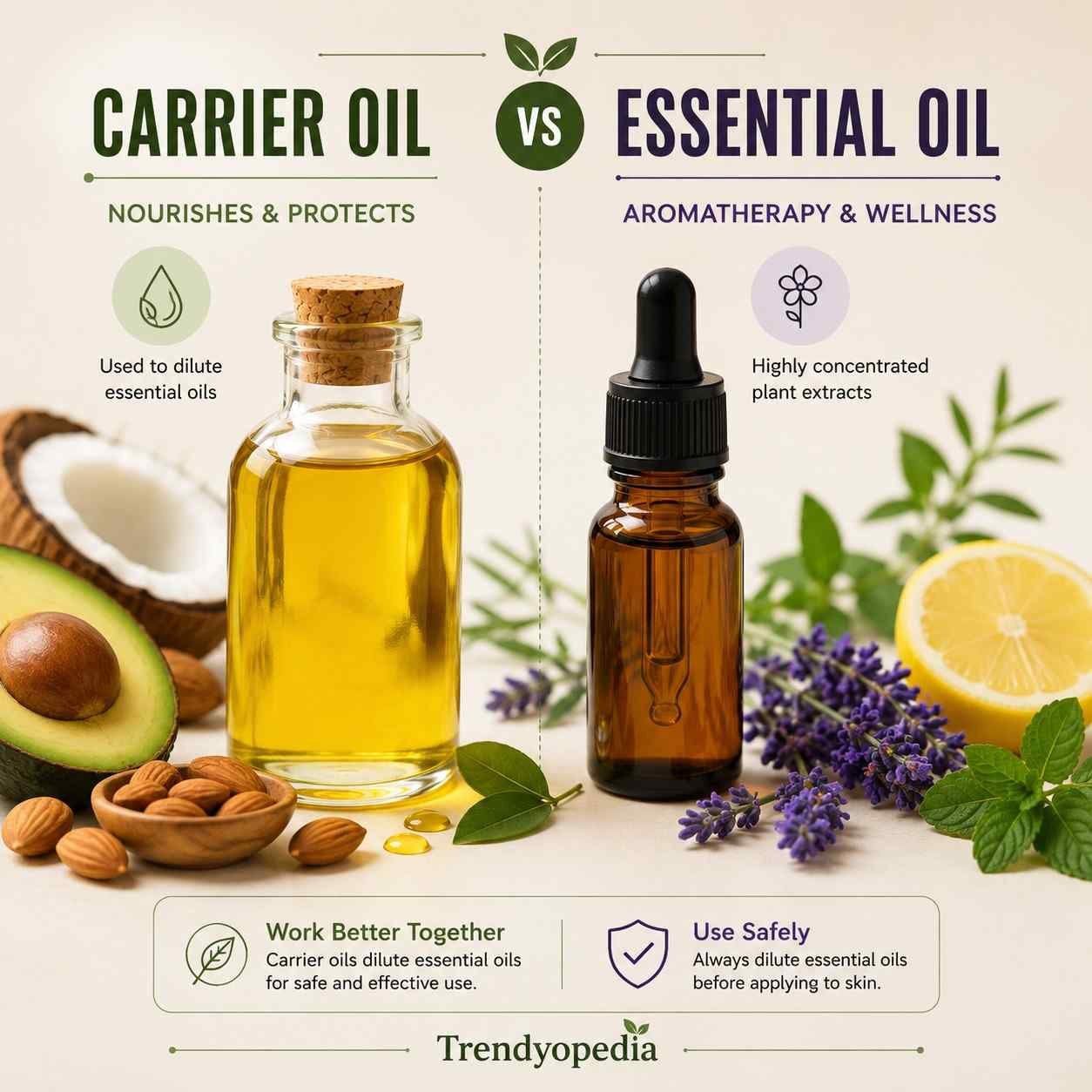
Carrier Oil vs Essential Oil is a common source of confusion, especially for people interested in aromatherapy, skincare, massage, and natural beauty.
Although both come from plants, they are very different products. Carrier oils are fatty plant oils commonly used to dilute essential oils before topical application. Essential oils are highly concentrated aromatic extracts containing volatile plant compounds.
Popular carrier oils include Almond Oil, Jojoba Oil, Coconut Oil, Olive Oil, Avocado Oil, and Rosehip Oil.
In this guide, we’ll explain the difference between carrier oils and essential oils, how they are used together, safety considerations, and how to choose the right oil for your routine.
What Is a Carrier Oil?
A carrier oil is generally a plant-derived fatty oil used to dilute essential oils before applying them to the skin.
Carrier oils can also be used on their own as moisturizing or conditioning oils.
Popular Carrier Oils
- Jojoba Oil
- Sweet Almond Oil
- Coconut Oil
- Olive Oil
- Avocado Oil
- Grapeseed Oil
- Rosehip Oil
- Flaxseed Oil
- Sunflower Oil
- Argan Oil
What Is an Essential Oil?
Essential oils are concentrated aromatic extracts obtained from different parts of plants, including flowers, leaves, bark, roots, seeds, or peels.
Examples include:
- Lavender Oil
- Tea Tree Oil
- Peppermint Oil
- Eucalyptus Oil
- Lemon Oil
- Rosemary Oil
- Ginger Oil
Essential oils are highly concentrated and are not the same as ordinary plant oils.
Carrier Oil vs Essential Oil: Key Differences
| Feature | Carrier Oil | Essential Oil |
|---|---|---|
| Concentration | Generally less concentrated | Highly concentrated |
| Main purpose | Dilution, moisturizing, massage | Aromatic and topical applications |
| Texture | Oily | Usually lighter and volatile |
| Evaporates quickly | No | Yes |
| Strong aroma | Usually mild | Often strong |
| Common use | Skin, hair, massage | Aromatherapy and diluted topical use |
| Used alone on skin | Many can be | Usually requires appropriate dilution |
Carrier Oil vs Essential Oil The biggest difference is concentration and purpose.
Can You Mix Carrier Oil and Essential Oil?
Yes. Carrier oils are commonly used to dilute essential oils before topical application.
For example:
Jojoba Oil + Lavender Essential Oil
or
Sweet Almond Oil + a suitable essential oil
The amount of essential oil should be appropriate for the specific oil, intended use, body area, and user.
Do not assume that every essential oil has the same dilution recommendation.
Why Do Essential Oils Need Dilution?
Essential oils contain highly concentrated plant compounds.
Using them at excessive concentrations may increase the risk of:
- Skin irritation
- Burning
- Redness
- Allergic reactions
- Sensitization
Diluting an essential oil in an appropriate carrier oil reduces the concentration applied to the skin.
However, dilution does not guarantee that a reaction will not occur.
How to Dilute Essential Oils
Carrier Oil vs Essential Oil: A simple way to think about dilution is:
Essential Oil + Carrier Oil = Diluted Topical Blend
For general adult topical use, lower concentrations are often preferred, particularly for the face or sensitive areas.
A 1% dilution means approximately 1 part essential oil in 99 parts carrier oil.
A 2% dilution means approximately 2 parts essential oil in 98 parts carrier oil.
The appropriate dilution can vary depending on the essential oil and its intended use.
Always follow reliable safety guidance for the particular essential oil.
Best Carrier Oils for Essential Oils
Jojoba Oil
Carrier Oil vs Essential Oil: Jojoba Oil has a lightweight feel and is commonly used in facial products, massage blends, and hair-care products.
Sweet Almond Oil
Sweet Almond Oil has a smooth texture and is commonly used for massage, body care, and hair care.
Coconut Oil
Coconut Oil is another popular option and can be used for body and hair-care applications.
Avocado Oil
Avocado Oil has a richer texture and is commonly used in moisturizing skincare and hair-care formulations.
Rosehip Oil
Rosehip Oil is popular in facial skincare and can be used as a carrier oil in appropriate formulations.
Carrier Oil vs Essential Oil for Skin
Carrier Oil vs Essential Oil: Carrier oils are generally used to moisturize and condition the skin.
Essential oils are more concentrated and should be selected and diluted carefully for topical use.
For a simple skincare routine, you don’t necessarily need an essential oil. A plain carrier oil may be enough if your goal is simply to moisturize dry skin.
Always patch-test a new product before applying it more widely.
Carrier Oil vs Essential Oil for Hair
Carrier Oil vs Essential Oil: Carrier oils are commonly used in hair-oiling routines.
Popular choices include:
- Coconut Oil
- Almond Oil
- Jojoba Oil
- Avocado Oil
- Olive Oil
Essential oils may be added to carrier oils in carefully diluted amounts, but they should not automatically be considered treatments for hair loss or scalp disease.
Can Essential Oils Be Used Directly on Skin?
Carrier Oil vs Essential Oil: Using an essential oil directly on the skin can increase the risk of irritation and sensitization.
For this reason, appropriate dilution is generally recommended for topical applications.
Some essential oils also have specific safety considerations, including photosensitivity or restrictions for certain populations.
Always research the specific essential oil before topical use.
Are Carrier Oils Safe?
Carrier Oil vs Essential Oil: Many carrier oils are commonly used in cosmetic products, but individual reactions are possible.
Before using one:
- Check the ingredient label.
- Patch-test the product.
- Avoid damaged or irritated skin.
- Keep oils away from the eyes.
- Stop if irritation occurs.
- Store oils properly.
- Check for potential allergens.
People with nut or seed allergies should pay particular attention to the source of the carrier oil.
Are Essential Oils Safe?
Carrier Oil vs Essential Oil: Essential oils are natural products, but natural does not automatically mean risk-free.
Potential concerns include:
- Skin irritation
- Allergic reactions
- Sensitization
- Eye irritation
- Photosensitivity with certain oils
- Interactions with certain medications or conditions
Children, pregnant people, older adults, and people with medical conditions may require additional precautions.
Carrier Oil vs Essential Oil: Which One Should You Choose?
Carrier Oil vs Essential Oil: It depends on your purpose.
For Moisturizing
Choose a suitable carrier oil.
For Essential-Oil Dilution
Choose a suitable carrier oil + properly diluted essential oil.
For Massage
Carrier oils such as Almond Oil, Jojoba Oil, or Coconut Oil can provide a smooth application.
For Aromatherapy
Essential oils are commonly used for their aroma, often through diffusion or appropriately diluted topical applications.
For Hair Conditioning
A carrier oil may be sufficient without adding an essential oil.
Common Mistakes to Avoid
Using Too Much Essential Oil
More concentrated does not necessarily mean better.
Confusing Essential Oil With Carrier Oil
They are chemically and functionally different.
Applying Essential Oils Undiluted
This can increase the risk of skin reactions.
Ignoring Allergies
Always check ingredients and consider your personal allergy history.
Making Medical Claims
Neither carrier oils nor essential oils should be presented as guaranteed cures for medical conditions.
FAQs
Is carrier oil the same as essential oil?
No. Carrier oils are generally fatty plant oils used for dilution and moisturizing, while essential oils are concentrated aromatic plant extracts.
Can I mix carrier oil with essential oil?
Yes. Carrier oils are commonly used to dilute essential oils before appropriate topical application.
Which is better for skin, carrier oil or essential oil?
If your main goal is moisturizing, a carrier oil may be sufficient. Essential oils are optional and require careful selection and dilution.
Can carrier oils be used alone?
Many carrier oils can be used alone as part of a skincare, hair-care, or massage routine.
Can I use essential oil directly on my face?
Undiluted essential oils may irritate facial skin. If used topically, choose an appropriate oil and dilution for facial application.
Which carrier oil is best?
There is no single best carrier oil. Jojoba, Almond, Coconut, Avocado, Olive, and Rosehip oils all have different characteristics.
Do carrier oils make hair grow?
Carrier oils can condition hair and improve its feel, but they should not be presented as proven treatments for hair growth.
Can people with sensitive skin use essential oils?
They may need extra caution. Patch-testing and appropriate dilution are important, and some people may still experience irritation or allergy.
Conclusion
Carrier Oil vs Essential Oil: Carrier Oils and Essential Oils are not the same, but they can work together in appropriate topical formulations. Carrier oils such as Jojoba, Almond, Coconut, Avocado, and Rosehip Oil are commonly used to dilute essential oils and can also be used independently for skincare, hair care, and massage.
Essential oils are highly concentrated, so appropriate dilution and safety precautions are important. Always choose products carefully, patch-test new blends, and avoid treating medical conditions with oils without professional guidance.
For more natural oil guides, explore our Carrier Oil, Flaxseed Oil, Pomegranate Seed Oil, Onion Oil. articles on Trendyopedia.
Author
Hitasha is a beauty, nutrition, and wellness writer at Trendyopedia, creating reader-friendly, research-informed content about natural oils, skincare, hair care, nutrition, and healthy lifestyle topics.
Disclaimer
This article is for informational purposes only and is not medical advice. Essential oils can cause irritation, allergic reactions, or other adverse effects. Always follow appropriate safety guidance and consult a qualified healthcare professional when necessary.