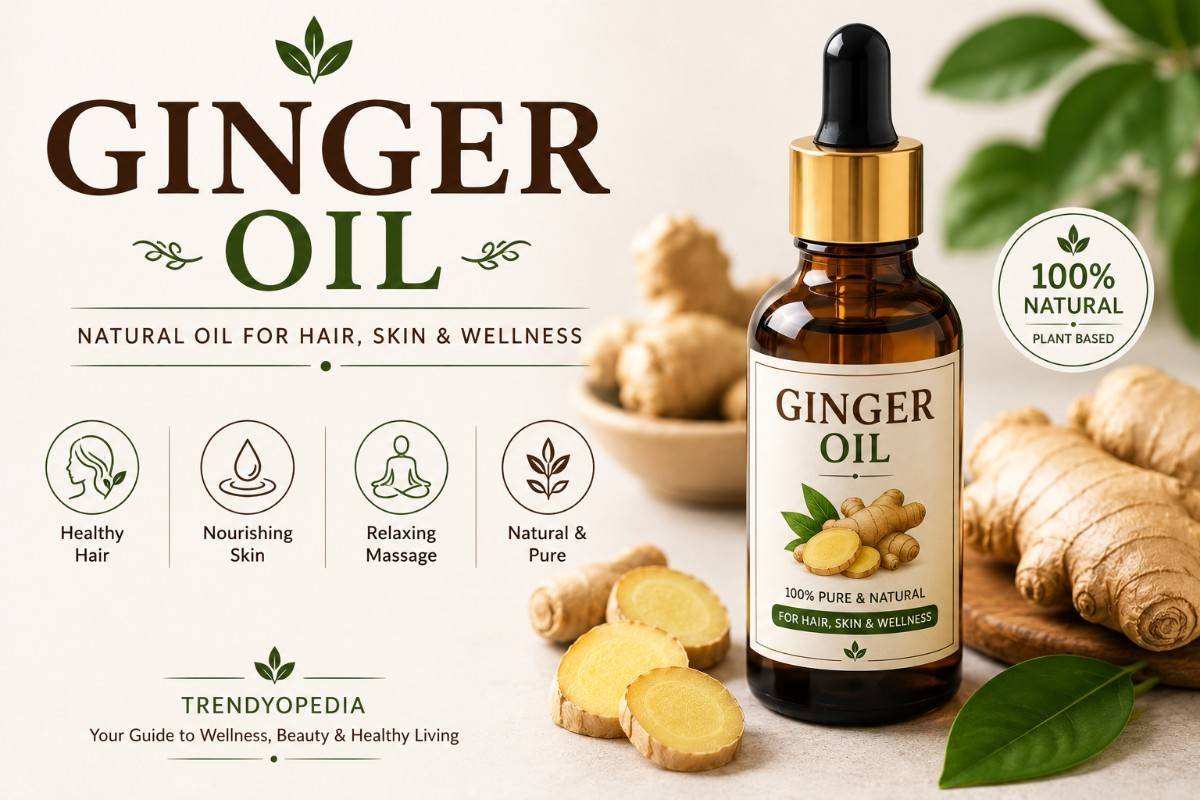
Ginger Oil is a natural plant oil made from the rhizome (root) of the ginger plant (Zingiber officinale). Known for its warm, spicy aroma and traditional use in wellness practices, Ginger Oil is commonly used in massage, skincare, hair care, and aromatherapy.
Depending on how it is produced, Ginger Oil may refer to essential oil obtained through steam distillation or infused ginger oil made by soaking ginger in a carrier oil. Both forms are popular in natural beauty routines, but essential oil should always be diluted before applying it to the skin.
Ginger contains naturally occurring compounds such as gingerol, shogaol, and zingiberene, which have been studied for their antioxidant and anti-inflammatory properties. While many traditional uses exist, more human research is needed to confirm some topical benefits.
In this guide, you’ll learn about the 20 potential benefits of Ginger Oil, how to use it safely, possible side effects, and the best ways to include it in your daily self-care routine.
For more natural beauty oils, read our Olive Oil, Tea Tree Oil, Neem Oil, Onion Oil articles.
What Is Ginger Oil?
Ginger Oil is extracted from the underground stem (rhizome) of the ginger plant.
There are two common forms:
Ginger Essential Oil
- Produced through steam distillation
- Highly concentrated
- Used in aromatherapy and massage
- Must be diluted before topical use
Ginger-Infused Oil
- Made by soaking fresh or dried ginger in a carrier oil
- Less concentrated
- Suitable for hair and body massage
- Often used in DIY beauty recipes
Although Ginger, Ginger Powder, Ginger Tea, and Ginger Oil all come from the same plant, they serve different purposes. Ginger and Ginger Powder are commonly used in cooking and beverages, Ginger Tea is enjoyed as a herbal drink, while Ginger Oil is primarily used for massage, skincare, hair care, and aromatherapy.
How Is Ginger Oil Made?
Steam Distillation
High-quality Ginger Essential Oil is commonly produced through steam distillation.
Steps include:
- Harvest fresh ginger rhizomes.
- Wash and chop the ginger.
- Steam-distill the ginger to collect the essential oil.
- Filter and bottle the oil.
Infused Ginger Oil
Homemade Ginger Oil is often prepared by:
- Slicing fresh ginger.
- Combining it with a carrier oil such as coconut or olive oil.
- Heating gently over low heat.
- Straining and storing the finished oil.
Types of Ginger Oil
1. Ginger Essential Oil
- Highly concentrated
- Strong aroma
- Used for aromatherapy and massage
- Requires dilution
2. Cold-Infused Ginger Oil
- Gentle on the skin
- Popular for DIY beauty routines
3. Organic Ginger Oil
- Made from organically grown ginger
- Preferred by natural skincare enthusiasts
Key Active Compounds
Ginger Oil naturally contains several plant compounds, including:
- Gingerol
- Shogaol
- Zingiberene
- Sesquiterpenes
- Antioxidant compounds
The exact composition depends on the extraction method and product quality.
20 Potential Benefits of Ginger Oil
1. Helps Moisturize Dry Skin
When blended with carrier oils, Ginger Oil can help soften dry skin.
2. Suitable for Massage
Its warming aroma makes it a popular massage oil ingredient.
3. Supports Healthy-Looking Skin
Regular moisturizing contributes to smoother-looking skin.
4. Rich in Natural Antioxidants
Ginger contains plant compounds that have been studied for antioxidant activity.
5. Helps Condition Dry Hair
Can improve softness when used in hair oil blends.
6. Supports Scalp Care
Scalp massage with diluted Ginger Oil may help maintain scalp comfort.
7. Adds Shine to Hair
Regular conditioning can improve hair appearance.
8. Helps Reduce Frizz
May smooth dry hair strands.
9. Supports Beard Care
Can soften beard hair when mixed with a carrier oil.
10. Suitable for Aromatherapy
The spicy scent is commonly used in diffusers.
11. Complements Relaxation Routines
Frequently included in massage oils for a calming self-care experience.
12. Helps Moisturize Rough Skin
Useful for elbows, knees, and heels.
13. Supports Daily Hair Care
Can be incorporated into weekly oiling routines.
14. Helps Improve Hair Manageability
Hair may become easier to comb after conditioning.
15. Multipurpose Beauty Oil
Suitable for skin, scalp, beard, and body care when properly diluted.
16. May Leave Skin Feeling Warm
Its warming sensation is one reason it’s often used in massage products.
17. Blends Well with Other Oils
Works well with coconut, jojoba, olive, and castor oils.
18. Naturally Plant-Based
Suitable for vegan beauty routines when formulated with plant-derived ingredients.
19. Easy to Add to DIY Recipes
Commonly used in homemade massage oils and hair treatments.
20. Popular in Ayurvedic and Herbal Traditions
Ginger has been used in traditional wellness practices for centuries.
Ginger Oil for Hair
Ginger Oil is commonly added to hair care routines to help nourish and condition the hair.
Potential benefits include:
- Softening dry hair
- Improving shine
- Moisturizing the scalp
- Supporting healthy-looking hair
- Reducing frizz
Build a complete natural hair care routine by combining Ginger Oil with our Amla Oil, Hibiscus Oil, Moringa Oil, Biotin for Hair Growth guides.
Ginger Oil for the Scalp
A healthy scalp supports overall hair care.
How to Use
- Mix 2–3 drops of Ginger Essential Oil with 1 tablespoon of a carrier oil.
- Massage gently into the scalp.
- Leave on for 20–30 minutes.
- Wash with a mild shampoo.
Never apply undiluted essential oil directly to the scalp.
Ginger Oil for Skin
When diluted properly, Ginger Oil may be used in body oils and skincare blends.
Potential benefits include:
- Moisturizing dry skin
- Softening rough areas
- Supporting a healthy skin barrier
- Improving skin smoothness
Ginger Oil for Massage
Ginger Oil is often included in massage blends because of its warming aroma and pleasant scent.
Massage uses include:
- Relaxation
- Post-workout massage
- Self-care routines
- Body moisturizing
Ginger Oil is widely used in massage blends. For more body care ideas, explore our Body Oiling Routine guide and compare other massage-friendly oils like Ashwagandha Oil .
How to Use Ginger Oil
For Hair
- Mix 2–3 drops of Ginger Essential Oil with a carrier oil.
- Massage into the scalp.
- Leave on for 20–30 minutes.
- Wash with shampoo.
For Skin
- Dilute with a carrier oil before applying.
- Use after showering on slightly damp skin.
For Aromatherapy
- Add 2–3 drops to a diffuser according to the manufacturer’s instructions.
DIY Ginger Hair Oil
Ingredients
- 1 tablespoon Coconut Oil
- 1 tablespoon Castor Oil
- 2 drops Ginger Essential Oil
Directions
- Mix the oils together.
- Massage gently into the scalp.
- Leave on for 30 minutes.
- Wash with a gentle shampoo.
Ginger Oil vs Ginger Essential Oil
| Feature | Ginger-Infused Oil | Ginger Essential Oil |
|---|---|---|
| Concentration | Mild | Highly concentrated |
| Ready for Skin | Usually yes | Must be diluted |
| Best For | Hair, body, skin | Aromatherapy, massage blends |
| Aroma | Mild | Strong and spicy |
Tip: Always dilute Ginger Essential Oil with a carrier oil such as coconut, jojoba, or sweet almond oil before applying it to the skin.
Ginger Oil vs Coconut Oil
| Feature | Ginger Oil | Coconut Oil |
|---|---|---|
| Main Use | Massage, skincare, hair care | Hair care, skincare, cooking |
| Texture | Light to medium | Rich |
| Aroma | Warm and spicy | Mild |
| Best For | Massage and herbal beauty | Daily moisturizing |
Ginger Oil vs Castor Oil
| Feature | Ginger Oil | Castor Oil |
|---|---|---|
| Texture | Lightweight | Thick |
| Best For | Massage and scalp care | Hair conditioning and eyebrow care |
| Daily Use | Yes (when diluted) | Yes |
Best Time to Use Ginger Oil
Morning
- Use in a diffuser for an energizing aroma.
- Apply diluted oil before showering as a scalp treatment.
Evening (Recommended)
Many people prefer using This Oil in the evening as part of a relaxing massage routine.
Night Routine
- Dilute Ginger Essential Oil with a carrier oil.
- Massage into the scalp or body.
- Leave on for 20–30 minutes or overnight if suitable.
- Wash off if needed.
Possible Side Effects
Although This Oil is generally safe when diluted properly, it may cause:
- Skin irritation
- Redness
- Burning sensation
- Allergic reactions
- Eye irritation if accidental contact occurs
- Increased sensitivity if applied in excessive amounts
Safety Tips
- Always dilute Ginger Essential Oil before applying to the skin.
- Perform a patch test before first use.
- Avoid applying to broken or irritated skin.
- Keep away from the eyes and mucous membranes.
- Store in a cool, dark place.
- Discontinue use if irritation occurs.
- Consult a healthcare professional if you are pregnant, breastfeeding, or have a medical condition before using essential oils.
FAQs
Can Ginger Oil be applied directly to the skin?
Infused This Oil may be used directly if the product instructions allow. Ginger Essential Oil should always be diluted with a carrier oil before topical use.
Is Ginger Oil good for hair?
This Oil is commonly used to condition hair, moisturize the scalp, and improve hair softness. However, evidence supporting direct hair-growth effects is limited.
Can Ginger Oil be used every day?
Yes, when properly diluted and tolerated by your skin. Many people use it several times a week for massage or hair care.
Does Ginger Oil help dry skin?
When mixed with nourishing carrier oils, it can help moisturize and soften dry skin.
Can I leave Ginger Oil overnight?
Diluted Ginger Oil blends may be left on overnight if they suit your skin or scalp and the product instructions permit.
Conclusion
Ginger Oil is a versatile botanical oil that has been used in traditional wellness practices for massage, skincare, hair care, and aromatherapy. Whether you choose a gentle ginger-infused oil or a concentrated essential oil, using it correctly and safely can make it a valuable addition to your self-care routine. Always dilute essential oil before topical use, perform a patch test, and select a high-quality product for the best experience.
To build a complete natural wellness routine, explore our Jojoba Oil, Rosehip Oil, Pomegranate Seed Oil, Kumkumadi Oil on Trendyopedia.
Author
Author: Hitasha
Hitasha is a beauty and wellness writer at Trendyopedia, specializing in evidence-based skincare, hair care, nutrition, and natural remedies. She creates well-researched, reader-friendly content that helps people make informed beauty and wellness choices.
Disclaimer
This article is for informational purposes only and should not replace professional medical advice. Ginger Essential Oil is highly concentrated and should always be diluted before topical use. Individual results may vary depending on skin type and product formulation. If you have sensitive skin, allergies, or an existing skin condition, consult a qualified healthcare professional before use.