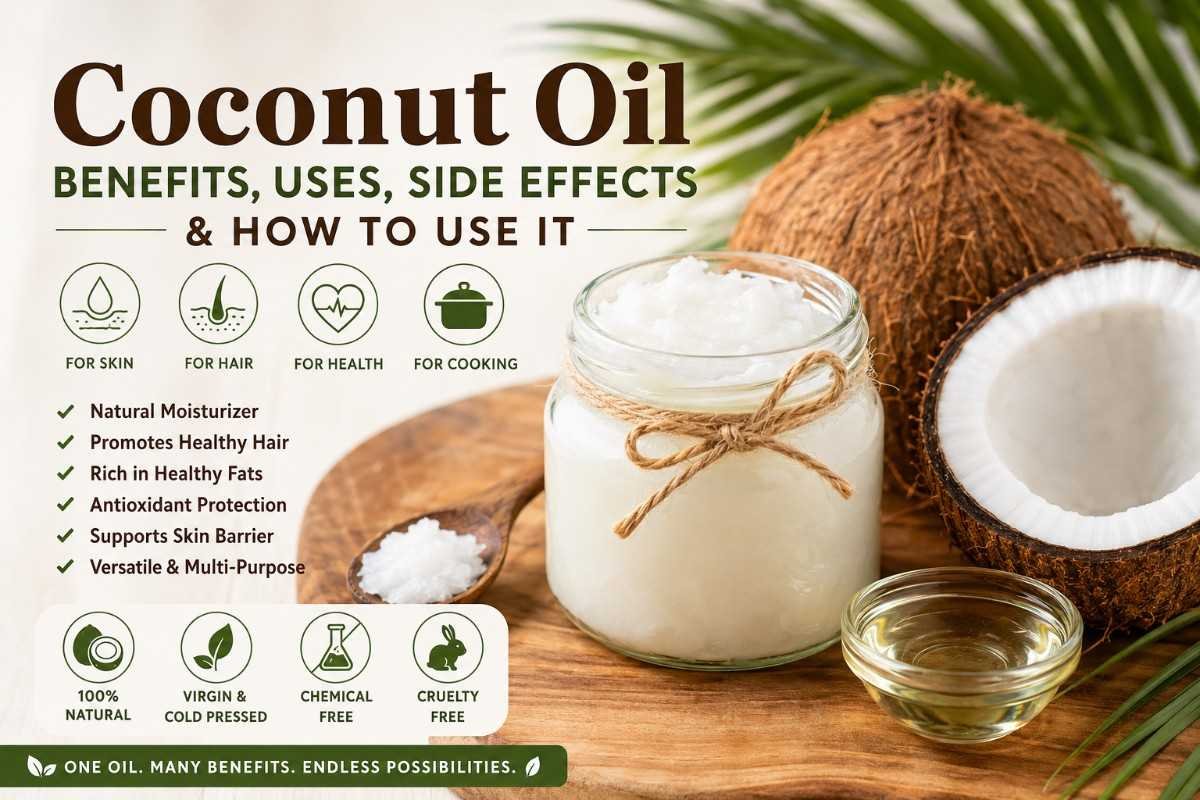
Coconut oil is one of the world’s most popular natural oils, valued for its versatility in cooking, skincare, hair care, and wellness. Extracted from the meat of mature coconuts, it contains medium-chain fatty acids (MCFAs), including lauric acid, along with vitamin E and natural antioxidants.
For centuries, coconut oil has been used in traditional practices across tropical regions. Today, it is commonly found in moisturizers, shampoos, conditioners, lip balms, massage oils, and many home remedies. While some potential health benefits continue to be studied, coconut oil is well established as an effective moisturizer and hair-conditioning ingredient.
In this guide, you’ll learn the evidence-based Coconut Oil benefits, how to use it safely, possible side effects, and practical ways to include it in your daily routine.
If you enjoy natural beauty oils, explore our guides on Neem Oil, Rosehip Oil, Moringa Oil. Each botanical oil offers unique benefits for healthy hair, glowing skin, and everyday self-care.
What Is Coconut Oil?
Coconut oil is extracted from the white flesh (kernel) of mature coconuts. It is used in food, cosmetics, personal care products, and some traditional wellness practices.
It is commonly found in:
- Hair oils
- Body oils
- Facial moisturizers
- Lip balms
- Massage oils
- Soaps
- Cooking oils
- Homemade beauty products
Types of Coconut Oil
1. Virgin Coconut Oil
- Made from fresh coconut meat
- Minimally processed
- Popular for cooking and personal care
- Mild coconut aroma
2. Refined Coconut Oil
- Processed to remove much of the coconut flavor and aroma
- Often chosen for higher-heat cooking
- Common in cosmetic products
3. Cold-Pressed Coconut Oil
- Extracted without high heat
- Popular in skincare and hair care
- Retains more natural aroma
4. Fractionated Coconut Oil
- Liquid at room temperature
- Frequently used in massage oils and cosmetics
- Lightweight and easy to absorb
Nutrition Profile (Per 1 Tablespoon / 14 g)
| Nutrient | Amount |
|---|---|
| Calories | 121 |
| Total Fat | 14 g |
| Saturated Fat | 12 g |
| Carbohydrates | 0 g |
| Protein | 0 g |
| Sodium | 0 mg |
| Vitamin E | Small Amount |
Although both come from coconuts, This oil and Coconut Water have very different nutritional profiles. This oil is rich in healthy fats, while Coconut Water is naturally low in calories and contains electrolytes such as potassium.
The American Heart Association recommends limiting saturated fat intake as part of an overall heart-healthy eating pattern.
Key Compounds in Coconut Oil
This oil naturally contains:
- Lauric acid
- Caprylic acid
- Capric acid
- Medium-chain triglycerides (MCTs)
- Vitamin E (small amounts)
- Antioxidant compounds
Top Coconut Oil Benefits
1. Helps Moisturize Dry Skin
This oil acts as an emollient, helping reduce water loss from the skin and leaving it feeling softer and smoother.
2. Supports the Skin Barrier
Research suggests coconut oil can help improve skin hydration and support the skin’s natural protective barrier when used as a moisturizer.
3. Conditions Hair
Applying coconut oil to the hair can reduce dryness, improve softness, and leave hair looking shinier.
4. Helps Reduce Protein Loss in Hair
Some studies suggest coconut oil may reduce protein loss from hair when used before or after washing, compared with certain other oils.
5. Softens Rough Skin
Regular use can improve the appearance and feel of dry areas such as elbows, knees, and heels.
6. Works Well as a Body Oil
Its rich texture makes it a popular option for body massage and post-shower moisturizing.
7. Nourishes Dry Cuticles
A small amount applied to nails and cuticles can help improve moisture.
8. Helps Improve Hair Shine
Coconut oil coats the hair shaft, making hair appear smoother and shinier.
9. Supports Scalp Moisture
Using This oil on the scalp may help relieve dryness and improve comfort.
10. Suitable for DIY Beauty Recipes
It blends well with other botanical oils, making it ideal for homemade hair masks and body oils.
11. Popular for Lip Care
Many lip balms contain This oil because of its moisturizing properties.
12. Multipurpose Household Ingredient
Coconut oil is commonly used in cooking, baking, skincare, hair care, and massage.
13. Helps Lock in Skin Moisture
Creates an occlusive layer that helps reduce water loss from the skin.
14. Supports Soft, Smooth Hair
Improves the feel and appearance of dry, rough hair.
15. Helps Reduce Hair Frizz
A small amount can tame flyaways and improve manageability.
16. Makes Hair Easier to Detangle
Adds slip to hair, reducing tangles after washing.
17. Moisturizes Dry Elbows and Knees
Useful for areas prone to roughness and dryness.
18. Softens Dry Heels
Can be applied before bed to help soften cracked heels.
19. Helps Condition Cuticles
Keeps nails and cuticles moisturized.
20. Works as a Massage Oil
Its smooth texture makes it popular for body massage.
Coconut Oil for Hair
This oil is widely used as a pre-shampoo treatment and leave-in conditioner for dry or damaged hair.
Potential benefits include:
- Softer hair
- Improved shine
- Reduced dryness
- Better manageability
- Less protein loss from washing
Coconut oil works well alongside other botanical oils. Compare it with Onion Oil, Pumpkin Seed Oil to create a personalized hair care routine.
Coconut Oil for Skin
Coconut oil is one of the most popular natural moisturizers for dry skin.
It may help:
- Improve skin hydration
- Reduce moisture loss
- Soften rough skin
- Support the skin barrier
People with oily or acne-prone skin may find This oil too heavy for facial use, so patch testing is recommended.
According to the American Academy of Dermatology, moisturizing daily helps maintain the skin barrier and reduce moisture loss.
Coconut Oil for Face
If you choose to use This oil on your face:
- Apply a small amount.
- Use mainly on dry skin.
- Avoid the eye area.
- Cleanse thoroughly afterward.
- Stop use if it causes breakouts or irritation.
Coconut Oil for Cooking
Virgin This oil is commonly used for:
- Sautéing
- Baking
- Smoothies
- Homemade energy bites
- Curry dishes
Although This oil can be part of a balanced diet, it is high in saturated fat. Health organizations generally recommend consuming saturated fats in moderation and choosing a variety of healthy fat sources.
How to Use Coconut Oil
Hair Treatment
- Warm a small amount of This oil.
- Massage into the scalp and hair.
- Leave on for 30–60 minutes or overnight if tolerated.
- Wash with a gentle shampoo.
Body Moisturizer
Apply to slightly damp skin after showering to help lock in moisture.
Lip Care
Apply a thin layer to dry lips whenever needed.
Cooking
Use in moderation as part of a balanced eating pattern.
DIY Coconut Oil Hair Mask
Ingredients
- 2 tablespoons virgin This oil
- 1 tablespoon jojoba oil
- 1 tablespoon hibiscus oil
- 1 vitamin E capsule (optional)
Directions
- Mix all ingredients thoroughly.
- Apply from scalp to hair ends.
- Leave for 30–45 minutes.
- Wash with a mild shampoo.
Coconut Oil vs Olive Oil
| Feature | Coconut Oil | Olive Oil |
|---|---|---|
| Main Fat | Saturated fats (rich in lauric acid) | Monounsaturated fats (rich in oleic acid) |
| Texture | Thick | Medium |
| Best For | Hair care, body moisturizing, cooking | Cooking, skincare, massage |
| Hair Benefits | Helps reduce protein loss | Helps soften and condition hair |
Coconut Oil vs Castor Oil
| Feature | Coconut Oil | Castor Oil |
|---|---|---|
| Texture | Medium | Thick |
| Best For | Daily hair care | Deep conditioning |
| Hair Feel | Lightweight | Rich and heavy |
| Common Use | Hair, skin & cooking | Hair & scalp care |
Coconut Oil vs Argan Oil
| Feature | Coconut Oil | Argan Oil |
|---|---|---|
| Texture | Medium | Lightweight |
| Best For | Dry hair & body care | Hair styling & facial care |
| Rich In | Lauric acid | Vitamin E & antioxidants |
Best Time to Use Coconut Oil
Morning
- Apply to dry body skin after showering.
- Use a small amount on hair ends to reduce frizz.
- Use as a lip moisturizer.
Evening
- Massage into the scalp before shampooing.
- Apply to dry elbows, knees, and heels.
- Use as an overnight hair conditioning treatment if it suits your hair type.
How Often Should You Use Coconut Oil?
| Purpose | Recommended Frequency |
|---|---|
| Hair Mask | 1–2 times weekly |
| Scalp Massage | 1–2 times weekly |
| Body Moisturizer | Daily or as needed |
| Lip Care | Daily |
| Cooking | In moderation as part of a balanced diet |
Possible Side Effects
Coconut oil is generally safe for most people when used appropriately, but it may cause:
- Skin irritation in sensitive individuals
- Breakouts on acne-prone facial skin
- Greasy hair if overused
- Allergic reactions (rare)
- Digestive discomfort if consumed in excessive amounts
Always perform a patch test before applying This oil to larger areas of skin.
Precautions
- Patch test before first use.
- Avoid applying large amounts to acne-prone facial skin.
- Store in a cool, dry place.
- Use clean hands or utensils to prevent contamination.
- Consume in moderation because This oil is high in saturated fat.
- Consult a healthcare professional if you have a coconut allergy or a medical condition requiring dietary fat restrictions.
Mayo Clinic advises discontinuing skincare products that cause irritation and seeking medical advice if symptoms persist.
FAQs
Is coconut oil good for hair?
Yes. This oil is well known for conditioning hair, improving softness, reducing protein loss, and helping reduce dryness.
Can I use coconut oil on my face?
People with dry skin may benefit from This oil as a moisturizer, but those with oily or acne-prone skin may prefer lighter oils such as Jojoba Oil because This oil can clog pores for some individuals.
Is virgin coconut oil better than refined coconut oil?
Virgin This oil is less processed and retains its natural aroma. Both types can be used depending on personal preference and intended use.
Can coconut oil help repair damaged hair?
This oil may help reduce protein loss and improve the appearance of damaged hair, but it cannot permanently repair structural hair damage.
Can I cook with coconut oil every day?
This oil can be included in a balanced diet, but because it is high in saturated fat, most dietary guidelines recommend using it in moderation alongside other healthy fat sources.
Conclusion
Coconut oil is a versatile natural oil that can moisturize dry skin, condition hair, and serve as a useful ingredient in cooking and personal care. While it offers several practical benefits, it is important to use it appropriately based on your skin type, hair type, and dietary needs. For facial skincare, people with acne-prone skin may prefer lighter oils, and for cooking, moderation is recommended due to its saturated fat content.
Build a complete natural beauty routine by exploring our articles on Jojoba Oil, Tulsi Oil, on Trendyopedia.
Author
Author: Hitasha
Hitasha is a beauty and wellness writer at Trendyopedia, specializing in evidence-based nutrition, skincare, hair care, and natural remedies. She creates well-researched, easy-to-understand content to help readers make informed health and beauty decisions.
Disclaimer
This article is for informational purposes only and is not a substitute for professional medical advice. Individual responses to coconut oil vary. If you have allergies, persistent skin conditions, or specific dietary concerns, consult a qualified healthcare professional before using coconut oil regularly.