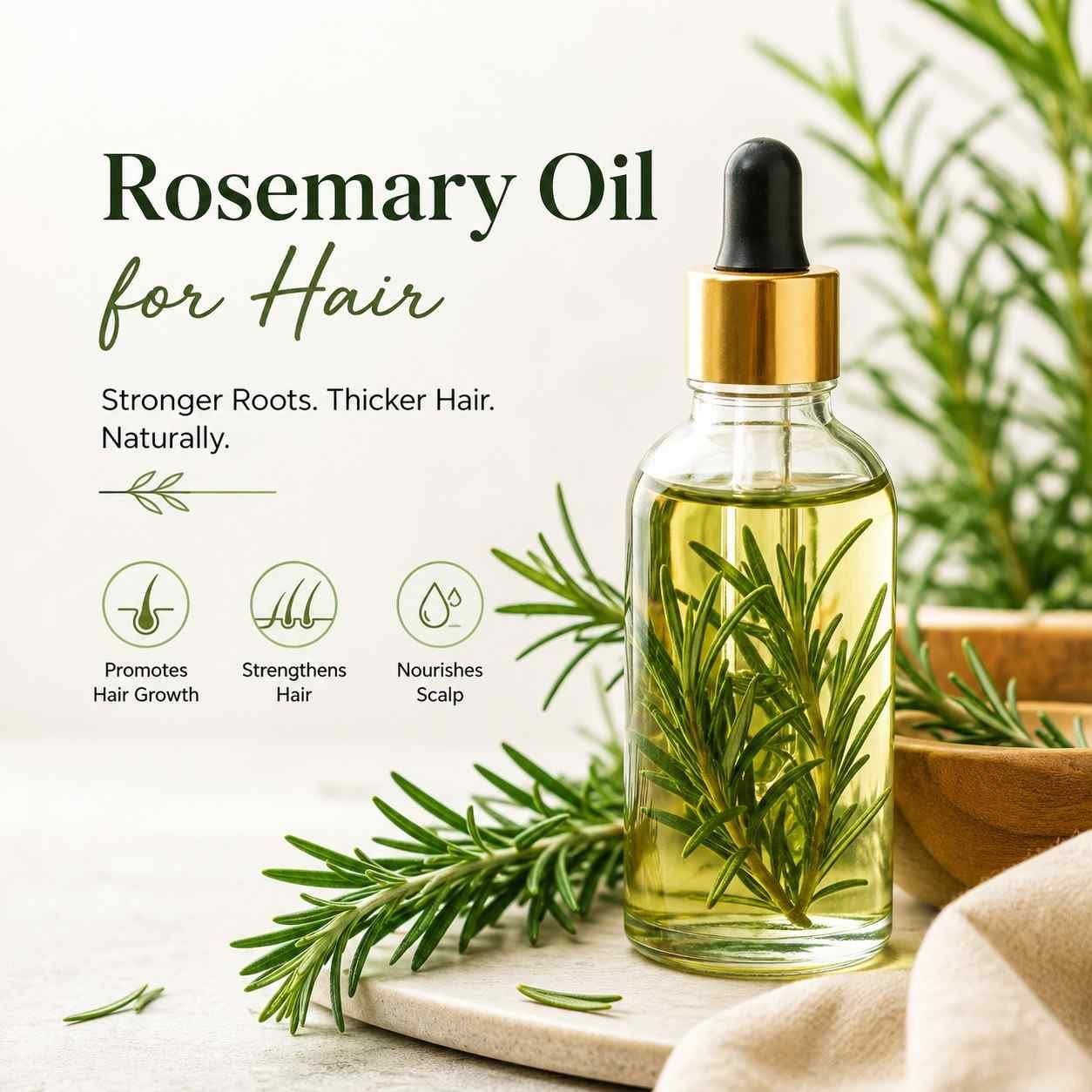
Rosemary Oil for Hair has become a popular natural hair-care trend, especially among people looking for ways to support a healthy scalp and fuller-looking hair. Rosemary essential oil is commonly used in scalp massage and hair products.
If you’re exploring natural oils, you can also read our guides on [Amla Oil], [Argan Oil]. Before applying rosemary essential oil to your scalp, learn [How to Dilute Essential Oils Safely] to understand proper topical use.
This guide explains the potential benefits of rosemary oil for hair, how to use it, safety precautions, and what current research actually says.
What Is Rosemary Oil?
Rosemary oil is a concentrated essential oil obtained from the rosemary plant.
It is commonly used in:
- Hair-care products
- Scalp massage
- Aromatherapy
- Massage oils
- Natural beauty products
Because rosemary oil is an essential oil, it is highly concentrated and should not be casually applied directly to the scalp.
Rosemary Oil Benefits for Hair
Rosemary oil is popular in natural hair-care routines, especially for scalp massage and hair-growth-focused routines. Research is promising, but evidence is still limited, so it should not be presented as a guaranteed hair-loss treatment.
1. May Support Hair Growth
Rosemary oil is popular in hair-care routines and may support healthier-looking hair. Research is promising, but more evidence is needed.
2. Supports Scalp Care
A diluted rosemary oil massage can be a relaxing addition to your regular scalp-care routine.
3. Helps Hair Look Healthier
Used properly, rosemary oil can complement a hair-care routine and help hair look smoother and more cared for.
4. Works Well With Carrier Oils
Rosemary oil can be combined with carrier oils such as Jojoba Oil, Almond Oil, or Coconut Oil.
5. Refreshing Herbal Aroma
Its fresh herbal scent makes rosemary oil popular in aromatherapy and personal-care products.
6. Easy to Add to a Hair Routine
A properly diluted blend can be incorporated into a simple scalp massage or hair-care routine.
Tip: Never use concentrated rosemary essential oil directly on your scalp. Follow appropriate dilution instructions.
Does Rosemary Oil Help Hair Growth?
Rosemary Oil for Hair: This is one of the most searched questions about rosemary oil.
A randomized comparative study involving people with androgenetic alopecia found that both rosemary oil and 2% minoxidil groups had increased hair counts after six months. The study also reported less scalp itching in the rosemary-oil group than in the minoxidil group.
However, the study was relatively small, and it does not prove that rosemary oil works for everyone.
Bottom line: Rosemary oil is promising, but more high-quality research is needed.
Rosemary Oil for Scalp Care
Rosemary Oil for Hair: A healthy scalp is an important part of overall hair care.
Some people use diluted rosemary oil during scalp massage. Massage itself can be relaxing, while the oil provides fragrance and may help condition the scalp.
However, rosemary oil should not be considered a treatment for:
- Severe dandruff
- Scalp infections
- Psoriasis
- Sudden hair loss
- Unexplained thinning
If you have persistent scalp problems, a dermatologist can help identify the underlying cause.
How to Use Rosemary Oil for Hair
Rosemary Oil for Hair: If you’re using pure rosemary essential oil, it should be diluted with a suitable carrier oil.
Simple method
- Choose a suitable carrier oil.
- Add rosemary essential oil according to an appropriate dilution.
- Mix thoroughly.
- Apply a small amount to the scalp.
- Massage gently.
- Follow the product’s recommended contact time.
- Wash your hair if necessary.
Good carrier oils include Jojoba Oil, Almond Oil, and Coconut Oil.
Rosemary Oil and Scalp Massage
Rosemary Oil for Hair: Scalp massage is an easy way to incorporate a diluted oil into your routine.
Use your fingertips rather than your nails and massage gently for a few minutes.
Avoid aggressive rubbing because excessive friction can irritate the scalp.
Rosemary Oil for Dry Hair
Rosemary Oil for Hair: Rosemary essential oil isn’t a moisturizing hair oil by itself.
For dry or rough hair, it can be incorporated into a properly formulated hair product or diluted with a carrier oil.
For a simpler conditioning routine, explore our:
- Argan Oil
- Jojoba Oil
- Almond Oil
- Coconut Oil
Rosemary Oil vs Castor Oil
Rosemary Oil for Hair: These oils are often discussed together, but they are very different.
| Rosemary Oil | Castor Oil |
|---|---|
| Essential oil | Vegetable/carrier oil |
| Highly concentrated | Thick and rich |
| Usually diluted | Commonly used as a cosmetic oil |
| Popular for scalp routines | Popular for hair conditioning |
Rosemary Oil vs Jojoba Oil
Rosemary Oil for Hair: Rosemary oil and jojoba oil serve different purposes.
Rosemary Oil: A concentrated essential oil.
Jojoba Oil: A cosmetic/carrier oil commonly used for skin and hair.
Jojoba oil can be used as a carrier for properly diluted rosemary essential oil.
Can Rosemary Oil Be Used Directly on the Scalp?
Rosemary Oil for Hair: It is better to avoid applying undiluted rosemary essential oil directly to the scalp.
Essential oils can cause irritation or allergic reactions, especially when used incorrectly. NCCIH recommends taking appropriate precautions when using essential oils.
Always follow the instructions provided with your specific product.
Rosemary Oil Safety
Rosemary Oil for Hair: Possible reactions to essential oils include:
- Redness
- Itching
- Burning
- Irritation
- Rash
- Allergic reaction
Before widespread use, consider testing a small amount of a properly diluted product.
Stop using it if you experience a reaction.
Keep essential oils away from the eyes and out of reach of children.
Who Should Be Careful With Rosemary Oil?
Rosemary Oil for Hair: Extra caution is appropriate if you:
- Have sensitive skin
- Have fragrance allergies
- Have an existing scalp condition
- Are pregnant or breastfeeding
- Are using medications
- Are considering using it on children
When in doubt, ask a healthcare professional.
Common Mistakes
Using Too Much
More oil doesn’t necessarily mean better results.
Applying Undiluted Oil
Pure essential oil can irritate the scalp.
Expecting Instant Hair Growth
Hair growth takes time, and research on rosemary oil is limited.
Ignoring Hair Loss Causes
Hair loss can have many causes, including genetics, hormonal changes, nutritional problems, medications, and medical conditions.
Replacing Medical Treatment
Don’t replace a dermatologist-recommended treatment with rosemary oil without discussing it with your healthcare provider.
FAQs
Does rosemary oil really grow hair?
A small clinical study found promising results, but there isn’t enough evidence to guarantee that rosemary oil promotes hair growth for everyone.
How often should I use rosemary oil on my hair?
There isn’t one scientifically established frequency that works for everyone. Follow your product’s instructions and use an appropriate dilution.
Can I mix rosemary oil with castor oil?
Yes, a properly diluted rosemary essential oil blend can use castor oil as a carrier oil.
Can I use rosemary oil every day?
Daily use isn’t necessary for everyone. Follow the instructions for your product and stop if irritation develops.
Can rosemary oil help with hair thinning?
It may have potential, but evidence remains limited. Persistent or significant thinning should be evaluated by a healthcare professional.
Is rosemary oil good for dry hair?
It isn’t primarily a moisturizing oil. A carrier oil such as argan or jojoba may be more useful for conditioning dry hair.
Conclusion
Rosemary Oil for Hair is a promising natural hair-care option, but the scientific evidence is still limited. One small clinical trial produced encouraging results, while more research is needed to understand its effectiveness for different types of hair loss.
If you choose to use rosemary oil, dilute it properly, use it consistently according to product instructions, and stop if irritation occurs.
For more hair-care ideas, explore our Lavender Oil , Carrier Oil vs Essential Oil guides.
Author
Hitasha is a beauty, nutrition, and wellness writer at Trendyopedia, creating reader-friendly, research-informed content about natural oils, skincare, hair care, and healthy lifestyle topics.
Disclaimer
This article is for informational purposes only and does not replace professional medical advice. Rosemary essential oil is concentrated and may cause irritation or allergic reactions. Consult a healthcare professional for persistent hair loss or scalp problems.