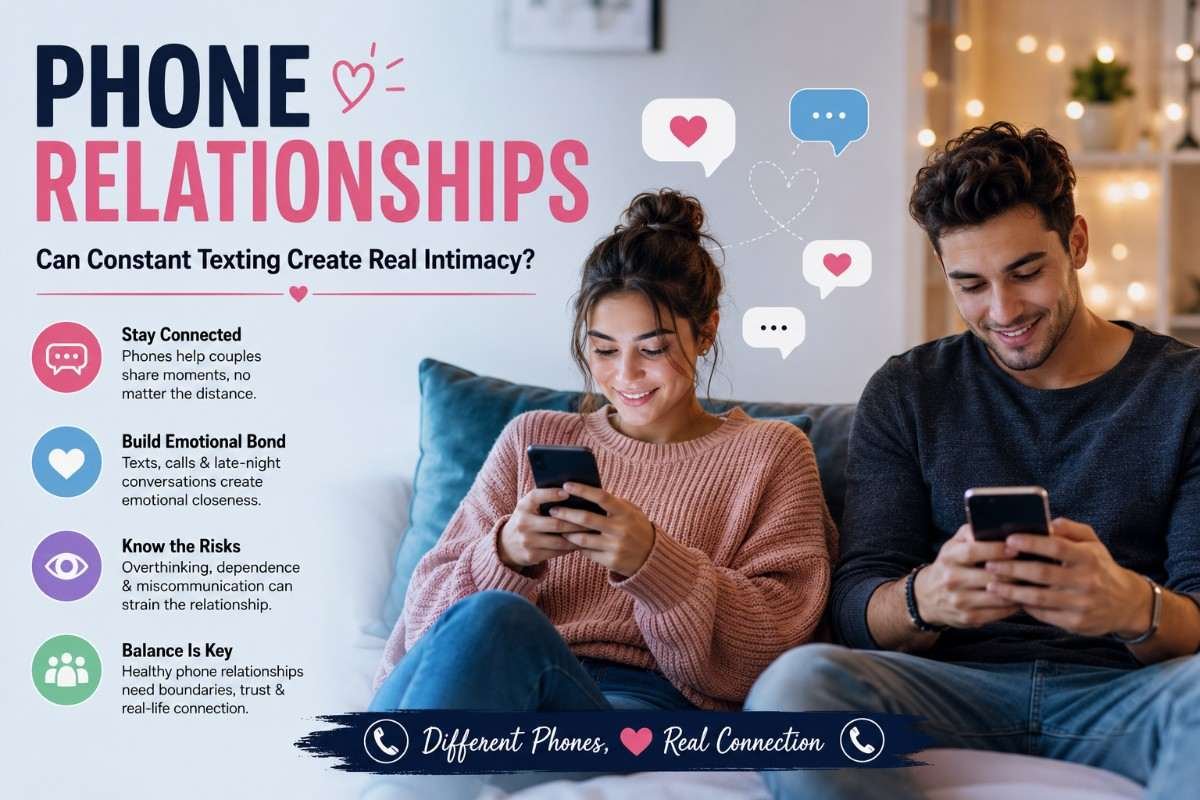
Phone relationships are connections where texting, calls, video chats, and social media play a major role in how two people communicate and stay emotionally connected.
For some couples, the phone simply supports an in-person relationship. For others, most of the connection happens through a screen. This can create genuine closeness, but it can also lead to misunderstandings, emotional dependence, or unrealistic expectations.
So, can constant texting create real intimacy? Yes, digital communication can help people build emotional connections—but a healthy relationship usually needs more than messages alone.
Phone relationships have become an important part of modern dating, especially as texting, social media, and video calls become part of everyday communication. For more about changing relationship habits, read our guide to Gen Z Dating Trends.
What Is a Phone Relationships?
A phone relationship is a romantic or emotional connection that relies heavily on digital communication.
It may involve:
- Texting throughout the day
- Phone calls
- Video calls
- Voice notes
- Social-media messages
- Sharing photos and videos
- Sending good-morning or good-night texts
- Talking about personal feelings online
The relationship can be long-distance, newly developing, or even between people who live close to each other.
The important factor is how much the phone is involved in maintaining the connection.
What Does a Phone Relationships Look Like?
A phone relationships can look different for everyone.
For example, two people might:
Morning: Send good-morning messages.
Afternoon: Check in through texts.
Evening: Have a video or phone call.
Before bed: Talk about their day and say goodnight.
This level of communication can make people feel emotionally close.
However, frequent communication doesn’t automatically mean that two people have a healthy or committed relationship.
10 Signs You’re in a Phone Relationships
1. You Text Every Day
Daily texting has become a normal part of many modern relationships.
2. You Share Personal Details
You discuss your goals, worries, family, memories, and everyday experiences.
3. You Have Long Phone Calls
Calls may become an important part of your routine.
4. You Send Voice Notes
Voice messages can make digital communication feel more personal.
5. You Share Your Daily Life
You might send photos of your food, workplace, pets, activities, or surroundings.
6. You Expect Quick Replies
You may start expecting the other person to respond immediately.
7. You Feel Close Even When You’re Apart
Digital communication can help maintain emotional connection across distance.
8. Most Important Conversations Happen on Your Phone
You may discuss feelings, disagreements, plans, and relationship concerns primarily through messages.
9. You Feel Disconnected When Communication Stops
A sudden lack of messages may make you feel anxious or uncertain.
10. You Prefer Texting to Face-to-Face Conversations
If you regularly find it easier to communicate through your phone than in person, digital communication may have become central to the relationship.
Can You Build Real Intimacy Through a Phone?
Yes, but there are limits.
Texting and phone calls can help people share emotions, learn about each other, and maintain a sense of closeness.
However, digital communication doesn’t always reveal everything about a person.
In-person interaction can show:
- Body language
- Communication style
- How someone handles disagreements
- How they treat other people
- How comfortable you feel around them
- Whether online behavior matches real-life behavior
That’s why a strong phone connection shouldn’t automatically be considered proof of long-term compatibility.
Benefits of Phone Relationships
Easy Communication
You can communicate regardless of distance.
Helpful for Long-Distance Couples
Phone calls and video chats can help couples stay connected when they cannot meet regularly.
More Time to Think
Some people find it easier to express difficult feelings through text because they have time to choose their words.
Emotional Support
A quick message or phone call can provide encouragement during a difficult day.
Staying Connected
Phones make it easier to share small moments throughout the day.
The Risks of Phone Relationships
1. Too Much Dependence on Texting
If your emotional well-being depends on receiving messages, communication can become stressful.
2. Misunderstandings
Text messages don’t always communicate tone clearly.
A simple:
“Okay.”
could mean many different things depending on the context.
3. Constant Checking
You may repeatedly check your phone to see whether someone has replied.
4. Social Media Jealousy
Likes, comments, follows, and online activity can sometimes create unnecessary relationship concerns.
5. Unrealistic Expectations
Constant communication can create the expectation that someone should always be available.
6. Avoiding Difficult Conversations
Important relationship discussions can sometimes become harder when everything happens through a screen.
7. Digital Overload
Being connected all day can make it difficult to switch off and enjoy personal time.
Phone Relationships vs. Textationships
A textationship is a connection that primarily exists through texting.
A phone relationships can be broader and include:
- Texting
- Calls
- Video calls
- Voice messages
- Social media
- Other digital communication
In other words, a textationship can be considered one type of phone-based relationship, but not every phone relationship is a textationship.
For more information, read What Is Textationship? Meaning, Signs, Risks & How to Handle One.
Phone Relationships vs. Long-Distance Relationships
These terms are also different.
A long-distance relationship describes a relationship where partners live far apart.
A phone relationships describes a connection where phone communication plays a major role.
A long-distance couple may have a phone relationship, but they can also regularly meet in person.
Is Constant Texting a Sign of Love?
Not necessarily.
Someone may text frequently because they:
- Enjoy communicating
- Have lots of free time
- Feel emotionally connected
- Prefer digital communication
- Are interested romantically
But texting frequency alone doesn’t prove love or commitment.
Look at the bigger picture:
Communication + consistency + respect + effort + trust
are more meaningful than simply counting the number of messages.
Why Do People Become Emotionally Attached Through Their Phones?
Phones allow people to communicate frequently and share small details throughout the day.
A person may become part of your routine:
Good morning → check-in → lunch message → evening conversation → good night.
Over time, this repeated communication can create familiarity and emotional attachment.
However, attachment developed online should still be balanced with realistic expectations and healthy boundaries.
Phone Relationships Red Flags
Watch for patterns such as:
- Constant demands for immediate replies
- Pressure to share private information
- Jealousy over every online interaction
- Checking your phone without permission
- Anger when you don’t respond
- Manipulation through messages
- Refusing to communicate outside the phone
- Avoiding any real-life interaction when meeting is appropriate and safe
- Repeated ghosting and returning
One behavior alone doesn’t necessarily define a relationship, but repeated patterns deserve attention.
If you’re dealing with someone who repeatedly disappears and returns, read What Is Zombieing in Dating?.
How to Build a Healthy Phone Relationships
1. Don’t Expect Instant Replies
People have work, family, hobbies, and personal responsibilities.
2. Set Communication Boundaries
It’s okay to say when you’re unavailable.
3. Don’t Overanalyze Every Message
A short reply doesn’t automatically mean someone is angry or losing interest.
4. Talk About Important Issues Properly
If a serious conversation keeps becoming misunderstood through text, consider a phone or video call—or an in-person conversation when possible.
5. Maintain Your Own Life
Continue spending time with friends, family, hobbies, work, and personal interests.
6. Don’t Measure Love by Screen Time
Someone doesn’t have to text you every minute to care about you.
7. Keep Real-Life Connection in Perspective
When possible and appropriate, relationships benefit from meaningful experiences beyond the phone.
How Much Texting Is Too Much?
There isn’t a universal number of texts that defines “too much.”
The better question is:
Does your communication feel healthy and balanced?
Texting may be excessive if:
- You can’t concentrate without checking your phone.
- You become extremely anxious when someone doesn’t respond.
- You stop spending time with other people.
- Arguments happen constantly through text.
- You feel obligated to be available 24/7.
- Your sleep or daily routine is affected.
Healthy communication should support your life rather than take it over.
Phone Relationships and Gen Z Dating
Phones have become an important part of modern dating culture, especially for people who grew up with smartphones and social media.
Dating can now move through several digital stages:
Social media → DM → texting → phone calls → video calls → meeting → dating
This has also created new dating terms such as ghosting, breadcrumbing, situationships, textationships, and zombieing.
What If Your Relationship Exists Mostly on Your Phone?
Ask yourself a few questions:
- Have we met in person?
- Do we make realistic plans?
- Do our actions match our words?
- Do I know what this relationship actually is?
- Do we communicate openly?
- Do I feel respected?
- Am I happy with the current situation?
If you’re constantly wondering “What are we?”, it may be time for an honest conversation.
FAQs
What is a phone relationships?
A phone relationship is a romantic or emotional connection where texting, calls, video chats, and other digital communication play a major role.
Can a phone relationships be real?
Yes. Genuine emotional connections can develop through digital communication. However, online communication doesn’t show every aspect of real-life compatibility.
Is texting every day healthy?
Daily texting can be healthy when both people enjoy it and maintain reasonable boundaries. It becomes a concern when communication creates stress, dependence, or unrealistic expectations.
Is a phone relationship the same as a textationship?
Not exactly. A textationship mainly focuses on texting, while a phone relationship can include texts, calls, video chats, voice notes, and social media.
Can you fall in love through texting?
People can develop strong emotional feelings through texting. However, meeting and interacting in real life can provide additional information about compatibility.
How do I know if I’m too dependent on my phone relationships?
If you feel extremely anxious without messages, constantly check your phone, or struggle to focus on other parts of your life, it may be useful to create stronger digital boundaries.
Conclusion
Phone relationships can create genuine emotional connection, but your phone shouldn’t become the entire relationship.
Texting, calls, and video chats can help people communicate, especially when distance makes meeting difficult. At the same time, healthy relationships need boundaries, trust, consistency, and—when possible—meaningful interaction beyond the screen.
The goal isn’t to text less or more. It’s to create a relationship where digital communication adds to the connection instead of replacing it.
As modern dating continues to evolve, digital behaviors such as What Is Ghosting? and Gen Z Sign Language are becoming part of wider conversations about how Gen Z communicates and connects online.
About the Author
Hitasha is a lifestyle and wellness writer at Trendyopedia, creating easy-to-understand content about modern trends, relationships, beauty, health, and everyday lifestyle topics. Her goal is to make trending subjects simple, practical, and informative for readers.
Disclaimer
This article is for general informational and educational purposes only. Relationship experiences vary from person to person. This content is not a substitute for professional relationship or mental-health advice.
Sources & References