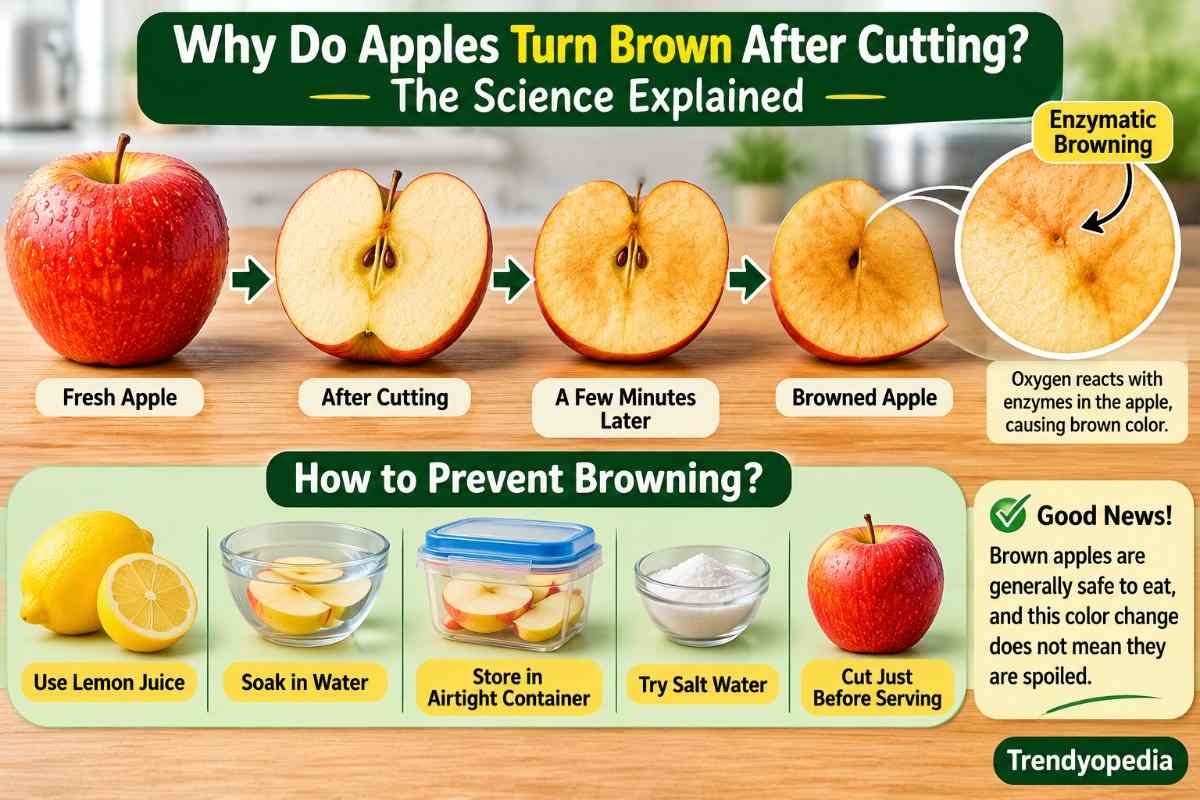
Have you ever sliced a fresh apple, left it on the kitchen counter for a few minutes, and noticed that it started turning brown? The apple may have looked bright and fresh when you first cut it, but its surface gradually changes color after being exposed to air.
This is a common kitchen mystery, and the reason behind it is surprisingly interesting. Apples turn brown because of a natural chemical reaction involving oxygen and an enzyme inside the fruit. Scientists call this process enzymatic browning.
Although the color change can make apple slices look less fresh, it does not automatically mean that the fruit has spoiled. There are also several simple ways to slow down browning and keep cut apples looking appealing for longer.
Food science can explain many other everyday mysteries, too. For example, discover why honey stays liquid or turns crystallized and learn how natural changes can affect the appearance and texture of common foods.
In this article, we will explain why apples turn brown after cutting, what happens inside the fruit, whether brown apples are safe to eat, and how to prevent apple slices from changing color.
Why Do Apples Turn Brown After Cutting?
Apples turn brown after cutting because their inner tissues come into contact with oxygen in the air. Cutting damages the apple’s cells and allows an enzyme called polyphenol oxidase, or PPO, to react with naturally occurring compounds in the fruit.
This reaction produces new compounds that eventually form brown-colored pigments on the exposed surface.
The process is similar to what happens when other fruits and vegetables, such as pears, bananas, potatoes, and avocados, become darker after being cut or bruised.
Here is the basic process:
- You cut or bite into an apple.
- The knife damages the cells inside the fruit.
- Oxygen reaches substances that were previously separated within the cells.
- The enzyme polyphenol oxidase helps trigger chemical reactions.
- Brown-colored compounds develop on the cut surface.
This reaction can begin quickly, although the visible color change depends on the apple variety, temperature, and other conditions.
What Is Enzymatic Browning?
Why Do Apples Turn Brown After Cutting: Enzymatic browning is a natural chemical reaction that occurs when certain enzymes in fruits and vegetables interact with oxygen and other compounds.
Apples naturally contain polyphenol oxidase and plant compounds called phenolics. In an intact apple, these substances are largely separated within the cells.
When the fruit is cut, bruised, or damaged, the separation is disrupted. The enzyme can then interact with the phenolic compounds in the presence of oxygen.
These reactions produce compounds that undergo further chemical changes, eventually creating brown pigments.
According to food science research, this process is not unique to apples. It also occurs in various fruits and vegetables and can affect their appearance during preparation, storage, and processing.
You can learn more about the chemistry in this explanation from Scientific American.
What Happens Inside an Apple When You Cut It?
Why Do Apples Turn Brown After Cutting: An apple may look like a simple fruit, but its cells contain many substances that help maintain its structure, flavor, and natural color.
When you slice an apple, the knife breaks through the skin and damages cells in the flesh. This allows oxygen from the surrounding air to reach areas that were previously protected.
The enzyme polyphenol oxidase then helps oxidize certain phenolic compounds. These reactions create intermediate substances that react further to produce brown-colored materials.
This is why the cut surface gradually changes from pale cream or white to tan or brown.
The process does not mean that the apple has suddenly lost all its nutrients or become rotten. It is primarily a change in the chemistry and appearance of the exposed tissue.
However, browning can occur alongside other changes if an apple is stored poorly or begins to spoil. Color alone cannot determine whether fruit is safe to eat.
Why Do Some Apples Turn Brown Faster Than Others?
Why Do Apples Turn Brown After Cutting: Have you noticed that some apple slices turn brown almost immediately while others stay light-colored for longer?
There are several reasons for this difference.
1. Apple Variety
Different apple varieties have different levels of polyphenol oxidase activity and naturally occurring phenolic compounds.
These differences can affect how quickly browning develops. Some varieties are more resistant to discoloration than others.
2. Ripeness
The maturity of an apple can influence its chemical composition and enzyme activity. As a result, apples at different stages of maturity may brown at different rates.
However, ripeness is not the only factor that determines how quickly an apple changes color.
3. Temperature
Temperature affects the rate of many chemical reactions. Keeping cut apples refrigerated generally slows browning compared with leaving them at room temperature.
Refrigeration also helps keep cut fruit fresh for longer.
4. Exposure to Air
Apple slices exposed to more air can develop browning more readily. Thin slices have more exposed surface area relative to their size than a large, uncut piece.
Covering freshly cut apples or placing them in an appropriate airtight container can help limit exposure to air.
5. Bruising and Physical Damage
An apple that has been dropped, squeezed, or bruised may develop brown areas because its internal cells have been damaged.
This is one reason gentle handling can help maintain the appearance of fresh apples.
Are Brown Apples Safe to Eat?
Why Do Apples Turn Brown After Cutting: In many cases, yes. An apple that has turned brown simply because it was cut and exposed to air is generally safe to eat.
Enzymatic browning is a natural reaction and is not, by itself, evidence of spoilage.
The texture and appearance may become less appealing, but the color change does not automatically make the fruit unsafe.
Before eating an apple, check for other signs of deterioration, such as:
- Visible mold.
- An unpleasant or fermented smell.
- Unusual sliminess.
- Extensive soft or mushy areas that suggest decay.
If an apple shows signs of spoilage, discard it rather than relying on its color alone.
Also remember that cut apples should be handled and stored properly. Refrigerate cut fruit promptly, and do not leave perishable prepared fruit at room temperature for more than two hours, or more than one hour when the temperature is above 90°F (32°C). Follow local food-safety guidance when in doubt.
For additional information, see University of Nebraska–Lincoln Extension’s guide to preventing cut fruit from turning brown.
How to Keep Apples from Turning Brown After Cutting
Why Do Apples Turn Brown After Cutting: You cannot always prevent browning completely, but several simple techniques can slow the reaction.
1. Use Lemon Juice
Lemon juice is one of the best-known ways to slow apple browning.
It contains citric acid and vitamin C, also called ascorbic acid. Acidity can reduce the activity of the browning enzyme, while vitamin C acts as an antioxidant and helps delay the reactions responsible for discoloration.
How to use it:
- Cut the apple into slices.
- Lightly coat the exposed surfaces with a small amount of lemon juice.
- Store the slices in a covered container in the refrigerator.
Use enough juice to coat the cut surfaces without soaking the apples unnecessarily. Lemon juice may add a slightly sour flavor.
2. Soak Apple Slices in Water
Water can help reduce the amount of oxygen reaching the cut surfaces when the slices are fully submerged.
How to use it:
- Place the freshly cut apple slices in a clean container.
- Add enough cold drinking water to cover them.
- Keep the container covered and refrigerate the apples.
This method is simple, although the apples may lose some flavor if left in water for too long. Drain them before serving.
3. Store Apples in an Airtight Container
Reducing exposure to air can help slow enzymatic browning.
Place freshly cut apple slices in a clean, airtight container and refrigerate them promptly. A well-fitting lid helps reduce continued exposure to fresh air.
This method works particularly well when combined with lemon juice or another suitable anti-browning treatment.
4. Try Vitamin C
Vitamin C can slow the oxidation reactions that contribute to browning.
Some food-preservation products contain ascorbic acid or other ingredients designed to help prevent discoloration. Follow the manufacturer’s directions if you use a commercial preparation.
Do not assume that every vitamin C supplement is suitable for preserving food. Use a food-grade product intended for that purpose.
5. Cut Apples Just Before Serving
One of the simplest solutions is to wait until shortly before serving to slice your apples.
Whole apples have a natural protective skin that limits exposure of the inner flesh to air. Keeping the apple intact until you need it helps preserve its original appearance.
If you need to prepare apples in advance, combine a suitable anti-browning method with prompt refrigeration.
Does Putting Salt Water on Apples Prevent Browning?
Why Do Apples Turn Brown After Cutting: Yes, a mild salt-water treatment can slow browning in apple slices. Salt solutions are sometimes used in food preparation to help reduce discoloration.
However, the taste may be affected if the slices are exposed to too much salt or soaked for too long.
If you try this method, use a mild solution, keep the treatment brief, and rinse the slices if needed to suit your taste. Lemon juice or a vitamin C-based food-preservation product may be preferable when you want to minimize salty flavor.
The best method depends on how you plan to use the apples and how much you want to preserve their original flavor and texture.
Does Refrigeration Stop Apples from Turning Brown?
Why Do Apples Turn Brown After Cutting: Refrigeration slows browning, but it does not stop the process completely.
Lower temperatures reduce the rate of many chemical reactions, including those involved in enzymatic browning. This is why apple slices generally change color more slowly in a refrigerator than on a warm kitchen counter.
For better results, refrigerate freshly cut apples in a covered container. You can also apply lemon juice before storing them.
Remember that refrigeration helps with freshness and food safety, but it does not make spoiled fruit safe to eat.
Does Browning Mean Apples Have Lost Their Nutrients?
Why Do Apples Turn Brown After Cutting: Not necessarily. A brown surface does not mean that an apple has suddenly lost all its nutritional value.
Apples still provide dietary fiber and various nutrients after cutting. However, exposure to oxygen can affect some sensitive compounds, including vitamin C, over time.
The extent of any nutrient changes depends on factors such as storage conditions, temperature, and how long the fruit remains exposed.
For everyday eating, a freshly cut apple that has developed a little surface browning can still be a nutritious choice if it has been stored and handled properly.
If you enjoy learning about fruit and nutrition, you can explore more evidence-based information about the nutrients in different fruits from reliable nutrition and food-science sources.
Can You Prevent Apple Browning With Honey Water?
Why Do Apples Turn Brown After Cutting: Honey water is another method used to slow browning in cut fruit. A diluted honey solution can help reduce discoloration, although results may vary.
To try it, follow a trusted food-preservation recipe, coat the apple slices, and refrigerate them promptly.
Keep in mind that honey adds sugar, so it may not be the best choice for everyone. Lemon juice or plain water may be more suitable if you prefer to avoid added sweetness.
Whichever method you choose, clean preparation and proper refrigeration remain important.
A Simple Apple Browning Experiment You Can Try at Home
Why Do Apples Turn Brown After Cutting: Would you like to see which method works best? You can conduct a simple experiment using a fresh apple and a few household ingredients.
What you need:
- One fresh apple.
- A knife and cutting board.
- Three or four small plates.
- Lemon juice.
- Water.
- A clean container.
Steps:
- Cut the apple into similarly sized slices.
- Leave one slice untreated as your control.
- Coat a second slice lightly with lemon juice.
- Place a third slice in water.
- If you have enough slices, store another in a covered container.
- Observe the slices at regular intervals and compare their color.
Keep the slices in the same environment during the comparison, except for the treatment being tested. Do not taste experimental slices if they have been handled or stored unsafely.
You will likely notice that the untreated slice develops browning more readily, while the treated slices may remain lighter for longer.
Your results may differ depending on the apple variety, temperature, and amount of treatment used.
This small experiment demonstrates how a visible everyday change can reveal an interesting chemical process.
FAQs Why Do Apples Turn Brown After Cutting
Why do apples turn brown after cutting?
Apples turn brown when cutting damages their cells and exposes internal compounds to oxygen. An enzyme called polyphenol oxidase helps trigger reactions that produce brown-colored pigments.
How long does it take for a cut apple to turn brown?
Some apples begin showing discoloration within minutes of cutting, while others take longer. The rate depends on the apple variety, temperature, exposure to air, and other conditions.
Is it safe to eat an apple that has turned brown?
Generally, yes, if the browning is caused by normal exposure to air and the apple has been stored properly. Discard apples that show mold, an unpleasant smell, or other signs of spoilage.
Does lemon juice stop apples from turning brown?
Lemon juice slows browning because its acidity reduces enzyme activity and its vitamin C helps delay oxidation. It may not prevent discoloration completely, but it can help apple slices stay lighter for longer.
Why do apples turn brown but not always taste different?
Browning mainly affects the appearance of the exposed surface. A lightly browned apple may taste almost the same as a freshly cut one, although storage time and other changes can affect flavor and texture.
Do all fruits turn brown after cutting?
No. Some fruits are more prone to enzymatic browning than others. Apples, pears, bananas, and avocados can show noticeable discoloration, while the reaction varies according to the fruit’s composition and enzyme activity.
Does putting apples in the refrigerator prevent browning?
Refrigeration slows browning but does not eliminate it entirely. Covering the slices and using a suitable treatment, such as lemon juice, can help preserve their appearance.
Can you keep apple slices fresh overnight?
Yes. Apply a suitable anti-browning treatment if desired, place the slices in a clean, covered container, and refrigerate them promptly. Check their appearance, smell, and texture before eating.
Conclusion
Why Do Apples Turn Brown After Cutting: Apples turn brown after cutting because of a natural chemical reaction called enzymatic browning. When the fruit’s cells are damaged, oxygen reaches the enzyme polyphenol oxidase and other compounds, leading to the formation of brown pigments.
Although the color change may make apple slices look less fresh, ordinary enzymatic browning does not automatically mean that the fruit has spoiled.
You can slow the process by using lemon juice, limiting exposure to air, covering the slices, and storing them in the refrigerator. Cutting apples shortly before serving is another simple way to maintain their appearance.
The next time you slice an apple, remember that this small color change is an example of chemistry happening right in your kitchen.
If you enjoy learning about everyday science, you may also like discovering how your brain recognizes things. These fascinating processes show how science helps explain the world around us and the way our bodies work.
Author bio
About the Author: Hitasha writes for Trendyopedia, exploring science, wellness, nutrition, and everyday questions in simple, reader-friendly language.
Disclaimer
Disclaimer: This article is for informational and educational purposes only. Food safety depends on proper handling and storage. Always discard fruit showing signs of spoilage.