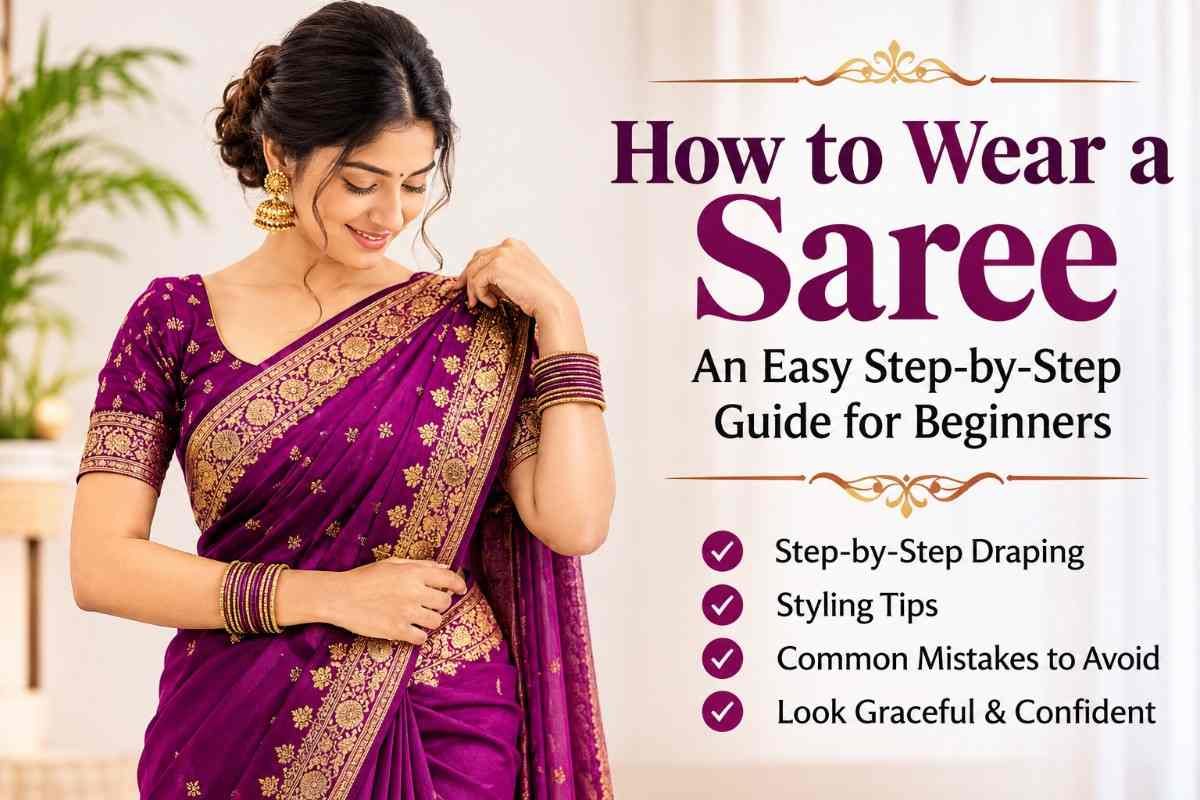
A saree is one of the most beautiful and timeless traditional outfits in Indian fashion. Known for its graceful appearance, colorful designs, and elegant draping style, a saree is worn for weddings, festivals, family gatherings, and many special occasions.
However, if you have never worn a saree before, the process may seem difficult. You might wonder how to wrap the fabric, make neat pleats, tuck the saree correctly, and drape the loose end over your shoulder.
The good news is that learning how to wear a saree is easier than it looks. With a little practice and the right instructions, beginners can learn the basic draping technique at home.
In this guide, we will explain how to wear a saree step by step, what accessories you need, how to make perfect pleats, and how to avoid common mistakes.
What Is a Saree?
A saree, also spelled sari, is a traditional South Asian garment made from a long piece of fabric. It is generally around five to nine yards long, depending on the style and regional draping method.
Unlike many other outfits, a saree is not stitched into a fixed shape. Instead, the fabric is wrapped and folded around the body to create an elegant outfit.
A traditional saree is usually worn with two important garments:
- Blouse: A fitted top worn on the upper body.
- Petticoat: An underskirt that holds the saree fabric in place.
Sarees come in different fabrics, colors, patterns, and designs. Some popular varieties include cotton, silk, chiffon, georgette, and crepe sarees.
What Do You Need to Wear a Saree?
Before learning how to wear a saree, gather everything you need. Having your accessories ready will make the process easier.
Here are the basic items:
- Saree: Choose a comfortable saree, preferably around five to six yards long for standard draping.
- Blouse: Wear a matching or contrasting blouse that fits comfortably.
- Petticoat: Choose a well-fitted underskirt with a secure waistband.
- Safety pins: Use them to secure the pleats and shoulder fabric.
- Footwear: Wear your heels or sandals before draping so you get the correct saree length.
- Accessories: Earrings, bangles, necklaces, and other jewelry can complete your look.
For beginners, lightweight georgette, chiffon, or cotton sarees are often easier to handle than heavy silk sarees.
How to Wear a Saree Step by Step
The basic Nivi draping style is one of the most widely recognized saree styles. It creates front pleats and places the pallu over the left shoulder.
Follow these steps to learn how to wear a saree properly.
Step 1: Wear Your Blouse and Petticoat
First, wear your blouse and petticoat. Make sure the petticoat fits comfortably around your waist and has a secure drawstring or waistband.
Wear your footwear before starting the draping process. This helps you decide how much fabric should touch the floor.
Step 2: Start Tucking the Saree
Take the plain end of your saree and tuck it into the petticoat near your waist.
Wrap the saree around your waist once, moving around your body. Keep the lower edge of the fabric at a comfortable height, usually just above the floor.
Make sure the fabric is smooth and not twisted.
Step 3: Make the Front Pleats
This is one of the most important steps in saree draping.
Take the remaining fabric in front of your body and create several equal-sized vertical folds. These folds are called pleats.
Usually, five to seven pleats are enough, although the number depends on the saree fabric and your preference.
Hold the pleats together and check that their bottom edges are even.
Step 4: Tuck the Pleats into the Petticoat
After making the pleats, tuck them securely into the front of your petticoat.
Adjust them so they fall straight down. You can use a small safety pin to keep the pleats together.
Make sure you can walk comfortably without the fabric feeling too tight.
Step 5: Drape the Pallu Over Your Shoulder
The loose decorative end of the saree is called the pallu.
Bring the remaining fabric around your body and over your left shoulder. Adjust the length so that the pallu hangs gracefully.
You can leave it open for a flowing appearance or make neat pleats and pin them to your blouse.
Step 6: Adjust and Secure Your Saree
Finally, check your entire saree in front of a mirror.
- Make sure the pleats are straight.
- Adjust the pallu to your preferred length.
- Secure loose fabric with safety pins.
- Check that the saree is comfortable around your waist.
- Make sure you can walk and sit easily.
Your saree is now ready!
Different Types of Saree Draping Styles
How to Wear a Saree: There are many ways to wear a saree. Each style has its own beauty and cultural significance.
1. Nivi Style Saree
This is one of the most widely recognized saree draping styles. It features front pleats and a pallu over the left shoulder. It is suitable for weddings, parties, festivals, and everyday occasions.
2. Gujarati Style Saree
In this style, the pallu is brought from the back toward the front and placed over the right shoulder. The decorative portion of the saree remains visible at the front.
3. Bengali Style Saree
The Bengali draping style is known for its distinctive pleats and wide pallu. Traditionally, the pallu is draped over the shoulders in a recognizable arrangement.
4. Maharashtrian Nauvari Saree
The Nauvari saree is traditionally nine yards long and is draped in a style that resembles trousers. It is associated with Maharashtrian culture and traditional celebrations.
5. Modern Bollywood-Style Saree
Modern Bollywood-inspired saree draping often includes stylish belts, open pallu designs, fitted silhouettes, and decorative accessories.
How to Choose the Right Saree for Beginners
How to Wear a Saree: Choosing the right fabric can make your first saree-draping experience much easier.
| Saree Fabric | Best For |
|---|---|
| Georgette | Easy draping and parties |
| Chiffon | Lightweight and flowing looks |
| Cotton | Daily wear and casual occasions |
| Crepe | Smooth, modern appearance |
| Silk | Weddings and festivals |
If you are a beginner, start with a lightweight saree that does not slip easily. Avoid very heavy embroidered sarees until you become comfortable with basic pleating.
Common Mistakes to Avoid When Wearing a Saree
How to Wear a Saree: Even experienced saree wearers sometimes make small mistakes. Here are a few things beginners should avoid.
1. Making uneven pleats
Uneven pleats can make the saree look untidy. Take your time and make folds of similar width.
2. Tucking the saree too tightly
A saree should feel comfortable. Tucking it too tightly can make walking and sitting difficult.
3. Choosing the wrong length
If the saree is too long, you may step on the fabric. If it is too short, your ankles may become exposed more than you intended.
4. Forgetting safety pins
Safety pins help keep the pallu and pleats in place. Use them carefully without damaging delicate fabric.
5. Wearing the wrong footwear
Your footwear affects the final saree length. Always wear your intended footwear before starting to drape.
How to Look Stylish in a Saree
How to Wear a Saree: Wearing a saree is not only about draping the fabric correctly. Styling also plays an important role.
Here are some simple ideas:
- Choose a matching blouse: A well-fitted blouse can make your saree look more polished.
- Add traditional jewelry: Earrings, bangles, and necklaces can complete a traditional outfit.
- Try a waist belt: A decorative saree belt can give your outfit a modern appearance.
- Style your hair: A bun, braid, or soft curls can complement different saree styles.
- Choose comfortable footwear: Select shoes that allow you to walk confidently.
- Experiment with colors: Try contrasting blouse colors to create a unique appearance.
Remember, you do not need expensive accessories to look beautiful in a saree. Simple styling can make a big difference.
When Can You Wear a Saree?
How to Wear a Saree: A saree is a versatile outfit that can be worn for different occasions.
Some popular occasions include:
- Indian weddings and receptions
- Festivals such as Diwali and Navratri
- Family celebrations
- Religious and cultural events
- Formal parties and special gatherings
- Cultural events outside India
Today, sarees are also appreciated by people around the world who enjoy traditional Indian fashion.
How to Take Care of Your Saree
How to Wear a Saree: Taking proper care of your saree helps maintain its beauty and quality for years.
Here are some useful tips:
- Always check the fabric care label before washing.
- Hand-wash delicate fabrics only when the care instructions allow it.
- Avoid harsh detergents on delicate sarees.
- Dry sarees away from strong direct sunlight when appropriate.
- Store silk sarees in a clean, dry place.
- Refold stored sarees occasionally to reduce permanent creases.
- Keep heavy embroidered sarees separate from delicate fabrics.
For expensive silk or heavily embroidered sarees, professional cleaning may be the safest option.
FAQs How to Wear a Saree
1. How long does it take to wear a saree?
For beginners, wearing a saree may take around 15–30 minutes. With regular practice, you can learn to drape it much faster.
2. Can beginners wear a saree without help?
Yes! Beginners can wear a saree without help by following simple instructions and practicing the basic draping method. Safety pins can also make the process easier.
3. Which saree is easiest to wear for beginners?
Lightweight georgette, chiffon, and cotton sarees are good options for beginners. Choose a fabric that is comfortable and manageable.
4. How many pleats should a saree have?
Most basic saree styles use around five to seven front pleats. However, the number can change depending on the saree fabric and personal preference.
5. Can I wear a saree without a petticoat?
Yes. Some modern sarees are designed to be worn with shapewear or specialized saree underskirts instead of traditional petticoats.
6. Which side should the saree pallu go on?
In the common Nivi draping style, the pallu goes over the left shoulder. Other regional draping styles may use different arrangements.
7. Can I wear a saree with sneakers?
Yes! Sneakers can create a modern and comfortable look with certain saree styles. Choose a suitable saree length so the fabric does not touch the ground.
8. Is wearing a saree difficult?
Wearing a saree may seem difficult at first, but the basic technique becomes easier with practice. Start with a simple draping style before trying more complicated designs.
Conclusion
How to Wear a Saree: Learning how to wear a saree is a wonderful way to explore traditional Indian fashion. Although the draping process may seem challenging at first, following a few simple steps can make it much easier.
Start with a lightweight saree, practice making neat pleats, and use safety pins to keep everything secure. Once you become comfortable with the basic Nivi style, you can experiment with different regional and modern draping techniques.
A saree is more than just a piece of clothing. It represents creativity, tradition, and personal style. Whether you wear it for a wedding, festival, or special occasion, the right saree can help you feel elegant and confident.
Also read: Nostalgia Trend: Why Everyone Is Craving the Past
About the Author
Hitasha is a lifestyle and wellness writer at Trendyopedia who enjoys exploring fashion, beauty, wellness, and everyday lifestyle topics.
Disclaimer
This article is for general fashion and styling information. Saree draping techniques may vary depending on regional traditions and personal preferences.
Sources and References
- National Institute of Fashion Technology (NIFT) – Fashion education and textile knowledge.
- Sahapedia – Indian art, culture, textiles, and traditional clothing.
- Textiles Committee, Government of India – Information about Indian textiles and the textile industry.
- Ministry of Textiles, Government of India – Indian textile heritage and traditional crafts.