Black sapote is one of the most fascinating tropical fruits in the world. Often called the “chocolate pudding fruit,” Black sapote surprises people because its dark, creamy flesh looks remarkably similar to chocolate pudding when fully ripe. Despite its dessert-like appearance, this fruit is naturally low in fat and rich in nutrients, making it a healthy choice for anyone looking to add more tropical fruits to their diet.
Native to parts of Mexico and Guatemala, black sapote grows on evergreen trees in warm climates and belongs to the same botanical family as persimmons. Its mild sweetness and soft texture make it popular in smoothies, desserts, and healthy recipes.
In recent years, black sapote has gained attention among nutrition enthusiasts because it combines the pleasure of a sweet dessert with valuable vitamins, minerals, and antioxidants. Many people who are trying to reduce refined sugar intake use black sapote as a natural ingredient in healthy desserts.
This fruit may look unusual from the outside, but inside it offers impressive nutritional value, digestive support, and potential immune benefits. If you are curious about tropical superfruits, black sapote deserves a place on your list.
What Is Black Sapote?
Black sapote is a tropical fruit scientifically known as Diospyros digyna. It belongs to the ebony family, which also includes persimmons. The fruit is round, with smooth green skin that turns softer as it ripens. When ripe, the inside becomes dark brown to black, creamy, and soft.
Because of its pudding-like texture, many people compare it to chocolate dessert, although its flavor is mild, slightly sweet, and less intense than actual chocolate.
Black sapote trees grow best in tropical and subtropical regions where temperatures remain warm throughout the year. Today it is cultivated in:
- Mexico
- Philippines
- Australia
- United States (especially tropical areas like Florida)
Its unusual appearance often attracts first-time fruit lovers, but the nutritional profile is what makes it truly valuable.
Nutrition Facts of Black Sapote
Black sapote is low in calories yet rich in beneficial nutrients.
Per 100 grams of ripe black sapote:
- Calories: 45–60
- Carbohydrates: 14–16 g
- Fiber: 2–3 g
- Vitamin C: High
- Potassium: Moderate
- Calcium: Small amounts
- Phosphorus: Present
- Iron: Trace amounts
One major advantage of black sapote is that it contains almost no fat, making it attractive for healthy dessert preparation.
Its naturally sweet flesh also allows people to reduce added sugar in recipes.
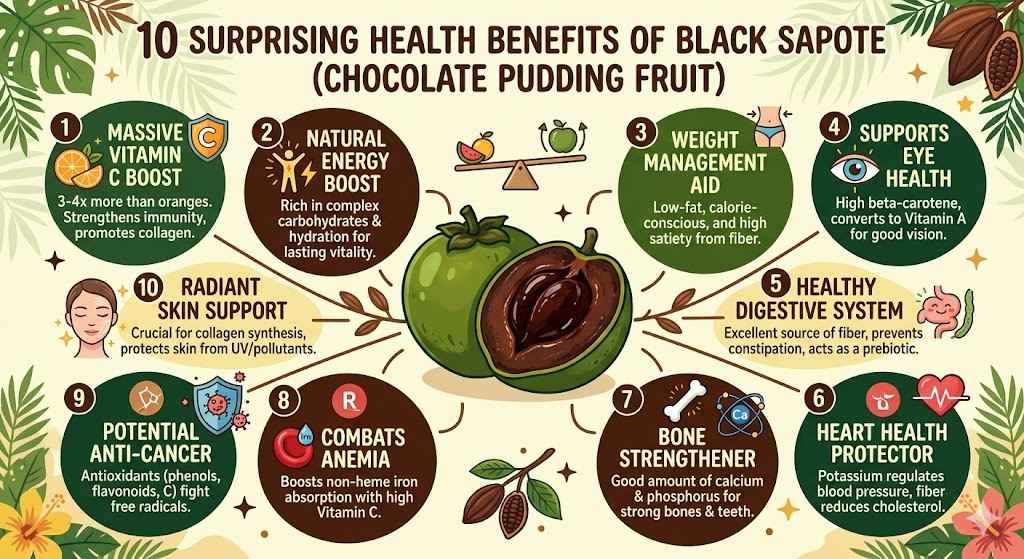
10 Amazing Health Benefits of Black Sapote
1. Supports Immune Health
Black sapote contains significant amounts of vitamin C, which supports immune defense.
Vitamin C helps:
- strengthen white blood cells
- support healing
- protect cells from oxidative stress
Regular intake of vitamin C-rich fruits may help the body respond better to infections.
2. Rich in Antioxidants
The fruit contains natural antioxidants that help neutralize free radicals.
Antioxidants may:
- reduce cellular damage
- support healthy aging
- protect skin cells
This makes black sapote valuable in a fruit-rich diet.
3. Helps Digestion
The fiber content in black sapote supports healthy digestion.
Fiber helps:
- improve bowel movement
- reduce constipation
- support beneficial gut bacteria
Because the fruit is soft and gentle, it is often easy to digest.
4. Low-Calorie Natural Dessert Option
One of black sapote’s biggest advantages is its dessert-like texture with relatively few calories.
People often use it as a substitute for:
- chocolate pudding
- sweet cream desserts
- sugar-heavy snacks
This helps reduce calorie intake without losing sweetness.
5. Supports Heart Health
Potassium in black sapote helps maintain healthy blood pressure balance.
Potassium contributes to:
- proper muscle function
- heart rhythm support
- fluid balance
A potassium-rich fruit diet may support cardiovascular wellness.
6. May Help Weight Management
Black sapote is filling because of its fiber and soft texture.
Benefits include:
- better satiety
- reduced sugar cravings
- lower calorie dessert replacement
This makes it attractive in weight-conscious diets.
7. Supports Skin Health
Vitamin C helps collagen production.
Collagen supports:
- skin elasticity
- wound repair
- smoother skin appearance
Many fruit-based beauty diets include vitamin C-rich fruits for this reason.
8. Natural Energy Source
Black sapote provides natural carbohydrates that offer gentle energy.
Unlike refined sugar desserts, it provides slower energy release when eaten with fiber.
9. Good for Healthy Snacking
Because it requires little preparation, ripe black sapote can be eaten directly with a spoon.
It works well as:
- afternoon snack
- breakfast fruit
- post-meal dessert
10. May Support Bone Health
Small amounts of calcium and phosphorus contribute to bone support.
Although not extremely high, every mineral-rich fruit adds value to total intake.
Why Is Black Sapote Called Chocolate Pudding Fruit?
The nickname comes entirely from appearance and texture.

When fully ripe:
- flesh becomes dark brown to black
- texture becomes creamy
- spoon consistency resembles pudding
However, the flavor is milder than chocolate, often described as:
- cocoa-like
- caramel-soft
- mildly sweet
Some people mix it with cocoa powder for stronger chocolate flavor.
How to Eat Black Sapote
Black sapote must be fully ripe before eating.
Steps:
- Wait until fruit becomes soft
- Cut it open
- Scoop flesh with spoon
- Remove seeds
Popular ways to eat it:
- plain fresh
- smoothie ingredient
- yogurt topping
- healthy pudding
- frozen dessert
Black Sapote Smoothie Recipe
Ingredients:
- 1 ripe black sapote
- 1 banana
- 1 cup milk
- 1 teaspoon cocoa powder
- honey if needed
Method:
Blend all ingredients until smooth.
This creates a naturally creamy tropical drink.
Black Sapote vs Persimmon
| Feature | Black Sapote | Persimmon |
|---|---|---|
| Flesh Color | Dark brown/black | Orange |
| Texture | Creamy | Firm or jelly-like |
| Taste | Mild sweet | Honey sweet |
| Family | Ebony family | Ebony family |
Persimmon is sweeter and firmer, while black sapote is softer and pudding-like.
How to Grow Black Sapote
Black sapote trees thrive in warm climates.
Growing requirements:
- tropical weather
- full sunlight
- well-drained soil
- moderate watering
Steps:
- Plant seed or grafted tree
- Use fertile soil
- Water regularly
- Protect from frost
- Allow several years for fruiting
Trees can become large, so spacing matters.
When Is Black Sapote Ripe?
Do not eat black sapote while firm.
Unripe fruit can taste bitter.
Ripe signs:
- skin softens
- slight wrinkles appear
- flesh becomes dark
Perfect ripeness gives best sweetness.
Possible Side Effects of Black Sapote
Black sapote is generally safe, but moderation is wise.
Possible issues:
- excess fiber may cause mild bloating
- overeating very ripe fruit may upset sensitive digestion
- unripe fruit tastes unpleasant
People trying new tropical fruits should begin with small portions.
Black Sapote in Healthy Desserts
Black sapote is becoming popular in natural dessert recipes.
Used in:
- vegan mousse
- fruit pudding
- healthy brownies
- sugar-free cakes
Its creamy texture reduces the need for heavy cream.
Why Black Sapote Is Becoming Popular Globally
Interest in tropical superfruits is growing because people want:
- natural nutrition
- unusual flavors
- low-fat desserts
- plant-based foods
Black sapote fits all these trends.
Fun Facts About Black Sapote
- Black sapote is famously called the “chocolate pudding fruit” because its ripe flesh looks like chocolate dessert.
- It belongs to the same plant family as Persimmon.
- Although it looks like chocolate, it contains no cocoa at all.
- The fruit is green on the outside but turns dark brown to black inside when fully ripe.
- Black sapote trees can grow quite tall and live for many years in tropical climates
- The fruit originally comes from Mexico and Guatemala.
- A fully ripe black sapote is so soft that it can be eaten with a spoon.
- Many people use it as a natural base for healthy desserts instead of processed sugar treats.
- It is naturally low in fat, which is unusual for such a creamy fruit.
- Some fruits can contain up to 10 seeds, while others may have fewer.
- Its scientific name is Diospyros digyna, and “Diospyros” also includes ebony-related fruit species.
- In some tropical gardens, black sapote trees are grown as rare collector fruit trees 🌱
- The fruit becomes sweeter only after complete ripening—unripe fruit tastes bitter.
- It is considered one of the most unusual tropical fruits because of its dramatic inside color change.
- Smoothies made with black sapote often look like chocolate milkshakes
Best Time to Eat Black Sapote
Ideal times:
- breakfast
- post-workout snack
- evening dessert
Because it is light and naturally sweet, it fits many eating schedules.
Storage Tips
Fresh fruit:
- keep at room temperature until ripe
Ripe fruit:
- refrigerate 2–3 days
Frozen pulp:
- store for smoothies
Conclusion
Black sapote is one of the most unique tropical fruits available today. Its creamy chocolate-like texture, low calorie profile, and rich vitamin content make it a remarkable healthy fruit for modern diets.
Whether eaten fresh, blended into smoothies, or turned into healthy desserts, black sapote offers both flavor and nutrition. For anyone exploring tropical fruits beyond common choices, this fruit is a truly memorable option 🍈✨
FAQs
1.Is black sapote actually chocolate?
No, it only looks like chocolate pudding. It does not contain chocolate.
2.Can diabetics eat black sapote?
In moderation, it may fit balanced diets, but portion control matters.
3.Does black sapote taste sweet?
Yes, mildly sweet when fully ripe.
4.Can black sapote be eaten raw?
Yes, fully ripe flesh is eaten raw.
5.Is black sapote good for weight loss?
Its low calories and fiber may support weight management.
6.Is black sapote found in India?
Black sapote (Diospyros nigra) is a tropical fruit native to eastern Mexico, the Caribbean, and Central America.
7.What does a black sapote taste like?
Black sapote tastes mildly sweet, soft, and creamy, with a texture that closely resembles chocolate pudding when fully ripe
8.Is black sapote good for weight loss?
Yes, black sapote is low in fat and relatively low in calories, while its fiber content can help you feel full longer.
9.Can black sapote be eaten every day?
Yes, moderate daily consumption is generally safe as part of a balanced fruit-rich diet.
10.Is black sapote high in sugar?
Black sapote contains natural fruit sugars, but it is usually less sweet than many dessert fruits.
Also read :