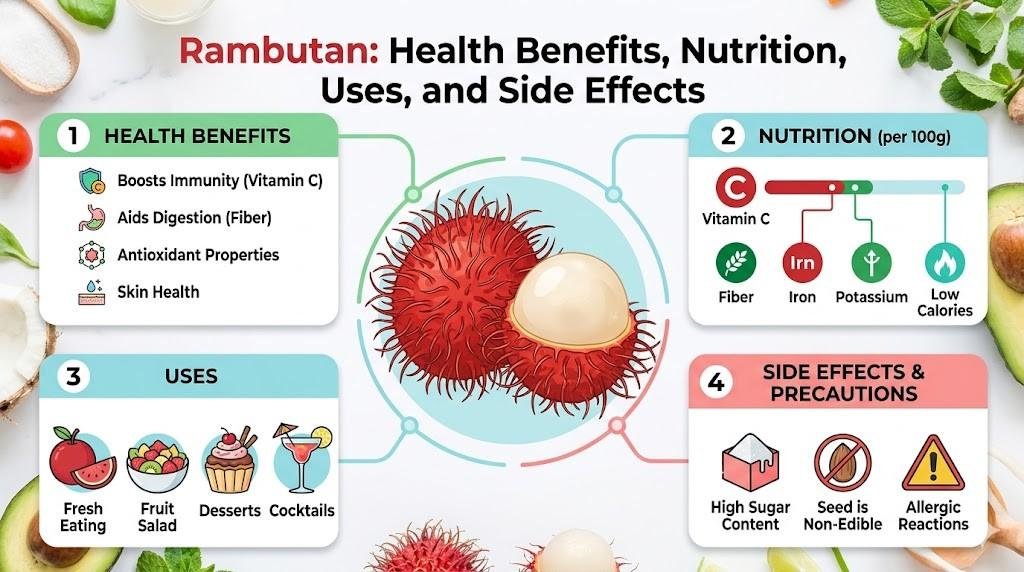
Rambutan is one of the most eye-catching tropical fruits in the world. With its bright red or yellow shell covered in soft hair-like spikes, rambutan instantly attracts attention in fruit markets across tropical countries. Native to Malaysia and widely grown in Thailand, Indonesia, and other tropical regions, rambutan has become increasingly popular worldwide because of its sweet flavor, refreshing texture, and impressive nutritional value.
The name “rambutan” comes from the Malay word rambut, meaning “hair,” referring to the fruit’s unusual outer appearance. Although it looks exotic, the inside reveals translucent white flesh that tastes mildly sweet, juicy, and similar to grapes or lychee. Rambutan is often compared to Lychee because both belong to the same botanical family.
In recent years, rambutan has gained attention among health-conscious consumers because it offers vitamins, minerals, antioxidants, and hydration while being relatively low in calories. This makes it attractive for people interested in natural immunity support, skin health, digestion, and weight management.
This complete guide explains everything about rambutan—its origin, nutrition, health benefits, side effects, uses, and why it deserves a place in a healthy diet.
What Is Rambutan?
Rambutan is a tropical fruit that grows on medium-sized evergreen trees in warm, humid climates. The fruit usually measures 3–6 cm in size and has a thick outer skin covered with soft flexible spines.
When peeled, rambutan reveals juicy translucent flesh surrounding a central seed. The edible part is sweet, slightly floral, and highly refreshing.
Botanical Classification
- Kingdom: Plantae
- Family: Sapindaceae
- Genus: Nephelium
- Scientific name: Nephelium lappaceum
Rambutan belongs to the same family as:
- Lychee
- Longan
Because of this, these fruits often share similar taste profiles and nutritional characteristics.
Origin and Global Popularity
Rambutan originated in Southeast Asia and remains highly popular there today.
Major Rambutan Producing Countries
- Thailand
- Malaysia
- Indonesia
- Philippines
- Vietnam
- India
Today rambutan is exported globally and appears in supermarkets in United States, United Kingdom, and Australia.
Its exotic appearance and health reputation have increased its demand in modern fruit markets.
Nutritional Value of Rambutan
A 100-gram serving of rambutan provides:
- Calories: 68
- Water: 78%
- Carbohydrates: 16–18 g
- Fiber: 1–2 g
- Protein: 0.9 g
- Fat: 0.2 g
- Vitamin C: High
- Copper: High
- Iron: Moderate
- Calcium: Small amount
- Potassium: Moderate
- Magnesium: Moderate
Rambutan is especially valued for its vitamin C content and hydration.
Top Health Benefits of Rambutan
1. Supports Immune Function
it contains significant vitamin C, which helps strengthen the immune system.
Vitamin C helps:
- Stimulate white blood cell activity
- Protect against infections
- Reduce oxidative stress
- Support faster healing
Regular fruit intake can improve immune defense naturally.
2. Rich in Antioxidants
It contains antioxidants that protect cells from free radical damage.
Important compounds include:
- Flavonoids
- Phenolic acids
- Vitamin C
Antioxidants may help reduce long-term inflammation.
3. Good for Skin Health
Vitamin C supports collagen production, which helps maintain:
- Skin elasticity
- Smoothness
- Natural glow
Hydration from It also contributes to healthier-looking skin.
4. Helps Digestion
The fiber in It supports digestive health.
Benefits include:
- Better bowel movement
- Reduced constipation
- Improved gut health
Eating whole fruit rather than juice gives more fiber benefits.
5. Supports Weight Management
It is relatively low in calories and naturally sweet.
This helps:
- Satisfy sugar cravings
- Reduce high-calorie dessert intake
- Improve satiety
It fits well into calorie-controlled diets.
6. Improves Hydration
Because It contains high water content, it helps:
- Maintain body fluid balance
- Refresh the body in hot climates
- Support kidney function
This makes it excellent during summer.
7. Supports Iron Absorption
Vitamin C improves iron absorption from plant foods.
This is especially useful when It is eaten with:
- Spinach
- Lentils
- Beans
8. May Support Heart Health
It contains potassium and antioxidants that may help:
- Regulate blood pressure
- Support blood vessel function
- Reduce oxidative stress
A balanced fruit-rich diet benefits cardiovascular health.
9. Supports Bone Strength
Minerals in It include:
- Calcium
- Magnesium
- Phosphorus
These nutrients help maintain bone structure.
10. Natural Energy Booster
Natural sugars in rambutan provide quick energy without processed additives.
This makes rambutan useful as:
- Midday snack
- Pre-workout fruit
- Summer refreshment
Rambutan for Men
It offers several benefits for male health:
Energy Support
Natural carbohydrates help daily stamina.
Mineral Support
Copper and iron support blood circulation.
Antioxidants
May reduce oxidative stress from active lifestyles.
Rambutan for Women
Women benefit from rambutan because it helps:
Skin Health
Vitamin C supports collagen.
Iron Absorption
Helpful during menstruation when iron demand increases.
Hydration
Supports skin and energy during hot weather.
Rambutan During Pregnancy
Pregnant women can eat rambutan moderately.
Benefits include:
- Vitamin C
- Hydration
- Mild fiber
Important:
- Eat fresh fruit only
- Avoid excess intake
- Wash thoroughly
Always consult a doctor for pregnancy diet advice.
Quick Fun Fact
Although it looks unusual outside, the inside of rambutan is one of the sweetest tropical fruits enjoyed globally.
Is Rambutan Good for Diabetes?
People with diabetes can eat rambutan in moderation.
Why Moderation Matters
Rambutan contains natural sugars.
Recommended:
- Small portions
- Pair with protein or nuts
- Avoid sweet syrups
Whole fruit is better than processed fruit products.
Rambutan for Weight Loss
Rambutan may help weight management because:
- Low calorie
- Naturally sweet
- High water content
Best used as:
- Snack replacement
- Fruit salad ingredient
- Dessert substitute
Rambutan vs Lychee
| Feature | Rambutan | Lychee |
|---|---|---|
| Texture | Juicy, firm | Soft, juicy |
| Taste | Mild sweet | Floral sweet |
| Shell | Hairy | Smooth |
| Fiber | Slightly higher | Moderate |
| Vitamin C | High | High |
Lychee remains sweeter, while rambutan often feels fresher.
Rambutan vs Longan
| Feature | Rambutan | Longan |
|---|---|---|
| Size | Larger | Smaller |
| Taste | Sweet mild | Musky sweet |
| Flesh | Firm | Tender |
Longan is milder in aroma.
How to Eat Rambutan
Simple Method
- Wash fruit
- Cut shell lightly
- Open peel
- Remove flesh
- Avoid seed
Ways to Enjoy
- Fresh raw
- Fruit salad
- Smoothies
- Desserts
- Yogurt topping
Rambutan in Modern Food Trends
Rambutan appears increasingly in:
- Tropical smoothie bowls
- Fruit platters
- Exotic desserts
- Juice bars
Its appearance makes it attractive on social media food content.
Can You Eat Rambutan Seed?
The seed is generally not recommended raw.
Why:
- Bitter taste
- Hard texture
- Certain compounds may cause digestive discomfort
Always remove seed.
Rambutan Peel Uses
In some traditional practices, peel extracts are studied for antioxidants.
However peel is not commonly eaten.
Possible Side Effects of Rambutan
Although safe for most people:
Excess Intake May Cause
- Digestive discomfort
- Too much sugar intake
- Mild bloating
Allergy Rare but Possible
Some people may react to tropical fruits.
Storage Tips
Fresh Rambutan Storage
- Room temperature: 2–3 days
- Refrigerator: 5–7 days
Best Practice
Keep shell intact until eating.
Seasonal Availability
Rambutan season varies by region but often peaks in tropical monsoon months.
In many Asian countries:
- Summer
- Early monsoon
Economic Importance
Rambutan supports tropical fruit export industries.
It provides farmers income in:
- Thailand
- Malaysia
- Indonesia
Why Rambutan Is Trending Globally
Modern consumers want:
- Exotic fruits
- Natural vitamins
- Low-calorie snacks
Rambutan fits all three trends.
It is increasingly featured in:
- Wellness blogs
- Nutrition plans
- Tropical fruit exports
FAQs
1.Is rambutan healthier than lychee?
Both are healthy; rambutan often has slightly more fiber.
2.Can children eat rambutan?
Yes, after removing seed carefully.
3.Is rambutan high in sugar?
Moderate natural sugar.
4.Can rambutan help skin glow?
Vitamin C may support skin health.
5.Is rambutan good in summer?
Yes, because it hydrates well.
6.Can diabetics eat rambutan?
Yes, in controlled portions.
7.Is canned rambutan healthy?
Fresh is better because canned versions may contain added sugar.
8.Does rambutan help digestion?
Fiber supports digestion.
9.Can rambutan be frozen?
Yes, peeled flesh freezes well.
10.Is rambutan expensive?
Price varies depending on season and imports.
11. What does rambutan taste like?
It tastes sweet, juicy, and mildly floral, often compared to Lychee or grapes.
12. Can you eat rambutan every day?
Yes, moderate daily intake is generally safe as part of a balanced diet.
13. Is rambutan good for weight loss?
It may support weight management because it is low in calories and high in water content.
Final Thoughts
Rambutan is far more than an exotic-looking fruit. It combines hydration, antioxidants, vitamin C, fiber, and natural sweetness in one refreshing package. Its growing popularity worldwide shows how consumers increasingly value fruits that offer both flavor and nutrition.
Whether eaten fresh, added to fruit bowls, blended into smoothies, or enjoyed as a healthy snack, rambutan deserves attention among the world’s most interesting tropical fruits.
Also read:
Passion Fruit 101: Everything You Need to Know About This Tropical Fruit