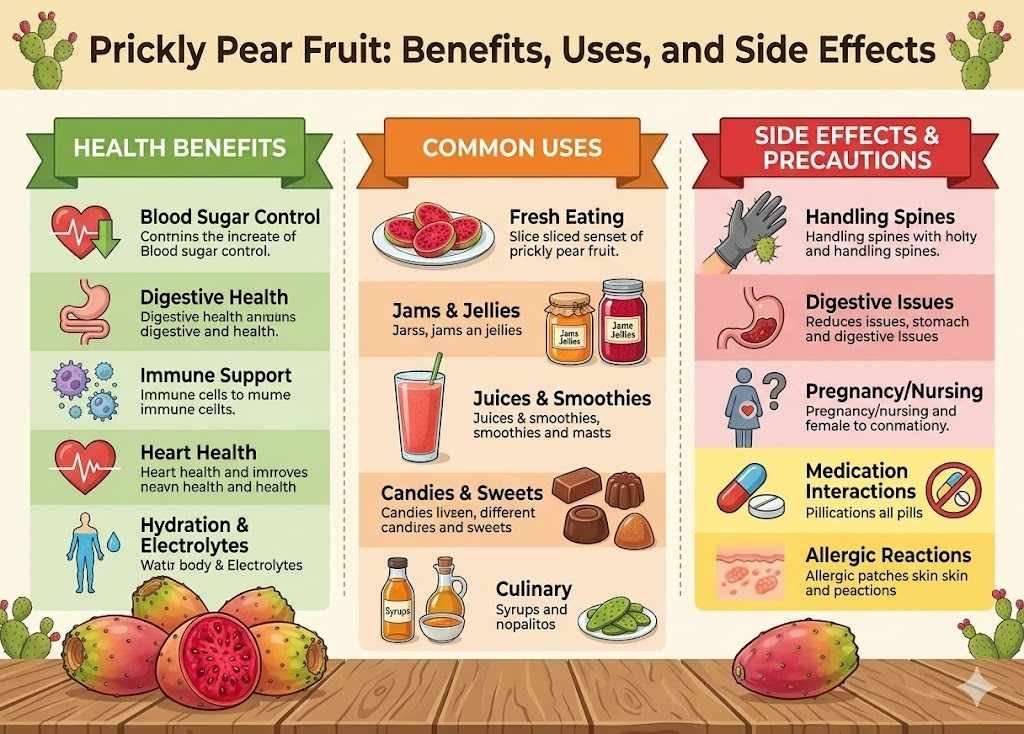
Prickly pear Fruit is one of the most fascinating fruits in the world because it grows on cactus plants in dry, hot climates while delivering impressive nutrition, vibrant color, and refreshing taste. Recognized by its oval shape, bright red, purple, yellow, or green skin, prickly pear is the edible fruit of the cactus species Opuntia.
For centuries, prickly pear has been an important food in desert regions of Mexico, the Mediterranean, and parts of India. Today it is increasingly popular worldwide because people are searching for fruits that offer hydration, antioxidants, fiber, and natural support for modern health goals.
The fruit is often called cactus fruit, cactus pear, tuna fruit, or nopales fruit depending on the region. Its sweet taste, juicy flesh, and vibrant pigment make it attractive in smoothies, juices, salads, desserts, and wellness diets.
This complete guide explores prickly pear nutrition, health benefits, uses, side effects, and why this desert fruit is becoming a modern superfruit.
What Is Prickly Pear?
Prickly pear is the fruit produced by cactus pads belonging mainly to the genus Opuntia.
The fruit grows in hot, dry climates and survives extreme conditions where many other fruits cannot grow.
Common Names of Prickly Pear
- Cactus pear
- Tuna fruit
- Indian fig
- Barbary fig
Its thick skin contains tiny spines called glochids that must be removed carefully before eating.
Inside, the flesh is juicy and contains many edible seeds.
Origin and Global Cultivation
Prickly pear originated in Mexico and spread worldwide because cactus plants adapt easily to arid conditions.
Major Growing Regions
- Mexico
- Italy
- Spain
- Morocco
- India
- United States
It is especially valued in dry agricultural systems because it requires little water.
Nutritional Value of Prickly Pear
A 100-gram serving of prickly pear provides:
- Calories: 40–45
- Water: High
- Carbohydrates: 9–10 g
- Fiber: 3–4 g
- Protein: 0.7 g
- Fat: Low
- Vitamin C
- Magnesium
- Potassium
- Calcium
- Antioxidants
Its bright pigments also contain plant compounds with protective effects.
Top Health Benefits of Prickly Pear Fruit
1. Rich in Antioxidants
Prickly pear contains antioxidants such as:
- Betalains
- Flavonoids
- Vitamin C
These compounds help protect cells from oxidative stress.
The red and purple varieties usually contain higher antioxidant pigments.
2. Supports Immune Health
Vitamin C helps:
- Support immune defense
- Assist tissue repair
- Improve antioxidant protection
Regular fruit intake supports overall resilience.
3. Good for Digestion
Prickly pear contains dietary fiber that helps:
- Promote regular bowel movement
- Support healthy gut bacteria
- Reduce constipation
Fiber also helps improve fullness after meals.
4. Supports Hydration
This fruit has high water content, making it excellent in hot climates.
Hydration helps:
- Maintain energy
- Support skin moisture
- Improve body temperature regulation
5. May Support Blood Sugar Balance
Fiber slows sugar absorption.
Because of this, prickly pear is often studied for metabolic support.
However portion control still matters.
6. Supports Heart Health
The fruit provides potassium and antioxidants that may help:
- Maintain healthy blood pressure
- Support circulation
- Reduce oxidative stress in blood vessels
7. Helps Weight Management
Prickly pear is useful for weight control because it is:
- Low in calories
- High in fiber
- Naturally sweet
It can replace high-calorie desserts.
8. Supports Skin Health
Vitamin C supports collagen formation.
Antioxidants may help reduce visible skin stress caused by environmental exposure.
9. May Help Reduce Inflammation
Plant pigments in prickly pear are widely studied for anti-inflammatory properties.
A colorful fruit-rich diet supports overall wellness.
10. Supports Bone Health
Minerals such as calcium and magnesium help support bones.
Prickly Pear for Men
Men may benefit because prickly pear offers:
Natural Energy
Its natural sugars support light energy.
Hydration
Useful during hot weather and active work.
Antioxidants
May help reduce oxidative stress.
Prickly Pear for Women
Women often choose prickly pear because it helps:
Skin Support
Vitamin C helps collagen.
Hydration
Useful for skin freshness.
Fiber
Supports digestive comfort.
Prickly Pear Fruit During Pregnancy
In moderate amounts prickly pear may help provide:
- Hydration
- Fiber
- Vitamin C
Always wash properly and remove spines.
Is Prickly Pear Fruit Good for Diabetes?
Moderate portions may fit diabetic diets.
Why?
- Fiber slows glucose release
- Lower calorie fruit option
Still best eaten carefully with meal planning.
Prickly Pear Fruit for Weight Loss
This fruit fits weight control plans because:
- Low calorie
- High fiber
- Filling effect
Best used between meals.
What Does Prickly Pear Taste Like?
Taste varies by variety but often includes:
- Mild sweetness
- Berry-like notes
- Melon-like freshness
Texture is juicy and seed-filled.
How to Eat Prickly Pear Fruit
Safe Preparation
- Wear gloves
- Remove outer spines
- Cut both ends
- Slice peel
- Remove flesh
Ways to Eat
- Fresh slices
- Smoothies
- Juice
- Fruit salads
- Desserts
Prickly Pear Fruit Juice Trend
Prickly pear juice is increasingly popular in wellness drinks because of:
- Bright natural color
- Refreshing taste
- Low calorie appeal
It appears in health cafes worldwide.
Prickly Pear Fruit vs Dragon Fruit
| Feature | Prickly Pear | Dragon Fruit |
|---|---|---|
| Plant | Cactus | Cactus |
| Texture | Juicy seeds | Soft seeds |
| Taste | Berry-like | Mild sweet |
| Fiber | High | Moderate |
Dragon fruit has milder flavor, while prickly pear often tastes richer.
Prickly Pear Fruit vs Watermelon
| Feature | Prickly Pear | Watermelon |
|---|---|---|
| Fiber | Higher | Lower |
| Water | High | Very high |
| Antioxidants | Strong pigments | Lycopene |
Seeds: Can You Eat Them?
Yes, the seeds are edible.
Some people:
- Swallow them whole
- Chew lightly
- Strain in juice
Prickly Pear Fruit in Traditional Food Culture
In Mexico, prickly pear is used in:
- Fresh fruit markets
- Juices
- Syrups
- Traditional dishes
The cactus pads themselves are also eaten as vegetables.
Prickly Pear Fruit and Sustainable Farming
Cactus farming is highly sustainable because:
- Requires little water
- Survives drought
- Protects dry soil
This makes prickly pear important in future climate-friendly agriculture.
Possible Side Effects
Though safe for most people:
Excess Intake May Cause
- Mild bloating
- Digestive discomfort
- Loose stool in sensitive people
Seeds May Feel Hard
Some people prefer strained juice.
Storage Tips
Fresh Fruit
- Refrigerate for 3–5 days
Cut Fruit
- Consume quickly
Why Prickly Pear Is Trending Globally
Modern consumers prefer fruits that offer:
- Strong antioxidants
- Unique appearance
- Low calorie nutrition
- Sustainable farming value
Prickly pear fits all these trends.
FAQs About Prickly pear
1.Is prickly pear a superfruit?
It is often considered one because of antioxidants and fiber.
2.Can you eat prickly pear raw?
Yes, after removing skin and spines.
3.Is prickly pear sweet?
Yes, mildly sweet.
4.Does prickly pear help digestion?
Fiber supports digestion.
5.Is prickly pear good for skin?
Vitamin C helps skin support.
6.Can diabetics eat prickly pear?
Moderate portions may fit diabetic diets.
7.Are seeds edible?
Yes.
8.Is prickly pear hydrating?
Yes, because of high water content.
9.Can children eat prickly pear?
Yes, after safe preparation.
10.Is prickly pear seasonal?
Yes, depending on climate.
11.Are there prickly pears in India?
In India, majorly it is found in Gujarat and Rajasthan. Prickly Pear is also known as Nopal, Tuna in International markets, Nagphani in Hindi and ayurveda.
12.What does prickly pear do for the body?
Prickly pear cactus — or also known as nopal, opuntia and other names — is promoted for treating diabetes, high cholesterol, obesity and hangovers. It’s also touted for its antiviral and anti-inflammatory properties.
13.What is another name for prickly pear?
In Mexico, these Opuntia cacti are known as “nopal,” derived from the Nahuatl word for prickly pear, “nochtli.” The Aztecs would use juice from this cactus to treat burns and other ailments, and they considered it sacred. This species is still consumed by people and wildlife today.
14.Are prickly pear cactus illegal?
Prickly pears (Opuntia species) are cactus plants that can invade natural areas and pastures. Opuntias must not be sold in NSW except for Indian fig Opuntia ficus-indica.
Final Thoughts
Prickly pear is one of the most unique fruits in the world because it combines desert survival, beautiful color, hydration, antioxidants, and nutritional value in one fruit. Its rising popularity reflects growing interest in fruits that support health while also fitting sustainable agriculture.
Whether eaten fresh, blended into juice, or added to fruit bowls, prickly pear offers both flavor and function for modern diets.
Also read :