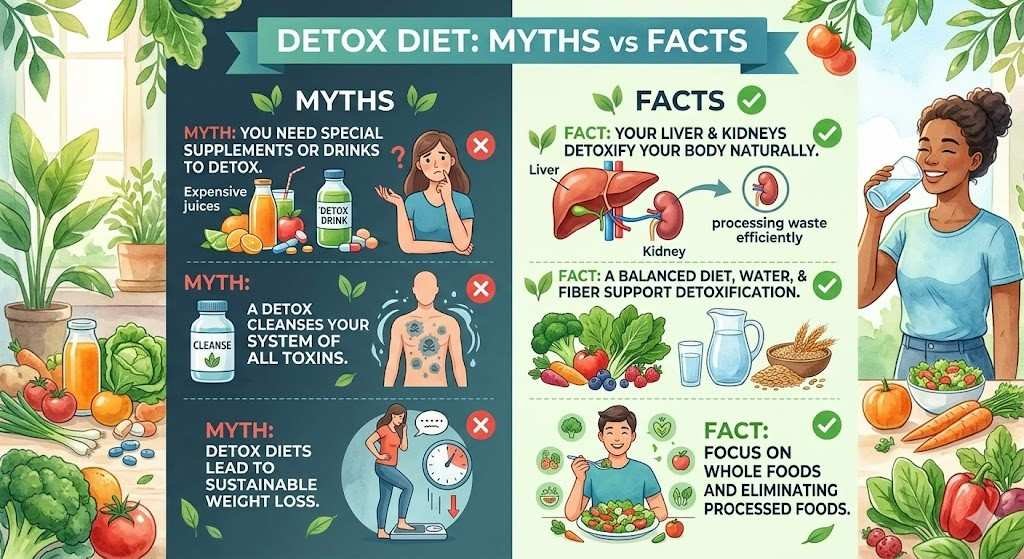
The idea of “detoxing” has become one of the most popular health trends in recent years. From juice cleanses and herbal teas to extreme fasting programs, detox diets promise to flush out toxins, boost energy, improve digestion, and even lead to rapid weight loss. But how much of this is actually true—and how much is just marketing hype?
In this comprehensive guide, we’ll separate myths from facts, explore how your body naturally detoxifies itself, and help you understand what truly supports long-term health.
What Is a Detox Diet?
A detox diet typically refers to a short-term eating plan designed to eliminate toxins from the body. These diets often involve:
- Fasting or consuming only liquids
- Drinking fruit and vegetable juices
- Avoiding processed foods, sugar, caffeine, and alcohol
- Taking supplements or herbal detox products
- Eating “clean” whole foods
Detox diets can last anywhere from a few days to several weeks.
Why Detox Diets Are So Popular
The appeal of detox diets lies in a simple promise: quick results with minimal effort. People are drawn to them for various reasons:
- Rapid weight loss
- Improved digestion
- Clearer skin
- Increased energy
- Resetting unhealthy eating habits
However, not all these claims are backed by science.
How Your Body Actually Detoxifies Itself
Before diving into myths and facts, it’s important to understand this key point:
👉 Your body already has a built-in detox system.
The primary organs involved include:
1. Liver
The liver processes toxins and converts them into substances that can be eliminated.
2. Kidneys
They filter waste products from the blood and remove them through urine.
3. Digestive System
Your intestines eliminate waste through bowel movements.
4. Skin
Sweat helps release certain toxins, although in small amounts.
5. Lungs
They expel carbon dioxide and other gaseous waste.
💡 Conclusion: A healthy body doesn’t need extreme detox diets—it just needs support.
Detox Diet Myths vs Facts
Let’s break down the most common detox claims.
Myth 1: Detox Diets Remove All Toxins
❌ Myth
Detox diets can completely cleanse your body of toxins.
✅ Fact
There is no scientific evidence that detox diets remove toxins better than your body already does.
Your liver and kidneys are highly efficient. Unless you have a medical condition, they don’t need help from expensive detox products.
Myth 2: Juice Cleanses Are the Best Detox Method
❌ Myth
Juice cleanses flush out toxins and rejuvenate your body.
✅ Fact
Juice cleanses may provide vitamins, but they also:
- Lack fiber (important for digestion)
- Contain high sugar levels
- Can cause energy crashes
Short-term weight loss is usually due to water loss, not fat loss.
Myth 3: Detox Diets Lead to Sustainable Weight Loss
❌ Myth
You can lose weight permanently through detox programs.
✅ Fact
Most weight lost during detox is temporary. Once normal eating resumes, the weight often returns.
True weight loss comes from:
- Balanced nutrition
- Regular exercise
- Long-term lifestyle changes
Myth 4: You Need Detox After Overeating
❌ Myth
After a weekend of junk food, you must detox.
✅ Fact
Your body naturally recovers once you return to healthy eating habits. Extreme detoxing can actually stress your system.
Myth 5: Detox Teas and Supplements Are Necessary
❌ Myth
Special teas and pills are essential for detoxification.
✅ Fact
Many detox products:
- Lack regulation
- Have little scientific backing
- May cause side effects (like dehydration or digestive issues)
Myth 6: Sweating Removes Toxins
❌ Myth
More sweating = more detox.
✅ Fact
Sweating helps regulate body temperature, but only a tiny amount of toxins is removed through sweat.
Myth 7: Detox Diets Boost Energy Instantly
❌ Myth
You’ll feel energized immediately on a detox diet.
✅ Fact
Low-calorie detox diets often cause:
- Fatigue
- Dizziness
- Irritability
Real Benefits of Detox Diets (When Done Right)
Not everything about detox diets is bad. Some positive aspects include:
1. Reduced Processed Food Intake
Cutting out junk food naturally improves health.
2. Increased Fruit and Vegetable Consumption
This boosts vitamin and antioxidant intake.
3. Mindful Eating Reset
A short detox can help break unhealthy habits.
Risks and Side Effects of Detox Diets
Extreme detox diets can do more harm than good.
Common Risks:
- Nutrient deficiencies
- Muscle loss
- Slowed metabolism
- Blood sugar imbalances
- Dehydration
Who Should Avoid Detox Diets:
- Pregnant or breastfeeding women
- People with diabetes
- Individuals with eating disorders
- Those with chronic illnesses
What Actually Works: Healthy Detox Strategies
Instead of extreme diets, focus on supporting your body’s natural detox system.
1. Stay Hydrated
Water is essential for flushing out waste.
Tip: Aim for 8–10 glasses daily.
2. Eat Whole Foods
Focus on:
- Fruits and vegetables
- Whole grains
- Lean protein
- Healthy fats
3. Increase Fiber Intake
Fiber helps eliminate toxins through digestion.
Sources:
- Oats
- Fruits
- Vegetables
- Legumes
4. Support Liver Health
Foods that help your liver:
- Garlic
- Turmeric
- Leafy greens
- Beets
5. Get Enough Sleep
Your body repairs and detoxifies during sleep.
Goal: 7–9 hours per night
6. Exercise Regularly
Physical activity improves circulation and supports detox organs.
7. Limit Alcohol and Sugar
Reducing these lowers the burden on your liver.
8. Manage Stress
Chronic stress can negatively affect digestion and overall health.
Sample 1-Day Natural Detox Meal Plan
Morning
- Warm water with lemon
- Oatmeal with fruits and nuts
Mid-Morning Snack
- Apple + handful of almonds
Lunch
- Brown rice, dal, and mixed vegetables
- Salad with olive oil
Afternoon Snack
- Green tea + roasted chana
Dinner
- Grilled vegetables + paneer or chicken
- Whole wheat roti
Before Bed
- Herbal tea
Signs Your Body Doesn’t Need a Detox
If you experience the following, your body is likely functioning well:
- Regular bowel movements
- Clear urine
- Stable energy levels
- Healthy skin
- Good digestion
When Should You Actually Detox?
Instead of extreme detoxing, consider a gentle reset when:
- You’ve been eating unhealthy for a long time
- You feel sluggish due to poor lifestyle habits
- You want to restart healthy routines
Even then, focus on balanced nutrition—not starvation.
Detox Diet vs Clean Eating
| Detox Diet | Clean Eating |
|---|---|
| Short-term | Long-term |
| Restrictive | Balanced |
| Quick results | Sustainable results |
| Often extreme | Moderate and practical |
👉 Winner: Clean eating for long-term health.
Expert Opinion: What Nutritionists Say
Most health professionals agree:
- Detox diets are unnecessary for healthy individuals
- The body already has effective detox systems
- Sustainable habits matter more than quick fixes
FAQs About Detox Diets
1. Do detox diets really work?
They may lead to short-term weight loss, but not long-term results.
2. How long should a detox last?
If done, keep it simple and short (1–3 days) with whole foods.
3. Are detox drinks safe?
Natural drinks are fine, but avoid extreme or chemical-based products.
4. Can detox improve skin?
A healthy diet can improve skin, but detox diets aren’t a magic solution.
5. Is fasting necessary for detox?
No. Your body detoxifies without fasting.
6. Can I exercise during detox?
Light exercise is fine, but avoid intense workouts on low-calorie plans.
7. Are detox diets good for digestion?
High-fiber diets help digestion—not restrictive detox plans.
8. Do detox diets remove fat?
No. Fat loss requires a calorie deficit over time.
Final Verdict: Myths vs Facts
Myths:
- Detox diets remove toxins
- Juice cleanses are essential
- Rapid weight loss is sustainable
- Supplements are necessary
Facts:
- Your body detoxifies naturally
- Whole foods support detox better than extremes
- Sustainable habits matter more than quick fixes
Conclusion
Detox diet may sound appealing, but the truth is simple: your body already knows how to detox itself. Instead of falling for quick-fix solutions, focus on building healthy, sustainable habits.
Eat balanced meals, stay hydrated, exercise regularly, and get enough sleep—these are the real keys to a naturally detoxified body.
Also read:
Thyroid Diet: What to Eat & Avoid for Optimal Hormone Health