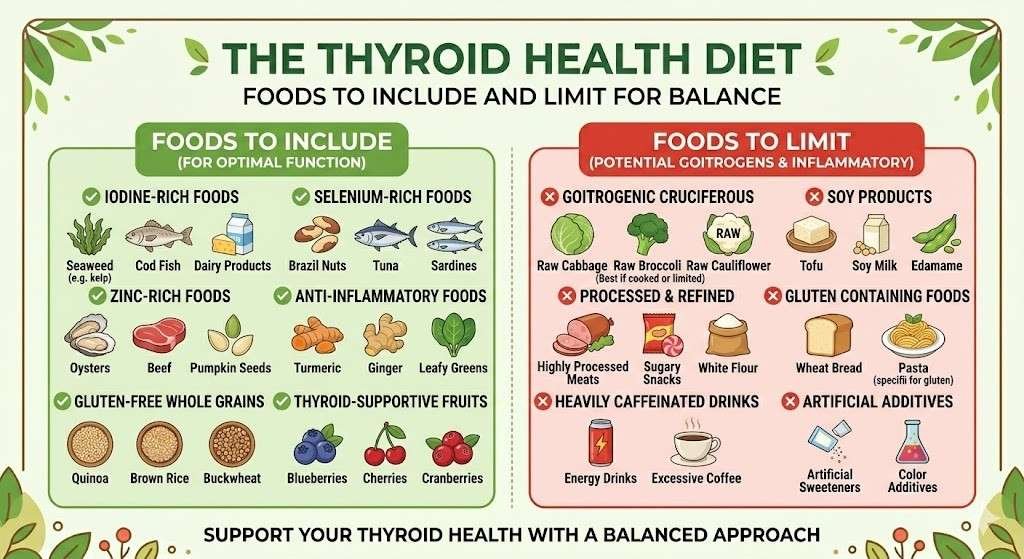
Thyroid Diet :The thyroid is a small, butterfly-shaped gland in the neck, but its impact on your body is enormous. It regulates metabolism, energy levels, body temperature, and even mood through the hormones it produces. When the thyroid is not functioning properly, it can lead to conditions like hypothyroidism (underactive thyroid) or hyperthyroidism (overactive thyroid).
Diet plays a crucial role in supporting thyroid health. While food alone cannot cure thyroid disorders, the right nutrition can help manage symptoms, improve hormone balance, and support overall well-being.
This comprehensive 3500-word guide will help you understand what to eat, what to avoid, and how to create a balanced thyroid-friendly meal plan.
Understanding Thyroid Function
The thyroid produces two main hormones:
- T3 (triiodothyronine)
- T4 (thyroxine)
These hormones control how your body uses energy. Proper thyroid function depends on key nutrients like iodine, selenium, zinc, and iron.
Common Thyroid Disorders
Hypothyroidism
- Fatigue
- Weight gain
- Cold sensitivity
- Dry skin
Hyperthyroidism
- Weight loss
- Anxiety
- Rapid heartbeat
- Heat intolerance
Importance of Diet for Thyroid Health
Nutrition directly affects hormone production and conversion. A balanced diet can:
- Support hormone synthesis
- Reduce inflammation
- Improve metabolism
- Boost energy levels
Key Nutrients for Thyroid Diet
1. Iodine
Iodine is essential for thyroid hormone production.
Sources:
- Iodized salt
- Seaweed
- Dairy products
2. Selenium
Helps convert T4 into active T3.
Sources:
- Brazil nuts
- Sunflower seeds
- Fish
3. Zinc
Supports hormone production and immune function.
Sources:
- Meat
- Shellfish
- Legumes
4. Iron
Important for oxygen transport and thyroid function.
Sources:
- Spinach
- Lentils
- Red meat
5. Vitamin D
Supports immune system and hormone balance.
Sources:
- Sunlight
- Eggs
- Fortified foods
What to Eat on a Thyroid Diet
1. Whole Foods
Focus on minimally processed foods rich in nutrients.
Examples:
- Fruits and vegetables
- Whole grains
- Lean proteins
2. High-Quality Protein
Protein supports metabolism and energy.
Examples:
- Chicken
- Fish
- Eggs
- Lentils
3. Healthy Fats
Support hormone production.
Examples:
- Olive oil
- Avocados
- Nuts and seeds
4. Fruits and Vegetables
Provide antioxidants and fiber.
Best choices:
- Berries
- Leafy greens
- Carrots
5. Gluten-Free Options (if sensitive)
Some individuals with thyroid issues benefit from reducing gluten.
Foods to Avoid or Limit
1. Goitrogenic Foods (in excess)
These can interfere with thyroid function when consumed raw in large amounts.
Examples:
- Cabbage
- Broccoli
- Cauliflower
Tip: Cooking reduces their effect.
2. Soy Products (excess)
May interfere with thyroid hormone absorption.
3. Processed Foods
High in sugar, salt, and unhealthy fats.
4. Sugary Foods
Can worsen energy crashes and weight gain.
5. Gluten (for sensitive individuals)
May trigger inflammation in some people.
Thyroid Diet Meal Plan (7 Days)
Day 1
- Breakfast: Oatmeal with berries
- Lunch: Quinoa salad with vegetables
- Dinner: Grilled fish with spinach
- Snack: Nuts
Day 2
- Breakfast: Eggs with whole grain toast
- Lunch: Lentil soup
- Dinner: Chicken with brown rice
- Snack: Yogurt
Day 3
- Breakfast: Smoothie with banana and spinach
- Lunch: Chickpea salad
- Dinner: Baked salmon with vegetables
- Snack: Seeds
Day 4
- Breakfast: Fruit bowl with nuts
- Lunch: Vegetable soup
- Dinner: Grilled chicken with quinoa
- Snack: Apple
Day 5
- Breakfast: Oats with nuts
- Lunch: Brown rice with vegetables
- Dinner: Fish curry (light)
- Snack: Yogurt
Day 6
- Breakfast: Smoothie bowl
- Lunch: Lentil salad
- Dinner: Chicken with vegetables
- Snack: Almonds
Day 7
- Breakfast: Eggs and avocado toast
- Lunch: Quinoa bowl
- Dinner: Grilled paneer with salad
- Snack: Dark chocolate (moderate)
Lifestyle Tips for Thyroid Health
- Eat balanced meals regularly
- Stay physically active
- Manage stress
- Get adequate sleep
- Avoid skipping meals
Common Mistakes to Avoid
- Over-restricting foods
- Ignoring nutrient deficiencies
- Relying only on diet without medical care
- Consuming too much iodine
Thyroid Diet for Weight Management
Balancing thyroid hormones can help regulate metabolism. Focus on:
- Protein-rich meals
- Fiber intake
- Regular physical activity
Featured Snippet Summary
What is a Thyroid Diet? A thyroid diet is a nutrition plan that supports healthy thyroid function by including essential nutrients like iodine, selenium, and zinc while limiting processed foods, excess soy, and sugar.
What to Eat:
- Iodine-rich foods (iodized salt, dairy)
- Selenium foods (Brazil nuts, fish)
- Zinc-rich foods (legumes, seeds)
- Whole foods (fruits, vegetables, lean protein)
What to Avoid:
- Processed foods
- Excess sugar
- Raw goitrogenic foods in large amounts
- Excess soy products
FAQs about Thyroid Diet
1. Can diet cure thyroid problems?
No, but it can help manage symptoms and support treatment.
2. Is iodine always beneficial?
Not in excess. Too much iodine can worsen thyroid issues.
3. Should I avoid all goitrogenic foods?
No, just avoid consuming them raw in large amounts.
4. Is gluten bad for thyroid?
Only for those who are sensitive or have autoimmune conditions.
5. Can I drink coffee?
Yes, but avoid taking it with thyroid medication.
6. What is the best diet for hypothyroidism?
A balanced diet rich in nutrients like selenium, zinc, and iodine.
7. Can I lose weight with thyroid issues?
Yes, with proper diet and medical support.
8. Are supplements necessary?
Only if prescribed by a doctor.
9. How long does diet take to show results?
A few weeks to months depending on consistency.
10. Can stress affect thyroid?
Yes, stress can disrupt hormone balance.
Conclusion
Thyroid Diet : Managing thyroid health requires a holistic approach that includes proper nutrition, lifestyle changes, and medical guidance. A thyroid-friendly diet can significantly improve your quality of life by supporting hormone balance, boosting energy, and reducing symptoms.
Focus on whole, nutrient-dense foods, avoid excessive processed items, and listen to your body’s needs. With consistency and the right approach, you can take control of your thyroid health and live a healthier, more balanced life.
Also read :