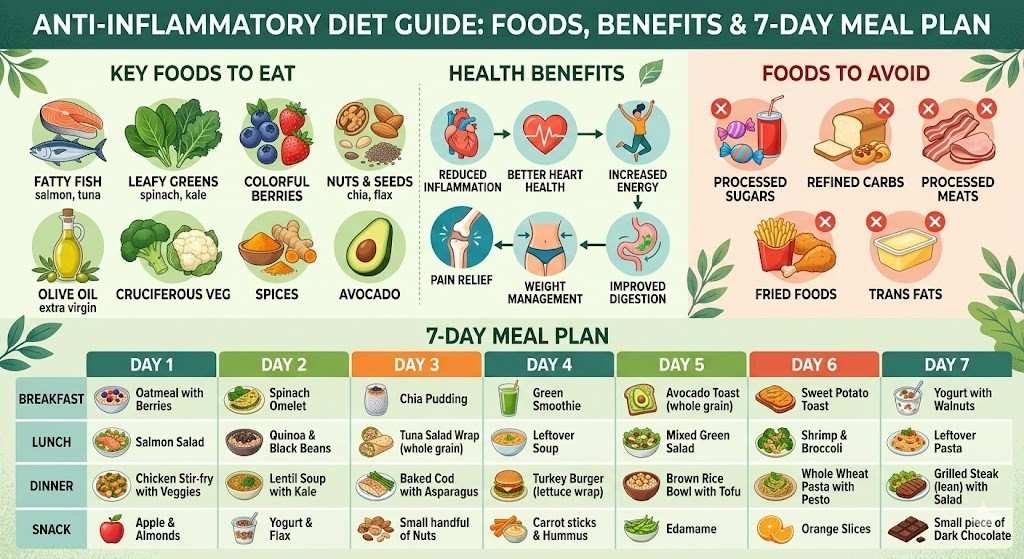
Inflammation is your body’s natural defense mechanism. It helps fight infections, heal injuries, and protect against harmful invaders. But when inflammation becomes chronic, it can silently contribute to serious health conditions like heart disease, diabetes, arthritis, and even cancer.
That’s where the anti-inflammatory diet comes in.
This diet focuses on nutrient-rich, whole foods that help reduce inflammation naturally while supporting overall health and longevity. In this complete 3000-word guide, you’ll learn what inflammation is, which foods fight it, what to avoid, and how to follow a practical meal plan.
What Is Inflammation?
Inflammation is your immune system’s response to injury or infection.
Types of Inflammation:
1. Acute Inflammation
- Short-term response
- Helps healing
- Example: swelling after injury
2. Chronic Inflammation
- Long-term and harmful
- Often caused by poor diet, stress, or lifestyle
- Linked to diseases like:
- Heart disease
- Type 2 diabetes
- Arthritis
- Obesity
What Is an Anti-Inflammatory Diet?
An anti-inflammatory diet is a way of eating that emphasizes:
- Whole, unprocessed foods
- Healthy fats
- Antioxidant-rich fruits and vegetables
It avoids foods that trigger inflammation, such as processed items, refined sugar, and trans fats.
This diet is similar to the Mediterranean diet, widely known for its health benefits.
How Diet Affects Inflammation
Your daily food choices can either:
- Increase inflammation (pro-inflammatory foods)
- Reduce inflammation (anti-inflammatory foods)
Pro-Inflammatory Foods:
- Sugary drinks
- Refined carbohydrates
- Processed meats
- Fried foods
Anti-Inflammatory Foods:
- Leafy greens
- Berries
- Fatty fish
- Nuts and seeds
Top Benefits of an Anti-Inflammatory Diet
1. Reduces Risk of Chronic Diseases
An anti-inflammatory diet may lower the risk of:
- Heart disease
- Diabetes
- Cancer
2. Supports Joint Health
This diet can help manage conditions like Rheumatoid Arthritis by reducing pain and stiffness.
3. Improves Gut Health
High-fiber foods promote:
- Healthy gut bacteria
- Better digestion
4. Boosts Immunity
Nutrient-rich foods strengthen your immune system, helping your body fight infections.
5. Aids in Weight Management
Whole foods keep you fuller for longer, reducing overeating and supporting healthy weight loss.
Best Anti-Inflammatory Foods
1. Fruits and Berries
- Blueberries
- Strawberries
- Oranges
- Pomegranates
Rich in antioxidants that fight inflammation.
2. Leafy Green Vegetables
- Spinach
- Kale
- Broccoli
Packed with vitamins, minerals, and phytonutrients.
3. Healthy Fats
- Olive oil
- Avocados
- Nuts and seeds
These fats help reduce inflammation and support heart health.
4. Fatty Fish
- Salmon
- Sardines
- Mackerel
High in omega-3 fatty acids, known for their anti-inflammatory effects.
5. Whole Grains
- Brown rice
- Quinoa
- Oats
Provide fiber and essential nutrients.
6. Herbs and Spices
- Turmeric
- Ginger
- Garlic
Contain powerful anti-inflammatory compounds.
Foods to Avoid
1. Refined Carbohydrates
- White bread
- Pastries
2. Sugary Foods
- Soft drinks
- Candy
3. Processed Foods
- Packaged snacks
- Fast food
4. Trans Fats
- Margarine
- Fried foods
5. Processed Meats
- Sausages
- Bacon
7-Day Anti-Inflammatory Meal Plan
Day 1
- Breakfast: Oatmeal with berries
- Lunch: Quinoa salad with vegetables
- Dinner: Grilled salmon with broccoli
Day 2
- Breakfast: Smoothie with spinach and banana
- Lunch: Lentil soup
- Dinner: Stir-fried vegetables with tofu
Day 3
- Breakfast: Greek yogurt with nuts
- Lunch: Chickpea salad
- Dinner: Brown rice with vegetable curry
Day 4
- Breakfast: Avocado toast
- Lunch: Vegetable soup
- Dinner: Grilled fish with greens
Day 5
- Breakfast: Fruit bowl with seeds
- Lunch: Whole grain wrap
- Dinner: Paneer with vegetables
Day 6
- Breakfast: Oats with almond milk
- Lunch: Mixed bean salad
- Dinner: Vegetable stir-fry
Day 7
- Breakfast: Smoothie bowl
- Lunch: Quinoa and roasted veggies
- Dinner: Soup with whole grains
Anti-Inflammatory Diet for Indian Lifestyle
This diet can easily fit into Indian cuisine.
Best Indian Foods:
- Turmeric (haldi)
- Ginger
- Garlic
- Lentils (dal)
- Green vegetables
Healthy Indian Meal Example:
- Breakfast: Vegetable poha with peanuts
- Lunch: Dal, brown rice, sabzi
- Dinner: Roti with vegetable curry
Lifestyle Tips to Reduce Inflammation
1. Exercise Regularly
Physical activity reduces inflammation markers.
2. Manage Stress
Chronic stress increases inflammation.
3. Sleep Well
Aim for 7–8 hours of quality sleep.
4. Stay Hydrated
Water supports detoxification and overall health.
Common Mistakes to Avoid
- Eating “healthy” processed foods
- Ignoring portion sizes
- Not including enough variety
- Skipping meals
Who Should Follow This Diet?
This diet is ideal for:
- People with chronic inflammation
- Individuals with joint pain
- Those aiming for long-term health
FAQs
1. How quickly does the anti-inflammatory diet work?
You may notice improvements within a few weeks.
2. Can I lose weight on this diet?
Yes, it promotes healthy weight loss.
3. Is this diet safe long-term?
Yes, it is sustainable and balanced.
4. Can vegetarians follow this diet?
Absolutely—plant-based foods are a major part of it.
5. Do I need supplements?
Not always, but consult a healthcare provider if needed.
Conclusion
The anti-inflammatory diet is not just a temporary plan—it’s a long-term lifestyle that promotes better health, reduces disease risk, and improves overall well-being.
By focusing on whole, nutrient-rich foods and avoiding inflammatory triggers, you can take control of your health naturally.
Start small, stay consistent, and make mindful choices every day—your body will thank you.
Also read :