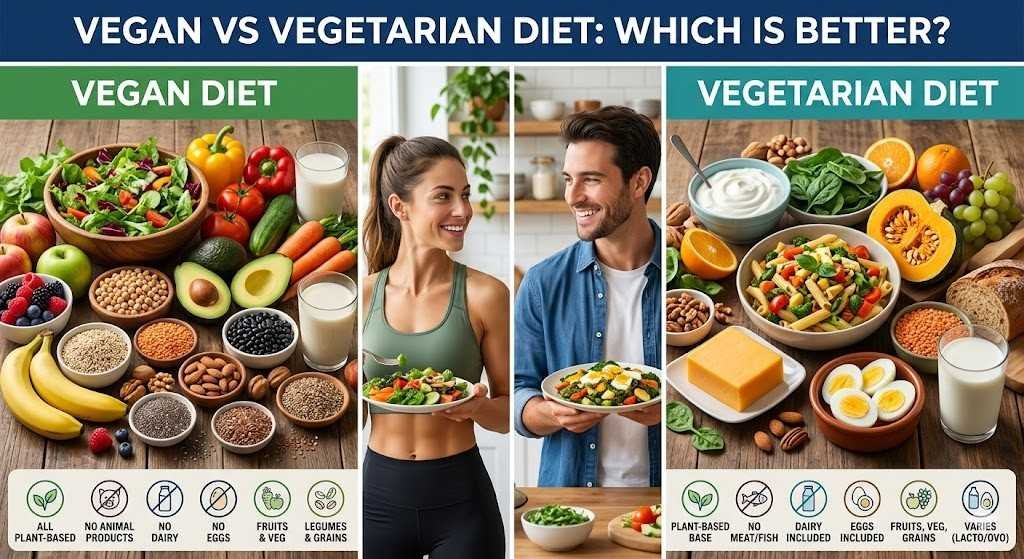
Vegan vs Vegetarian Diet :With growing awareness around health, sustainability, and ethical eating, plant-based diets have become more popular than ever. Two of the most common choices are the vegan diet and the vegetarian diet.
But which one is actually better?
The answer isn’t as simple as choosing one over the other. Both diets offer powerful health benefits—but they also come with unique challenges. In this in-depth guide, we’ll compare vegan vs vegetarian diets across nutrition, health benefits, risks, sustainability, and lifestyle to help you decide which is right for you.
What Is a Vegan Diet?
A vegan diet excludes all animal products, including:
- Meat (chicken, fish, beef)
- Dairy (milk, cheese, butter)
- Eggs
- Honey (in strict vegan diets)
What Vegans Eat:
- Fruits and vegetables
- Whole grains
- Legumes (lentils, chickpeas)
- Nuts and seeds
- Plant-based alternatives (almond milk, soy yogurt)
Veganism is not just a diet—it’s often a lifestyle choice focused on animal welfare and environmental sustainability.
What Is a Vegetarian Diet?
A vegetarian diet excludes meat, fish, and poultry but may include some animal products.
Types of Vegetarian Diets:
- Lacto-vegetarian: Includes dairy
- Ovo-vegetarian: Includes eggs
- Lacto-ovo vegetarian: Includes both dairy and eggs
What Vegetarians Eat:
- Fruits and vegetables
- Grains and legumes
- Dairy products
- Eggs (depending on type)
This flexibility makes vegetarian diets easier for many people to follow long-term.
Key Differences Between Vegan and Vegetarian Diets
| Feature | Vegan Diet | Vegetarian Diet |
|---|---|---|
| Animal Products | None | Some (dairy, eggs) |
| Protein Sources | Plant-based only | Plant + dairy/eggs |
| Nutrient Risk | Higher | Moderate |
| Flexibility | Low | High |
| Lifestyle Focus | Ethical & environmental | Mostly dietary |
Health Benefits of Vegan Diet
1. Better Heart Health
A vegan diet is naturally low in saturated fat and cholesterol, which may:
- Lower blood pressure
- Reduce LDL cholesterol
- Improve cardiovascular health
2. Weight Loss Support
Vegan diets are typically lower in calories and higher in fiber, helping:
- Control hunger
- Promote fat loss
- Improve metabolism
3. Lower Risk of Chronic Diseases
Research shows vegan diets may reduce risk of:
- Type 2 diabetes
- Certain cancers
- Obesity
4. Improved Digestion
High fiber intake supports:
- Healthy gut bacteria
- Regular bowel movements
Health Benefits of Vegetarian Diet
1. Balanced Nutrition
Vegetarian diets allow:
- Protein from dairy and eggs
- Easier nutrient balance
2. Easier to Maintain
Because it’s less restrictive, vegetarian diets are:
- More practical socially
- Easier for beginners
3. Strong Bone Health
Dairy provides:
- Calcium
- Vitamin D
- Protein
These nutrients support stronger bones.
4. Reduced Risk of Heart Disease
Vegetarians often consume:
- Less saturated fat
- More plant foods
This leads to improved heart health.
Nutritional Comparison
Protein
- Vegan: Lentils, beans, tofu, quinoa
- Vegetarian: Above + eggs, milk, cheese
👉 Vegetarian diets make it easier to meet protein needs.
Vitamin B12
- Found mainly in animal products
- Vegan: Requires supplements or fortified foods
- Vegetarian: Can get from dairy and eggs
Iron
- Vegan & Vegetarian: Plant-based iron (less absorbable)
- Pair with vitamin C for better absorption
Calcium
- Vegan: Plant sources (almonds, tofu, leafy greens)
- Vegetarian: Dairy provides abundant calcium
Omega-3 Fatty Acids
- Vegan: Flaxseeds, chia seeds, walnuts
- Vegetarian: Eggs (if included)
Risks and Challenges in Vegan vs Vegetarian Diet
Vegan Diet Risks
- Vitamin B12 deficiency
- Low protein intake (if not planned well)
- Iron deficiency
- Omega-3 deficiency
Vegetarian Diet Risks
- Overconsumption of dairy
- High calorie intake from cheese
- Possible nutrient imbalance
Environmental Impact
Vegan Diet
- Lower carbon footprint
- Less water usage
- Reduced greenhouse gas emissions
Vegetarian Diet
- Still environmentally friendly
- Slightly higher impact due to dairy production
Ethical Considerations
- Vegan diet: Avoids all animal exploitation
- Vegetarian diet: Reduces harm but still includes animal products
Which Diet Is Better for Weight Loss?
Both diets can support weight loss, but:
- Vegan diet: Faster weight loss due to lower calorie density
- Vegetarian diet: Easier to sustain long-term
👉 The best diet is the one you can stick to consistently.
Sample Meal Plans
Vegan Diet (1-Day Sample)
- Breakfast: Oatmeal with almond milk and fruits
- Lunch: Chickpea salad
- Dinner: Tofu stir-fry with vegetables
- Snack: Nuts and fruit
Vegetarian Diet (1-Day Sample)
- Breakfast: Eggs and whole-grain toast
- Lunch: Paneer salad
- Dinner: Vegetable curry with rice
- Snack: Yogurt and nuts
Vegan vs Vegetarian: Which Is Better for You?
Choose Vegan If You:
- Care deeply about animal welfare
- Want maximum environmental impact
- Can manage strict dietary planning
Choose Vegetarian If You:
- Want flexibility
- Prefer easier nutrition balance
- Are transitioning to plant-based eating
Tips for Choosing the Right Diet
1. Start Slow
Transition gradually instead of going all-in.
2. Focus on Whole Foods
Avoid processed plant-based junk food.
3. Plan Nutrient Intake
Ensure adequate protein, vitamins, and minerals.
4. Listen to Your Body
Adjust your diet based on how you feel.
Common Mistakes to Avoid
- Relying too much on processed foods
- Ignoring protein intake
- Skipping supplements (especially B12)
- Not eating enough variety
FAQs about Vegan vs Vegetarian Diet
1. Is vegan healthier than vegetarian?
Not necessarily—both can be healthy if well planned.
2. Can I switch from vegetarian to vegan easily?
Yes, gradually eliminating dairy and eggs helps.
3. Do vegans need supplements?
Yes, especially vitamin B12.
4. Is vegetarian diet enough for muscle gain?
Yes, with proper protein sources like eggs, dairy, and legumes.
5. Which diet is more sustainable?
Vegan diets generally have a lower environmental impact.
Conclusion
So, vegan vs vegetarian—which is better?
There’s no one-size-fits-all answer.
- The vegan diet is ideal for those focused on ethics and sustainability but requires careful planning.
- The vegetarian diet offers more flexibility and is easier to maintain while still delivering strong health benefits.
👉 Ultimately, the best diet is one that fits your lifestyle, meets your nutritional needs, and is sustainable for the long term.
Also read :