Heart disease and high blood pressure are among the leading health concerns worldwide—and the good news is that your diet can make a powerful difference. One of the most scientifically proven eating plans for improving heart health is the DASH diet.
Short for Dietary Approaches to Stop Hypertension, the DASH diet is designed to help lower blood pressure, improve cholesterol levels, and reduce the risk of heart disease—without extreme restrictions.
This comprehensive guide covers everything you need to know about the DASH diet, including benefits, foods to eat and avoid, meal plans, and practical tips to get started.
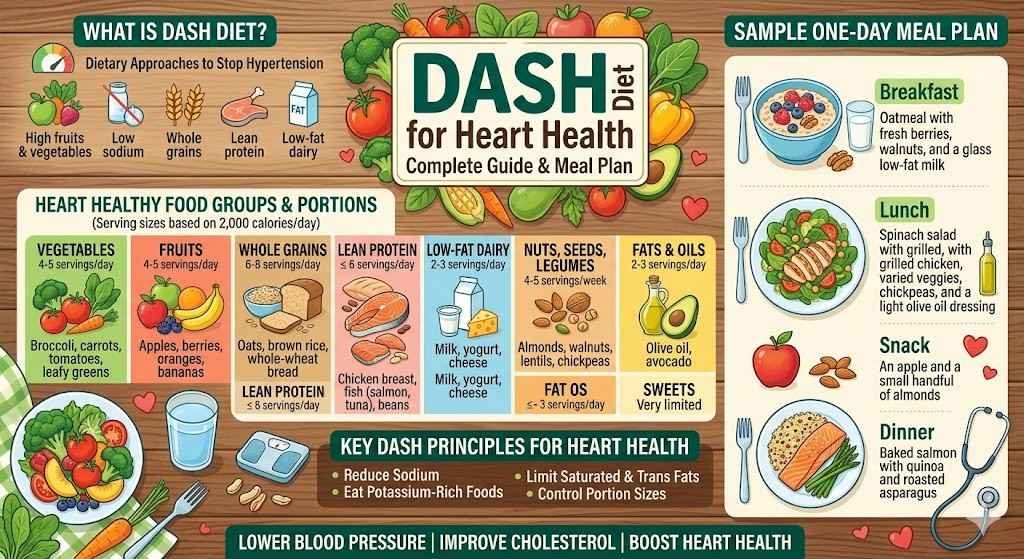
What Is the DASH Diet?
The DASH diet was developed by the National Institutes of Health to combat high blood pressure (hypertension).
It focuses on:
- Eating whole, nutrient-rich foods
- Reducing sodium (salt) intake
- Increasing potassium, magnesium, and calcium
- Limiting processed and high-fat foods
Unlike fad diets, DASH is a balanced and sustainable lifestyle that works for long-term health.
Why the DASH Diet Is Great for Heart Health
1. Helps Lower Blood Pressure Naturally

High blood pressure strains your heart and arteries. The DASH diet:
- Reduces sodium intake
- Increases potassium-rich foods
- Improves blood vessel function
👉 Studies show it can reduce blood pressure in just 2 weeks.
2. Supports Healthy Cholesterol Levels
The diet encourages:
- Less saturated fat
- More fiber-rich foods
This helps lower LDL (bad cholesterol) and increases HDL (good cholesterol).
3. Aids in Healthy Weight Management
The DASH diet naturally reduces calorie-dense processed foods, making it easier to:
- Lose excess weight
- Maintain a healthy BMI
4. Reduces Risk of Chronic Diseases
Following DASH may help prevent:
- Heart disease
- Stroke
- Type 2 diabetes
Foods to Eat on the DASH . Vegetables (Daily Essential)
Recommended: 4–5 servings/day
Examples:
- Spinach
- Broccoli
- Carrots
- Tomatoes
- Cucumbers
Why they matter:
- High in fiber
- Rich in potassium
- Low in calories
2. Fruits (Natural Sweetness)

Recommended: 4–5 servings/day
Best choices:
- Apples
- Bananas
- Oranges
- Berries
- Mango (in moderation)
3. Whole Grains

Recommended: 6–8 servings/day
Examples:
- Brown rice
- Whole wheat roti
- Oats
- Quinoa
- Millets
4. Lean Protein
Recommended: Moderate portions
Sources:
- Chicken (skinless)
- Fish
- Lentils (dal)
- Beans
- Tofu
5. Low-Fat Dairy
Recommended: 2–3 servings/day
Options:
- Low-fat milk
- Yogurt (curd)
- Buttermilk
6. Healthy Fats

Use in small amounts
Good fats:
- Nuts and seeds
- Olive oil
- Avocado
Foods to Avoid on the DASH Diet
1. High-Sodium Foods
Limit sodium to: 1500–2300 mg/day
Avoid:
- Packaged snacks
- Pickles
- Instant foods
- Processed meats
2. Saturated & Trans Fats
Avoid:
- Fried foods
- Butter (excess)
- Fatty meats
- Bakery items
3. Sugary Foods & Drinks
Cut down on:
- Soft drinks
- Sweets
- Cakes and pastries
- Packaged juices
4. Red Meat (Limit Intake)
Eat occasionally and in small portions.
Sodium Intake: The Core of DASH
Reducing salt is the most important part of DASH.
Tips to Reduce Sodium:
- Cook at home more often
- Use herbs and spices instead of salt
- Avoid packaged foods
- Read nutrition labels
DASH Diet Meal Plan (Indian Example)
Breakfast
- Oats with milk and fruits
- OR vegetable poha (low oil)
- Unsweetened tea/coffee
Mid-Morning Snack
- Fruit (apple/guava)
- Handful of nuts
Lunch
- 1–2 whole wheat rotis
- Mixed vegetable sabzi
- Dal or grilled chicken
- Salad
☕ Evening Snack
- Roasted chana
- Green tea
Dinner
- Brown rice or 1 roti
- Paneer/tofu curry
- Steamed vegetables
Before Bed
- Warm low-fat milk
DASH Diet Serving Guide
| Food Group | Daily Servings |
|---|---|
| Vegetables | 4–5 |
| Fruits | 4–5 |
| Grains | 6–8 |
| Dairy | 2–3 |
| Protein | 2 or fewer |
| Nuts/Seeds | 4–5 per week |
Lifestyle Tips to Maximize Results
- Exercise at least 30 minutes daily
- Manage stress (yoga/meditation)
- Maintain a healthy weight
- Stay hydrated
- Avoid smoking and excess alcohol
Common Mistakes to Avoid
- Adding too much salt “just a little more”
- Eating healthy but overeating portions
- Ignoring hidden sodium in packaged foods
- Skipping meals
DASH vs Other Diets
| Diet | Focus | Best For |
|---|---|---|
| DASH | Low sodium, balanced | Heart health |
| Mediterranean | Healthy fats | Longevity |
| Keto | Low carb | Rapid weight loss |
👉 DASH is considered one of the healthiest diets globally.
FAQs About the DASH Diet
1. How quickly does DASH lower blood pressure?
You may see results in 1–2 weeks.
2. Is the DASH diet good for weight loss?
Yes, it promotes healthy and sustainable weight loss.
3. Can vegetarians follow DASH?
Absolutely! Replace meat with lentils, beans, and tofu.
4. Is salt completely banned?
No, but it should be strictly limited.
5. Can I eat out on DASH?
Yes—choose low-sodium, grilled, and fresh foods.
Final Thoughts
The DASH diet is not just a temporary plan—it’s a lifelong approach to better heart health. By focusing on whole foods, reducing salt, and maintaining balance, you can naturally lower blood pressure and protect your heart.
Small daily changes—like switching to whole grains, eating more vegetables, and cutting down salt—can lead to big long-term health benefits.
Also read :