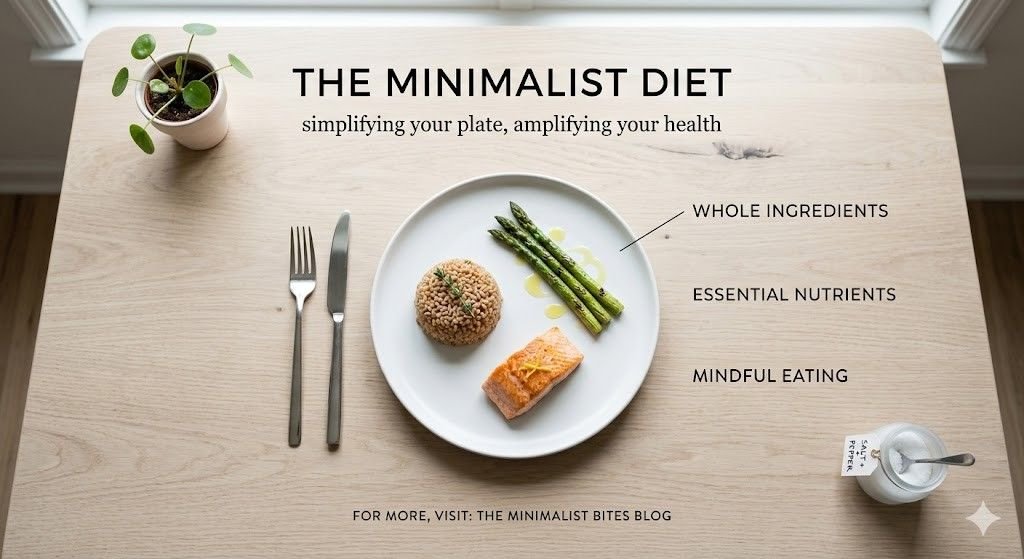
In a world full of complicated meal plans, calorie counting apps, and endless diet trends, the idea of a minimalist diet feels refreshing. Instead of focusing on restrictions and rules, this approach simplifies your relationship with food—helping you eat healthier with less stress.
A minimalist diet is not about eating less; it’s about eating smarter, simpler, and more intentionally. By focusing on whole foods, reducing unnecessary variety, and avoiding processed items, you can improve your health, save time, and make eating enjoyable again.
This complete guide explores everything you need to know about the minimalist diet, including benefits, food lists, meal plans, and practical tips to get started.
What Is a Minimalist Diet?
A minimalist diet is an eating approach that focuses on:
- Eating simple, whole foods
- Reducing processed and packaged foods
- Limiting ingredients per meal
- Avoiding overcomplicated recipes
- Repeating meals for convenience
It’s inspired by the broader concept of minimalism—removing excess to focus on what truly matters.
Why Choose a Minimalist Diet?
Many people feel overwhelmed by modern diets. The minimalist diet offers a solution by simplifying everything.
1. Reduces Decision Fatigue
No more wondering what to eat every day. Fewer choices mean less stress.
2. Saves Time
Simple meals require less cooking, preparation, and cleanup.
3. Supports Healthy Eating
By focusing on whole foods, you naturally avoid unhealthy options.
4. Budget-Friendly
Buying fewer ingredients reduces grocery costs.
5. Promotes Consistency
Simple routines are easier to maintain long-term.
Core Principles of a Minimalist Diet
1. Eat Whole Foods
Focus on foods in their natural form:
- Fruits
- Vegetables
- Whole grains
- Lean proteins
2. Keep Meals Simple
Limit meals to 3–5 ingredients instead of complex recipes.
3. Repeat Meals
Eating similar meals daily reduces effort and planning time.
4. Avoid Processed Foods
Cut down on:
- Packaged snacks
- Sugary drinks
- Fast food
5. Focus on Nutrition, Not Perfection
The goal is balance—not strict rules.
Foods to Eat on a Minimalist Diet
Whole Carbohydrates
- Rice
- Oats
- Quinoa
- Whole wheat
Protein Sources
- Eggs
- Chicken
- Fish
- Lentils
- Beans
Healthy Fats
- Nuts
- Seeds
- Olive oil
- Avocado
Fruits & Vegetables
- Seasonal produce
- Leafy greens
- Root vegetables
Foods to Limit
- Highly processed foods
- Sugary snacks
- Artificial ingredients
- Excess sauces and condiments
Sample Minimalist Meal Plan
Breakfast
Oatmeal with banana and nuts
Lunch
Rice + dal + vegetables
Snack
Fruit + handful of nuts
Dinner
Grilled chicken or tofu + vegetables
Easy Minimalist Meal Ideas
1. Rice + Dal + Veggies
A balanced, simple, and nutritious meal.
2. Egg & Toast
Quick and protein-rich.
3. Chicken + Salad
Minimal ingredients, maximum nutrition.
4. Yogurt + Fruit
Perfect for breakfast or snack.
5. Quinoa Bowl
Quinoa + vegetables + protein.
Benefits of a Minimalist Diet
1. Improves Digestion
Simple meals are easier for the body to process.
2. Encourages Mindful Eating
You focus more on what you eat.
3. Reduces Overeating
Less variety can reduce cravings.
4. Better Food Awareness
You understand your body’s needs better.
5. Sustainable Lifestyle
Easy to maintain for years.
Minimalist Diet for Weight Loss
A minimalist diet can support weight loss by:
- Reducing processed food intake
- Controlling portions naturally
- Encouraging whole foods
However, weight loss still depends on calorie balance.
Minimalist Diet vs Other Diets
Minimalist Diet
- Simple
- Flexible
- No strict rules
Keto Diet
- Low carb
- High fat
Vegan Diet
- No animal products
Clean Eating
- Focus on natural foods
Minimalism is more about simplicity than restriction.
Tips to Start a Minimalist Diet
1. Simplify Your Grocery List
Buy only essential items.
2. Cook in Batches
Prepare meals in advance.
3. Use Basic Cooking Methods
- Boiling
- Grilling
- Steaming
4. Stick to a Routine
Repeat meals to save time.
5. Declutter Your Kitchen
Keep only essential ingredients and tools.
Common Mistakes to Avoid
- Eating too little variety (can cause deficiencies)
- Skipping nutrients
- Making meals too boring
- Not planning meals
Balance is important.
Is a Minimalist Diet Healthy?
Yes, if balanced properly.
Ensure you include:
- Protein
- Fiber
- Healthy fats
- Vitamins & minerals
A well-planned minimalist diet can support overall health.
Who Should Try a Minimalist Diet?
- Busy professionals
- Students
- Beginners in healthy eating
- People who want a simple lifestyle
Challenges of a Minimalist Diet
- Can feel repetitive
- May lack variety
- Requires discipline
But these challenges reduce over time.
Final Thoughts
The minimalist diet is not about restriction—it’s about simplification. By focusing on whole foods and reducing unnecessary complexity, you can build a healthier, more sustainable way of eating.
In a world of overwhelming choices, sometimes the best solution is the simplest one.
Start small, keep meals basic, and enjoy the freedom that comes with eating less—but better.
Frequently Asked Questions (FAQs) About the Minimalist Diet
1. What is a minimalist diet?
A minimalist diet is a simple way of eating that focuses on whole, natural foods with minimal ingredients, helping reduce stress and improve overall health.
2. Is the minimalist diet effective for weight loss?
Yes. By cutting processed foods and simplifying meals, it naturally supports a calorie deficit, which is essential for weight loss.
3. What are the main rules of a minimalist diet?
Key principles include:
- Eat whole foods
- Keep meals simple (3–5 ingredients)
- Avoid processed foods
- Repeat meals for consistency
4. What foods should I eat on a minimalist diet?
Focus on:
- Whole grains (rice, oats)
- Proteins (eggs, chicken, lentils)
- Fruits and vegetables
- Healthy fats (nuts, seeds, olive oil)
5. What foods should I avoid?
Limit:
- Packaged snacks
- Sugary drinks
- Fast food
- Artificial ingredients
6. Can I eat the same meals every day?
Yes. Repeating meals helps reduce decision fatigue and makes the diet easier to follow.
7. Is the minimalist diet healthy long-term?
Yes, as long as your meals include balanced nutrients like protein, fiber, vitamins, and healthy fats.
8. Does a minimalist diet improve digestion?
Often yes. Simple meals are easier to digest and may reduce bloating.
9. Can vegetarians follow a minimalist diet?
Absolutely. Plant-based proteins like lentils, beans, tofu, nuts, and seeds fit perfectly.
10. How many meals should I eat daily?
Typically 2–3 meals and 1–2 snacks, depending on your needs.
11. Do I need to count calories?
Not necessarily, but it can help if your goal is weight loss.
12. Is meal prep necessary?
No, but it helps maintain consistency and saves time.
13. Can I eat out on a minimalist diet?
Yes. Choose simple meals like grilled foods, rice, and vegetables with minimal sauces.
14. Will I get bored eating simple meals?
You might initially, but rotating a few basic meals keeps things interesting.
15. Is this diet suitable for busy people?
Yes. It’s ideal because it reduces time spent on planning, shopping, and cooking.
16. Can I exercise while on this diet?
Yes. Just ensure you’re consuming enough calories and protein to support activity.
17. Does a minimalist diet save money?
Yes. Fewer ingredients and less processed food lower overall grocery costs.
18. Is the minimalist diet restrictive?
No. It’s flexible and focuses on simplifying choices rather than restricting foods.
19. How quickly will I see results?
Many people notice improvements in energy and digestion within 1–2 weeks.
20. Who should follow a minimalist diet?
Anyone looking for a simple, sustainable, and stress-free way of eating, especially beginners and busy individuals.
Also read :
Organic Diet: Benefits, Food List, Meal Plan & Complete Guide