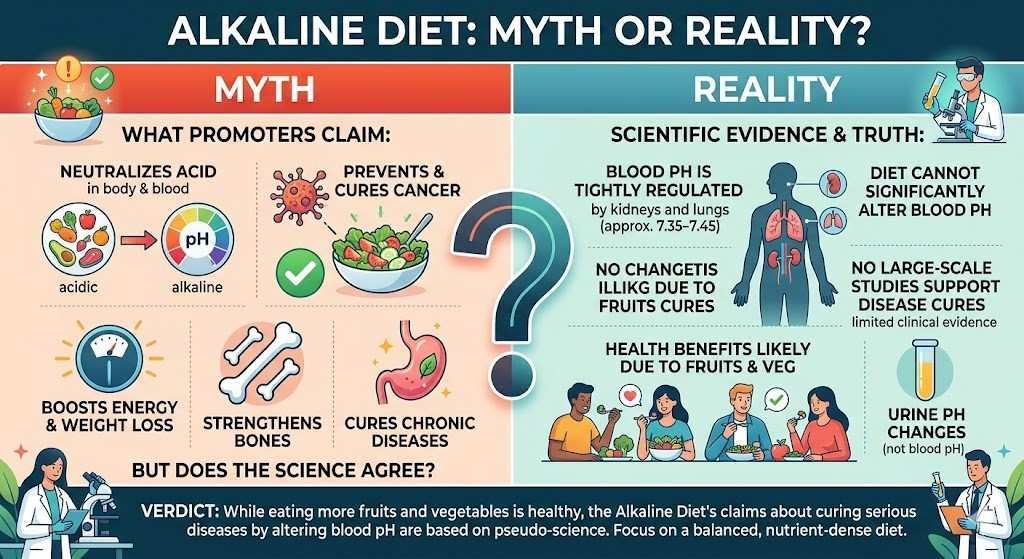
The alkaline diet has become one of the most talked-about nutrition trends in recent years. From celebrities and wellness influencers to fitness enthusiasts, many claim that maintaining an “alkaline body” can improve health, boost energy, and even prevent serious diseases. But how much of this is backed by science, and how much is simply clever marketing?
At its core, the alkaline diet is based on the idea that the foods we eat can affect the pH level of our body. Supporters argue that modern diets—rich in processed foods, sugar, and meat—create an acidic environment that leads to inflammation, weight gain, and chronic illness. By switching to more “alkaline-forming” foods like fruits, vegetables, and nuts, proponents believe you can restore balance and improve overall well-being.
But is it really that simple?
In this in-depth blog post, we’ll explore what the alkaline diet is, how it works, its claimed benefits, what science actually says, and whether it’s worth following.
What Is the Alkaline Diet?
The alkaline diet, also known as the alkaline ash diet or acid-alkaline diet, is based on the concept of regulating the body’s pH through food choices.
Understanding pH
pH is a scale that measures how acidic or alkaline a substance is, ranging from 0 to 14:
- 0–6: Acidic
- 7: Neutral
- 8–14: Alkaline (basic)
The human body maintains a very tight pH balance, especially in the blood, which stays between 7.35 and 7.45 (slightly alkaline). Even small deviations can be dangerous.
The Diet’s Core Idea
The alkaline diet classifies foods into three categories:
- Acid-forming foods
- Meat
- Dairy
- Processed foods
- Refined sugar
- White flour
- Neutral foods
- Natural fats
- Starches
- Alkaline-forming foods
- Fruits (especially citrus)
- Vegetables (especially leafy greens)
- Nuts and seeds
- Legumes
The goal is to consume more alkaline-forming foods and reduce acid-forming ones to maintain optimal health.
How Does the Alkaline Diet Work?
Supporters of the alkaline diet believe that when food is metabolized, it leaves behind an “ash” residue that can be acidic or alkaline. This residue supposedly influences the body’s pH.
Key Principles
- Eat 70–80% alkaline foods
- Limit acid-producing foods
- Drink alkaline water (optional)
- Avoid processed and junk foods
Common Foods on the Alkaline Diet
Allowed (Alkaline Foods):
- Spinach, kale, broccoli
- Avocado
- Bananas
- Almonds
- Lentils
- Herbal teas
Avoid or Limit (Acidic Foods):
- Red meat
- Cheese and milk
- White bread and pastries
- Soft drinks
- Alcohol
Claimed Benefits of the Alkaline Diet
Advocates of the alkaline diet promote a wide range of health benefits. Let’s examine the most common claims.
1. Weight Loss
Many people report losing weight on the alkaline diet. However, this is often due to cutting out processed foods and reducing calorie intake rather than pH balance.
2. Improved Energy Levels
Eating more whole foods like fruits and vegetables can naturally increase energy levels due to better nutrient intake.
3. Reduced Inflammation
The diet emphasizes anti-inflammatory foods, which may help reduce chronic inflammation.
4. Better Bone Health
Some proponents claim that acidic foods leach calcium from bones, leading to osteoporosis. The alkaline diet is believed to protect bone density.
5. Cancer Prevention
One of the more controversial claims is that cancer cannot survive in an alkaline environment.
What Does Science Say?
This is where things get interesting—and a bit controversial.
1. Your Body Already Controls pH
The human body tightly regulates blood pH through the kidneys and lungs. No matter what you eat, your blood pH remains stable.
2. Food Does Not Change Blood pH Significantly
While food can change the pH of urine, it does not significantly affect blood pH in healthy individuals.
3. Cancer and pH: A Misunderstood Concept
The idea that cancer cannot survive in an alkaline environment is misleading. Cancer cells can adapt to different environments, and diet alone cannot alter body pH enough to prevent or cure cancer.
4. Bone Health Myth
There is no strong evidence that acidic foods weaken bones. In fact, protein-rich foods (often labeled acidic) are important for bone health.
Why the Alkaline Diet Still Works (Sometimes)
Even though the core theory may not be scientifically accurate, many people still experience health improvements. Why?
1. Increased Whole Food Intake
The diet encourages:
- More fruits and vegetables
- Less processed food
- Reduced sugar intake
These changes alone can significantly improve health.
2. Better Hydration
People on the alkaline diet often drink more water, which supports digestion and metabolism.
3. Reduced Junk Food
Cutting out processed and high-calorie foods naturally leads to weight loss and better overall health.
Pros of the Alkaline Diet
- Encourages healthy eating habits
- Promotes whole, plant-based foods
- May aid in weight loss
- Reduces processed food consumption
- Easy to follow for beginners
Cons of the Alkaline Diet
- Based on questionable scientific claims
- Restricts nutrient-rich foods like dairy and meat
- Can be difficult to maintain long-term
- May lead to nutritional imbalances if not planned properly
- Overhyped health claims (e.g., cancer prevention)
Sample 1-Day Alkaline Diet Meal Plan
Breakfast
- Smoothie with spinach, banana, almond milk, and chia seeds
Mid-Morning Snack
- Apple with a handful of almonds
Lunch
- Quinoa salad with cucumber, avocado, and lemon dressing
Afternoon Snack
- Carrot and cucumber sticks with hummus
Dinner
- Stir-fried vegetables with tofu and brown rice
Before Bed
- Herbal tea
Who Should Try the Alkaline Diet?
The alkaline diet may be suitable for:
- People looking to eat cleaner
- Those wanting to reduce processed food intake
- Individuals aiming for weight loss
- Vegetarians or plant-based eaters
Who Should Be Cautious?
- People with kidney disorders
- Individuals needing high protein intake
- Athletes requiring specific nutrition
- Those with nutrient deficiencies
Always consult a healthcare professional before making major dietary changes.
Alkaline Diet vs Balanced Diet
| Aspect | Alkaline Diet | Balanced Diet |
|---|---|---|
| Focus | pH balance | Nutritional balance |
| Food Variety | Limited | Wide |
| Scientific Support | Weak | Strong |
| Sustainability | Moderate | High |
A balanced diet is generally considered more sustainable and scientifically sound.
Common Myths About the Alkaline Diet
Myth 1: You Can Change Blood pH with Food
Reality: The body regulates pH automatically.
Myth 2: Acidic Foods Are Bad
Reality: Many acidic foods (like fruits) are healthy.
Myth 3: Alkaline Diet Cures Diseases
Reality: No diet alone can cure serious diseases.
Practical Tips If You Want to Try It
If you’re interested in the alkaline diet, here’s a smart way to approach it:
- Focus on adding more vegetables
- Don’t completely eliminate protein sources
- Stay hydrated
- Avoid extreme restrictions
- Prioritize balance over perfection
Final Verdict: Myth or Reality?
So, is the alkaline diet a myth or reality?
The answer is both.
- The idea that food can significantly change your body’s pH is largely a myth.
- However, the emphasis on whole, plant-based foods is a reality that benefits health.
In other words, the alkaline diet works—not because it changes your body’s pH, but because it promotes healthier eating habits.
Conclusion
The alkaline diet is a perfect example of how a concept can be both misleading and beneficial at the same time. While its foundational theory lacks strong scientific backing, the lifestyle it promotes—rich in fruits, vegetables, and whole foods—can lead to real health improvements.
Instead of focusing strictly on “acid vs alkaline,” a better approach is to aim for a balanced, nutrient-rich diet that supports overall well-being.
At the end of the day, your body is already excellent at maintaining its internal balance. Your job is simply to nourish it with the right foods.
FAQs
1.What is the main goal of the alkaline diet?
The main goal is to reduce acidity in the body by consuming more alkaline-forming foods.
2.Can the alkaline diet help with weight loss?
Yes, mainly due to reduced calorie intake and healthier food choices.
3.Does the alkaline diet change blood pH?
No, the body tightly regulates blood pH regardless of diet.
4.Are all acidic foods unhealthy?
No, many acidic foods like fruits are rich in nutrients and beneficial.
5.Is the alkaline diet safe long-term?
It can be safe if balanced properly, but extreme restrictions should be avoided.
6.Can the alkaline diet prevent cancer?
There is no scientific evidence to support this claim.
7.Do I need alkaline water?
Not necessary—regular water is sufficient for hydration.
8.Is the alkaline diet vegetarian?
Mostly plant-based, but not strictly vegetarian.
9.What foods should I avoid?
Processed foods, excessive sugar, and refined grains.
10.Is it better than a balanced diet?
A balanced diet is generally more sustainable and scientifically supported.
Also read :