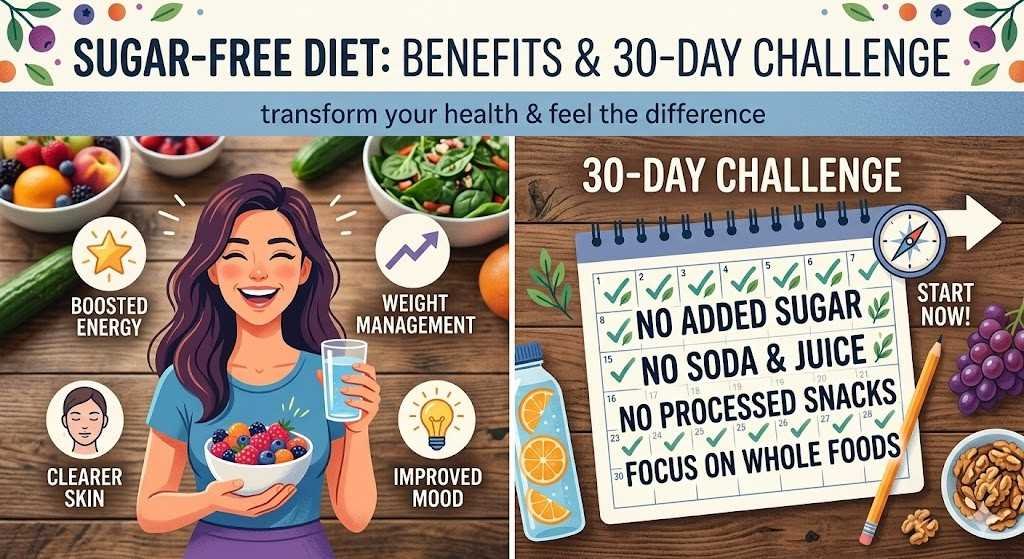
Sugar is everywhere—hidden in packaged foods, beverages, sauces, and even so-called “healthy” snacks. While it may taste good and give a quick energy boost, excessive sugar consumption has become one of the biggest health concerns worldwide.
From weight gain and fatigue to serious conditions like diabetes and heart disease, too much sugar can quietly damage your body over time.
That’s why more people are turning to a sugar-free diet—a lifestyle approach that eliminates or significantly reduces added sugar intake.
But what really happens when you stop eating sugar? And can you realistically stick to it for 30 days?
In this complete guide, you’ll learn:
- The real benefits of a sugar-free diet
- What to eat and avoid
- A step-by-step 30-day no sugar challenge
- Tips to control cravings and stay consistent
What Is a Sugar-Free Diet?
A sugar-free diet focuses on eliminating added sugars while allowing natural sugars found in whole foods like fruits and dairy (in moderation).
Types of Sugar to Avoid
- White sugar
- Brown sugar
- High fructose corn syrup
- Artificial sweeteners (optional, depending on strictness)
- Sugary drinks and desserts
Foods Allowed
- Whole fruits
- Vegetables
- Whole grains
- Lean proteins
- Healthy fats
👉 The goal is not to eliminate carbohydrates but to avoid processed and added sugars.
Why Is Sugar Harmful?
Excess sugar consumption affects your body in multiple ways:
1. Weight Gain
Sugar adds empty calories and increases fat storage, especially around the belly.
2. Blood Sugar Spikes
It causes rapid spikes and crashes, leading to fatigue and cravings.
3. Increased Risk of Diabetes
Long-term high sugar intake can lead to insulin resistance.
4. Heart Health Issues
High sugar diets are linked to increased risk of heart disease.
5. Skin Problems
Sugar may worsen acne and accelerate aging.
Benefits of a Sugar-Free Diet
1. Effective Weight Loss
Reducing sugar helps cut unnecessary calories and reduces fat storage.
👉 Many people notice weight loss within the first few weeks.
2. Stable Energy Levels
No more energy crashes! Your body learns to use steady energy sources instead of quick sugar spikes.
3. Better Skin Health
Lower sugar intake can:
- Reduce acne
- Improve skin glow
- Slow aging
4. Improved Mental Clarity
Less brain fog and better focus are commonly reported after quitting sugar.
5. Reduced Risk of Chronic Diseases
A sugar-free diet can help lower the risk of:
- Type 2 diabetes
- Heart disease
- Obesity
6. Better Digestion
Whole foods improve gut health and digestion.
What Happens When You Quit Sugar? (Week-by-Week)
Week 1: Withdrawal Phase
- Cravings
- Headaches
- Irritability
👉 This is temporary—your body is adjusting.
Week 2: Energy Stabilizes
- Fewer cravings
- Improved sleep
- Better mood
Week 3: Visible Changes
- Weight loss
- Clearer skin
- Reduced bloating
Week 4: Lifestyle Shift
- Sugar cravings almost gone
- Healthier habits formed
- Better overall well-being
Foods to Eat on a Sugar-Free Diet
Healthy Options
- Fresh fruits (in moderation)
- Leafy vegetables
- Whole grains (brown rice, oats)
- Nuts and seeds
- Eggs, chicken, fish
- Dairy (unsweetened)
Foods to Avoid
- Soft drinks and juices
- Cakes, pastries, cookies
- Packaged snacks
- Flavored yogurt
- Sweetened cereals
- Sauces with added sugar
30-Day Sugar-Free Challenge Plan
Week 1: Awareness & Reduction
- Read food labels
- Cut sugary drinks
- Reduce desserts
👉 Goal: Reduce sugar intake by 50%
Week 2: Elimination Phase
- Remove all added sugar
- Switch to whole foods
- Avoid processed snacks
👉 Tip: Drink more water to reduce cravings
Week 3: Clean Eating Focus
- Eat home-cooked meals
- Increase protein and fiber
- Add healthy fats
👉 This helps keep you full and satisfied
Week 4: Lifestyle Integration
- Maintain sugar-free habits
- Plan meals in advance
- Practice mindful eating
👉 Goal: Make it sustainable
Sample Sugar-Free Meal Plan
Breakfast
- Oats with nuts and seeds
- Boiled eggs
- Vegetable poha (no sugar)
Lunch
- Roti + dal + sabzi
- Brown rice + curry
- Salad + protein
Dinner
- Grilled vegetables
- Soup + roti
- Paneer or chicken dish
Snacks
- Fruits
- Nuts
- Yogurt (unsweetened)
Tips to Control Sugar Cravings
1. Stay Hydrated
Sometimes cravings are just dehydration.
2. Eat Enough Protein
Protein reduces hunger and cravings.
3. Sleep Well
Poor sleep increases sugar cravings.
4. Avoid Triggers
Stay away from sugary foods during early stages.
5. Use Natural Sweetness
Fruits can help satisfy sweet cravings.
Common Mistakes to Avoid
❌ Going Too Extreme Too Fast
✔ Start gradually
❌ Skipping Meals
✔ Eat balanced meals
❌ Relying on Artificial Sweeteners
✔ Use whole foods instead
❌ Ignoring Hidden Sugars
✔ Check labels carefully
Is a Sugar-Free Diet Safe?
Yes, for most people, reducing added sugar is safe and beneficial.
However:
- Diabetics should consult a doctor
- Athletes may need balanced carbs
Who Should Try a Sugar-Free Diet?
✔ People trying to lose weight
✔ Individuals with sugar cravings
✔ Those with prediabetes or diabetes
✔ Anyone aiming for a healthier lifestyle
Long-Term Sustainability
A strict sugar-free diet may not be necessary forever.
👉 A better approach:
- Follow 80/20 rule
- Limit added sugar
- Focus on whole foods
FAQs
1. Can I eat fruits on a sugar-free diet?
Yes, fruits contain natural sugar and are healthy in moderation.
2. How long does sugar withdrawal last?
Usually 3–7 days.
3. Will I lose weight if I stop sugar?
Yes, especially if combined with a balanced diet.
4. Is honey allowed?
Technically no—it’s still sugar.
5. Can I drink tea or coffee?
Yes, without sugar.
Conclusion
A sugar-free diet is one of the most powerful steps you can take toward better health. From weight loss and improved energy to clearer skin and reduced disease risk, the benefits are undeniable.
The 30-day sugar-free challenge is not just a short-term plan—it’s a way to reset your body, break unhealthy habits, and build a sustainable lifestyle.
👉 Start small, stay consistent, and remember:
You don’t need sugar to live a sweet, healthy life.
Also read :