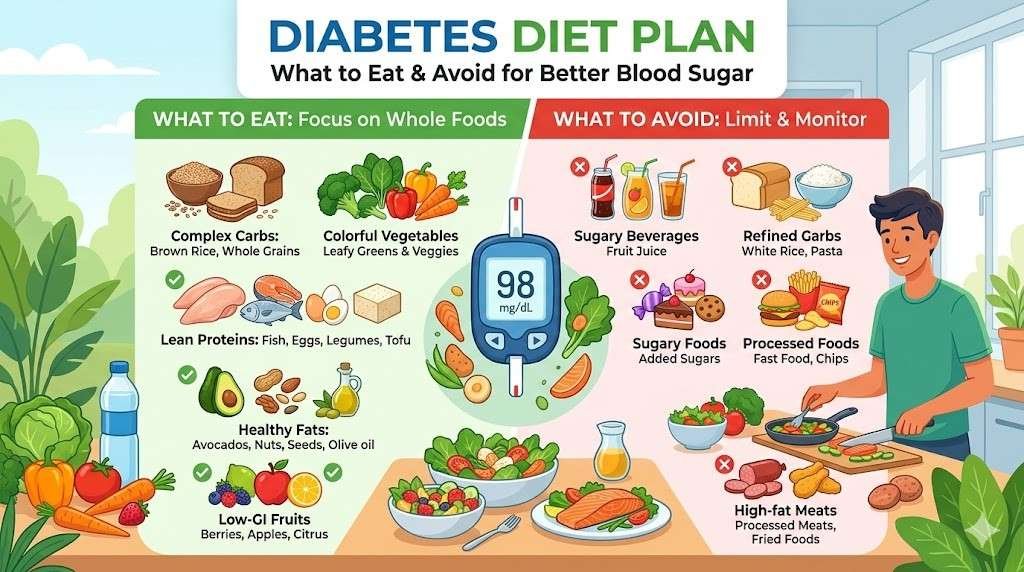
Managing diabetes isn’t just about medication—it’s about making smart, consistent food choices every day. A well-planned diabetes diet can help control blood sugar levels, improve energy, support weight management, and reduce the risk of complications.
Whether you have Type 1, Type 2, or prediabetes, this comprehensive guide will help you understand exactly what to eat, what to avoid, and how to build a sustainable eating plan.
What Is a Diabetes Diet?
A diabetes diet is not a strict or restrictive eating plan—it’s a balanced, nutrient-rich way of eating that helps maintain stable blood glucose levels.
It focuses on:
- Controlling carbohydrate intake
- Choosing high-fiber foods
- Avoiding refined sugars and processed foods
- Including lean proteins and healthy fats
The goal is to prevent spikes and crashes in blood sugar while keeping your body nourished.
How Food Affects Blood Sugar
When you eat, your body breaks down food into glucose (sugar), which enters your bloodstream. Insulin helps move this glucose into your cells for energy.
In diabetes:
- Either your body doesn’t produce enough insulin
- Or it can’t use insulin effectively
This leads to high blood sugar levels, which can damage organs over time.
Key Nutrients That Impact Blood Sugar
1. Carbohydrates (Biggest Impact)
- Raise blood sugar quickly
- Found in grains, fruits, milk, sweets
2. Protein
- Helps stabilize blood sugar
- Keeps you full longer
3. Fats
- Slow digestion
- Help prevent spikes when paired with carbs
Best Foods to Eat for Diabetes
1. Non-Starchy Vegetables
These are low in calories and carbohydrates, making them ideal for blood sugar control.
Examples:
- Spinach
- Broccoli
- Cauliflower
- Cabbage
- Zucchini
- Bell peppers
Benefits:
- High in fiber
- Rich in antioxidants
- Help improve insulin sensitivity
👉 Aim to fill half your plate with non-starchy vegetables.
2. Whole Grains
Unlike refined grains, whole grains are digested slowly, preventing sudden spikes in blood sugar.
Healthy choices:
- Brown rice
- Quinoa
- Oats
- Whole wheat roti
- Barley
Tip: Watch portion sizes—even healthy carbs can raise blood sugar.
3. Lean Proteins
Protein helps maintain muscle and keeps blood sugar stable.
Best options:
- Eggs
- Chicken (skinless)
- Fish (especially fatty fish like salmon)
- Tofu
- Lentils and beans
Why it matters:
- Reduces hunger
- Prevents overeating
- Helps balance meals
4. Healthy Fats
Not all fats are bad. Healthy fats improve heart health, which is crucial for people with diabetes.
Sources:
- Nuts (almonds, walnuts)
- Seeds (chia, flaxseed)
- Olive oil
- Avocado
Avoid: Trans fats and deep-fried oils.
5. Low-Glycemic Fruits
Fruits contain natural sugars but also fiber, which slows absorption.
Best fruits:
- Apples
- Berries (strawberries, blueberries)
- Guava
- Oranges
- Pears
Eat in moderation: 1–2 servings per day.
6. Dairy (Low-Fat or Unsweetened)
Dairy provides calcium and protein but should be consumed wisely.
Choose:
- Low-fat milk
- Unsweetened yogurt
- Greek yogurt
Avoid: Flavored or sugary dairy products.
Foods to Avoid in Diabetes Diet
1. Refined Carbohydrates
These spike blood sugar quickly and offer little nutrition.
Avoid:
- White bread
- White rice (in excess)
- Pasta made from refined flour
- Bakery products
2. Sugary Foods and Drinks
These are the biggest culprits for blood sugar spikes.
Avoid:
- Soft drinks
- Sweets and candies
- Cakes and pastries
- Sweetened fruit juices
3. Processed and Packaged Foods
Often high in hidden sugars, salt, and unhealthy fats.
Examples:
- Chips
- Instant noodles
- Frozen meals
- Processed snacks
4. Fried and Fast Foods
These increase insulin resistance and heart disease risk.
Avoid:
- Deep-fried snacks
- Fast food burgers
- Fried chicken
- Street fried foods
5. High-Sugar Fruits (Limit Intake)
Some fruits have a high glycemic index.
Limit:
- Mango
- Banana (especially ripe)
- Grapes
- Pineapple
The Plate Method (Simple Meal Planning)
One of the easiest ways to manage diabetes is using the plate method.
Divide your plate into:
- 50% non-starchy vegetables
- 25% lean protein
- 25% whole grains or healthy carbs
Add a small portion of healthy fats.
Sample Diabetes Diet Meal Plan (Indian Diet)
Breakfast
- Vegetable oats or poha (with less oil)
- Boiled eggs or sprouts
- Unsweetened tea/coffee
Mid-Morning Snack
- A small apple or handful of nuts
Lunch
- 1–2 whole wheat rotis
- Mixed vegetable sabzi
- Dal or grilled chicken
- Salad
Evening Snack
- Roasted chana or peanuts
- Green tea
Dinner
- Brown rice or 1 roti
- Paneer/tofu/chicken curry
- Steamed vegetables
Before Bed
- A glass of warm milk (unsweetened)
Portion Control: The Key to Success
Even healthy foods can raise blood sugar if eaten in large amounts.
Tips:
- Use smaller plates
- Avoid second servings
- Measure carbs
- Eat slowly
Glycemic Index (GI): Why It Matters
The Glycemic Index ranks foods based on how quickly they raise blood sugar.
Low GI (Best):
- Lentils
- Oats
- Vegetables
Medium GI:
- Brown rice
- Whole wheat
High GI (Avoid):
- White bread
- Sugary foods
👉 Focus on low to medium GI foods for better control.
Best Cooking Methods for Diabetes
How you cook matters just as much as what you eat.
Healthy methods:
- Steaming
- Boiling
- Grilling
- Baking
Avoid:
- Deep frying
- Excess oil cooking
Healthy Snacking for Diabetes
Snacking can help maintain steady blood sugar if done right.
Smart snack ideas:
- Roasted nuts
- Boiled chickpeas
- Greek yogurt
- Vegetable sticks with hummus
Avoid:
- Biscuits
- Chips
- Sugary snacks
Hydration and Diabetes
Drinking enough water helps regulate blood sugar levels.
Best drinks:
- Water
- Coconut water (in moderation)
- Herbal teas
Avoid:
- Sugary drinks
- Energy drinks
- Packaged juices
Role of Fiber in Diabetes
Fiber slows down sugar absorption and improves digestion.
High-fiber foods:
- Vegetables
- Fruits with skin
- Whole grains
- Legumes
👉 Aim for 25–35 grams of fiber daily.
Eating Out with Diabetes
You don’t have to avoid restaurants completely.
Smart tips:
- Choose grilled over fried
- Avoid sugary drinks
- Ask for less oil
- Control portion sizes
Common Mistakes to Avoid in Diabetes Diet
- Skipping meals
- Overeating healthy foods
- Drinking sugary beverages
- Ignoring portion sizes
- Not reading food labels
Diabetes Diet and Weight Loss
Maintaining a healthy weight improves insulin sensitivity.
Tips:
- Eat smaller meals
- Increase protein intake
- Reduce refined carbs
- Stay active
Lifestyle Tips Alongside Diet
Diet alone isn’t enough—lifestyle matters too.
Include:
- Daily exercise (30 minutes walking)
- Stress management
- Proper sleep
- Regular blood sugar monitoring
FAQs About Diabetes Diet
1. Can people with diabetes eat rice?
Yes, but choose brown rice and control portion size.
2. Is sugar completely banned?
Not completely, but it should be limited strictly.
3. Can I eat fruits daily?
Yes, but stick to low-GI fruits and moderate portions.
4. Is fasting safe for diabetics?
It depends on your condition—consult a doctor before fasting.
5. Are artificial sweeteners safe?
They can be used in moderation but should not replace healthy eating habits.
6.Which foods are good for diabetes?
Managing diabetes becomes much easier when you focus on the right foods that keep blood sugar stable. The key is choosing foods that are rich in fiber, protein, and healthy fats while being low in refined sugar.
Final Thoughts (Diabetes Diet)
A diabetes diet is not about restriction—it’s about balance, consistency, and smart choices. By focusing on whole foods, controlling portions, and avoiding sugar-heavy and processed items, you can effectively manage your blood sugar and improve overall health.
Small changes—like switching to whole grains, adding more vegetables, and cutting sugary drinks—can make a big difference over time.
Also read :