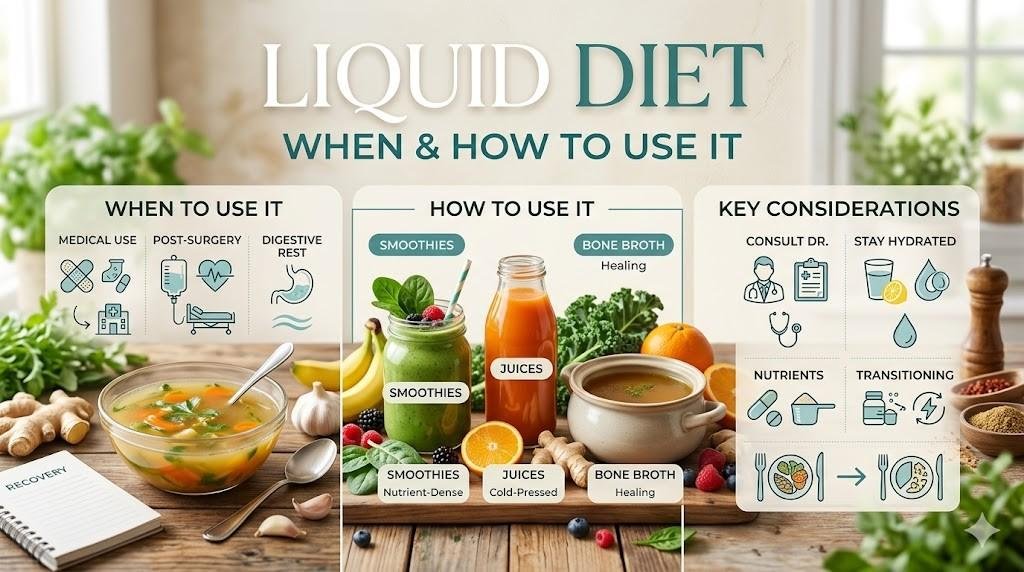
Liquid diets have been around for decades, but in 2026 they’re gaining renewed attention—not just for weight loss, but for medical recovery, digestive reset, and short-term wellness goals. From hospital-prescribed clear liquids to modern smoothie-based plans, liquid diets can serve very different purposes depending on how they’re used.
But here’s the catch: not all liquid diets are healthy or sustainable. Used correctly, they can support healing and simplify digestion. Used incorrectly, they can lead to nutrient deficiencies, fatigue, and muscle loss.
This comprehensive guide will walk you through:
- What a liquid diet actually is
- Different types of liquid diets
- When it’s appropriate to use one
- Benefits and risks
- Safe ways to follow it
- Sample meal plans
What Is a Liquid Diet?
A liquid diet is exactly what it sounds like—a diet consisting primarily or entirely of liquids instead of solid foods. These liquids may include:
- Water
- Juices
- Broths
- Smoothies
- Meal replacement shakes
Depending on the purpose, a liquid diet may be:
- Clear liquids only (for medical procedures)
- Full liquids (including milk, soups, and shakes)
- Nutritionally complete (doctor-supervised plans)
Types of Liquid Diets
1. Clear Liquid Diet
This is the most restrictive type and is usually prescribed for short-term medical use.
Includes:
- Water
- Clear broths
- Apple juice
- Gelatin
- Tea or black coffee (no milk)
Used for:
- Before surgery
- Colonoscopy preparation
- Digestive rest
2. Full Liquid Diet

This is more flexible and nutritionally richer.
Includes:
- Smoothies
- Milk and dairy
- Cream soups
- Protein shakes
- Porridge (blended)
Used for:
- Post-surgery recovery
- Dental procedures
- Difficulty chewing
3. Meal Replacement Liquid Diet
These are structured diets using commercial or homemade shakes.
Purpose:
- Weight loss
- Controlled calorie intake
- Busy lifestyles
4. Detox / Juice Liquid Diet
Often marketed as a cleanse, this type focuses on fruit and vegetable juices.
Note: Scientific evidence for detox benefits is limited—your liver already detoxifies your body naturally.
When Should You Use a Liquid Diet?
A liquid diet isn’t meant for everyone or for long-term use. It’s best suited for specific situations:
1. Medical Reasons
Doctors may recommend it for:
- Surgery preparation
- Digestive disorders
- Severe illness recovery
2. Post-Surgery or Dental Procedures
After oral surgery or gastrointestinal procedures, liquids help:
- Prevent irritation
- Aid healing
- Ensure easy digestion
3. Digestive Rest
Short-term use can help if you have:
- Severe bloating
- Gastroenteritis
- Temporary digestive discomfort
4. Weight Loss (Short-Term Only)
Liquid diets can reduce calorie intake quickly—but:
- Results are often temporary
- Not ideal for sustainable fat loss
Benefits of a Liquid Diet
1. Easy Digestion
Liquids require less effort from your digestive system, making them ideal during recovery.
2. Hydration Support
You naturally increase fluid intake, which supports overall health.
3. Controlled Calories
Helpful for short-term weight management or medical supervision.
4. Convenience
Quick to prepare and easy to consume, especially for busy individuals.
Risks and Side Effects
Let’s be clear—this is where many people go wrong.
1. Nutrient Deficiencies
Liquid diets may lack:
- Fiber
- Protein
- Essential fats
2. Muscle Loss
Low protein intake can lead to loss of muscle mass.
3. Low Energy
You may feel:
- Fatigued
- Dizzy
- Weak
4. Slowed Metabolism
Long-term calorie restriction can reduce metabolic rate.
5. Digestive Issues
Ironically, lack of fiber may lead to constipation.
How to Follow a Liquid Diet Safely
1. Define Your Goal
Ask yourself:
- Is this for medical recovery?
- Weight loss?
- Digestive rest?
Your goal determines the type and duration.
2. Choose Nutrient-Dense Liquids
Include:
- Protein shakes
- Vegetable soups
- Smoothies with seeds/nuts
- Fortified drinks
3. Maintain Protein Intake
Protein is essential to prevent muscle loss.
Good sources:
- Whey or plant protein powder
- Milk
- Yogurt
4. Don’t Skip Electrolytes
Include:
- Coconut water
- Broths
- Lightly salted soups
5. Limit Duration
- Clear liquid diet: 1–3 days
- Full liquid diet: up to 1–2 weeks (with supervision)
Sample 3-Day Liquid Diet Plan
Day 1
Morning: Warm lemon water
Breakfast: Fruit smoothie with yogurt
Lunch: Vegetable soup (blended)
Snack: Coconut water
Dinner: Lentil soup (pureed)
Day 2
Morning: Herbal tea
Breakfast: Protein shake
Lunch: Creamy spinach soup
Snack: Fresh juice
Dinner: Tomato soup
Day 3
Morning: Warm water with honey
Breakfast: Banana smoothie
Lunch: Carrot-ginger soup
Snack: Buttermilk
Dinner: Pumpkin soup
Liquid Diet for Weight Loss: Does It Work?
Yes—but with limitations.
Short-Term Results
- Rapid weight loss (mostly water weight)
Long-Term Reality
- Weight regain is common
- Not sustainable
Better Approach
Use it as a kick-start, then transition to balanced eating.
Who Should Avoid Liquid Diets?
- Pregnant or breastfeeding women
- People with diabetes (without supervision)
- Individuals with eating disorders
- Children and teenagers
Transitioning Back to Solid Foods
This step is crucial and often overlooked.
Step-by-Step Transition
- Start with soft foods (porridge, mashed vegetables)
- Add easily digestible solids
- Gradually return to a balanced diet
Avoid jumping straight to heavy or fried foods.
Liquid Diet vs Other Diets
| Diet Type | Best For | Sustainability |
|---|---|---|
| Liquid Diet | Short-term use | Low |
| Keto Diet | Fat loss | Medium |
| Mediterranean Diet | Heart health | High |
| Intermittent Fasting | Metabolic health | Medium |
Common Mistakes to Avoid
- Following it too long
- Ignoring protein intake
- Relying only on fruit juices
- Skipping medical advice
- Expecting permanent weight loss
Practical Tips for Success
- Blend your own smoothies for better nutrition
- Use spices like ginger for digestion
- Drink slowly to aid absorption
- Stay hydrated
- Listen to your body
FAQs
1. How long can I stay on a liquid diet?
Usually 1–3 days for clear liquids, and up to 2 weeks for full liquids under supervision.
2. Can I exercise while on a liquid diet?
Light activity is fine, but intense workouts are not recommended.
3. Will I lose weight on a liquid diet?
Yes, but mostly short-term weight that may return.
4. Is a liquid diet safe?
It can be safe if done correctly and for a short duration.
5. Can I drink coffee?
Yes, but avoid sugar and heavy cream.
Conclusion
A liquid diet can be a powerful tool—but only when used correctly and for the right reasons. It’s not a magic solution for weight loss, nor is it meant to replace a balanced diet permanently.
Also read :