The Paleo Diet—often referred to as the “caveman diet”—has gained massive popularity among health enthusiasts, fitness experts, and people looking to lose weight naturally. The idea behind this diet is simple: eat like our ancestors did during the Paleolithic era, before agriculture and processed foods became the norm.
But is going back in time really the key to better health? While the Paleo Diet has many supporters, it also has its fair share of critics. In this comprehensive guide, we’ll explore everything you need to know about the Paleo Diet, including its benefits, drawbacks, foods to eat and avoid, and whether it’s right for you.
What is the Paleo Diet?
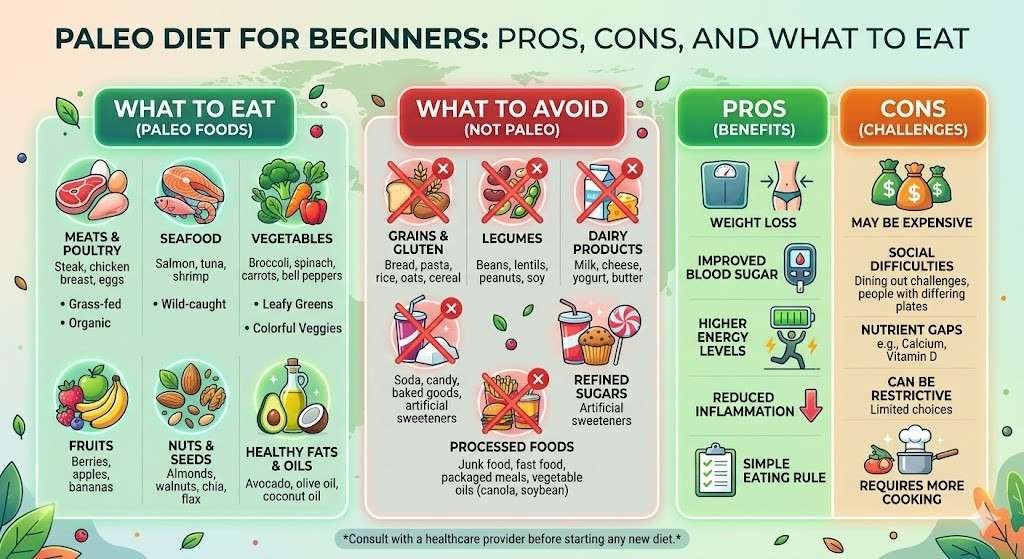
The Paleo Diet is based on the concept of consuming whole, unprocessed foods that early humans would have eaten. This includes foods that can be hunted or gathered, such as:
- Lean meats
- Fish
- Fruits
- Vegetables
- Nuts and seeds
It excludes foods that became common after the advent of farming, including:
- Grains
- Dairy products
- Legumes
- Refined sugar
- Processed foods
The philosophy is that modern diets are mismatched with our genetics, leading to chronic diseases such as obesity, diabetes, and heart disease.
History and Evolution of the Paleo Diet
The modern Paleo Diet was popularized in the early 2000s by researchers and nutritionists who studied ancestral eating patterns. It is rooted in evolutionary biology, suggesting that our bodies are still adapted to the diet of hunter-gatherers.
However, it’s important to note that ancient diets varied widely depending on geography and climate. There was no single “Paleo menu,” but the core idea remains consistent: whole, natural foods are better than processed ones.
Foods to Eat on the Paleo Diet
1. Lean Meats and Poultry
Grass-fed beef, chicken, turkey, and other lean meats are staples of the Paleo Diet. These are rich in protein, iron, and essential nutrients.
2. Fish and Seafood
Fish like salmon, mackerel, and sardines are encouraged due to their high omega-3 fatty acid content.
3. Fruits and Vegetables
All types of fruits and vegetables are allowed, especially non-starchy vegetables like spinach, broccoli, and peppers.
4. Nuts and Seeds
Almonds, walnuts, chia seeds, and flaxseeds are excellent sources of healthy fats and protein.
5. Healthy Fats
Natural fats like olive oil, coconut oil, and avocado are recommended.
Foods to Avoid
The Paleo Diet restricts several common food groups:
- Grains (wheat, rice, oats)
- Legumes (beans, lentils, peanuts)
- Dairy products (milk, cheese, yogurt)
- Refined sugar and artificial sweeteners
- Processed foods
- Vegetable oils (like soybean and corn oil)
Pros of the Paleo Diet
1. Encourages Whole, Unprocessed Foods
One of the biggest advantages of the Paleo Diet is its focus on natural foods. By eliminating processed items, it reduces intake of harmful additives, preservatives, and excess sugar.
2. Supports Weight Loss
Many people experience weight loss on the Paleo Diet. This is largely due to:
- Reduced calorie intake
- High protein consumption
- Lower carbohydrate intake
Protein-rich diets increase satiety, helping you feel full longer and reducing overeating.
3. Improves Blood Sugar Levels
By eliminating refined carbohydrates and sugar, the Paleo Diet can help stabilize blood sugar levels. This makes it beneficial for people with insulin resistance or type 2 diabetes.
4. Reduces Inflammation
The diet emphasizes anti-inflammatory foods such as fruits, vegetables, and omega-3-rich fish. Reducing processed foods and sugar can lower inflammation in the body.
5. Better Heart Health
The Paleo Diet may improve heart health by:
- Lowering bad cholesterol (LDL)
- Increasing good cholesterol (HDL)
- Reducing triglycerides
Healthy fats from nuts, seeds, and fish play a crucial role in cardiovascular health.
6. Eliminates Junk Food
By design, the Paleo Diet cuts out junk food, fast food, and sugary snacks. This naturally leads to healthier eating habits.
7. May Improve Gut Health
Some people report better digestion after removing processed foods, dairy, and gluten-containing grains.
Cons of the Paleo Diet
1. Highly Restrictive
One of the biggest criticisms of the Paleo Diet is that it eliminates entire food groups. Cutting out grains, legumes, and dairy can make it difficult to maintain long-term.
2. Risk of Nutrient Deficiencies
By excluding dairy and whole grains, you may miss out on important nutrients such as:
- Calcium
- Vitamin D
- Fiber
Without careful planning, deficiencies can occur.
3. Expensive to Follow
High-quality meats, organic produce, and nuts can be costly. This makes the Paleo Diet less accessible for some people.
4. Not Vegetarian-Friendly
The diet heavily relies on animal protein, making it unsuitable for vegetarians and vegans.
5. Lack of Scientific Consensus
While some studies support the benefits of the Paleo Diet, others question its long-term sustainability and health effects. There is no universal agreement among nutrition experts.
6. Difficult Socially
Eating out or attending social events can be challenging when following strict dietary rules.
7. Misinterpretation of “Paleo”
Some people assume that any high-meat, low-carb diet is Paleo. However, consuming processed meats or excessive saturated fats can negate potential health benefits.
Paleo Diet vs Modern Diet
| Aspect | Paleo Diet | Modern Diet |
|---|---|---|
| Food Type | Whole, natural | Processed, refined |
| Sugar Intake | Low | High |
| Nutrient Density | High | Often low |
| Convenience | Low | High |
| Cost | Higher | Variable |
The Paleo Diet prioritizes quality over convenience, which can lead to better health outcomes—but also requires more effort and planning.
Sample Paleo Meal Plan
Breakfast
- Scrambled eggs with spinach and tomatoes
- Fresh fruit
- Black coffee or herbal tea
Lunch
- Grilled chicken salad with olive oil dressing
- Mixed vegetables
Snack
- Handful of almonds
- Apple slices
Dinner
- Baked salmon
- Steamed broccoli
- Sweet potato
Who Should Try the Paleo Diet?
The Paleo Diet may be suitable for:
- People looking to lose weight
- Individuals with insulin resistance
- Those wanting to reduce processed food intake
- Fitness enthusiasts seeking high-protein diets
Who Should Avoid It?
This diet may not be ideal for:
- Vegetarians or vegans
- People with kidney issues (due to high protein intake)
- Those needing high-carb diets (like endurance athletes)
- Individuals on a tight budget
Tips for Success on the Paleo Diet
- Plan your meals in advance
- Focus on variety to avoid nutrient deficiencies
- Choose high-quality, organic foods when possible
- Stay hydrated
- Avoid “Paleo junk food” (processed snacks labeled as Paleo)
Common Myths About the Paleo Diet
Myth 1: It’s All About Meat
While meat is a key component, the diet also emphasizes fruits, vegetables, nuts, and seeds.
Myth 2: Cavemen Ate Only One Type of Food
Ancient diets were diverse and varied by region.
Myth 3: It Guarantees Weight Loss
Weight loss depends on calorie balance, not just food type.
Scientific Perspective
Research on the Paleo Diet shows mixed results. Some studies indicate improvements in weight, blood sugar, and cholesterol levels. However, long-term effects are still being studied.
Experts generally agree that reducing processed foods and increasing whole foods is beneficial—but eliminating entire food groups may not be necessary for everyone.
Paleo Diet vs Keto Diet
| Feature | Paleo | Keto |
|---|---|---|
| Carbs | Moderate | Very low |
| Focus | Whole foods | Ketosis |
| Dairy | Not allowed | Allowed |
| Flexibility | Moderate | Strict |
While both diets reduce processed foods, the Keto Diet focuses on achieving ketosis, whereas Paleo emphasizes food quality.
Sustainability and Long-Term Considerations
One major challenge of the Paleo Diet is sustainability. Many people find it difficult to maintain due to its restrictions.
A more balanced approach—sometimes called “modified Paleo” or “Paleo-inspired eating”—can offer similar benefits while being easier to follow.
Final Verdict: Is the Paleo Diet Worth It?
The Paleo Diet has clear advantages, especially when it comes to eliminating processed foods and promoting nutrient-dense eating. It can support weight loss, improve metabolic health, and encourage better food choices.
However, it’s not perfect. Its restrictive nature, potential nutrient gaps, and higher cost make it unsuitable for some people.
The best diet is one that is balanced, sustainable, and tailored to your individual needs.
FAQs
1. Can I drink coffee on the Paleo Diet?
Yes, black coffee is generally allowed, but avoid sugar and dairy.
2. Is rice allowed on the Paleo Diet?
No, rice is a grain and is excluded.
3. Can I eat potatoes?
Sweet potatoes are allowed, but regular potatoes are debated.
4. Is the Paleo Diet safe long-term?
It can be safe if well-balanced, but long-term effects are still being studied.
5. Can I build muscle on Paleo?
Yes, due to high protein intake, it can support muscle growth.
Conclusion
The Paleo Diet offers a return to simple, whole-food eating in a world dominated by processed options. While it has many benefits, it’s not a one-size-fits-all solution.
If you’re considering trying it, start gradually, listen to your body, and focus on balance rather than perfection.
Also read :