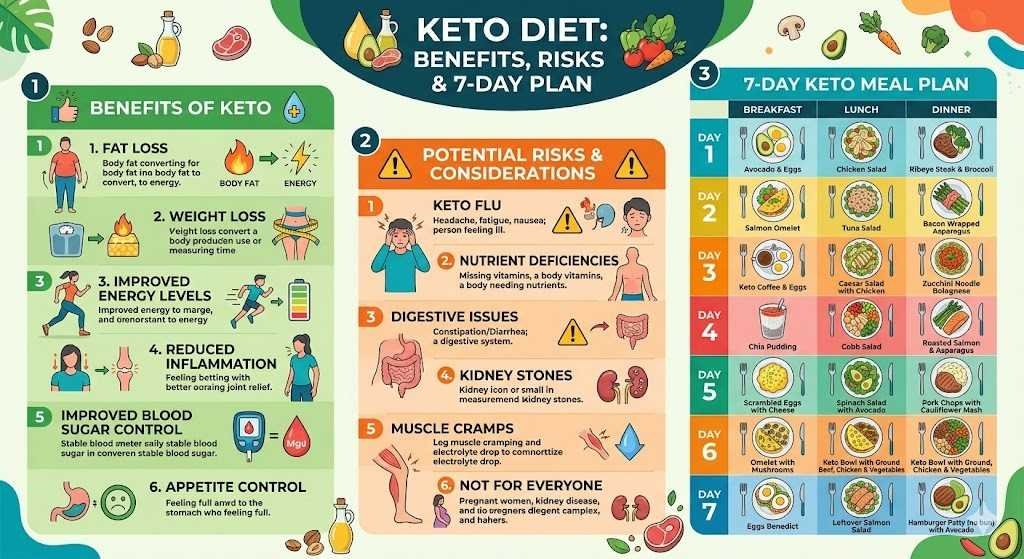
The Keto Diet, short for Ketogenic Diet, has become one of the most popular and widely discussed diets in recent years. From rapid weight loss to improved mental clarity, keto promises impressive results—but it’s not without controversy.
This comprehensive guide will walk you through everything you need to know about the keto diet, including how it works, its benefits, potential risks, and a practical meal plan to help you get started.
What Is the Keto Diet?
The ketogenic diet is a low-carb, high-fat, moderate-protein diet designed to shift your body into a metabolic state called ketosis.
Typical Macronutrient Breakdown:
- 70–75% fat
- 20–25% protein
- 5–10% carbohydrates
When you drastically reduce carbohydrates, your body no longer has enough glucose (sugar) for energy. Instead, it begins burning fat and produces molecules called ketones, which become your primary energy source.
How Does Ketosis Work?
Under normal conditions, your body relies on carbohydrates for energy. But when carb intake drops significantly:
- Glycogen stores are depleted
- Blood sugar levels decrease
- The liver converts fat into ketones
- The body switches to fat-burning mode
This metabolic shift is called ketosis, and it is the foundation of the keto diet.
Types of Keto Diets
Not all keto diets are the same. Here are the main variations:
1. Standard Ketogenic Diet (SKD)
- Most common version
- Strict low-carb, high-fat intake
2. Cyclical Ketogenic Diet (CKD)
- Includes carb refeed days (e.g., 5 days keto, 2 days high-carb)
3. Targeted Ketogenic Diet (TKD)
- Allows small carb intake around workouts
4. High-Protein Ketogenic Diet
- Similar to SKD but includes more protein
Benefits of the Keto Diet
1. Weight Loss
Keto is highly effective for weight loss because:
- It reduces appetite
- Increases fat burning
- Stabilizes blood sugar
Many people experience rapid initial weight loss, especially in the first few weeks.
2. Improved Blood Sugar Control
The keto diet may help people with insulin resistance or type 2 diabetes by:
- Lowering blood glucose levels
- Reducing insulin spikes
- Improving insulin sensitivity
3. Increased Energy and Mental Clarity
Once your body adapts to ketosis, many people report:
- Steady energy levels
- Reduced brain fog
- Better focus
4. Reduced Appetite
Fat and protein are more satisfying than carbs, which helps:
- Reduce cravings
- Control calorie intake naturally
5. Potential Health Benefits
Research suggests keto may support:
- Heart health (when done correctly)
- Neurological conditions (like epilepsy)
- Reduced inflammation
Risks and Side Effects of Keto Diet
While keto has benefits, it’s not suitable for everyone.
1. Keto Flu
When starting keto, you may experience:
- Headaches
- Fatigue
- Dizziness
- Irritability
This is temporary and usually lasts a few days to a week.
2. Nutrient Deficiencies
Cutting out fruits, grains, and some vegetables can lead to:
- Low fiber
- Vitamin deficiencies
- Mineral imbalance
3. Digestive Issues
Some people experience:
- Constipation
- Bloating
This is often due to low fiber intake.
4. Increased Cholesterol Levels
High intake of saturated fats may increase LDL cholesterol in some individuals.
5. Not Suitable for Everyone
Avoid or consult a doctor if you have:
- Liver disease
- Pancreatic conditions
- Pregnancy
- Eating disorders
Foods to Eat on Keto Diet
Healthy Fats
- Avocados
- Olive oil
- Coconut oil
- Butter and ghee
Protein Sources
- Eggs
- Chicken
- Fish (salmon, tuna)
- Meat (beef, lamb)
Low-Carb Vegetables
- Spinach
- Broccoli
- Cauliflower
- Zucchini
Dairy
- Cheese
- Cream
- Greek yogurt (unsweetened)
Nuts & Seeds
- Almonds
- Walnuts
- Chia seeds
Foods to Avoid
- Sugar and sweets
- Bread and pasta
- Rice and grains
- Potatoes
- Sugary drinks
- Most fruits (except berries in small amounts)
7-Day Keto Meal Plan
Day 1
- Breakfast: Scrambled eggs with butter
- Lunch: Grilled chicken salad with olive oil
- Dinner: Salmon with sautéed spinach
Day 2
- Breakfast: Avocado smoothie
- Lunch: Paneer (cottage cheese) stir-fry
- Dinner: Chicken curry (low-carb style)
Day 3
- Breakfast: Omelette with cheese
- Lunch: Tuna salad
- Dinner: Grilled vegetables with tofu
Day 4
- Breakfast: Greek yogurt with nuts
- Lunch: Egg salad
- Dinner: Butter chicken with cauliflower rice
Day 5
- Breakfast: Bulletproof coffee
- Lunch: Chicken lettuce wraps
- Dinner: Grilled fish with broccoli
Day 6
- Breakfast: Boiled eggs and avocado
- Lunch: Paneer tikka
- Dinner: Zucchini noodles with sauce
Day 7
- Breakfast: Smoothie with coconut milk
- Lunch: Salad with olive oil dressing
- Dinner: Chicken soup (low-carb)
Keto Diet for Vegetarians (Indian-Friendly)
If you’re vegetarian, keto can still work:
Vegetarian Keto Options:
- Paneer dishes
- Tofu and soy products
- Nuts and seeds
- Low-carb vegetables
- Coconut-based curries
Tips for Success on Keto
1. Stay Hydrated
Drink plenty of water to avoid dehydration.
2. Increase Electrolytes
Include:
- Sodium
- Potassium
- Magnesium
3. Plan Your Meals
Avoid temptation by preparing meals in advance.
4. Track Your Macros
Use apps to monitor carb intake.
5. Be Patient
It takes time for your body to adapt to ketosis.
Common Mistakes to Avoid
- Eating too much protein
- Not eating enough fat
- Hidden carbs in foods
- Not drinking enough water
- Skipping vegetables
Keto vs Other Diets
| Diet Type | Carb Intake | Fat Intake | Best For |
|---|---|---|---|
| Keto | Very Low | High | Rapid fat loss |
| Low-Carb | Moderate | Moderate | Sustainable weight loss |
| Mediterranean | Moderate | Healthy fats | Heart health |
| Vegan | High carbs | Low fat | Ethical/lifestyle choice |
FAQs About Keto Diet
1. How long does it take to enter ketosis?
Usually 2–4 days of very low carb intake.
2. Can I eat fruits on keto?
Only low-carb fruits like berries in small quantities.
3. Is keto safe long-term?
It can be, but requires careful planning and monitoring.
4. Can I exercise on keto?
Yes, but performance may dip initially.
5. Do I need supplements?
Sometimes (electrolytes, vitamins), depending on diet quality.
Who Should Try the Keto Diet?
Keto may be ideal for:
- People looking for rapid weight loss
- Individuals with insulin resistance
- Those who prefer high-fat foods
Who Should Avoid It?
- Pregnant or breastfeeding women
- People with certain medical conditions
- Individuals who struggle with restrictive diets
Conclusion
The Keto Diet is a powerful tool for weight loss and metabolic health when followed correctly. It shifts your body into fat-burning mode, helping you lose weight and stabilize energy levels.
However, it’s not a one-size-fits-all solution. Understanding both the benefits and risks is essential before starting. With proper planning, a balanced approach, and consistency, keto can be an effective and sustainable lifestyle choice.
Also read :