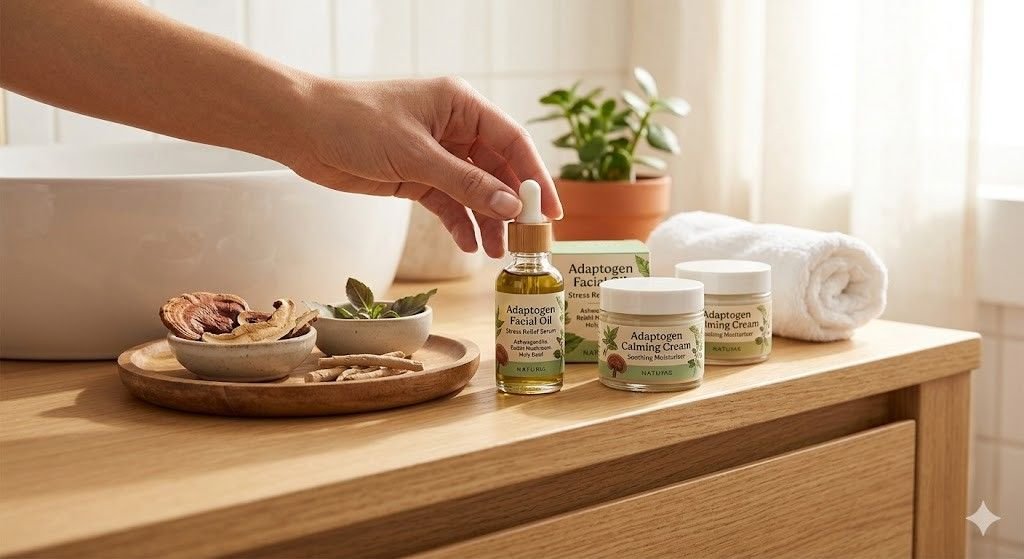
Modern skincare is no longer only about cleansing, moisturizing, and applying sunscreen. Today, people are increasingly looking for ingredients that help skin cope with stress, pollution, hormonal changes, and environmental damage. One of the most talked-about trends in beauty right now is adaptogen skincare—a category of products made with plant-based ingredients believed to help the skin adapt to daily stress.
Adaptogens have been used for centuries in herbal wellness traditions, especially in Ayurveda and Traditional Chinese Medicine. They were originally valued for helping the body resist stress and restore balance. Now, skincare brands are bringing those same ingredients into creams, serums, masks, and toners.
But what exactly are adaptogens? How do they work on skin? Are they suitable for all skin types? And which adaptogenic ingredients are worth adding to your routine?
This complete guide explains everything you need to know about adaptogen skincare, including benefits, best ingredients, how to use it, and whether it fits into your skincare routine.
What Is Adaptogen Skincare?
Adaptogen skincare refers to skincare products formulated with botanical ingredients known as adaptogens—natural substances believed to help skin adjust to physical and environmental stress.
Skin faces stress every day from:
- UV exposure
- Pollution
- Lack of sleep
- Stress hormones
- Blue light exposure
- Climate changes
- Harsh skincare products
These stressors can weaken the skin barrier, increase sensitivity, and speed up visible aging.
Adaptogens are believed to help by:
- Supporting skin barrier recovery
- Reducing inflammation
- Balancing oil production
- Improving hydration
- Defending against oxidative damage
Unlike harsh active ingredients, adaptogens usually work gently and are ideal for people who want calm, resilient skin.
Why Skin Stress Matters
When your body experiences stress, levels of cortisol rise. Elevated cortisol can affect skin by:
- Triggering breakouts
- Increasing oil production
- Causing redness
- Weakening collagen
- Slowing healing
Over time, stress may contribute to:
- Fine lines
- Uneven tone
- Sensitivity
- Dryness
- Dullness
Adaptogen skincare focuses on reducing these visible effects.
How Adaptogens Work in Skincare
Adaptogens contain antioxidants, anti-inflammatory compounds, vitamins, and minerals that help skin defend itself.
Their skincare actions usually include:
1. Strengthening Skin Barrier
The skin barrier protects against moisture loss and irritation. Adaptogens help support barrier lipids.
2. Fighting Free Radicals
Environmental pollution creates oxidative stress. Adaptogens contain antioxidants that help neutralize free radicals.
3. Calming Inflammation
Many adaptogens reduce redness and irritation.
4. Supporting Hydration
Several adaptogens help retain moisture.
5. Balancing Skin Function
They help skin remain stable under changing conditions.
Popular Adaptogens Used in Skincare
Ashwagandha
Ashwagandha is one of the most recognized adaptogens.
Benefits:
- Helps reduce visible stress effects
- Supports collagen preservation
- Improves skin elasticity
- Calms irritated skin
Best for:
- Aging skin
- Stress-related dullness
- Sensitive skin
Reishi Mushroom
Reishi is often called the mushroom of immortality.
Benefits:
- Strong antioxidant protection
- Helps calm redness
- Supports hydration
- Strengthens barrier
Best for:
- Dry skin
- Redness-prone skin
- Reactive skin
Ginseng
Ginseng is widely used in skincare.
Benefits:
- Improves circulation
- Brightens skin
- Helps reduce fatigue signs
- Supports firmness
Best for:
- Tired skin
- Mature skin
- Uneven skin tone
Holy Basil
Holy Basil is rich in antioxidants.
Benefits:
- Protects from pollution
- Helps reduce breakouts
- Calms inflammation
Best for:
- Acne-prone skin
- Urban pollution exposure
Licorice Root
Licorice is common in brightening products.
Benefits:
- Helps fade dark spots
- Reduces redness
- Brightens complexion
Best for:
- Pigmentation
- Post-acne marks
Rhodiola
Rhodiola rosea supports stressed skin.
Benefits:
- Helps improve resilience
- Reduces fatigue appearance
- Supports antioxidant defense
Benefits of Adaptogen Skincare
Calms Sensitive Skin
Adaptogens are often ideal for easily irritated skin.
Supports Healthy Glow
By reducing stress impact, skin looks fresher.
Helps Prevent Premature Aging
Antioxidants defend collagen.
Reduces Environmental Damage
Especially helpful in polluted environments.
Works Well with Minimalist Routines
Adaptogens combine easily with other skincare.
Who Should Use Adaptogen Skincare?
Adaptogen skincare suits many skin types:
Sensitive Skin
Helps reduce irritation.
Dry Skin
Many adaptogens improve hydration.
Acne-Prone Skin
Some adaptogens calm inflammation.
Mature Skin
Antioxidants support elasticity.
Combination Skin
Balances skin gently.
Best Adaptogen Skincare Product Types
Adaptogen Serum
Serums deliver concentrated active ingredients.
Use after cleansing.
Adaptogen Moisturizer
Ideal for daily barrier support.
Adaptogen Toner
Light hydration plus calming effect.
Adaptogen Mask
Useful during skin stress periods.
Adaptogen Eye Cream
Helps tired under-eye area.
How to Build an Adaptogen Skincare Routine
Morning Routine
Cleanser
Use gentle cleanser.
Adaptogen Serum
Apply light serum.
Moisturizer
Seal hydration.
Sunscreen
Essential daily protection.
Night Routine
Cleanser
Remove pollution and sunscreen.
Adaptogen Treatment
Use serum or essence.
Moisturizer
Support overnight repair.
Can Adaptogens Be Combined with Active Ingredients?
Yes, adaptogens work well with:
Hyaluronic Acid
Hyaluronic acid boosts hydration.
Niacinamide
Niacinamide improves barrier support.
Ceramides
Ceramide strengthen moisture barrier.
Peptides
Peptide support firmness.
Adaptogens vs Traditional Active Ingredients
| Adaptogens | Strong Actives |
|---|---|
| Gentle | Often stronger |
| Barrier-supportive | Can irritate |
| Daily use friendly | May need caution |
| Focus on resilience | Focus on correction |
Both can work together.
Adaptogen Skincare for Different Seasons
Summer
Use lightweight adaptogen gel products.
Winter
Choose richer creams.
Monsoon
Barrier-supporting serums help.
Common Myths About Adaptogen Skincare
Myth 1: Adaptogens Work Instantly
Results usually build gradually.
Myth 2: Adaptogens Replace All Actives
They complement but do not replace targeted treatments.
Myth 3: Only Dry Skin Needs Adaptogens
All skin types benefit.
Signs Your Skin May Benefit from Adaptogens
- Frequent redness
- Sudden dullness
- Stress breakouts
- Tight feeling
- Uneven texture
How Long Does Adaptogen Skincare Take to Show Results?
Visible improvement often appears after:
- 2 weeks: calmer feel
- 4 weeks: improved hydration
- 6–8 weeks: stronger resilience
Consistency matters.
Ingredients Often Paired with Adaptogens
Aloe Vera
Aloe vera adds soothing hydration.
Green Tea
Tea plant provides antioxidants.
Oat Extract
Oat calms irritation.
Are Adaptogen Products Safe for Sensitive Skin?
Usually yes, but always:
- Patch test first
- Avoid fragrance-heavy formulas
- Start slowly
How to Choose the Best Adaptogen Product
Look for:
- Ingredient listed high on label
- Fragrance-free formula
- Minimal alcohol
- Barrier-support ingredients
Adaptogen Skincare Trends in Modern Beauty
Why this trend is growing:
- Demand for gentle skincare
- Interest in plant-based formulas
- Barrier repair focus
- Stress-related skin concerns
Many modern brands now combine botanical science with dermatology.
Can Adaptogens Help Acne?
Some adaptogens may help by:
- Reducing inflammation
- Balancing oil
- Supporting healing
But severe acne may still need targeted treatment.
Adaptogen Skincare and Anti-Aging
Adaptogens may help:
- Reduce oxidative stress
- Support collagen
- Improve elasticity
Especially when paired with sunscreen.
Best Time to Start Adaptogen Skincare
You can start at any age, especially if:
- Skin feels stressed
- You live in polluted areas
- Barrier feels weak
Final Thoughts
Adaptogen skincare is one of the most promising gentle skincare trends because it focuses on what modern skin truly needs: resilience.
Instead of aggressively correcting every skin issue, adaptogens help skin become stronger, calmer, and more balanced over time.
If your skin often reacts to stress, weather, pollution, or overuse of active ingredients, adding adaptogen-based products may help restore comfort and glow naturally.
The key is consistency, simplicity, and choosing formulas that suit your skin type.
A calm skin barrier often creates better long-term results than aggressive treatment routines.
FAQs: Adaptogen Skincare
1.What is adaptogen skincare?
Adaptogen skincare uses plant-based ingredients called adaptogens that help skin respond better to environmental stress, pollution, dryness, and irritation.
2.How does adaptogen skincare benefit the skin?
Adaptogen skincare helps calm redness, support hydration, strengthen the skin barrier, and protect against oxidative stress.
3.Is adaptogen skincare good for sensitive skin?
Yes, adaptogen skincare is often suitable for sensitive skin because many adaptogenic ingredients have soothing and anti-inflammatory properties.
4.Which adaptogens are commonly used in skincare?
Popular adaptogens include Ashwagandha, Reishi, Ginseng, Holy Basil, and Licorice.
5.Can adaptogen skincare help acne-prone skin?
Some adaptogens may help reduce inflammation and balance oil production, which can support acne-prone skin.
6.Is adaptogen skincare anti-aging?
Yes, adaptogens contain antioxidants that help protect collagen and reduce visible signs of premature aging.
7.Can I use adaptogen skincare every day?
Most adaptogen skincare products are gentle enough for daily morning and evening use.
8.Does adaptogen skincare brighten skin?
Certain adaptogens such as licorice root and ginseng may help improve skin radiance and even tone.
9.Can adaptogens be combined with retinol or vitamin C?
Yes, adaptogens often work well with active ingredients because they help reduce irritation and support the skin barrier.
10.How long does adaptogen skincare take to show results?
Many people notice calmer and more hydrated skin within 2 to 4 weeks of regular use.
11.Is adaptogen skincare good for dry skin?
Yes, many adaptogenic ingredients help improve moisture retention and barrier strength.
12.What skin type benefits most from adaptogen skincare?
Sensitive, dry, stressed, and mature skin often benefits the most, but all skin types can use adaptogens.
Also read: