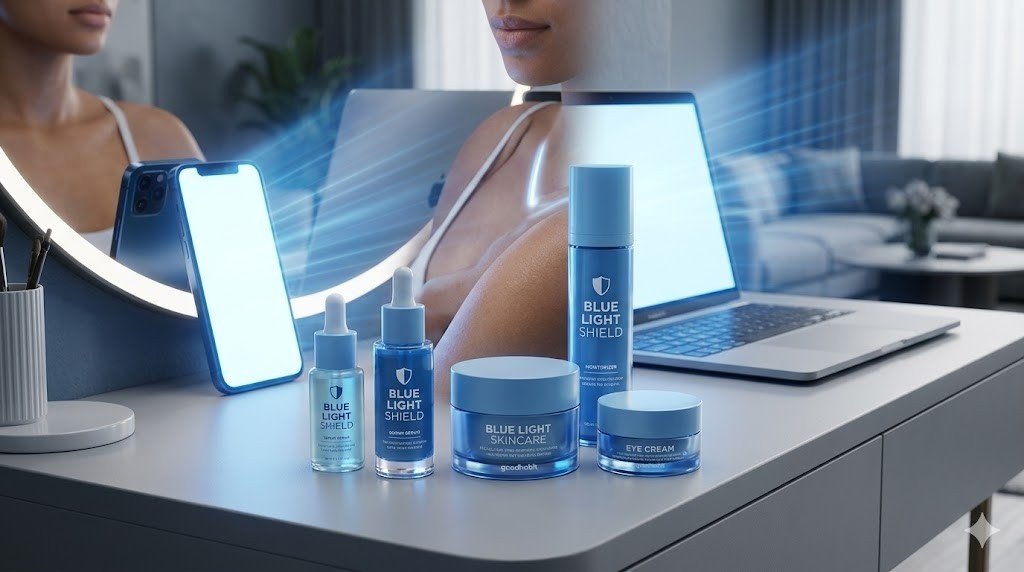
In today’s digital world, screens are impossible to avoid. From smartphones and laptops to tablets, televisions, and LED lighting, most people spend hours every day surrounded by artificial light. As awareness about environmental skin damage increases, one topic gaining serious attention is Blue Light Skincare Routine for Healthy, Protected Skin.
Blue light, also known as high-energy visible light (HEV light), is emitted by both sunlight and digital devices. While sunlight remains the strongest source, long daily exposure to screens has raised concerns about whether blue light contributes to skin aging, dullness, pigmentation, and barrier stress.
This has led skincare experts and consumers to explore routines designed specifically to defend the skin against digital exposure. But how much protection do you really need? Which ingredients work? And what should a complete blue light skincare routine include?
This guide explains the science behind blue light exposure, how it affects skin, and the best daily skincare routine to keep your skin healthy, strong, and protected.
What Is Blue Light?
Blue light is part of the visible light spectrum, with wavelengths between 400 and 500 nanometers. It exists naturally in sunlight, but artificial sources now surround us constantly.
Common blue light sources include:
- Smartphones
- Computers
- Tablets
- LED lights
- Television screens
- Office lighting
Because blue light carries relatively high energy compared to other visible light wavelengths, scientists call it high-energy visible light.
Unlike UV rays, blue light penetrates deeper into the skin.
How Blue Light Affects Skin
Blue light exposure may trigger several biological processes inside the skin.
Potential effects include:
- Free radical formation
- Oxidative stress
- Inflammation
- Pigment stimulation
- Collagen breakdown
- Skin barrier stress
These processes may gradually contribute to visible skin aging.
Although screen exposure is weaker than sunlight, daily cumulative exposure matters—especially for people who spend many hours indoors under screens and artificial light.
Why Blue Light Skincare Matters Today
Modern lifestyles have changed skin exposure patterns.
Many people now:
- Work 8–10 hours at computers
- Use phones constantly
- Stay indoors under LED lights
- Experience digital fatigue daily
This means skin is exposed not only to UV rays outdoors but also to indoor oxidative stress.
Blue light skincare focuses on strengthening skin defenses against modern environmental stress.
Signs Your Skin May Need Blue Light Protection
Some common signs linked to digital skin stress include:
- Dullness
- Uneven tone
- Dryness
- Fine lines
- Tired appearance
- Increased pigmentation
These effects are often subtle but accumulate over time.
Is Blue Light as Harmful as UV Rays?
Blue light and UV light affect skin differently.
UV Rays:
- Cause sunburn
- Damage DNA
- Increase skin cancer risk
- Trigger rapid photoaging
Blue Light:
- Penetrates deeper
- Creates oxidative stress
- Stimulates pigmentation
- Causes slower cumulative damage
UV remains far more damaging, but blue light still deserves attention in long-term skincare.
The Ideal Blue Light Skincare Routine
The most effective routine focuses on:
- Antioxidants
- Barrier protection
- Visible light defense
- Overnight repair
Morning Blue Light Skincare Routine
Morning skincare is your main defense period.
Step 1: Gentle Cleanser
Start with a mild cleanser that removes overnight oil without stripping your skin barrier.
A good cleanser should:
- Maintain skin pH
- Avoid harsh sulfates
- Leave skin soft
Choose:
- Gel cleanser for oily skin
- Cream cleanser for dry skin
Clean skin absorbs protective ingredients better.
Step 2: Antioxidant Serum
Antioxidants are essential because blue light primarily causes oxidative stress.
Best antioxidant choices:
Vitamin C
Benefits:
- Neutralizes free radicals
- Brightens skin
- Supports collagen
- Fights dullness
Niacinamide
Benefits:
- Strengthens skin barrier
- Reduces inflammation
- Controls pigmentation
- Improves resilience
Green Tea Extract
Benefits:
- Soothes stressed skin
- Reduces inflammation
- Supports antioxidant defense
Apply serum evenly across face and neck.
Why Antioxidants Matter So Much for Blue Light Protection
Unlike UV filters, antioxidants help stop free radicals after exposure begins.
They create a biochemical shield inside the skin.
This makes them the foundation of blue light skincare.
Step 3: Hydrating Moisturizer
A strong moisture barrier reduces environmental damage.
Choose ingredients like:
- Ceramides
- Hyaluronic acid
- Glycerin
- Squalane
Healthy skin barrier = stronger defense against digital stress.
Step 4: Tinted Sunscreen Is Essential
Many people assume sunscreen is only for outdoor use.
But sunscreen indoors matters too.
Best choice:
Tinted mineral sunscreen with iron oxides
Why tinted sunscreen works best:
- Protects against UVA
- Protects against UVB
- Helps block visible light
- Defends against blue light
Iron oxides are especially important because they protect against visible light wavelengths.
SPF 30 or higher is ideal.
Why Regular Sunscreen Is Not Enough
Standard sunscreen protects mostly against UV rays.
For visible light protection:
Tinted formulas perform better.
This is especially important for pigmentation-prone skin.
Midday Blue Light Skin Habits
Your routine is not only products—daily habits matter too.
Reapply Sunscreen Indoors
If sitting near windows or bright screens all day:
Reapply every 4–5 hours.
Use Screen Night Mode
Night mode reduces blue light intensity slightly.
This helps both skin and eye comfort.
Lower Screen Brightness
Excessive brightness increases digital stress.
Take Skin Breaks Every 20 Minutes
Look away from screens regularly.
This improves:
- Circulation
- Facial muscle relaxation
- Eye comfort
Evening Blue Light Skincare Routine
Nighttime is repair time.
Step 1: Double Cleansing
Remove:
- Sunscreen
- Pollution
- Sebum
- Screen-related residue
First cleanse:
Oil cleanser or balm
Second cleanse:
Gentle water-based cleanser
This prevents clogged pores.
Step 2: Repair Serum
Evening serums should focus on skin recovery.
Best ingredients:
Peptides
Benefits:
- Support collagen
- Repair skin stress
Niacinamide
Continues overnight barrier support.
Ceramide serum
Strengthens moisture barrier.
Step 3: Night Moisturizer
Choose richer formulas at night.
Best ingredients:
- Ceramides
- Panthenol
- Fatty acids
- Squalane
Night cream helps repair daily oxidative stress.
Optional Step: Retinol (2–3 Nights Weekly)
Retinol supports:
- Collagen renewal
- Texture improvement
- Fine line prevention
Because blue light may contribute to early aging, retinol helps long-term repair.
Use slowly if beginner.
Weekly Blue Light Skincare Boost
Antioxidant Mask Once Weekly
Choose masks containing:
- Green tea
- Vitamin C
- Clay + antioxidants
This refreshes tired skin.
Hydrating Mask for Barrier Support
Especially useful for screen-heavy lifestyles.
Blue Light and Hyperpigmentation
One major concern is pigmentation.
Blue light may worsen:
- Melasma
- Post-inflammatory pigmentation
- Uneven skin tone
This affects darker skin tones more strongly.
Best Ingredients for Pigment Protection
Niacinamide
Iron Oxides
Vitamin C
Licorice Extract
Tranexamic Acid
These help prevent visible light-triggered darkening.
Blue Light and Premature Aging
Blue light may indirectly accelerate aging through oxidative stress.
Possible signs:
- Fine lines
- Loss of firmness
- Dullness
- Tired skin
This is why daily antioxidant defense matters.
Best Blue Light Skincare for Oily Skin
Choose lightweight formulas:
- Gel cleanser
- Niacinamide serum
- Gel moisturizer
- Oil-free tinted sunscreen
Avoid heavy layers.
Best Blue Light Skincare for Dry Skin
Choose richer products:
- Cream cleanser
- Vitamin C serum
- Ceramide moisturizer
- Nourishing sunscreen
Dry skin needs stronger barrier protection.
Best Blue Light Skincare for Sensitive Skin
Choose calming ingredients:
- Centella asiatica
- Panthenol
- Zinc oxide
- Fragrance-free formulas
Sensitive skin benefits from minimal routines.
Foods That Support Blue Light Skin Defense
Internal antioxidants matter too.
Eat more:
- Spinach
- Berries
- Tomatoes
- Carrots
- Nuts
- Green tea
Nutrition strengthens skin resilience.
Does Blue Light Cause Acne?
Blue light itself does not directly cause acne.
But digital lifestyles contribute indirectly through:
- Stress hormones
- Poor sleep
- Barrier irritation
- Touching face frequently
Balanced skincare helps reduce breakouts.
Blue Light Skincare Myths
Myth 1: Screens damage skin like sun
False.
Sunlight remains much stronger.
Myth 2: Blue light protection means expensive products
False.
Basic antioxidants already help.
Myth 3: Sunscreen indoors is unnecessary
False.
Visible light enters through windows.
Do You Really Need Special Blue Light Products?
Not always.
A smart routine with:
- Vitamin C
- Niacinamide
- Moisturizer
- Tinted sunscreen
already offers strong defense.
Best Daily Routine Summary
Morning:
- Cleanser
- Antioxidant serum
- Moisturizer
- Tinted sunscreen
Evening:
- Double cleanse
- Repair serum
- Night moisturizer
Weekly:
- Antioxidant mask
- Hydration treatment
Who Benefits Most From Blue Light Skincare?
Best for:
- Office workers
- Students
- Gamers
- Remote workers
- Content creators
- People with pigmentation concerns
Future of Blue Light Skincare
This category continues growing because modern skin concerns now include:
- Digital stress
- Pollution
- Indoor aging
Future formulas may combine multiple environmental shields.
Final Thoughts
A Blue Light Skincare Routine for Healthy, Protected Skin is less about fear of screens and more about strengthening skin for modern living.
Screens alone are not the biggest threat—but combined with pollution, stress, indoor dryness, and long digital hours, they can contribute to skin fatigue over time.
The smartest solution is simple:
- Use antioxidants daily
- Protect with tinted sunscreen
- Repair skin overnight
- Support your barrier consistently
Healthy skin today requires protection not only from sunlight—but from modern indoor life too.
FAQs About Blue Light Skincare Routine
1. What is blue light skincare?
Blue light skincare refers to products and routines designed to protect skin from oxidative stress caused by digital screens, LED lights, and visible light exposure
2. Does blue light from screens really affect skin?
Yes, prolonged exposure may contribute to free radical damage, dullness, and pigmentation over time, especially when combined with other environmental stressors
3. Which ingredients help protect skin from blue light?
The most effective ingredients include:
- Vitamin C
- Niacinamide
- Iron oxides
- Zinc oxide
- Green tea extract
- Ceramides
4. Is sunscreen necessary for blue light protection indoors?
Yes, especially tinted sunscreen with iron oxides, because it helps protect against visible light as well as UV rays
5. Can blue light cause pigmentation?
Blue light may worsen hyperpigmentation and melasma, particularly in medium to deeper skin tones.
6. Is blue light skincare good for oily skin?
Yes, lightweight antioxidant serums and gel moisturizers work well for oily skin.
7. Does blue light cause premature aging?
It may contribute to collagen stress and oxidative damage, which can gradually lead to fine lines and dull skin.
8. What is the best morning blue light skincare routine?
A simple morning routine includes:
- Gentle cleanser
- Antioxidant serum
- Moisturizer
- Tinted sunscreen
9. Can blue light skincare help sensitive skin?
Yes, fragrance-free products with niacinamide, panthenol, and zinc oxide are often suitable for sensitive skin.
10. Do I need blue light skincare if I use screens daily?
If you spend many hours on phones, laptops, or computers, antioxidant-based skincare can help support healthy skin protection
Also read :