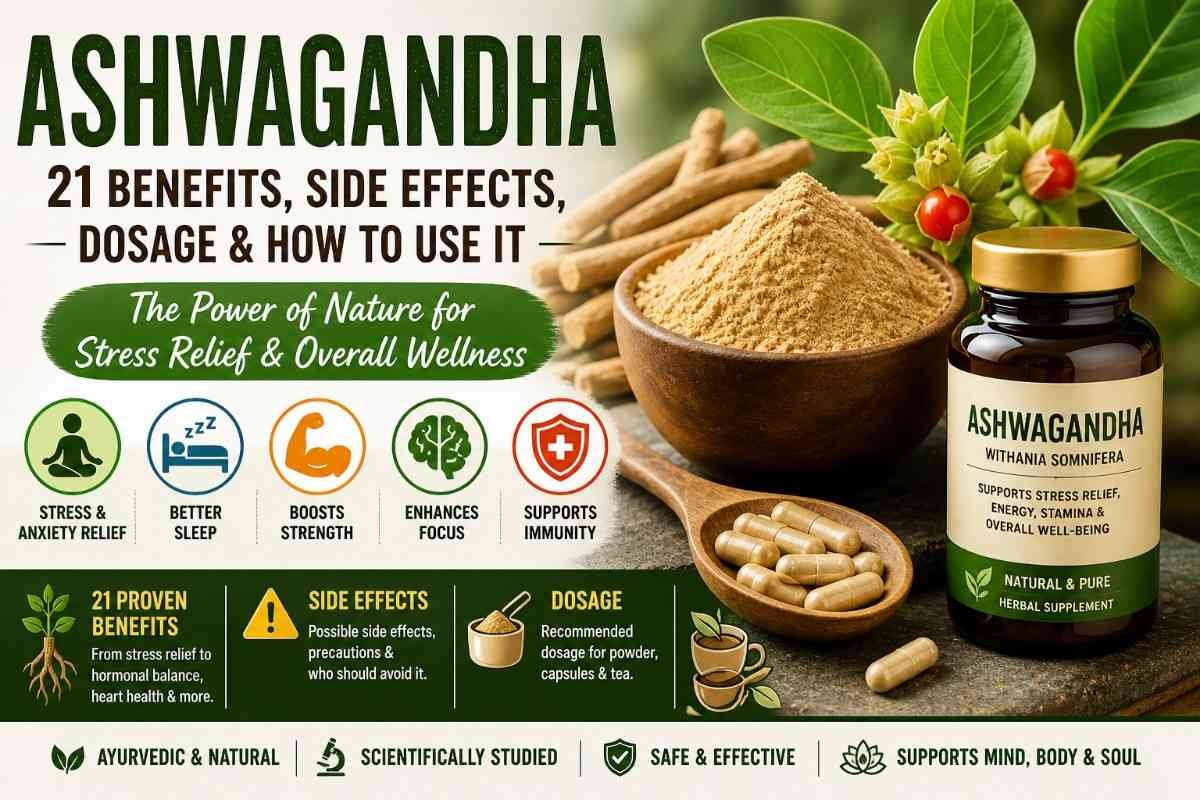
Ashwagandha has exploded in popularity across the wellness world—and not without reason. Rooted in the ancient system of Ayurveda, this powerful herb has been used for thousands of years to support stress resilience, energy, sleep, and overall vitality.
But is it really as effective as people claim? How should you take it, and what are the risks?
This in-depth guide covers 23 science-backed benefits of ashwagandha, plus its side effects, ideal dosage, and practical ways to use it safely.
What Is Ashwagandha?
Ashwagandha is an adaptogenic herb, meaning it helps your body adapt to stress. It’s often called “Indian ginseng,” although it’s not related to true ginseng.
The roots and leaves are used in supplements, powders, and teas. Its active compounds—called withanolides—are responsible for many of its health effects.
23 Benefits of Ashwagandha
1. Reduces Stress and Anxiety
it is best known for lowering cortisol, the body’s stress hormone. It helps calm the nervous system and reduce anxiety symptoms.
2. Improves Sleep Quality
It has natural calming properties that relax the nervous system, making it easier to fall asleep and stay asleep longer, especially for people with insomnia or restless nights.
3. Boosts Testosterone in Men
Studies show increased testosterone levels and improved reproductive health in men.
4. Enhances Fertility
it may improve sperm quality, count, and motility.
5. Supports Muscle Growth
It can increase muscle mass and strength when combined with resistance training.
6. Improves Brain Function
Supports memory, focus, and cognitive performance.
7. Reduces Cortisol Levels
By lowering cortisol, it helps reduce chronic stress and fatigue.
8. Strengthens Immunity
Its antioxidant properties help fight infections and inflammation.
9. Helps Manage Blood Sugar
May improve insulin sensitivity and reduce blood sugar levels.
10. Supports Heart Health
Can lower cholesterol and triglycerides.
11. Reduces Inflammation
Ashwagandha has strong anti-inflammatory effects.
12. Improves Thyroid Function
May help regulate thyroid hormones, especially in mild hypothyroidism.
13. Enhances Energy Levels
Reduces fatigue and boosts stamina.
14. Supports Weight Management
Helps control stress-related eating and improves metabolism.
15. Improves Mood
May reduce symptoms of depression and improve overall well-being.
16. Boosts Athletic Performance
Improves endurance and oxygen utilization.
17. Supports Sexual Health
Enhances libido and sexual performance.
18. Protects Brain Health
Ashwagandha is widely valued in Ayurveda for its ability to support and protect brain function. Modern research is beginning to back up these traditional claims, especially in areas like memory, focus, and long-term brain health.
19. Improves Skin Health
Ashwagandha, a staple in Ayurveda, is not just for stress relief—it can also support healthier, clearer, and more radiant skin from the inside out.
20. Supports Hormonal Balance
Helps regulate hormones in both men and women.
21. Promotes Longevity
Its adaptogenic and antioxidant effects may support long-term health.
22. Boosts Energy Levels
By reducing stress and improving overall vitality, ashwagandha helps combat fatigue and increases physical and mental energy without stimulants like caffeine.
23.Supports Anti-Aging
Its antioxidant properties help fight free radicals, which can slow down signs of aging and support long-term health.
Side Effects of Ashwagandha
While generally safe, ashwagandha can cause side effects in some people:
Common Side Effects
- Upset stomach
- Diarrhea
- Nausea
- Drowsiness
Less Common but Important
- Low blood pressure
- Thyroid hormone changes
- Allergic reactions
Who Should Avoid It?
- Pregnant or breastfeeding women
- People with autoimmune diseases
- Those on sedatives or thyroid medication
Always consult a doctor before starting any supplement.
Recommended Dosage
The ideal dosage depends on the form and purpose:
General Dosage Guidelines
- Powder: 3–6 grams per day
- Capsules/Extract: 300–600 mg daily (standardized extract)
- Tea: 1–2 cups per day
For stress and anxiety, 300–500 mg twice daily is commonly used.
When to Take Ashwagandha
Morning: For energy, focus, and stress control
Evening/Night: For relaxation and better sleep
Split Dose: Morning + evening for balanced effects
How Long to Take It
- Use consistently for 4–8 weeks to see noticeable results
- Can be taken long-term with breaks (e.g., 1–2 weeks off after a few months)
You can split the dose (morning + evening) for best results.
How to Use Ashwagandha
Ashwagandha is versatile and can fit easily into your daily routine. The best way to use it depends on your lifestyle, taste preference, and health goals.
1. Capsules or Tablets (Easiest Method)
- How to use: Take with water after meals
- Best for: Convenience and accurate dosing
- Tip: Ideal for beginners who want a hassle-free option
2. Powder (Traditional Method)
- How to use: Mix ½–1 teaspoon in warm water, milk, or smoothies
- Best for: Those who prefer natural, minimally processed forms
- Tip: Traditionally taken with warm milk and a little honey for better absorption
3. Ashwagandha Milk (Ayurvedic Style)
- How to use:
- Add 1 teaspoon powder to warm milk
- Optional: add honey or turmeric
- Best for: Relaxation, better sleep, and calming the mind
4. Herbal Tea
- How to use: Boil the powder or root in water for 10–15 minutes
- Best for: Gentle stress relief and relaxation
- Tip: Add ginger or cinnamon for better taste
5. Smoothies & Drinks
- How to use: Blend a small amount into smoothies or protein shakes
- Best for: Masking the earthy taste
6. Topical Use (For Skin & Hair)
- How to use: Mix powder with water, honey, or yogurt to make a paste
- Best for: Face masks and scalp treatments
- Tip: Always do a patch test before applying
Popular Ways to Add It to Your Routine
- Add to morning smoothies
- Mix into coffee or herbal tea
- Take capsules with meals
- Use in bedtime milk for better sleep
How Long Does It Take to Work?
You may notice benefits within:
- Stress & sleep: 1–2 weeks
- Hormones & strength: 4–8 weeks
Consistency is key.
Ashwagandha vs Other Adaptogens
Compared to other adaptogens, ashwagandha is particularly effective for:
- Stress reduction
- Hormonal balance
- Sleep improvement
Ashwagandha vs Other Adaptogens (Comparison Table)
| Feature / Herb | Ashwagandha | Rhodiola rosea | Panax ginseng | Reishi mushroom | Holy Basil |
|---|---|---|---|---|---|
| Primary Effect | Calming, anti-stress | Energizing, anti-fatigue | Stimulating, performance boost | Immune support, calming | Mild stress relief, balancing |
| Best For | Stress, anxiety, sleep | Mental fatigue, focus | Energy, stamina | Immunity, longevity | Immunity, respiratory health |
| Energy Impact | Lowers stress energy spikes | Increases energy | Strong energy boost | Mild calming energy | Gentle uplift |
| Sleep Support | ⭐⭐⭐⭐ Excellent | ⭐⭐ Moderate | ⭐ Low | ⭐⭐⭐ Good | ⭐⭐⭐ Moderate |
| Stress Reduction | ⭐⭐⭐⭐⭐ Very strong | ⭐⭐⭐ Moderate | ⭐⭐ Mild | ⭐⭐⭐⭐ Strong | ⭐⭐⭐ Moderate |
| Hormonal Support | ⭐⭐⭐⭐ Strong | ⭐⭐ Mild | ⭐⭐⭐ Moderate | ⭐⭐ Mild | ⭐⭐⭐ Moderate |
| Immune Support | ⭐⭐⭐ Moderate | ⭐⭐ Mild | ⭐⭐⭐ Moderate | ⭐⭐⭐⭐⭐ Very strong | ⭐⭐⭐⭐ Strong |
| Mental Focus | ⭐⭐⭐ Good | ⭐⭐⭐⭐ Excellent | ⭐⭐⭐ Good | ⭐⭐ Mild | ⭐⭐⭐ Moderate |
| Best Time to Take | Evening or split dose | Morning | Morning | Evening | Anytime |
| Traditional Use | Ayurveda | European herbal medicine | Traditional Chinese Medicine | Traditional Chinese Medicine | Ayurveda |
Scientific Perspective
Research supports many of ashwagandha’s benefits, especially for stress and anxiety reduction. However, more long-term human studies are needed for some claims.
FAQs
Is ashwagandha safe for daily use?
Yes, when taken in recommended doses.
Can women take ashwagandha?
Yes, it supports hormone balance and stress relief.
Does ashwagandha cause weight gain?
Not directly. It may help manage stress-related weight changes.
Can I take ashwagandha with other supplements?
Generally yes, but consult a doctor for interactions.
What is ashwagandha used for?
Ashwagandha is commonly used to reduce stress, improve sleep, boost energy, enhance focus, and support overall wellness.
How long does ashwagandha take to work?
Most people notice results within 1–2 weeks for stress and sleep, while benefits like improved strength and hormonal balance may take 4–8 weeks.
What is the best time to take ashwagandha?
You can take it:
- Morning for energy and focus
- Night for better sleep and relaxation
What is the recommended dosage of ashwagandha?
Typical dosage:
- 300–600 mg daily (extract)
- 3–6 grams (powder)
Always follow the product label or consult a healthcare professional.
Can I take ashwagandha every day?
Yes, it is generally safe for daily use when taken in recommended doses.
Does ashwagandha have side effects?
Some people may experience mild side effects such as:
- Stomach upset
- Nausea
- Drowsiness
Rarely, it may affect blood pressure or thyroid levels.
Who should avoid ashwagandha?
Avoid or consult a doctor if you:
- Are pregnant or breastfeeding
- Have autoimmune conditions
- Take thyroid or sedative medications
Is it better to take ashwagandha at night?
Yes, especially if your goal is better sleep and relaxation.
Final Thoughts
Ashwagandha is one of the most powerful and versatile herbs in natural medicine. From reducing stress and improving sleep to boosting strength and supporting hormones, its benefits are wide-ranging.
However, like any supplement, it’s not a magic cure. The best results come from consistent use, proper dosage, and combining it with a healthy lifestyle.
If used correctly, ashwagandha can be a valuable addition to your wellness routine—helping you feel calmer, stronger, and more balanced in everyday life.
Also read :