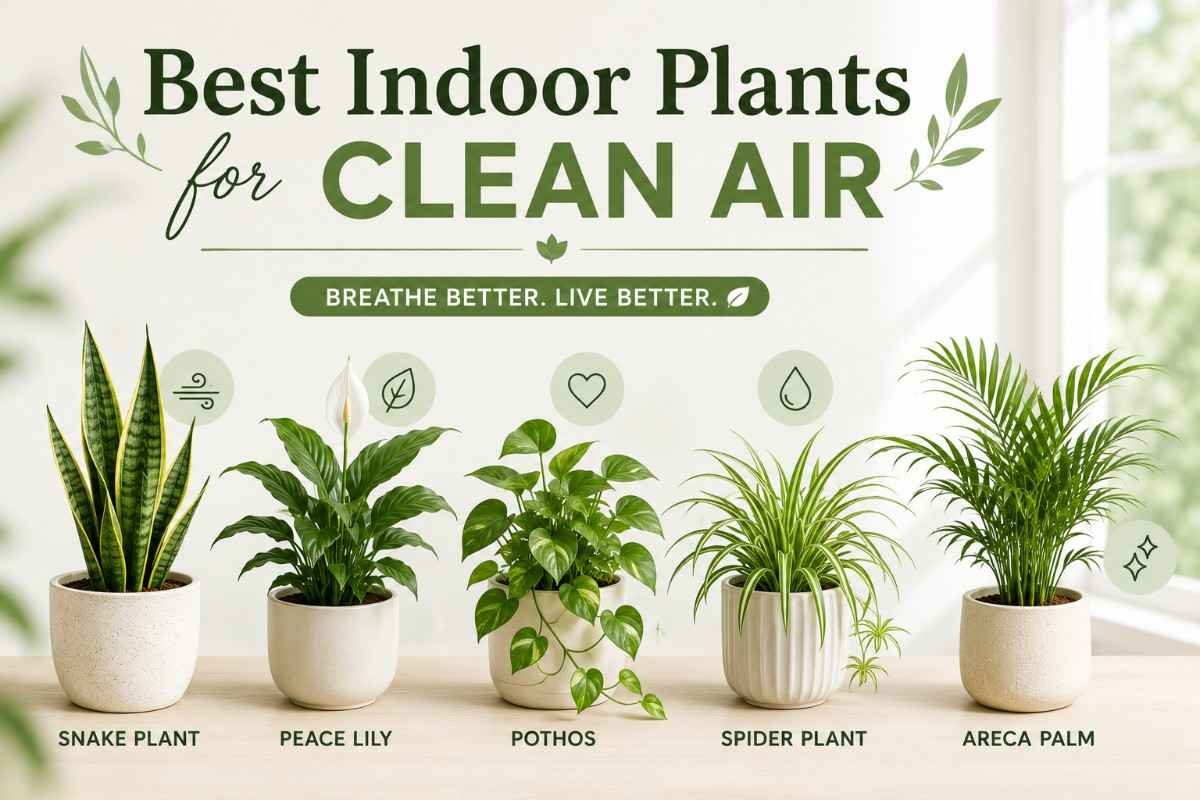
Indoor Plants for Clean Air: Indoor air quality has become an important concern in modern life. Most people spend a large portion of their time indoors—at home, in offices, or in enclosed public spaces. Unfortunately, indoor air can sometimes be more polluted than outdoor air due to dust, chemicals, cleaning products, cooking fumes, and synthetic materials used in furniture and building construction.
One of the most natural and beautiful ways to improve indoor air quality is by growing houseplants. Certain indoor plants are known for their ability to filter toxins, increase oxygen levels, and create a refreshing environment. Beyond their air-purifying benefits, they also enhance mood, reduce stress, and improve overall well-being, check out our guide on How to Grow Curry Leaves at Home.
In this detailed guide, we will explore the best indoor plants for clean air, how they work, their benefits, care tips, and how to choose the right plants for your home or workspace.
How Indoor Plants Improve Air Quality
Indoor Plants for Clean Air: Indoor plants improve air quality through natural biological processes. They absorb carbon dioxide and release oxygen during photosynthesis. Some plants also help filter harmful airborne chemicals such as formaldehyde, benzene, and trichloroethylene.
Key Air-Purifying Functions of Plants
- Absorb carbon dioxide and release oxygen
- Filter airborne toxins through leaves and roots
- Increase humidity levels naturally
- Reduce dust particles in the air
- Improve overall freshness of indoor spaces
Plants also support beneficial microorganisms in the soil that help break down pollutants.
Benefits of Indoor Plants for Clean Air
1. Improved Breathing Environment
Indoor plants help create a cleaner and fresher atmosphere, making it easier to breathe comfortably, especially in enclosed spaces.
2. Stress Reduction
Studies suggest that being around greenery can lower stress levels and promote relaxation. Check out our Stress Reduction guide Ashwagandha Tea
3. Better Sleep Quality
Some air-purifying plants improve oxygen levels at night, which may support better sleep.
4. Increased Productivity
Indoor greenery in workspaces can improve focus and concentration.
5. Natural Humidifiers
Plants release moisture into the air, which helps maintain comfortable humidity levels.
6. Aesthetic Appeal
In addition to health benefits, indoor plants enhance home decor with natural beauty.(Indoor Plants for Clean Air)
Best Indoor Plants for Clean Air
Indoor Plants for Clean Air: Below are some of the most effective and popular air-purifying indoor plants you can grow at home.
1. Snake Plant (Sansevieria)
The Snake Plant is one of the most powerful air-purifying plants. It is known for its tall, upright leaves and extreme durability.
Benefits:
- Removes toxins like formaldehyde and benzene
- Releases oxygen at night
- Very low maintenance
Care Tips:
- Needs indirect sunlight
- Water only when soil is dry
- Avoid overwatering
Snake plants are ideal for bedrooms due to their oxygen-releasing properties.
2. Spider Plant (Chlorophytum comosum)
Spider plants are popular hanging plants with long, arching leaves.
Benefits:
- Removes carbon monoxide and toxins
- Easy to grow and propagate
- Safe for pets
Care Tips:
- Prefers bright, indirect light
- Water moderately
- Grows well in hanging baskets
3. Peace Lily (Spathiphyllum)
Peace lilies are elegant plants with glossy leaves and white flowers.
Benefits:
- Removes mold spores and toxins
- Improves indoor humidity
- Enhances air freshness
Care Tips:
- Prefers shade or low light
- Keep soil slightly moist
- Avoid direct sunlight
4. Aloe Vera
Aloe Vera is not only a medicinal plant but also a great air purifier.
Benefits:
- Removes formaldehyde and benzene
- Produces oxygen
- Offers healing gel for skin burns
Care Tips:
- Needs bright sunlight
- Water sparingly
- Use well-draining soil
You can also read Aloe Vera Plant Care Guide
5. Areca Palm
Areca Palm is one of the best natural humidifiers.
Benefits:
- Removes toxins from the air
- Increases humidity
- Adds tropical beauty
Care Tips:
- Needs bright, indirect light
- Water regularly but avoid overwatering
- Thrives in warm environments
6. Rubber Plant (Ficus elastica)
Rubber plants are large-leaf indoor plants that are highly effective air purifiers.
Benefits:
- Removes airborne toxins
- Improves indoor oxygen levels
- Fast-growing plant
Care Tips:
- Bright indirect light
- Moderate watering
- Wipe leaves for dust removal
7. Boston Fern
Boston ferns are lush green plants known for humidity control.
Benefits:
- Removes formaldehyde
- Acts as a natural humidifier
- Improves indoor freshness
Care Tips:
- Prefers indirect light
- Requires frequent watering
- Likes humid environments
8. Bamboo Palm
Bamboo palms are excellent for removing indoor pollutants.
Benefits:
- Filters benzene and formaldehyde
- Adds tropical appearance
- Improves air moisture
Care Tips:
- Indirect sunlight
- Keep soil moist
- Avoid direct heat exposure
9. English Ivy
English Ivy is a trailing plant with strong air-cleaning properties.
Benefits:
- Reduces airborne mold
- Filters toxins
- Suitable for hanging baskets
Care Tips:
- Moderate sunlight
- Keep soil slightly moist
- Trim regularly
10. Money Plant (Pothos)
Money plants are one of the easiest indoor plants to grow.
Benefits:
- Removes toxins like formaldehyde
- Improves oxygen levels
- Low maintenance
Care Tips:
- Grows in low to bright light
- Water when soil is dry
- Can grow in soil or water
How to Choose the Right Indoor Plant
Consider Light Conditions
Some plants need bright light while others thrive in shade.
Consider Maintenance Level
Beginners should choose low-maintenance plants like snake plant or pothos.
Consider Space
Small plants suit desks and shelves, while larger plants suit living rooms.
Consider Air Quality Needs
Different plants target different pollutants.
Best Indoor Plant Combinations
Indoor Plants for Clean Air: You can combine plants for maximum air-purifying effect:
- Snake Plant + Peace Lily
- Spider Plant + Aloe Vera
- Areca Palm + Rubber Plant
- Money Plant + Boston Fern
Indoor Plant Care Tips
1. Avoid Overwatering
Overwatering is the most common cause of plant death.
2. Clean Leaves Regularly
Dust reduces plant efficiency in filtering air.
3. Use Proper Pots
Ensure pots have drainage holes.
4. Provide Adequate Light
Place plants near windows whenever possible.
5. Rotate Plants
Rotate plants to ensure even growth.
Common Mistakes to Avoid
- Keeping plants in complete darkness
- Overwatering or underwatering
- Ignoring pests
- Using poor-quality soil
- Overcrowding plants
Do Indoor Plants Really Purify Air?
Yes, indoor plants can help improve air quality, but they work best as part of a broader approach that includes ventilation and cleanliness. While they may not completely eliminate pollution, they significantly contribute to a healthier indoor environment.(Indoor Plants for Clean Air)
Benefits Beyond Air Quality
Indoor Plants for Clean Air: Indoor plants also offer:
- Mental relaxation
- Improved mood
- Reduced anxiety
- Better focus
- Enhanced creativity
- Natural home decor
Conclusion
Indoor Plants for Clean Air: The best indoor plants for clean air not only improve the quality of your living space but also enhance your physical and mental well-being. From the low-maintenance snake plant to the elegant peace lily and tropical areca palm, each plant offers unique benefits for your home.
Adding indoor plants is a simple, affordable, and natural way to create a healthier environment. Whether you live in a small apartment or a large house, incorporating greenery into your space can make a noticeable difference in air freshness and overall lifestyle quality.
By choosing the right plants and caring for them properly, you can enjoy a greener, cleaner, and more peaceful indoor environment every day.
For more healthy living tips, explore:
How to Start Small Herb Garden
FAQs
What are the best indoor plants for clean air?
Some of the best indoor plants for clean air include Snake Plant, Peace Lily, Spider Plant, Aloe Vera, Areca Palm, Rubber Plant, Boston Fern, Bamboo Palm, English Ivy, and Money Plant. These plants are popular because they are relatively easy to grow and can help create a fresher indoor environment.
Do indoor plants really help improve air quality?
Yes, indoor plants can contribute to better air quality by absorbing carbon dioxide, releasing oxygen, and supporting a healthier indoor environment. While plants alone cannot completely purify indoor air, they can be a valuable addition to proper ventilation and regular cleaning.
Which indoor plant produces the most oxygen?
Several indoor plants produce oxygen, but Snake Plant is particularly popular because it continues releasing oxygen at night. Areca Palm, Aloe Vera, and Money Plant are also known for supporting oxygen production indoors.
What is the easiest air-purifying plant to grow?
Snake Plant is often considered one of the easiest air-purifying plants to grow. It requires minimal watering, tolerates various light conditions, and is highly resilient, making it ideal for beginners.
Can indoor plants help with allergies?
Some indoor plants may help improve humidity levels and reduce airborne dust particles, which can create a more comfortable indoor environment. However, individuals with plant allergies should choose species carefully and keep plants clean to minimize potential allergens.
Which indoor plants are best for bedrooms?
Snake Plant, Aloe Vera, Peace Lily, and Areca Palm are commonly recommended for bedrooms. These plants are appreciated for their attractive appearance and ability to contribute to a fresher atmosphere.
How many indoor plants do I need to improve air quality?
The number of plants needed depends on the size of the room and the types of plants selected. Adding several healthy plants throughout the home can help create a greener and more refreshing environment.
Do indoor plants require direct sunlight?
Not all indoor plants require direct sunlight. Some plants, such as Peace Lily and Snake Plant, can tolerate lower light conditions, while others like Aloe Vera prefer brighter locations. Understanding each plant’s light requirements is important for healthy growth.
How often should I water air-purifying plants?
Watering needs vary depending on the plant species, container size, and indoor conditions. Most indoor plants prefer watering when the top layer of soil becomes dry. Overwatering is a common mistake and can damage roots.
Are air-purifying plants safe for pets?
Some indoor plants are pet-friendly, while others may be toxic if ingested. Spider Plant is generally considered pet-safe, but plants such as Peace Lily and English Ivy may pose risks to cats and dogs. Always research plant safety before bringing them into a pet-friendly home.
Can indoor plants reduce stress and improve mood?
Many people find that indoor plants create a calming and pleasant atmosphere. Being around greenery may help reduce stress, improve mood, and increase feelings of relaxation and well-being.
What is the best low-maintenance indoor plant for clean air?
Snake Plant, Money Plant, and Aloe Vera are among the best low-maintenance indoor plants. They require minimal care, tolerate occasional neglect, and are suitable for beginners.
Can indoor plants help increase humidity?
Yes, many indoor plants naturally release moisture into the air through a process called transpiration. Plants such as Areca Palm and Boston Fern are particularly effective at increasing indoor humidity levels.
What is the best indoor plant for an office?
Snake Plant, ZZ Plant, Spider Plant, and Money Plant are excellent office plants because they are easy to care for and adapt well to indoor environments with limited natural light.
How can I keep indoor plants healthy?
To keep indoor plants healthy, provide appropriate light, water them properly, use well-draining soil, clean dust from leaves, and inspect them regularly for pests. Consistent care and proper growing conditions help plants thrive and maintain their appearance.
About the Author
Hitasha is a health, wellness, gardening, and lifestyle content writer who creates easy-to-understand articles on natural living, home gardening, nutrition, and healthy habits.
Disclaimer
This article is for informational and educational purposes only. Results may vary depending on plant species, growing conditions, and indoor environment. Always follow proper plant care guidelines for the best results.
Sources & References
“This article is based on information from trusted gardening organizations, horticultural experts, and environmental research resources.”
- NASA Clean Air Study
- Royal Horticultural Society (RHS) – Houseplants Guide
- University of Florida IFAS Extension – Houseplants and Indoor Gardening
- Missouri Botanical Garden – Houseplant Care Resources
- The Old Farmer’s Almanac – Growing Houseplants Indoors
- University of Minnesota Extension – Growing Indoor Plants
- Gardening Know How – Indoor Plant Care Guides