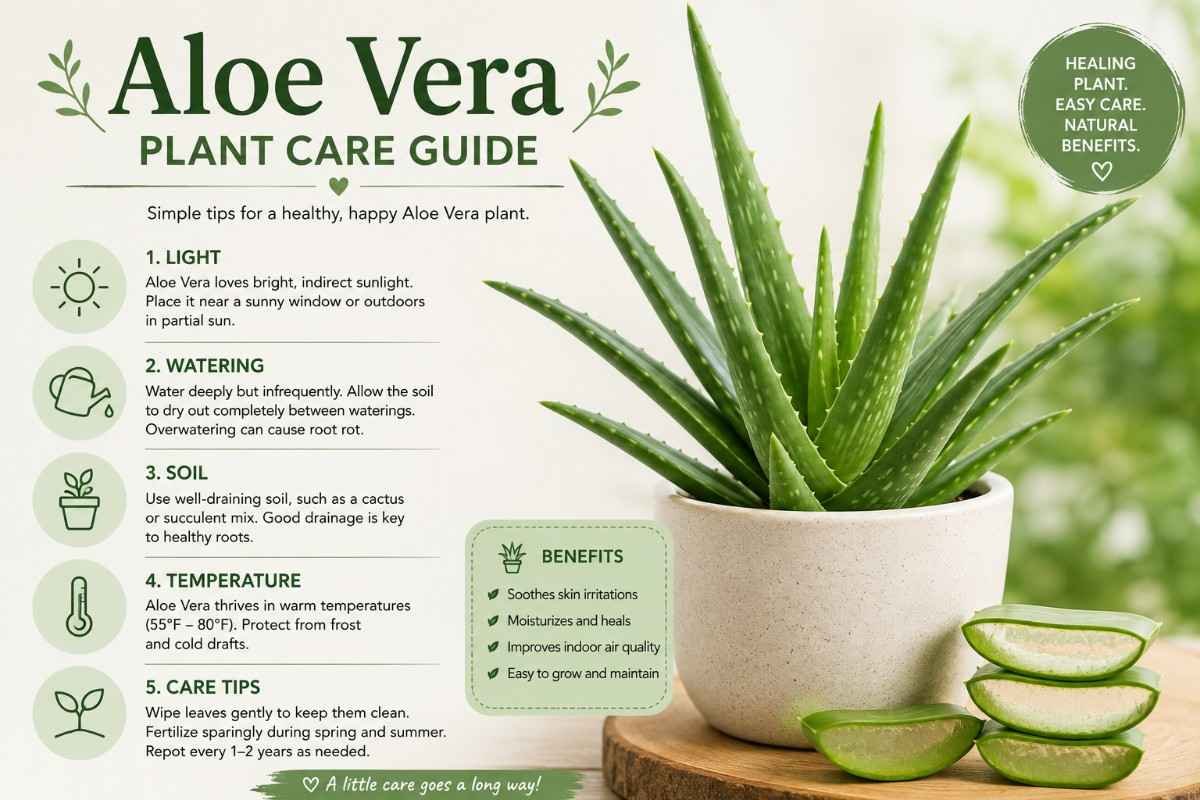
Aloe Vera Plant Care Guide: Aloe Vera is one of the most popular succulent plants in the world. Known for its thick, fleshy leaves filled with soothing gel, Aloe Vera is valued for both its ornamental beauty and practical uses. Whether grown indoors as a houseplant or outdoors in warm climates, Aloe Vera is relatively easy to care for, making it an excellent choice for beginner and experienced gardeners alike.
Native to the Arabian Peninsula, Aloe Vera has been cultivated for thousands of years and is now grown worldwide. Its ability to thrive in dry conditions, tolerate occasional neglect, and provide attractive greenery makes it a favorite among plant enthusiasts.
Aloe vera is one of the most popular indoor plants due to its low-maintenance nature and many household uses. If you enjoy growing useful plants at home, you may also like our guide on How to Grow Curry Leaves at Home and Best Indoor Plants for Clean Air.
What Is Aloe Vera?
Aloe Vera is a succulent plant species belonging to the Asphodelaceae family. It stores water in its thick leaves, allowing it to survive in hot and dry environments.
Characteristics of Aloe Vera
- Thick green leaves
- Gel-filled interior
- Drought tolerance
- Low maintenance requirements
- Attractive ornamental appearance
- Long lifespan
A mature Aloe Vera plant can grow between 1 and 3 feet tall depending on growing conditions.
Benefits of Growing Aloe Vera
Easy to Maintain
Aloe Vera requires minimal care and is ideal for beginners.
Attractive Houseplant
Its unique shape and green foliage enhance indoor and outdoor spaces.
Drought Resistant
The plant stores water in its leaves, reducing watering needs.
Air Quality Benefits
Like many indoor plants, Aloe Vera contributes to a pleasant indoor environment.
Produces Offsets
Healthy plants produce baby plants called pups that can be propagated easily.
Choosing the Right Aloe Vera Plant
Aloe Vera Plant Care: When purchasing an Aloe Vera plant, look for:
- Firm leaves
- Bright green color
- No signs of rot
- Healthy root system
- Pest-free foliage
Avoid plants with:
- Mushy leaves
- Brown spots
- Yellowing foliage
- Excessive damage
Aloe vera has long been associated with wellness and healthy living. Learn more in Aloe Vera Water
Best Growing Conditions for Aloe Vera
Aloe Vera Plant Care: Creating the proper environment helps Aloe Vera thrive.
Temperature
Aloe Vera prefers temperatures between:
- 55°F and 85°F (13°C to 29°C)
The plant dislikes freezing temperatures and should be protected from frost.
Humidity
Aloe Vera prefers low to moderate humidity levels.
Excessive humidity may increase the risk of fungal problems and root rot.
Light Requirements
Indoor Light
Aloe Vera needs bright, indirect sunlight.
Best locations include:
- South-facing windows
- West-facing windows
- Bright rooms
Outdoor Light
Outdoor Aloe Vera enjoys:
- Full sun
- Partial sun
- Bright conditions
In extremely hot climates, afternoon shade may prevent sunburn.
Signs of Insufficient Light
- Leggy growth
- Pale leaves
- Slow growth
Signs of Too Much Sun
- Brown leaf tips
- Sunburn spots
- Leaf discoloration
Best Soil for Aloe Vera(Aloe Vera Plant Care)
Proper soil is essential because Aloe Vera dislikes sitting in wet conditions.
Ideal Soil Characteristics
The soil should be:
- Well-draining
- Sandy
- Loose
- Fast drying
Recommended Soil Mix
Many gardeners use:
- Cactus soil
- Succulent potting mix
- Sandy soil blends
DIY Aloe Vera Soil Mix
Combine:
- 2 parts potting soil
- 1 part coarse sand
- 1 part perlite
This improves drainage and prevents root rot.
Choosing the Right Pot
Aloe Vera Plant Care: Selecting the right container plays a major role in plant health.
Best Pot Materials
Suitable options include:
- Terracotta pots
- Clay pots
- Ceramic pots
Terracotta is especially useful because it allows excess moisture to evaporate.
Drainage Holes
Always choose pots with drainage holes.
Without proper drainage, water can accumulate around roots and cause serious problems.
Watering Aloe Vera
Aloe Vera Plant Care: One of the most common mistakes people make is overwatering.
How Often to Water
Water thoroughly and then allow the soil to dry completely before watering again.
Typical watering schedule:
- Every 2–3 weeks during warm months
- Less frequently during winter
Signs of Overwatering
- Yellow leaves
- Mushy foliage
- Root rot
- Drooping leaves
Signs of Underwatering
- Thin leaves
- Wrinkled foliage
- Dry leaf edges
Proper Watering Technique
- Water deeply.
- Allow excess water to drain.
- Empty drainage trays.
- Wait until soil dries before watering again.
Overwatering is one of the most common mistakes when caring for aloe vera plants. Understanding the importance of water can also help you develop healthier daily habits. Read our guide on How Much Water Do I Need to Drink?.
Fertilizing Aloe Vera
Aloe Vera Plant Care: Aloe Vera is not a heavy feeder.
Fertilizer Recommendations
Use:
- Succulent fertilizer
- Cactus fertilizer
- Balanced liquid fertilizer
Feeding Schedule
Apply fertilizer:
- Once in spring
- Once in summer
Avoid excessive fertilization, which can damage roots.
Repotting Aloe Vera
Repotting helps support healthy growth.
When to Repot
Repot when:
- Roots outgrow the pot
- The plant becomes top-heavy
- Pups crowd the container
Best Time to Repot
Spring is generally the ideal season.
Repotting Steps
- Remove the plant carefully.
- Shake off excess soil.
- Inspect roots.
- Place in a larger pot.
- Add fresh soil.
- Wait several days before watering.
Aloe Vera Propagation
One of the easiest ways to multiply Aloe Vera plants is through pups.
What Are Pups?
Pups are baby Aloe Vera plants that grow near the base of the parent plant.
How to Propagate Aloe Vera
- Remove the parent plant from its container.
- Identify healthy pups.
- Separate pups carefully.
- Allow cuts to dry.
- Plant pups in fresh soil.
- Water lightly after establishment.
Pruning Aloe Vera
Pruning helps maintain appearance and plant health.
Remove
- Dead leaves
- Damaged leaves
- Diseased foliage
Benefits of Pruning
- Better airflow
- Improved appearance
- Reduced pest problems
Always use clean pruning tools.
Common Aloe Vera Problems
Root Rot
Root rot is often caused by overwatering.
Symptoms
- Soft leaves
- Foul odor
- Black roots
Prevention
- Use well-draining soil
- Avoid excess watering
- Ensure proper drainage
Brown Leaf Tips
Possible causes include:
- Too much sun
- Underwatering
- Salt buildup
Yellow Leaves
Possible causes:
- Overwatering
- Poor drainage
- Low light
Common Aloe Vera Pests
Although relatively pest-resistant, Aloe Vera can occasionally attract pests.
Mealybugs
Signs:
- White cotton-like masses
Aphids
Signs:
- Tiny insects on leaves
Spider Mites
Signs:
- Fine webbing
- Leaf damage
Treatment Options
- Neem oil
- Insecticidal soap
- Manual removal
Aloe Vera Plant Care During Winter
Winter care differs from summer care.
Reduce Watering
Growth slows during colder months.
Protect From Frost
Freezing temperatures can severely damage Aloe Vera.
Increase Indoor Light
Move plants closer to bright windows if necessary.
Indoor Aloe Vera Plant Care Tips
Rotate the Plant
Rotate every few weeks for even growth.
Dust Leaves
Clean leaves occasionally to improve photosynthesis.
Avoid Cold Drafts
Keep plants away from:
- Air conditioners
- Heating vents
- Cold windows
Outdoor Aloe Vera Plant Care Tips
Provide Adequate Sunlight
Choose bright locations.
Ensure Good Drainage
Avoid low areas where water collects.
Protect During Heavy Rain
Excessive moisture can damage roots.
Aloe Vera Growth Stages
Seedling Stage
Young plants establish roots and develop leaves.
Juvenile Stage
Growth accelerates and leaf production increases.
Mature Stage
Plants produce larger leaves and may generate pups.
Can Aloe Vera Flower?
Aloe Vera Plant Care: Yes, mature Aloe Vera plants can produce flowers.
Flower Characteristics
- Yellow flowers
- Orange flowers
- Tall flower spikes
Flowering is more common outdoors and in ideal growing conditions.
Benefits of Growing Aloe Vera Indoors
Aloe Vera Plant Care: Indoor Aloe Vera plants offer:
- Decorative beauty
- Low maintenance care
- Easy propagation
- Compact growth
- Year-round greenery
Best Companion Plants for Aloe Vera
Aloe Vera Plant Care: Aloe Vera grows well with other succulents.
Examples include:
- Haworthia
- Echeveria
- Jade Plant
- Zebra Plant
- Sedum
These plants share similar care requirements.
Mistakes to Avoid
Overwatering
The most common mistake among beginners.
Using Heavy Soil
Poor drainage increases root problems.
Insufficient Light
Can cause weak growth.
Oversized Pots
Large pots retain excess moisture.
Ignoring Pests
Early treatment prevents serious infestations.
Long-Term Aloe Vera Care
Aloe Vera Plant Care: Healthy Aloe Vera plants can live for many years.
To ensure longevity:
- Water properly
- Provide bright light
- Repot when needed
- Monitor pests
- Use well-draining soil
Consistent care encourages healthy growth and frequent pup production.
Conclusion
Aloe Vera Plant Care: Aloe Vera is one of the easiest and most rewarding plants to grow. Its attractive appearance, drought tolerance, and low-maintenance nature make it ideal for homes, offices, patios, and gardens. By providing bright light, well-draining soil, occasional watering, and proper care, you can enjoy a thriving Aloe Vera plant for many years.
Whether you are a beginner gardener or an experienced plant enthusiast, Aloe Vera offers beauty, resilience, and satisfaction with minimal effort. Following the tips in this Aloe Vera Plant Care Guide will help you grow a healthy, vibrant plant that continues to flourish season after season. Aloe vera is an excellent plant for beginners because it is easy to grow, attractive, and useful around the home. To continue your healthy living journey, explore our related guides:
FAQs
How often should I water an Aloe Vera plant?
Aloe Vera plants prefer infrequent watering because they store water in their thick leaves. In most cases, watering every two to three weeks is sufficient during the growing season. Always allow the soil to dry out completely between waterings to help prevent root rot and other moisture-related problems.
What type of soil is best for Aloe Vera?
Aloe Vera grows best in well-draining soil designed for succulents or cacti. A soil mix that contains sand, perlite, or other drainage-enhancing materials helps prevent excess moisture from accumulating around the roots.
Does Aloe Vera need direct sunlight?
Aloe Vera thrives in bright light and can tolerate several hours of direct sunlight each day. Indoors, placing the plant near a sunny window usually provides adequate light. However, sudden exposure to intense sunlight can sometimes cause leaf discoloration or sunburn.
Can Aloe Vera be grown indoors?
Yes, Aloe Vera is one of the most popular indoor plants because it is easy to care for and adapts well to indoor environments. As long as it receives enough sunlight and proper watering, it can thrive indoors for many years.
Why are my Aloe Vera leaves turning yellow?
Yellow leaves are often a sign of overwatering, poor drainage, or insufficient sunlight. Checking the soil moisture and ensuring the plant is growing in well-draining soil can help identify and correct the problem.
How do I know if my Aloe Vera plant is overwatered?
Common signs of overwatering include soft or mushy leaves, yellowing foliage, drooping leaves, and root rot. If you suspect overwatering, reduce watering frequency and allow the soil to dry completely before watering again.
Can Aloe Vera survive in low light conditions?
Aloe Vera can tolerate lower light levels for short periods, but it generally grows best in bright light. Prolonged low-light conditions may result in slow growth, weak stems, and pale leaves.
When should I repot my Aloe Vera plant?
Repotting is usually necessary when the plant becomes root-bound, produces numerous pups, or outgrows its current container. Spring is often the best time to repot because the plant is actively growing during this season.
What are Aloe Vera pups?
Aloe Vera pups are small baby plants that grow around the base of the parent plant. These offsets can be carefully separated and replanted to grow new Aloe Vera plants.
How can I propagate Aloe Vera?
The easiest way to propagate Aloe Vera is by separating healthy pups from the parent plant. Once removed, the pups can be planted in well-draining soil and cared for as individual plants.
Does Aloe Vera need fertilizer?
Aloe Vera does not require frequent fertilization. A light application of a balanced succulent or cactus fertilizer once or twice during the growing season is usually enough to support healthy growth.
Can Aloe Vera grow outdoors?
Yes, Aloe Vera can be grown outdoors in warm climates where temperatures remain above freezing. It thrives in sunny locations with well-draining soil and protection from excessive rainfall.
Why are the tips of my Aloe Vera leaves turning brown?
Brown leaf tips may occur due to underwatering, excessive sunlight, salt buildup in the soil, or environmental stress. Evaluating watering practices and growing conditions can help determine the cause.
Can Aloe Vera plants flower?
Yes, mature Aloe Vera plants can produce flowers under the right conditions. The flowers typically appear on tall stalks and may be yellow, orange, or red. Flowering is more common in outdoor plants receiving optimal sunlight.
What are the benefits of growing an Aloe Vera plant?
Aloe Vera is valued for its attractive appearance, low-maintenance care requirements, drought tolerance, and ability to produce new plants through propagation. It is an excellent choice for beginners and experienced gardeners looking for an easy-to-grow houseplant.
About the Author
Hitasha is a health, wellness, gardening, and lifestyle content writer who creates informative articles on home gardening, natural living, nutrition, and healthy habits.
Disclaimer
This article is for informational and educational purposes only. Plant growth and care results may vary depending on climate, soil conditions, and growing environment. Always follow proper gardening practices for the best results.
Sources & References
“This article is based on information from trusted horticultural organizations, gardening experts, and plant care resources.”
- Royal Horticultural Society (RHS) – Aloe Vera Care Guide
- University of Florida IFAS Extension – Growing Succulents and Aloe Vera
- Missouri Botanical Garden – Aloe Vera Plant Information
- The Old Farmer’s Almanac – Growing Aloe Vera Indoors
- University of Minnesota Extension – Indoor Plant Care Guide
- Gardening Know How – Aloe Vera Growing Tips
- Gardenia – How to Grow and Care for Aloe Vera