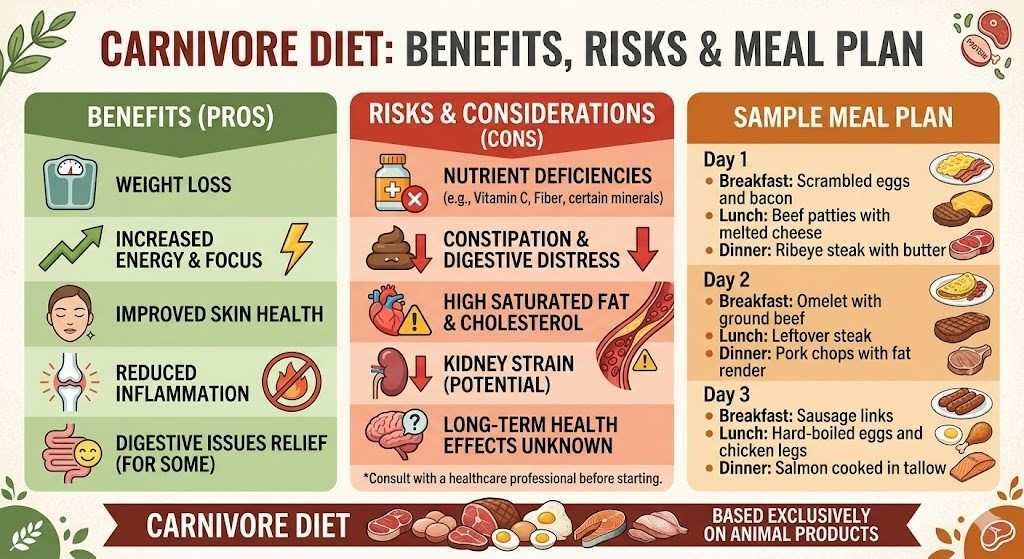
The Carnivore Diet is one of the most extreme yet increasingly popular dietary trends in the health and fitness world. Unlike balanced diets that include fruits, vegetables, and grains, the carnivore diet is based entirely on animal products—meat, fish, eggs, and some dairy.
It has gained attention for its potential benefits in weight loss, mental clarity, and reducing inflammation. However, it also raises serious questions about long-term health, nutrient deficiencies, and sustainability.
In this comprehensive guide, we’ll break down everything you need to know about the Carnivore Diet—its benefits, risks, scientific perspective, and a practical meal plan to get started.
What is the Carnivore Diet?
The Carnivore Diet is a zero-carb, animal-based diet that eliminates all plant foods. This includes:
- Fruits
- Vegetables
- Grains
- Legumes
- Nuts and seeds
Instead, the diet focuses on:
- Meat (beef, chicken, lamb, pork)
- Fish and seafood
- Eggs
- Animal fats
- Limited dairy (optional)
Core Principle:
If it comes from an animal, you can eat it. If it comes from a plant, avoid it.
Types of Carnivore Diet
There are several variations of the carnivore diet:
1. Strict Carnivore
- Only meat, salt, and water
- No dairy or eggs
2. Standard Carnivore
- Includes meat, eggs, and dairy
3. Keto Carnivore
- High-fat animal foods
- Similar to ketogenic diet but without plants
4. Animal-Based Diet (Flexible Carnivore)
- Includes small amounts of fruits or honey
Benefits of the Carnivore Diet
1. Rapid Weight Loss
One of the main reasons people try the carnivore diet is for weight loss.
Why it works:
- High protein increases satiety
- Zero carbs reduce insulin levels
- Fat becomes the primary energy source
Many people report quick fat loss, especially in the first few weeks.
2. Reduced Inflammation
Eliminating processed foods, sugar, and plant toxins may reduce inflammation.
People with conditions like:
- Arthritis
- Autoimmune diseases
- Digestive issues
often report symptom relief.
3. Improved Mental Clarity
Some followers claim better focus and reduced brain fog.
Possible reasons:
- Stable blood sugar levels
- Ketone production (brain fuel)
- Elimination of inflammatory foods
4. Simplicity
The diet is extremely simple:
- No calorie counting
- No complex recipes
- Minimal food choices
This makes it easy to follow for many people.
5. Blood Sugar Control
Because the diet contains zero carbohydrates, it may help:
- Reduce blood sugar spikes
- Improve insulin sensitivity
- Support people with type 2 diabetes (under supervision)
6. Gut Health Improvements (for some)
Some people experience relief from:
- Bloating
- IBS symptoms
- Food intolerances
This may be due to removing plant-based irritants.
Risks of the Carnivore Diet
Despite its benefits, the carnivore diet comes with significant risks.
1. Nutrient Deficiencies
Eliminating plant foods can lead to lack of:
- Fiber
- Vitamin C
- Magnesium
- Potassium
- Antioxidants
Over time, this may impact overall health.
2. Digestive Issues
- Constipation (due to lack of fiber)
- Diarrhea (during adaptation phase)
Your gut microbiome may also suffer due to lack of diversity.
3. Increased Cholesterol Levels
High intake of saturated fats may raise:
- LDL cholesterol
This could increase the risk of heart disease in some individuals.
4. Long-Term Health Concerns
There is limited research on long-term effects.
Potential risks include:
- Heart disease
- Kidney strain (due to high protein)
- Nutritional imbalance
5. Social and Lifestyle Limitations
- Eating out becomes difficult
- Limited food variety
- Can feel restrictive
6. Not Suitable for Everyone
Avoid or consult a doctor if you have:
- Kidney disease
- Heart conditions
- Pregnancy
- Eating disorders
Foods to Eat on Carnivore Diet
Animal-Based Foods
Meat
- Beef (ribeye, steak, ground beef)
- Lamb
- Pork
- Chicken
Fish & Seafood
- Salmon
- Sardines
- Tuna
- Shrimp
Eggs
- Whole eggs (highly nutritious)
Animal Fats
- Butter
- Ghee
- Tallow
Dairy (optional)
- Cheese
- Heavy cream
Foods to Avoid
- Fruits
- Vegetables
- Grains
- Sugar
- Processed foods
- Seed oils
- Nuts and legumes
7-Day Carnivore Diet Meal Plan
Day 1
- Breakfast: Scrambled eggs in butter
- Lunch: Grilled chicken thighs
- Dinner: Ribeye steak
Day 2
- Breakfast: Omelette with cheese
- Lunch: Ground beef patties
- Dinner: Salmon with butter
Day 3
- Breakfast: Boiled eggs
- Lunch: Lamb chops
- Dinner: Pork belly
Day 4
- Breakfast: Fried eggs and bacon
- Lunch: Tuna salad (no veggies)
- Dinner: Beef steak
Day 5
- Breakfast: Egg muffins
- Lunch: Chicken wings
- Dinner: Grilled salmon
Day 6
- Breakfast: Cheese omelette
- Lunch: Beef liver (nutrient-rich)
- Dinner: Lamb steak
Day 7
- Breakfast: Scrambled eggs
- Lunch: Pork chops
- Dinner: Roast chicken
Tips for Beginners
1. Start Slowly
Transition from a low-carb or keto diet before going full carnivore.
2. Stay Hydrated
Drink plenty of water and consider electrolytes.
3. Eat Enough Fat
Fat provides energy—don’t go too lean.
4. Listen to Your Body
Adjust based on how you feel.
5. Don’t Fear Salt
You may need more sodium due to low insulin levels.
Carnivore Diet vs Keto Diet
| Feature | Carnivore Diet | Keto Diet |
|---|---|---|
| Carbs | 0% | 5–10% |
| Food Variety | Very limited | Moderate |
| Fiber | None | Low |
| Flexibility | Low | Higher |
| Sustainability | Challenging | Easier |
Scientific Perspective
The Carnivore Diet lacks long-term scientific evidence. Most benefits are based on:
- Anecdotal reports
- Short-term studies
- Keto-related research
Experts generally recommend a balanced diet including:
- Fruits
- Vegetables
- Whole grains
However, some individuals may benefit short-term under medical guidance.
Who Should Try Carnivore Diet?
It may be helpful for:
- People with autoimmune conditions
- Those struggling with severe food intolerances
- Individuals looking for short-term weight loss
Who Should Avoid It?
- Pregnant women
- People with kidney issues
- Heart patients
- Those needing balanced nutrition
Common Side Effects
First Week (Adaptation Phase):
- Fatigue
- Headaches
- Cravings
- Digestive changes
This is often called the “carnivore flu.”
Long-Term Sustainability
The biggest challenge is sustainability.
Issues include:
- Lack of variety
- Nutritional gaps
- Social limitations
Many people eventually transition to a more balanced diet.
FAQs
1. Is the carnivore diet safe?
It may be safe short-term for some individuals, but long-term safety is unclear.
2. Can I lose weight on the carnivore diet?
Yes, many people experience rapid weight loss due to low carbs and high protein.
3. Do I need supplements?
Possibly—especially for vitamins like C and magnesium.
4. Can I drink coffee?
Strict carnivore says no, but some people include it.
5. Is fiber necessary?
Fiber is generally beneficial, but the carnivore diet excludes it entirely.
6. How long should I follow it?
Many people try it for 30–90 days rather than long-term.
7. Can diabetics follow this diet?
It may help blood sugar control, but medical supervision is essential.
8. Will it increase cholesterol?
It can in some people—monitor regularly.
Conclusion
The Carnivore Diet is a bold and highly restrictive approach to eating that eliminates all plant-based foods. While it offers potential benefits like weight loss, reduced inflammation, and simplicity, it also carries serious risks including nutrient deficiencies and long-term health concerns.
It may work as a short-term elimination diet or for specific health conditions, but it is not suitable for everyone. Before starting, it’s crucial to consult a healthcare professional and consider whether such an extreme diet aligns with your lifestyle and long-term health goals.
Also read :