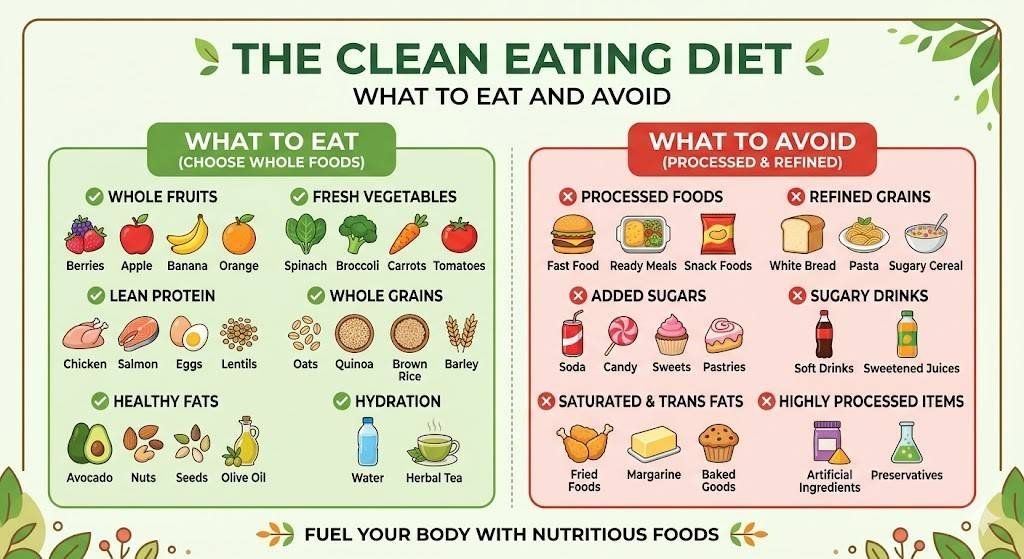
In a world filled with processed foods, artificial ingredients, and fast-paced lifestyles, the concept of clean eating has emerged as a powerful approach to improving overall health. The clean eating diet focuses on consuming whole, natural foods that are as close to their original form as possible. It emphasizes quality over quantity and encourages mindful eating habits.
Clean eating Diet is not a strict diet with rigid rules. Instead, it is a sustainable lifestyle that promotes better nutrition, increased energy, and long-term wellness. Whether your goal is weight loss, improved digestion, or enhanced overall health, clean eating can be a practical and effective solution.
This comprehensive guide will walk you through what clean eating really means, its benefits, foods to include, foods to avoid, and a simple meal plan to help you get started.
What Is Clean Eating Diet?
Clean eating is a dietary approach that focuses on whole, minimally processed foods. It encourages the consumption of fresh fruits, vegetables, whole grains, lean proteins, and healthy fats while avoiding processed and refined foods.
Key Principles of Clean Eating Diet
- Eat whole, natural foods
- Avoid processed and packaged foods
- Choose fresh over frozen (when possible)
- Limit added sugars and salt
- Stay hydrated with water
- Read food labels carefully
- Practice portion control
Benefits of Clean Eating Diet
1. Improves Overall Health
Clean eating provides essential nutrients your body needs to function properly. By avoiding processed foods, you reduce exposure to harmful additives and preservatives.
2. Supports Weight Loss
Whole foods are naturally lower in calories and higher in fiber, helping you feel full longer and reducing overeating.
3. Boosts Energy Levels
Nutrient-dense foods provide sustained energy throughout the day, unlike sugary foods that cause energy crashes.
4. Enhances Digestion
Fiber-rich foods promote healthy digestion and support a balanced gut microbiome.
5. Improves Skin Health
Eating clean can lead to clearer skin by reducing inflammation and providing essential vitamins and antioxidants.
6. Reduces Risk of Chronic Diseases
A clean diet can lower the risk of conditions such as obesity, heart disease, and type 2 diabetes.
What to Eat on a Clean Eating Diet
1. Fruits and Vegetables
Fresh fruits and vegetables should make up a large portion of your diet. They are rich in vitamins, minerals, and antioxidants.
Examples:
- Apples
- Bananas
- Berries
- Spinach
- Carrots
- Broccoli
2. Whole Grains
Choose whole grains instead of refined grains to increase fiber intake.
Examples:
- Brown rice
- Quinoa
- Oats
- Whole wheat bread
3. Lean Proteins
Include protein sources that are low in unhealthy fats.
Examples:
- Chicken breast
- Fish
- Eggs
- Lentils
- Beans
4. Healthy Fats
Healthy fats are essential for brain function and overall health.
Examples:
- Avocados
- Nuts
- Seeds
- Olive oil
5. Dairy or Alternatives
Opt for minimally processed dairy products or plant-based alternatives.
Examples:
- Yogurt
- Milk
- Almond milk
6. Natural Sweeteners (in Moderation)
Use natural sweeteners instead of refined sugar.
Examples:
- Honey
- Maple syrup
- Dates
Foods to Avoid on a Clean Eating Diet
1. Processed Foods
These often contain additives, preservatives, and unhealthy fats.
Examples:
- Packaged snacks
- Instant meals
- Processed meats
2. Refined Sugars
High sugar intake can lead to weight gain and energy crashes.
Examples:
- Soft drinks
- Candy
- Pastries
3. Refined Grains
Refined grains lack fiber and nutrients.
Examples:
- White bread
- White rice
- Pasta made from refined flour
4. Artificial Ingredients
Avoid foods with artificial colors, flavors, and preservatives.
5. Trans Fats
These unhealthy fats increase the risk of heart disease.
Examples:
- Fried foods
- Margarine
- Baked goods with hydrogenated oils
7-Day Clean Eating Diet Meal Plan
Day 1
- Breakfast: Oatmeal with fresh berries
- Lunch: Grilled chicken salad with olive oil dressing
- Dinner: Brown rice with steamed vegetables and fish
- Snack: Apple with almonds
Day 2
- Breakfast: Smoothie with banana, spinach, and almond milk
- Lunch: Quinoa salad with chickpeas
- Dinner: Grilled chicken with roasted vegetables
- Snack: Yogurt
Day 3
- Breakfast: Whole grain toast with avocado
- Lunch: Lentil soup
- Dinner: Baked fish with broccoli
- Snack: Nuts
Day 4
- Breakfast: Fruit bowl with nuts
- Lunch: Brown rice with vegetables
- Dinner: Stir-fried tofu with vegetables
- Snack: Carrot sticks
Day 5
- Breakfast: Oats with honey and fruits
- Lunch: Whole grain wrap with vegetables
- Dinner: Grilled chicken with quinoa
- Snack: Fresh fruit
Day 6
- Breakfast: Smoothie bowl
- Lunch: Chickpea salad
- Dinner: Fish with steamed vegetables
- Snack: Seeds mix
Day 7
- Breakfast: Yogurt with granola
- Lunch: Vegetable soup
- Dinner: Grilled paneer with salad
- Snack: Dark chocolate (moderation)
Tips for Following a Clean Eating Lifestyle
- Plan your meals in advance
- Cook at home more often
- Avoid grocery shopping when hungry
- Drink plenty of water
- Read ingredient labels carefully
Common Mistakes to Avoid
- Being too restrictive
- Skipping meals
- Ignoring portion sizes
- Relying on “healthy” packaged foods
Clean Eating Diet for Beginners
Start by making small changes, such as replacing processed snacks with fruits or switching to whole grains. Gradually build healthier habits over time.
FAQs about Clean Eating Diet
1. Is clean eating the same as dieting?
No, clean eating is a lifestyle focused on food quality rather than strict calorie counting.
2. Can I lose weight with clean eating?
Yes, it can support weight loss by reducing processed foods and improving nutrition.
3. Is clean eating expensive?
It can be affordable if you focus on seasonal produce and home-cooked meals.
4. Can I eat carbs on a clean eating diet?
Yes, but choose whole grains instead of refined carbs.
5. Is clean eating suitable for vegetarians?
Yes, it includes plenty of plant-based food options.
6. How quickly will I see results?
You may notice improved energy and digestion within a few weeks.
7. Can I eat out while following clean eating?
Yes, choose simple, whole-food-based meals and avoid processed options.
8. Do I need to count calories?
No, focus on food quality and balanced meals.
9. Are cheat meals allowed?
Occasional indulgences are fine as long as they don’t become a habit.
10. Is clean eating safe long-term?
Yes, it is a sustainable and healthy lifestyle.
Conclusion
Clean eating is more than just a trend—it is a long-term approach to better health and wellness. By focusing on whole, natural foods and avoiding processed ingredients, you can improve your energy levels, support weight management, and reduce the risk of chronic diseases.
The key to success is consistency and balance. Start small, make gradual changes, and build a lifestyle that supports your health goals. Clean eating is not about perfection but about making better choices every day.
By following the guidelines in this article, you can begin your clean eating journey and enjoy the benefits of a healthier, more vibrant life.
Also read :