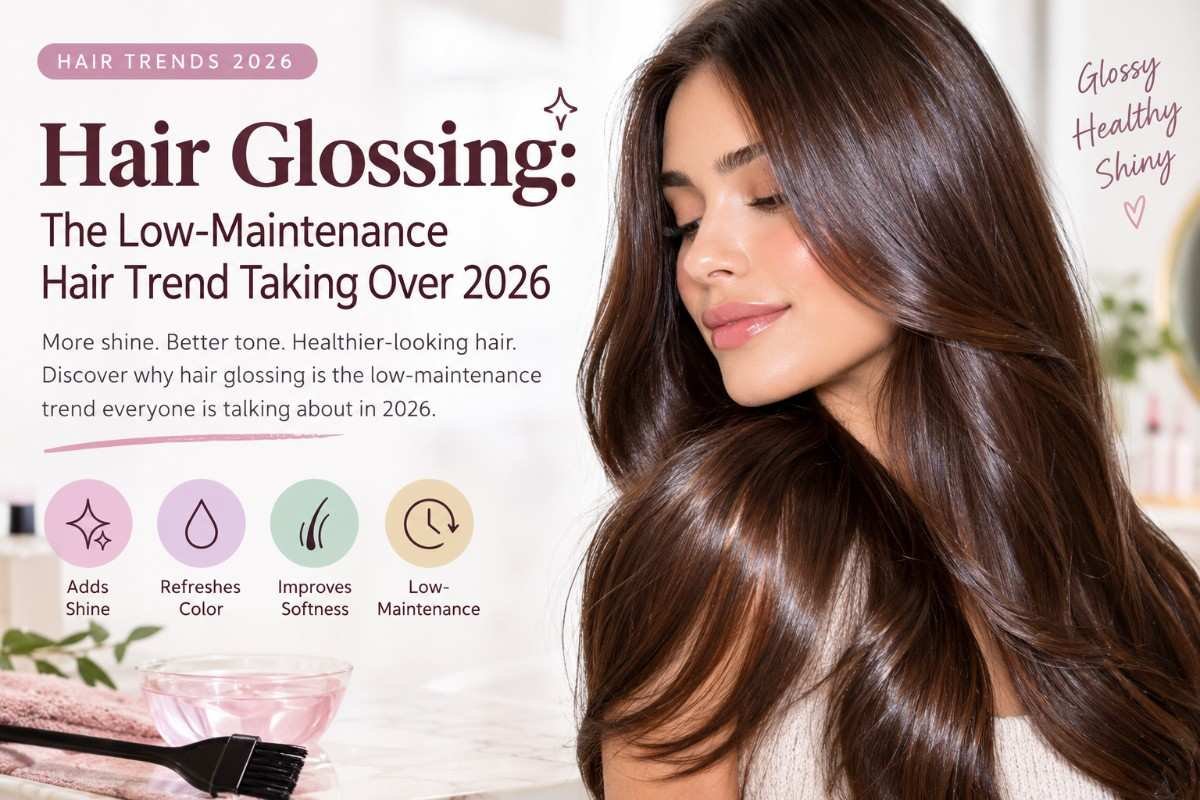
If you want shinier, smoother-looking hair without committing to a dramatic color change, hair glossing may be one of the biggest beauty trends to know in 2026.
From glossy brunettes and dimensional blondes to the viral “glass hair” look, high-shine hair has become a major part of the current beauty conversation. Unlike a traditional permanent color transformation, a gloss can be used to refresh existing color, enhance natural tones, reduce the appearance of dullness, and give hair a polished finish.
The appeal is simple: more shine, subtle color enhancement, and a relatively low-maintenance approach to changing your look.
In this guide, we’ll explain what hair glossing is, how it works, the benefits, different types of glosses, how long the results can last, and whether this trend could be right for your hair.
What Is Hair Glossing?
Hair glossing is a hair treatment designed primarily to enhance shine, tone, softness, and color appearance.
Depending on the formula, a hair gloss may be clear or contain pigment. A tinted gloss can refresh an existing hair color or subtly shift unwanted tones, while a clear gloss focuses mainly on shine and the appearance of smoother hair.
Many professional gloss treatments use demi-permanent color technology. These formulas generally provide less commitment than permanent hair color because the color gradually fades with washing.
Hair glossing is particularly popular among people who want their hair to look polished without making a dramatic change.
Why Is Hair Glossing Trending in 2026?
The rise of hair glossing fits into a larger 2026 beauty movement toward healthy-looking, polished, personalized hair.
Vogue’s 2026 hair trend coverage highlights a shift toward glossy, sleek-looking hair while still maintaining movement and a natural appearance.
At the same time, the “glass hair” aesthetic has gained attention for its smooth, reflective finish. Vogue describes glass hair as shiny, soft lengths with a mirror-like sheen and identifies hair glossing as one route toward that salon-fresh appearance.
There is also a growing interest in lower-maintenance color. Rather than constantly lightening or completely recoloring hair, people can use subtle toning and glossing techniques to refresh their existing shade.
This makes hair glossing appealing for anyone who wants a beauty upgrade without a major transformation.
What Does a Hair Gloss Do?
A hair gloss can serve several different purposes depending on the formula and the condition of your hair.
1. Adds Shine
The most recognizable benefit is the glossy finish.
When the hair surface appears smoother, it can reflect light more evenly, making the hair look shinier and more polished.
This is one reason glossing has become closely associated with the glass-hair trend.
2. Refreshes Hair Color
A tinted gloss can help refresh an existing color between larger salon appointments.
For example, a brunette may use a brown-toned gloss to enhance richness, while someone with blonde hair may choose a toner or gloss designed to adjust unwanted warmth.
3. Enhances Natural Hair
You don’t necessarily need heavily color-treated hair to enjoy a gloss.
Clear or lightly tinted treatments can be used to enhance the appearance of natural hair without completely changing its base color.
4. Makes Hair Look Softer
Glossing treatments are often marketed around improved softness and manageability. Professional colorists also describe glosses as treatments that can improve the feel and appearance of the hair surface.
However, it’s important to distinguish cosmetic improvement from repairing damaged hair. A gloss can make hair look smoother and shinier, but it doesn’t permanently reverse structural damage.
5. Helps Refresh Color Between Appointments
Instead of scheduling a major color transformation every time hair begins looking dull, a gloss can provide a temporary refresh.
That lower-commitment approach is one reason the trend fits today’s preference for easier beauty routines.
Hair Gloss vs. Permanent Hair Color
One of the biggest differences is commitment.
Permanent hair color is designed to create a lasting color change. Hair glosses, especially demi-permanent formulas, generally fade gradually instead of creating the same long-term color commitment.
Demi-permanent color sits between semi-permanent and permanent color in terms of longevity and chemical processing. It can deposit pigment and alter tone without being designed to permanently change the hair in the same way as permanent dye.
Hair Gloss
- Primarily focuses on shine and tone
- Can be clear or tinted
- Often fades gradually
- Can refresh existing color
- Usually offers a lower-commitment change
Permanent Hair Color
- Designed for longer-lasting color changes
- Can create more significant color transformation
- Requires more maintenance as new hair grows
- Can involve stronger chemical processing
The exact formula and results vary by product and salon service, so it’s worth asking your stylist what type of gloss they are using.
Hair Gloss vs. Hair Glaze
The terms gloss and glaze are sometimes used interchangeably, but they don’t always refer to exactly the same type of treatment.
Hair.com explains that glosses commonly use demi-permanent color technology, while glazes are generally temporary treatments designed to coat the hair and provide a short-term shine boost.
In simple terms:
Gloss: Often provides shine plus tonal or color enhancement.
Glaze: Generally focuses more heavily on temporary surface-level shine.
Because salon terminology varies, always ask what specific formula and technology a stylist is using rather than relying only on the treatment name.
Who Can Try Hair Glossing?
Hair glossing can work across many different hair colors and textures.
Brunette Hair
Glossing can make brunette hair appear richer and more reflective.
Popular approaches include:
- Chocolate brown gloss
- Espresso gloss
- Caramel-toned gloss
- Warm brunette gloss
- Cool brunette gloss
- Clear gloss
The goal doesn’t have to be a dramatic color change. Sometimes the biggest difference is simply making the existing shade appear more vibrant.
Blonde Hair
Blonde hair can lose its brightness or develop unwanted warmth over time.
A professionally selected toner or gloss may help adjust the appearance of the color.
For blonde hair, the correct shade matters because different formulas are designed to neutralize or enhance different tones.
Red and Copper Hair
Red and copper shades can look particularly vibrant when they have plenty of shine.
A tinted gloss can be used to refresh the appearance of fading red or copper color between more substantial color appointments.
Gray or Silver Hair
Some people use toning treatments to enhance silver tones or reduce unwanted warmth.
The exact approach depends on the natural color, existing color, percentage of gray, and desired result.
Is Hair Glossing Good for Damaged Hair?
This is where it’s important to avoid confusing appearance with repair.
A gloss may temporarily make damaged or dry-looking hair appear smoother, softer, and shinier. However, it should not be considered a permanent treatment for structural hair damage.
Sun exposure, heat styling, bleaching, and chemical processing can affect hair quality over time. Cleveland Clinic notes that UV exposure can dry hair, weaken its structure, and contribute to brittleness and split ends.
If your hair is severely damaged, breaking, or unusually fragile, focus on reducing damaging practices and consider speaking with a qualified hairstylist or dermatologist rather than relying on glossing alone.
How Long Does Hair Gloss Last?
The longevity depends on the formula, how frequently you wash your hair, your hair’s condition, and the products you use.
Some hair gloss treatments can last several weeks, with Martha Stewart reporting that certain glossing treatments may last up to around six weeks.
Demi-permanent color can also gradually fade with washing. Allure notes that demi-permanent color may last around 24 washes, although actual longevity varies considerably by formula and hair.
So instead of thinking of hair gloss as permanent color, it’s better to view it as a temporary color and shine refresh.
Salon Hair Gloss vs. At-Home Hair Gloss
Both options are available, but they offer different levels of customization.
Salon Hair Gloss
A professional stylist can:
- Assess your existing color
- Choose a suitable tone
- Combine shades when appropriate
- Consider previous chemical treatments
- Apply the product evenly
- Adjust the result according to your desired look
This can be particularly helpful if your hair is bleached, highlighted, color-treated, or has multiple tones.
At-Home Hair Gloss
At-home products can be convenient for maintaining shine between salon appointments.
They may be available as:
- Clear glosses
- Tinted treatments
- Color-depositing masks
- Shine treatments
- Glossing conditioners
However, follow the product instructions carefully and perform a patch test when recommended.
If you’re trying to significantly change your color or correct uneven color, professional advice may be more appropriate.
How to Make Hair Gloss Last Longer
If you’ve invested in a gloss, your routine can affect how long the results remain noticeable.
Use a Gentle Hair-Care Routine
Choose hair products appropriate for color-treated hair when necessary.
Avoid Excessive Heat
Frequent high-temperature styling can contribute to dryness and damage. Use a heat protectant when using hot tools.
Don’t Overwash
Frequent washing can contribute to faster color fading, depending on the formula.
Protect Hair From the Sun
UV exposure can affect hair quality and color. Wearing a hat or using hair products designed for UV protection can be useful when spending significant time outdoors.
Keep Hair Hydrated
Conditioner and occasional hair masks can help maintain a softer-feeling finish.
If your hair tends to look dry or frizzy between washes, a small amount of argan oil can be used on the mid-lengths and ends as part of a simple finishing routine. Learn more about Argan Oil: Benefits, Uses, Skin & Hair Care Guide and how it can fit into a hair-care routine.
Hair Glossing and the “Glass Hair” Trend
The popularity of hair glossing is closely connected to the glass hair aesthetic.
Glass hair is characterized by an extremely smooth, reflective, high-shine appearance. Vogue’s 2026 coverage describes the look as shiny and soft with a mirror-like sheen and connects it with professional glossing treatments.
The important thing to remember is that the glass-hair appearance isn’t produced by gloss alone.
Hair condition, styling technique, haircut, hydration, lighting, and product buildup can all influence how reflective hair looks.
A gloss can be one part of the overall routine rather than a magic solution.
Why Hair Glossing Fits the Low-Maintenance Beauty Movement
One reason this trend stands out is that it doesn’t require a complete makeover.
Modern beauty trends increasingly emphasize subtle improvements rather than dramatic transformations. Glossing fits that idea because it can enhance what you already have.
Instead of:
“Change my hair completely.”
The approach becomes:
“Make my existing hair look healthier, richer, shinier, and more polished.”
That philosophy also explains why glossy brunette and lower-maintenance color trends are appearing alongside the broader 2026 movement toward personalized, natural-looking hair.
Hair glossing is only one part of a broader shine-focused hair routine. If you’re interested in popular natural hair-care trends, you can also explore Rice Water for Skin and Hair, including how people incorporate it into their beauty routines.
Is Hair Glossing Worth Trying?
Hair glossing may be worth considering if you want:
- More visible shine
- A subtle color refresh
- Less commitment than permanent color
- A polished salon-style finish
- A way to refresh existing color
- A temporary experiment with tone
It may not be the right solution if you’re looking for a dramatic lightening transformation or a permanent color change.
The best choice depends on your existing hair color, chemical history, texture, condition, and desired result.
FAQs
What is hair glossing?
Hair glossing is a treatment designed to enhance hair shine and, depending on the formula, refresh or subtly change the tone of the hair. Many professional glosses use demi-permanent color technology.
Does hair gloss change your natural hair color?
A tinted gloss can subtly enhance or shift the appearance of natural hair, but the result is generally less dramatic than permanent color. Clear glosses primarily focus on shine.
How long does a hair gloss last?
Results vary by formula and hair-care routine. Some treatments may remain noticeable for several weeks before gradually fading.
Is hair gloss the same as hair dye?
Not exactly. Some glosses use demi-permanent color technology, while permanent dyes are designed for longer-lasting color changes.
Can blondes use hair gloss?
Yes. Glossing or toning treatments can be used to refresh blonde hair and adjust its appearance, depending on the desired tone.
Can brunettes use hair gloss?
Yes. Brunettes can use clear or tinted glosses to enhance richness, warmth, coolness, or shine.
Does hair gloss repair damaged hair?
A gloss may temporarily improve the appearance and feel of hair, but it should not be considered a permanent repair for structural damage.
Can you use hair gloss at home?
Yes, many at-home glossing products are available. Follow the manufacturer’s instructions carefully and choose a product appropriate for your current hair color.
Is hair gloss low maintenance?
Compared with permanent color transformations, glossing can be relatively low commitment because many glosses gradually fade. However, maintenance depends on how quickly your particular formula fades.
Conclusion
Hair glossing is one of the defining low-commitment hair trends of 2026, particularly as glossy, healthy-looking and polished hair continues to dominate beauty conversations.
The appeal isn’t simply about making hair shiny. A well-chosen gloss can refresh color, enhance tone, improve the appearance of softness, and create the reflective finish associated with the glass-hair aesthetic.
For anyone who doesn’t want a dramatic transformation but still wants their hair to look more polished, glossing offers an appealing middle ground between everyday haircare and permanent color.
As with any chemical or color treatment, the formula matters. If your hair is heavily bleached, damaged, or previously treated with multiple color products, getting professional advice can help you choose a suitable option.
In 2026, the hair-color conversation is increasingly about looking polished without looking overdone—and that is exactly where hair glossing fits.
While hair glossing can improve the appearance of dull or damaged-looking hair, maintaining healthy hair also involves looking at your overall hair-care routine. If you’re interested in nutrients commonly discussed for hair health, explore Top 10 Vitamins for Hair Growth and Thickness in 2026, Hair Breakage Guide for a deeper look at vitamins, hair growth, thickness, and breakage.
Author
Hitasha is the author of Trendyopedia, covering beauty, wellness, lifestyle, and emerging trends with a focus on practical, easy-to-understand information.
Disclaimer
This article is for general informational purposes only. Hair color and glossing results vary by product, hair type, and previous treatments. Always follow product instructions and consult a qualified hair professional when needed