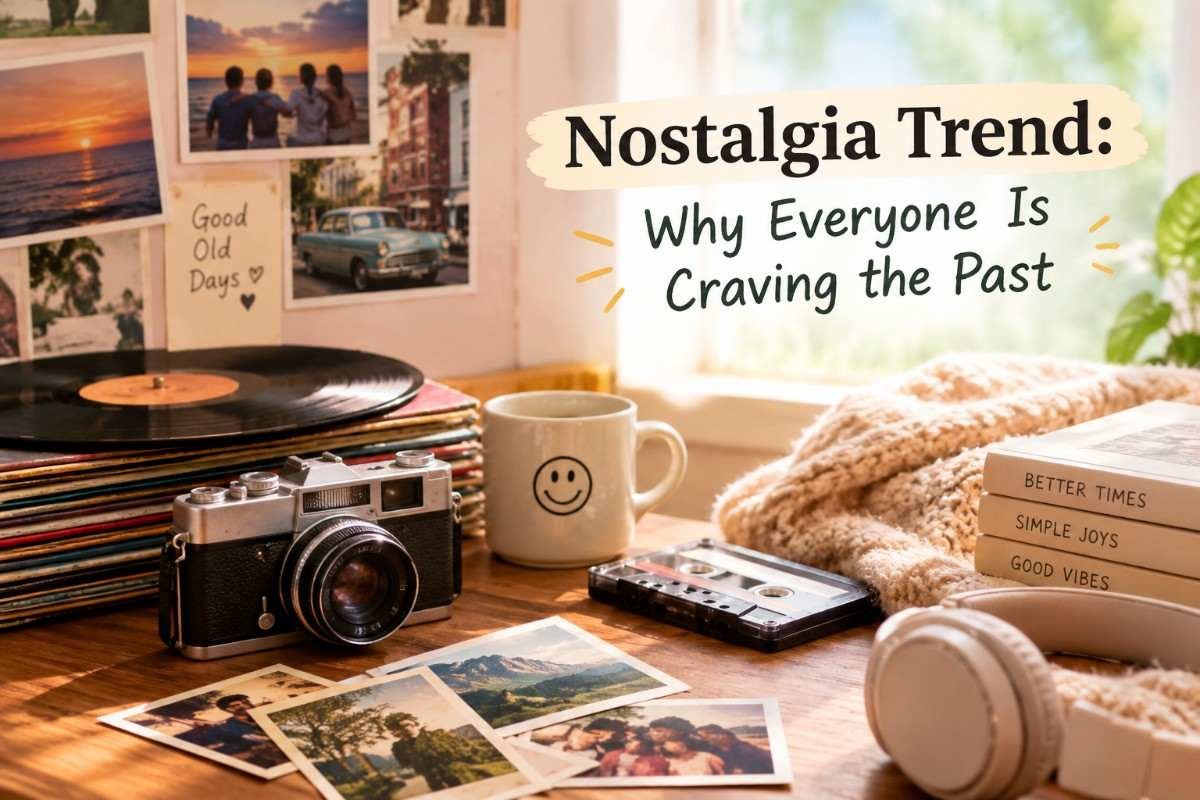
There is something comforting about the past. An old song, a childhood cartoon, a familiar snack, a photo from school, or even the look of an old computer can suddenly bring back strong memories.
That feeling is at the center of the Nostalgia Trend, which has become increasingly visible across fashion, entertainment, social media, home decor, music, and everyday lifestyle. Instead of constantly looking toward the future, many people are finding inspiration in things that remind them of earlier times.
From Y2K fashion and retro technology to childhood snacks and old television shows, the past is being reintroduced in modern ways.
But why are people so drawn to nostalgia? And why does the past feel especially appealing during periods of rapid cultural and technological change?
Let’s explore the nostalgia trend, what it means, why it is popular, and how nostalgia is influencing modern lifestyle and culture.
The growing interest in older technology also connects with the wider movement toward analog living, where people are rediscovering physical books, film photography, journaling, gardening, and other offline experiences.
What Is Nostalgia?
Nostalgia is an emotional feeling associated with remembering or thinking about meaningful experiences from the past.
The memory could be connected to childhood, family, friendships, school, music, holidays, travel, food, television, fashion, or a particular period of life.
For example, hearing a song you listened to during your teenage years may immediately remind you of where you were, who you spent time with, or how you felt at that stage of your life.
Nostalgia is not necessarily about wanting to return permanently to the past. Instead, it can be a way of reconnecting with familiar memories while living in the present.
Why Is the Nostalgia Trend Growing?
The popularity of nostalgia can be seen across several areas of modern culture.
Social media makes it easier for people to rediscover older trends, while streaming platforms make older movies, shows, and music widely accessible. At the same time, brands frequently bring back designs, products, packaging, and advertising styles inspired by previous decades.
The result is a constant mixture of old and new.
1. People Are Rediscovering Childhood Memories
Childhood is one of the strongest sources of nostalgia.
Old toys, cartoons, school supplies, snacks, games, and family traditions can remind people of a period when life may have felt simpler or more familiar.
Social media has made sharing these memories particularly easy. A photograph of an old toy or a forgotten childhood product can quickly encourage thousands of people to share their own memories.
2. Retro Trends Keep Returning
Fashion and design rarely move in a completely straight line.
Styles from previous decades frequently return with a modern interpretation. Denim styles, vintage-inspired clothing, old-school sneakers, colorful accessories, retro interiors, and Y2K-inspired aesthetics are examples of how earlier visual styles can become relevant again.
The modern version may not exactly reproduce the original trend. Instead, designers and consumers often combine retro elements with contemporary clothing and technology.
3. Social Media Encourages Digital Nostalgia
Nostalgia is no longer limited to physical objects.
People can now feel nostalgic about earlier versions of the internet.
Old social-media layouts, early smartphones, digital cameras, computer games, ringtones, pixel graphics, and early internet culture can all become nostalgic symbols.
This is sometimes described as digital nostalgia.
For younger generations, even technology from the 2000s and early 2010s can feel retro.
Nostalgia and Gen Z
One of the interesting parts of the nostalgia trend is the role of Gen Z.
Many Gen Z consumers are embracing cultural references from periods they experienced during childhood or that they discovered through older media.
The result is a revival of:
- Y2K-inspired fashion
- Early-2000s music
- Digital cameras
- Flip phones
- Retro gaming
- Vintage-style graphics
- Old television shows
- Childhood toys
- Thrifted clothing
- Retro bedroom decor
This doesn’t necessarily mean Gen Z wants to recreate the past exactly.
Instead, older aesthetics can provide a source of creativity and identity.
Social platforms also allow younger users to discover cultural moments they did not personally experience. Someone born after a particular decade can still become interested in its music, fashion, design, and technology.
Gen Z’s relationship with older aesthetics can also be seen in newer consumer trends such as The Doop Trend, where affordability and online culture are reshaping how younger consumers approach products and style.
What Is Nostalgia Aesthetic?
The nostalgia aesthetic refers to using visual styles, objects, colors, clothing, sounds, or design elements associated with an earlier period.
It can take many forms.
A nostalgic bedroom might include vintage posters, old-style lamps, retro electronics, photographs, and secondhand furniture.
A nostalgic fashion look might combine modern clothing with vintage denim, retro sunglasses, classic sneakers, or accessories inspired by another decade.
On social media, nostalgia aesthetics often use filters, grainy photographs, disposable-camera effects, vintage typography, and older visual formats.
The goal isn’t always historical accuracy. It is often about recreating a particular feeling.
Y2K Nostalgia Is Still Influential
The early 2000s have become one of the most recognizable examples of modern nostalgia.
Y2K-inspired culture often includes:
- Low-rise and relaxed denim
- Baby tees
- Metallic accessories
- Small handbags
- Chunky sneakers
- Glossy makeup
- Digital-camera photography
- Futuristic graphics
- Flip phones
- Early internet-inspired designs
Many of these elements have been adapted rather than copied directly.
This makes Y2K nostalgia a useful example of how old cultural ideas can be transformed for a new generation.
Nostalgia in Music
Music has always been closely connected to memory.
A song can remind someone of a particular summer, relationship, school year, holiday, or stage of life.
Streaming services and social media have also made it easier for older songs to reach new audiences.
A track that was popular decades ago can suddenly appear in short-form videos, playlists, movies, television shows, or online trends.
This creates a cycle where older music becomes familiar to younger audiences while older listeners reconnect with memories from their past.
Nostalgia in Movies and Television
Entertainment companies regularly revisit older franchises and recognizable stories.
Reboots, remakes, reunions, sequels, anniversary releases, and streaming libraries can all bring older entertainment back into public conversation.
For audiences who grew up with particular shows or movies, seeing familiar characters again can create an immediate emotional connection.
For younger viewers, older entertainment can become something new to discover.
This combination helps explain why older cultural content continues to circulate.
Nostalgia Marketing: Why Brands Use the Past
Businesses have also recognized the power of nostalgia.
Nostalgia marketing uses familiar memories, imagery, products, packaging, characters, music, or cultural references to create an emotional connection with consumers.
A brand might bring back an older package design, revive a discontinued product, use retro advertising imagery, or reference a popular cultural moment from an earlier decade.
The strategy works because familiarity can make a product feel emotionally recognizable.
However, nostalgia marketing is not simply about making something look old. The strongest campaigns usually connect a familiar reference with a current product or experience.
Why Does Nostalgia Feel Comforting?
Nostalgic memories can be emotionally powerful because they often involve people, places, and experiences that have personal meaning.
Thinking about a family holiday, childhood home, favorite song, or old friendship can create a sense of familiarity.
Research into nostalgia has explored its relationship with emotions such as social connectedness, meaning, and feelings of continuity.
That doesn’t mean every nostalgic memory is positive. People can also feel sadness or longing when remembering something that has changed or disappeared.
Nostalgia can therefore involve both pleasant memories and a sense of loss.
Nostalgia and Modern Stress
Modern life moves quickly.
People are surrounded by constant notifications, changing technology, social media updates, and an endless stream of new content.
Against this background, familiar things can feel reassuring.
An old movie doesn’t require learning a new storyline.
A familiar song doesn’t need explanation.
A childhood snack can immediately bring back a memory.
This may be one reason nostalgic content can feel particularly appealing during periods of rapid change.
However, nostalgia should not be viewed as a replacement for dealing with present-day challenges. It is better understood as one way people connect their past experiences with their current lives.
The Rise of Digital Nostalgia
Digital nostalgia deserves special attention because today’s technology becomes outdated very quickly.
Consider how rapidly phones, social platforms, websites, cameras, and computer interfaces have changed.
For some people, a low-resolution photograph or an old phone can now feel nostalgic.
Even early social media culture has become something people look back on.
Examples of digital nostalgia include:
- Old phone designs
- Early digital cameras
- MP3 players
- CD collections
- Computer games
- Classic website designs
- Early social-media interfaces
- Old ringtones
- Desktop computer sounds
- Internet memes from earlier eras
What was once considered ordinary technology can eventually become a cultural memory.
Nostalgia Is Influencing Home Decor
The nostalgia trend is also visible inside homes.
Retro-inspired interiors can combine older furniture styles with modern spaces.
Popular nostalgic elements can include:
- Vintage lamps
- Film photographs
- Secondhand furniture
- Retro clocks
- Old-style posters
- Classic kitchenware
- Record players
- Traditional patterns
- Vintage-inspired color palettes
The modern approach usually mixes these elements with contemporary furniture and technology rather than recreating an entire historical period.
This creates a more personal and collected look.
Nostalgia and Food
Food may be one of the strongest nostalgia triggers.
A familiar recipe can remind people of family gatherings, holidays, childhood birthdays, school lunches, or a particular place.
Nostalgic food trends can include:
- Childhood snacks
- Retro candy
- Classic desserts
- Family recipes
- Old-fashioned drinks
- School lunch recreations
- Traditional comfort foods
Social media has helped turn these memories into shareable content.
Someone may post a childhood snack and ask others whether they remember it, creating an immediate conversation around shared memories.
Is Nostalgia Always Positive?
Not necessarily.
Nostalgia can feel comforting, but memories can also bring sadness.
Someone might remember a person who is no longer in their life, a home they moved away from, or a period that cannot be recreated.
There is also a difference between appreciating the past and idealizing it.
Memory is selective. People may remember certain enjoyable parts of an earlier period while forgetting the difficulties that existed at the same time.
That’s why nostalgia is best understood as an emotional relationship with the past rather than an objective representation of what the past was actually like.
How Social Media Is Changing Nostalgia
Social media has transformed nostalgia from a private experience into a shared cultural activity.
People can post:
- Old photographs
- Childhood memories
- Vintage outfits
- Retro playlists
- Forgotten products
- Old technology
- Childhood games
- Classic movies
- Family recipes
Other users can then add their own memories.
This creates collective nostalgia, where large groups of people connect over cultural experiences they remember from the same period.
Trends can therefore move quickly from a single nostalgic reference to a much larger online conversation.
This desire to step away from constant digital stimulation is also reflected in the growing interest in Digital Detox Trends, from phone-free mornings to screen-free evenings.
Why Old Things Can Feel New Again
One of the most interesting aspects of the nostalgia trend is that something old can become exciting again.
A product that once seemed ordinary may become collectible years later.
An old fashion style can become fashionable again.
A forgotten song can become popular with a new audience.
An outdated piece of technology can become desirable because it offers a different experience from today’s devices.
This shows how cultural value can change over time.
What feels ordinary today may become nostalgic tomorrow.
How to Add Nostalgia to Your Everyday Life
You don’t need to completely recreate the past to enjoy nostalgia.
You could:
- Listen to music you loved growing up.
- Cook a family recipe.
- Look through old photographs.
- Rewatch a favorite childhood movie.
- Visit a meaningful place.
- Use a disposable or digital camera for fun.
- Bring a vintage item into your home.
- Create a playlist based on a specific period of your life.
- Reconnect with an old hobby.
- Write down memories you want to preserve.
The idea is to use positive memories as a connection to your personal history while continuing to live in the present.
Nostalgia Trend vs. Retro Trend
Although the terms are sometimes used together, nostalgia and retro are not exactly the same.
Nostalgia is primarily about an emotional connection to the past.
Retro usually refers to styles, products, designs, or aesthetics inspired by earlier periods.
For example, listening to a song because it reminds you of childhood is nostalgic.
Buying a modern jacket designed with a 1970s-inspired look is retro.
The two often overlap, which is why nostalgia has become so visible in fashion, entertainment, design, and lifestyle.
What Is Driving the Nostalgia Trend?
Several factors are helping nostalgia remain culturally relevant:
Social media: Makes memories and old cultural references easy to share.
Streaming: Gives people access to older movies, television shows, and music.
Fashion cycles: Bring previous styles back into modern wardrobes.
Branding: Allows companies to reconnect with consumers through familiar references.
Digital change: Makes older technology feel increasingly distinctive.
Generational identity: Helps people express the period and culture they grew up with.
Together, these factors have turned nostalgia from a personal emotion into a broader cultural phenomenon.
The Future of the Nostalgia Trend
The nostalgia trend is likely to keep changing as new generations grow older.
Today’s smartphones, social-media platforms, video games, memes, and digital experiences may eventually become nostalgic symbols themselves.
The important point is that nostalgia doesn’t necessarily mean going backward.
Instead, it often means taking something familiar from the past and giving it a new place in the present.
That could mean wearing a vintage-inspired outfit, listening to an old song, decorating a room with retro pieces, or simply remembering a meaningful moment.
FAQs About the Nostalgia Trend
What is the Nostalgia Trend?
The Nostalgia Trend refers to the growing cultural interest in past experiences, products, fashion, music, technology, entertainment, and aesthetics. It can appear in lifestyle, social media, fashion, home decor, food, and marketing.
Why is nostalgia so popular right now?
Nostalgia is popular across modern culture because social media, streaming platforms, fashion revivals, and nostalgia marketing make older cultural experiences easy to rediscover and share.
Why is Gen Z interested in nostalgia?
Gen Z has embraced many older aesthetics and cultural references, including Y2K fashion, retro technology, vintage photography, older music, and childhood entertainment. Social media has also made it easier to discover and share older cultural trends.
What is digital nostalgia?
Digital nostalgia is an emotional connection to older forms of technology and internet culture, such as early smartphones, digital cameras, old video games, MP3 players, early websites, and older social-media experiences.
Is nostalgia always a positive feeling?
No. Nostalgia can create pleasant feelings and a sense of connection, but it can also involve sadness or longing when people remember experiences, relationships, or periods of life that have changed.
What is nostalgia marketing?
Nostalgia marketing is a strategy in which brands use familiar memories, designs, products, characters, music, or cultural references from the past to create an emotional connection with consumers.
Conclusion
The Nostalgia Trend shows how strongly the past continues to influence modern culture.
From Y2K fashion and retro interiors to childhood snacks, old music, digital nostalgia, and nostalgia marketing, people are finding new ways to reconnect with familiar experiences.
Part of the appeal comes from recognition. Something from the past can feel personal, familiar, and meaningful in a world that changes quickly.
But nostalgia doesn’t have to mean living in the past. It can simply be a way of appreciating where we came from while creating something new.
And perhaps that is why nostalgia keeps coming back: the past may change with time, but the memories connected to it can remain meaningful.
Modern nostalgia doesn’t always recreate the past exactly. Like newer aesthetics such as the Pale Girl Trend, it can take familiar visual ideas and reinterpret them for today’s audience.
About the Author
Hitasha is a lifestyle and trends writer at Trendyopedia, covering emerging wellness, beauty, lifestyle, culture, and internet trends. Her content focuses on making popular topics easy to understand through research-backed, reader-friendly articles.
Disclaimer
This article is for informational and educational purposes only. Trends and cultural behaviors can change over time, and individual experiences with nostalgia may vary. Trendyopedia does not provide medical or psychological diagnosis or treatment advice.
Sources & References
1 thought on “Nostalgia Trend: Why Everyone Is Craving the Past”