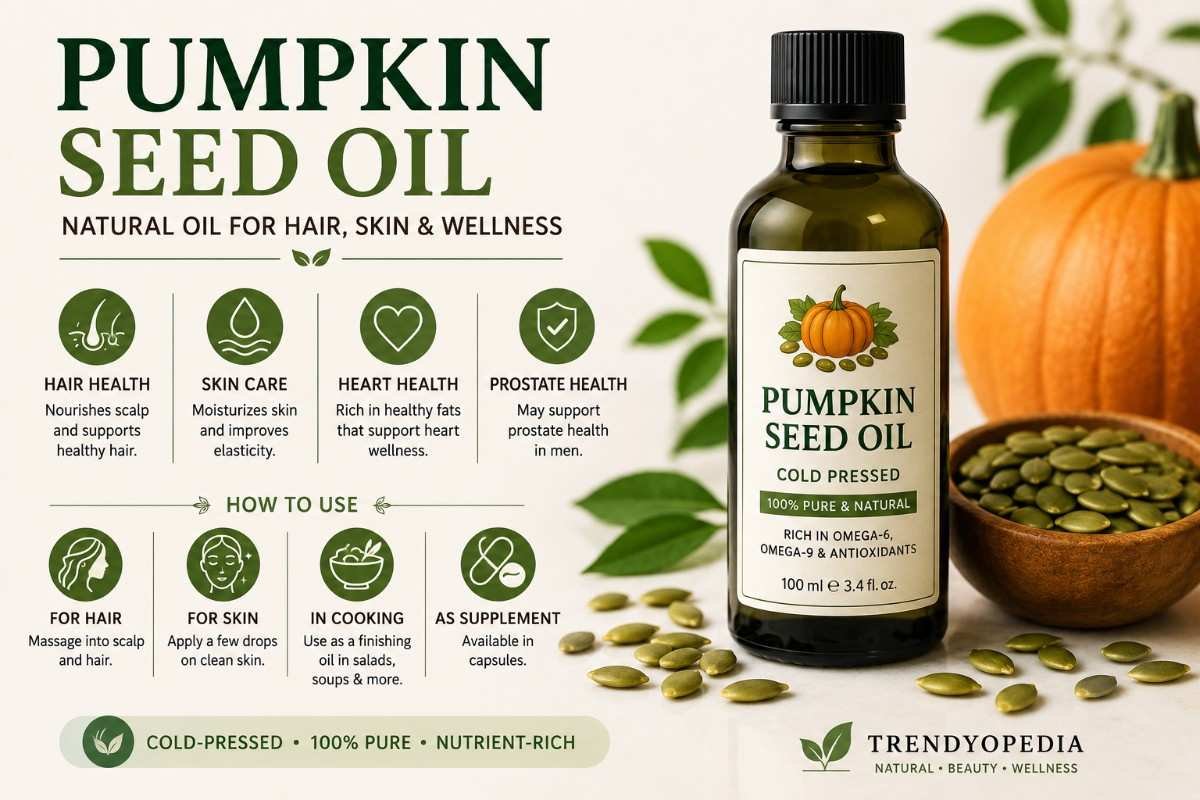
Pumpkin seed oil is a nutrient-rich plant oil extracted from the seeds of pumpkins (Cucurbita pepo). Known for its deep green color and nutty flavor, it has long been used in cooking and traditional wellness practices. Today, pumpkin seed oil is also gaining popularity in hair care and skincare because it contains healthy fats, vitamin E, antioxidants, and plant compounds that help nourish the hair and skin.
Research suggests that This seed oil may support healthy-looking hair, improve skin hydration, and contribute to overall wellness when used as part of a balanced lifestyle. While some studies have explored its role in hair growth and prostate health, more research is needed to fully understand its long-term effects.
In this guide, you’ll discover the evidence-based Pumpkin Seed Oil benefits, how to use it correctly, possible side effects, and practical tips for adding it to your daily routine.
If you’re exploring natural oils for healthier hair and skin, check out our guides on Batana Oil Benefits These articles compare popular plant oils and explain how they can fit into a balanced hair care routine.
What Is Pumpkin Seed Oil?
This seed oil is made by cold-pressing pumpkin seeds, which helps preserve many of their naturally occurring nutrients.
It is available in two common forms:
- Cold-pressed pumpkin seed oil (best for nutritional and cosmetic use)
- Refined This seed oil (milder flavor and lighter color)
Pumpkin seed oil is commonly used for:
- Hair care
- Scalp massage
- Skin moisturization
- Salad dressings
- Dietary supplements
Nutritional Profile of Pumpkin Seed Oil
This seed oil contains several beneficial nutrients, including:
- Vitamin E
- Omega-6 fatty acids
- Omega-9 fatty acids
- Phytosterols
- Carotenoids
- Polyphenols
- Antioxidants
These compounds help protect cells from oxidative stress while supporting healthy skin and hair.
Types of Pumpkin Seed Oil
1. Cold-Pressed Pumpkin Seed Oil
- Rich in nutrients
- Dark green color
- Strong nutty aroma
- Preferred for hair and skincare
2. Refined Pumpkin Seed Oil
- Lighter taste
- Milder aroma
- Longer shelf life
- Often used for cooking
Top Pumpkin Seed Oil Benefits
1. Rich in Antioxidants
This seed oil contains vitamin E, carotenoids, and polyphenols that help protect cells from oxidative stress caused by free radicals.
2. Helps Moisturize Hair
The natural fatty acids in pumpkin seed oil help coat the hair shaft, reducing dryness and improving softness.
3. Supports Healthy-Looking Hair
Healthy hair depends on proper hydration and nourishment.
Pumpkin seed oil may help:
- Improve shine
- Reduce frizz
- Minimize breakage
- Enhance manageability
4. May Support Hair Growth
Some research suggests pumpkin seed oil may help support hair growth in certain individuals, although more large-scale studies are needed.
Its benefits may be linked to plant compounds called phytosterols, which have been studied for their effects on hair follicles.
5. Nourishes the Scalp
A healthy scalp provides the foundation for healthy-looking hair.
Pumpkin seed oil helps moisturize the scalp and reduce dryness.
6. Helps Reduce Hair Breakage
Dry hair breaks more easily.
Regular conditioning with This seed oil may improve hair flexibility and reduce breakage.
7. Supports Skin Hydration
Pumpkin seed oil acts as an emollient that helps reduce moisture loss from the skin.
Many people use it to improve skin softness and comfort.
8. Promotes a Healthy Skin Barrier
The essential fatty acids in This seed oil help maintain the skin’s protective barrier.
Ingredients that support the skin barrier can work well together. Learn more in our Peptides in Skincare and Snail Mucin Skincare guides, which explain how these ingredients complement a hydration-focused routine.
9. Supports Heart Health
When consumed as part of a balanced diet, pumpkin seed oil provides healthy unsaturated fats that contribute to overall heart health.
10. Rich in Healthy Fats
This seed oil contains mostly unsaturated fats, making it a nutritious alternative to saturated fats in cooking.
11. May Support Prostate Health
Some studies have explored This seed oil for supporting prostate health in men, although more research is needed before firm conclusions can be made.
12. Supports Overall Wellness
Because it contains antioxidants and healthy fats, This seed oil can be part of a balanced wellness routine alongside a nutritious diet and healthy lifestyle.
Pumpkin Seed Oil for Hair
Pumpkin seed oil has become popular as a natural hair care ingredient because it helps improve moisture and shine.
Potential benefits include:
- Softer hair
- Reduced dryness
- Better manageability
- Improved shine
- Less frizz
Healthy hair depends on both external care and proper nutrition. Pair This seed oil with our Biotin for Hair Growth and Top 10 Vitamins for Hair Growth guides to learn how essential nutrients support stronger, healthier-looking hair.
Pumpkin Seed Oil for Hair Growth
Pumpkin seed oil has attracted attention after small clinical studies suggested it may help improve hair growth in some men with androgenetic alopecia.
However:
- More research is needed.
- Results vary between individuals.
- It should not replace medical treatment for hair loss.
Healthy hair growth also depends on:
- Nutrition
- Genetics
- Hormonal balance
- Overall health
According to the American Academy of Dermatology (AAD), a healthy diet and gentle hair care practices are important for maintaining healthy hair.
Pumpkin Seed Oil for Skin
This seed oil is commonly used as a facial and body oil because it helps support the skin barrier and reduce moisture loss.
It may help:
- Improve hydration
- Soften rough skin
- Enhance skin comfort
- Support healthier-looking skin
Mayo Clinic recommends moisturizing after cleansing to help lock in hydration and support the skin’s natural barrier.
Pumpkin Seed Oil for Heart Health
This seed oil contains heart-friendly unsaturated fats.
When included as part of a balanced eating pattern, these healthy fats may contribute to cardiovascular wellness.
Remember:
No single food or oil alone can prevent heart disease.
Pumpkin Seed Oil for Prostate Health
Research has explored This seed oil for its potential role in supporting prostate health, particularly in men with age-related urinary symptoms.
While results are encouraging, more high-quality human studies are needed before it can be recommended as a treatment.
Always consult a healthcare professional for persistent urinary or prostate-related concerns.
How to Use Pumpkin Seed Oil
For Hair
- Warm 1–2 tablespoons of This seed oil.
- Massage into your scalp.
- Apply through the hair lengths.
- Leave for 30–60 minutes.
- Wash with a mild shampoo.
For Skin
- Apply 2–3 drops to slightly damp skin.
- Massage gently until absorbed.
- Follow with moisturizer if needed.
In Cooking
Cold-pressed This seed oil works best as a finishing oil.
Try adding it to:
- Salads
- Soups
- Roasted vegetables
Avoid high-heat cooking, as excessive heat may reduce some of its beneficial compounds.
DIY Pumpkin Seed Oil Hair Mask
Ingredients
- 2 tablespoons This seed oil
- 1 tablespoon coconut oil
- 1 teaspoon honey (optional)
Directions
- Mix the ingredients well.
- Apply evenly to the scalp and hair.
- Leave on for 45 minutes.
- Wash with a gentle shampoo.
Use once or twice weekly for deep conditioning.
Pumpkin Seed Oil vs Castor Oil
Both oils are popular for hair care, but they have different properties.
| Feature | Pumpkin Seed Oil | Castor Oil |
|---|---|---|
| Texture | Lightweight | Thick |
| Best For | Hair nourishment & scalp hydration | Deep conditioning |
| Rich in Vitamin E | Yes | Small amounts |
| Everyday Use | Yes | Use sparingly |
| Hair Shine | Excellent | Good |
Pumpkin Seed Oil vs Rosemary Oil
| Feature | Pumpkin Seed Oil | Rosemary Oil |
|---|---|---|
| Main Benefit | Nourishes hair & scalp | Scalp massage (when diluted) |
| Texture | Medium | Lightweight (diluted) |
| Rich in Antioxidants | Yes | Yes |
| Hair Growth Research | Some early studies | Some evidence for certain types of hair loss |
| Best For | Dry and damaged hair | Scalp care |
Pumpkin Seed Oil vs Amla Oil
| Feature | Pumpkin Seed Oil | Amla Oil |
|---|---|---|
| Main Benefit | Hydration & nourishment | Traditional scalp care |
| Texture | Medium | Medium |
| Hair Shine | Excellent | Excellent |
| Traditional Use | Nutritional & cosmetic | Ayurvedic hair care |
| Best For | Dry hair | Overall hair wellness |
For a detailed look at another traditional hair oil, read our Amla Oil Benefits guide to compare its unique properties with This seed oil.
Pumpkin Seed Oil Capsules vs Liquid Oil
Both forms have different uses.
Capsules
- Convenient daily supplement
- Used for overall wellness
- Follow the manufacturer’s dosage instructions
Liquid Oil
- Suitable for cooking
- Used in DIY hair masks
- Applied directly to skin and scalp
If you have a medical condition or take medication, speak with your healthcare provider before taking supplements.
Best Time to Use Pumpkin Seed Oil
For Hair
- Before shampooing
- Overnight as a hair treatment (if tolerated)
- Once or twice a week
For Skin
- After cleansing
- During your evening skincare routine
- On slightly damp skin
How Often Should You Use Pumpkin Seed Oil?
| Purpose | Recommended Use |
|---|---|
| Hair | 1–2 times per week |
| Scalp Massage | Weekly |
| Skin | Daily or every other day |
| Cooking | In moderation as part of a balanced diet |
Possible Side Effects
This seed oil is generally well tolerated, but some people may experience:
- Mild skin irritation
- Allergic reactions
- Digestive discomfort (if consumed in large amounts)
- Product buildup on hair when overused
Perform a patch test before applying it to your skin or scalp.
Precautions
- Store in a cool, dark place.
- Avoid using rancid oil.
- Consult your healthcare provider before taking supplements if you are pregnant, breastfeeding, or taking medication.
- Do not apply to broken or infected skin.
- Choose high-quality, cold-pressed This seed oil from reputable brands.
FAQs
Does pumpkin seed oil help with hair growth?
Some small studies suggest that This seed oil may support hair growth in certain people, but more high-quality research is needed. It should not replace medical treatment for hair loss.
Can I use pumpkin seed oil every day?
Yes, but many people find that applying it one or two times per week is enough for hair. For skin, small amounts can be used daily if well tolerated.
Is pumpkin seed oil good for dry skin?
Yes. Its healthy fats help reduce moisture loss and support the skin’s natural barrier.
Can pumpkin seed oil clog pores?
This seed oil is generally considered lightweight, but individual skin responses vary. If you have acne-prone skin, patch test first.
Can I cook with pumpkin seed oil?
Yes. Cold-pressed This seed oil is best used as a finishing oil for salads, soups, and vegetables rather than high-heat cooking.
Is pumpkin seed oil safe for everyone?
Most healthy adults can use pumpkin seed oil, but people with allergies to pumpkin seeds should avoid it.
Concusion
Pumpkin seed oil is a versatile natural oil that can support healthier-looking hair, nourish the scalp, hydrate the skin, and contribute to overall wellness when used as part of a balanced lifestyle. While research into its role in hair growth and prostate health is promising, more studies are needed before definitive conclusions can be made.
For the best results, combine pumpkin seed oil with a nutritious diet, a consistent hair care routine, and evidence-based skincare practices.
To continue your natural beauty journey, explore our related guides on Body Oiling Routine,, and Lip Oils on Trendyopedia.
Author Bio
Author: Hitasha
Hitasha is a beauty and wellness writer at Trendyopedia, specializing in evidence-based hair care, skincare, nutrition, and wellness. She creates practical, research-backed content to help readers make informed choices about natural beauty and healthy living.
Disclaimer
This article is for educational purposes only and should not be considered medical advice. Individual results may vary. If you have persistent hair loss, a scalp or skin condition, or concerns about using pumpkin seed oil or supplements, consult a dermatologist or qualified healthcare professional before use.