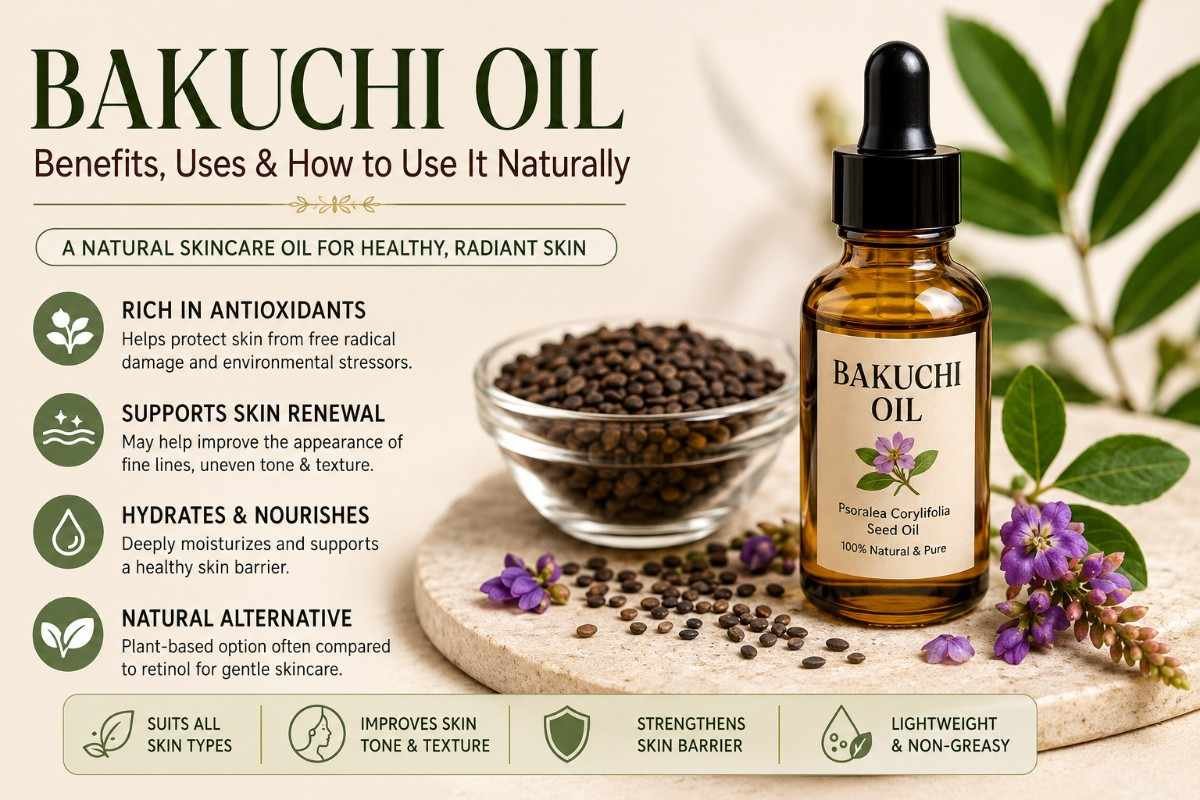
Bakuchi oil is becoming one of the most talked-about natural skincare oils thanks to its association with bakuchiol, a plant-derived compound often promoted as a gentler alternative to retinol. Extracted from the seeds of the bakuchi (Psoralea corylifolia) plant, this traditional Ayurvedic oil has been used for centuries in herbal skincare practices.
Rich in naturally occurring plant compounds, bakuchi oil is commonly used to improve the appearance of fine lines, uneven skin tone, dryness, and dull-looking skin. While early research on bakuchiol is promising, it’s important to note that bakuchi oil and purified bakuchiol are not the same product, and the evidence supporting this oil specifically is more limited.
If you’re building a natural skincare routine, explore our guides on Morning vs Night Skincare Routine, and Fermented Skincare. These articles explain how different skincare ingredients work together to support healthier-looking skin.
What Is Bakuchi Oil?
Bakuchi oil is a plant-based oil made from the seeds of the bakuchi plant (Psoralea corylifolia), also known as Babchi.
It has been traditionally used in Ayurveda and other herbal practices for skin care.
The oil contains naturally occurring plant compounds, including small amounts of bakuchiol, antioxidants, and other phytochemicals that contribute to its skincare properties.
Bakuchi oil is commonly used for:
- Facial massage
- Moisturizing dry skin
- Supporting smoother-looking skin
- Evening out skin appearance
- Traditional herbal skincare
Bakuchi Oil vs Bakuchiol
Many people confuse these two ingredients, but they are different.
| Bakuchi Oil | Bakuchiol |
|---|---|
| Natural oil extracted from bakuchi seeds | Purified plant compound isolated from the plant |
| Contains multiple plant compounds | Contains concentrated bakuchiol |
| Used as a facial oil | Used in skincare serums and creams |
| Traditional Ayurvedic use | Studied in modern cosmetic research |
Most scientific studies focus on bakuchiol, not the whole oil.
Active Compounds in Bakuchi Oil
Bakuchi oil contains several naturally occurring compounds, including:
- Bakuchiol
- Flavonoids
- Antioxidants
- Fatty acids
- Plant lipids
- Phytochemicals
These compounds may help support healthy-looking skin by protecting against environmental stress and maintaining skin hydration.
Top Bakuchi Oil Benefits
1. Helps Moisturize Dry Skin
Bakuchi oil helps reduce moisture loss by supporting the skin’s natural protective barrier.
Regular use may leave skin feeling:
- Softer
- Smoother
- Better hydrated
2. Supports a Healthy Skin Barrier
A healthy skin barrier helps keep moisture in while protecting against external irritants.
Bakuchi oil’s natural lipids may help reinforce this protective layer.
3. Rich in Antioxidants
Antioxidants help protect the skin from oxidative stress caused by:
- UV exposure
- Pollution
- Environmental factors
This contributes to healthier-looking skin over time.
4. Improves Skin Softness
Many users notice softer, smoother skin after incorporating facial oils into their routine.
Bakuchi oil provides lightweight nourishment without leaving the skin feeling overly dry.
5. Helps Reduce the Appearance of Fine Lines
Research on bakuchiol suggests it may improve the appearance of fine lines and wrinkles.
Although this oil naturally contains bakuchiol, more studies are needed to confirm whether the oil itself provides the same level of benefit.
6. Promotes a More Even-Looking Skin Tone
With consistent use, this oil may help improve the appearance of uneven skin texture and dullness.
7. Supports Skin Hydration
Hydrated skin often appears:
- Plumper
- Brighter
- Healthier
Bakuchi oil helps lock in moisture after cleansing.
8. May Improve Skin Texture
Keeping the skin moisturized can improve its overall feel and appearance.
Many users describe their skin as smoother after regular application.
9. Helps Reduce Dry Patches
Bakuchi oil can be applied to areas prone to dryness, such as:
- Cheeks
- Forehead
- Neck
10. Leaves Skin Looking Radiant
Healthy, hydrated skin naturally reflects light better.
Bakuchi oil may contribute to a fresh, glowing complexion.
11. Complements a Gentle Anti-Aging Routine
Unlike stronger active ingredients, this oil is often included in skincare routines focused on maintaining hydration and supporting overall skin health.
If you’re interested in non-invasive skincare technologies, our Red Light Therapy at Home guide explains how light therapy may complement a consistent skincare routine.
12. Supports Daily Skincare
Bakuchi oil pairs well with moisturizers, facial massages, and nighttime skincare routines.
Bakuchi Oil for Skin
Bakuchi oil is primarily used as a facial oil to improve skin hydration and support a healthy skin barrier.
Potential benefits include:
- Improved softness
- Better moisture retention
- Smoother-looking skin
- Healthier appearance
For best results:
- Apply after cleansing.
- Massage gently into slightly damp skin.
- Follow with moisturizer if needed.
According to the American Academy of Dermatology (AAD), moisturizing daily helps maintain the skin barrier and reduce moisture loss.
Bakuchi Oil for Acne-Prone Skin
Some people with acne-prone skin use this oil because it is lighter than heavier plant oils.
However:
- Patch test before use.
- Avoid applying to active, open acne lesions.
- Stop use if irritation develops.
If you have persistent acne, consult a dermatologist.
Bakuchi Oil for Fine Lines
Bakuchiol has been studied for improving the appearance of fine lines.
Because bakuchi oil naturally contains plant-derived bakuchiol, many people include it in anti-aging routines.
Keep expectations realistic, as this oil is not a replacement for prescription retinoids.
Bakuchi Oil for Dark Spots
Regular moisturizing and protecting the skin from sun exposure are important for improving overall skin appearance.
This oil may help support a brighter-looking complexion when used consistently as part of a complete skincare routine.
Always wear sunscreen during the day.
Bakuchi Oil for Dry Skin
Dry skin benefits from nourishing facial oils.
This oil helps reduce moisture loss while leaving the skin feeling comfortable.
For extra hydration:
- Apply after a hydrating serum.
- Finish with a moisturizer to seal in hydration.
Mayo Clinic recommends moisturizing after cleansing to help lock in hydration and support healthy skin.
How to Use Bakuchi Oil
As a Night Facial Oil
- Cleanse your face.
- Apply 2–3 drops of this oil.
- Massage gently.
- Follow with moisturizer if desired.
Mix with Moisturizer
Add 1–2 drops to your regular moisturizer for additional hydration.
Facial Massage
Use gentle upward strokes for 3–5 minutes to distribute the oil evenly.
DIY Bakuchi Facial Oil Blend
Ingredients
- 2 teaspoons this oil
- 1 teaspoon jojoba oil
- 2 drops vitamin E oil (optional)
Directions
- Mix the oils in a clean glass bottle.
- Shake gently before each use.
- Apply 2–3 drops to clean skin at night.
- Massage until absorbed.
Perform a patch test before first use.
Bakuchi Oil for Different Skin Types
This oil may suit many skin types when used correctly. Start with a patch test and introduce it gradually into your skincare routine.
Dry Skin
Dry skin often benefits the most from facial oils.
Tips:
- Apply 2–3 drops after cleansing.
- Follow with a moisturizer to lock in hydration.
- Use nightly for best results.
Oily Skin
People with oily skin should use a small amount.
Tips:
- Apply only 1–2 drops.
- Choose non-comedogenic skincare products.
- Monitor how your skin responds.
Combination Skin
Apply this oil mainly to dry areas while using less on oily zones like the T-zone.
Sensitive Skin
Sensitive skin requires extra care.
- Perform a patch test.
- Start with 2–3 nights per week.
- Stop using the product if irritation occurs.
Best Time to Apply Bakuchi Oil
Most people prefer using this oil during their nighttime skincare routine.
Benefits include:
- Supports overnight skin hydration.
- Fits well into evening skincare.
- Allows the skin to absorb the oil while you sleep.
How Often Should You Use Bakuchi Oil?
| Skin Type | Frequency |
|---|---|
| Dry Skin | Daily or every other night |
| Normal Skin | 3–5 times weekly |
| Oily Skin | 2–3 times weekly |
| Combination Skin | 3 times weekly |
| Sensitive Skin | 2–3 times weekly (after patch testing) |
Bakuchi Oil vs Retinol
| Feature | Bakuchi Oil | Retinol |
|---|---|---|
| Source | Plant-derived oil | Vitamin A derivative |
| Main Benefit | Hydration & skin nourishment | Improves fine lines and skin texture |
| Skin Irritation | May still cause irritation in some people | More likely to cause irritation, dryness, or peeling |
| Daily Moisturizing | Yes | Often introduced gradually |
| Pregnancy | Consult a healthcare professional before use | Generally avoided during pregnancy unless advised by a healthcare professional |
Important: Most research supporting anti-aging benefits has been conducted on bakuchiol, not this oil itself.
If you’re new to vitamin A skincare products, our Retinol for Beginners guide explains how to start using retinol safely, avoid common mistakes, and build an effective routine. Understanding the differences between retinol and this oil can help you choose the right option for your skin.
Bakuchi Oil vs Rosehip Oil
| Feature | Bakuchi Oil | Rosehip Oil |
|---|---|---|
| Texture | Medium | Lightweight |
| Main Benefit | Skin nourishment | Hydration & support for the skin barrier |
| Rich in Antioxidants | Yes | Yes |
| Best For | Dry and mature-looking skin | Most skin types |
Bakuchi Oil vs Peptide Serums
| Feature | Bakuchi Oil | Peptide Serum |
|---|---|---|
| Main Use | Facial oil | Lightweight treatment serum |
| Hydration | Excellent | Moderate |
| Skin Barrier Support | Good | Good |
| Texture | Rich | Lightweight |
While this oil is valued in traditional skincare, ingredients like Peptides in Skincare may also help support firmer-looking skin as part of a complete anti-aging routine.
Possible Side Effects
Although this oil is generally well tolerated, some people may experience:
- Mild redness
- Skin irritation
- Itching
- Allergic reactions
- Sensitivity to certain formulations
Always patch test before first use.
Precautions
- Use sunscreen every morning, especially if you use active skincare ingredients.
- Avoid applying to broken or irritated skin.
- Store the oil in a cool, dry place away from direct sunlight.
- Choose products from reputable manufacturers.
- Consult a dermatologist if you have persistent skin conditions.
FAQs
Is bakuchi oil the same as bakuchiol?
No. this oil is a natural oil extracted from the seeds of the bakuchi plant, while bakuchiol is a purified compound commonly used in skincare products.
Can I use bakuchi oil every day?
Yes, if your skin tolerates it well. Start with a few applications per week and increase gradually.
Does bakuchi oil replace retinol?
No. Bakuchi oil should not be considered a direct replacement for prescription or over-the-counter retinoids. While bakuchiol has been studied for similar cosmetic benefits, more research is needed on this oil itself.
Can bakuchi oil help with dark spots?
It may improve overall skin appearance when combined with a consistent skincare routine and daily sunscreen use. Individual results vary.
Is bakuchi oil safe for sensitive skin?
Many people with sensitive skin can use it, but a patch test is recommended before regular application.
Can I use bakuchi oil with peptides?
Yes. this oil can be used alongside peptide-based skincare products as part of a moisturizing routine.
Concusion
Bakuchi oil is a traditional botanical oil that offers moisturizing and antioxidant benefits, making it a valuable addition to many skincare routines. While purified bakuchiol has been studied for its potential anti-aging effects, research specifically on bakuchi oil is still limited. Regular use may help improve skin hydration, softness, and the appearance of healthy-looking skin when combined with a consistent skincare routine and daily sun protection.
Bakuchi oil is a nourishing botanical oil that can help hydrate the skin and support a healthy skin barrier when used consistently. To create a complete skincare routine, explore our related guides on Glass Skin Routine, Korean Skincare Routine, AI-Personalized Skincare.