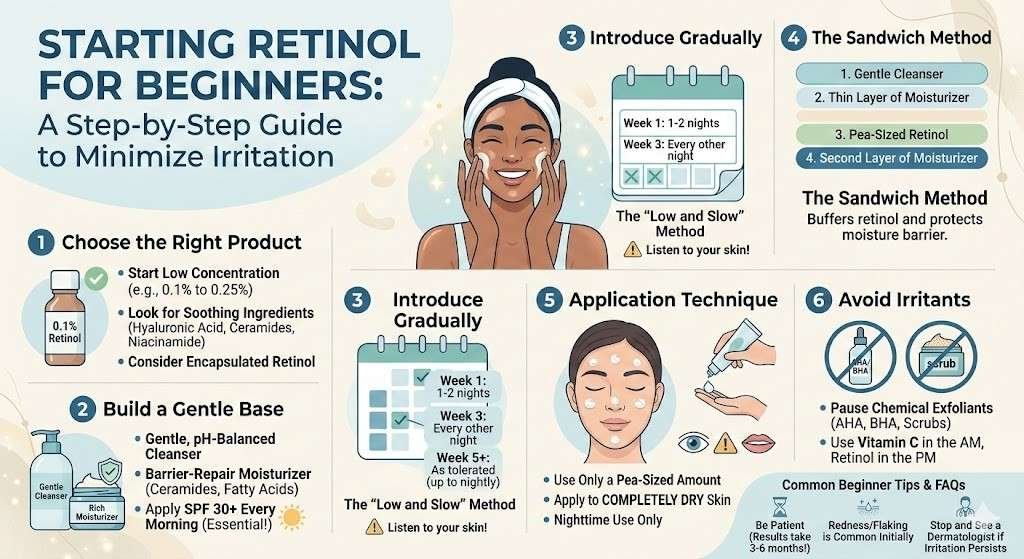
Retinol for Beginners : Retinol has become one of the most talked-about ingredients in modern skincare—and for good reason. Dermatologists and skincare experts consistently recommend retinol for improving skin texture, reducing wrinkles, fading dark spots, and preventing breakouts. However, many beginners hesitate to use it because of one common concern: irritation.
If you’ve heard stories about redness, peeling, dryness, or purging, you’re not alone. Retinol is powerful, and when used incorrectly it can irritate the skin. But when introduced slowly and used properly, it can transform your skin without discomfort.
This complete beginner’s guide explains everything you need to know about starting retinol safely—from understanding how it works to building a gentle routine that minimizes irritation.
What Is Retinol?
Retinol is a form of Vitamin A commonly used in skincare to improve skin health and appearance. It belongs to a group of ingredients known as retinoids, which stimulate skin cell turnover and boost collagen production.
When applied to the skin, retinol penetrates deep into the epidermis and converts into retinoic acid, the active form that communicates with skin cells. This process helps regulate how skin cells behave and renew themselves.
Retinol is widely used to treat several skin concerns, including:
- Fine lines and wrinkles
- Acne and clogged pores
- Hyperpigmentation
- Uneven skin tone
- Rough skin texture
- Enlarged pores
Because of its ability to address multiple skin concerns at once, retinol is often considered the gold standard ingredient in anti-aging skincare.
Why Retinol Can Cause Irritation
Although retinol is extremely effective, it also accelerates skin renewal. When the skin starts turning over cells faster than usual, the protective barrier may temporarily weaken.
This adjustment phase can lead to symptoms such as:
- Dryness
- Peeling or flaking
- Redness
- Tightness
- Sensitivity
This reaction is commonly called retinization, and it usually happens when beginners start with a concentration that is too strong or use retinol too frequently.
The good news is that irritation can be minimized—or even avoided—by starting slowly and supporting the skin barrier properly.
Benefits of Retinol for Skin
Before learning how to start retinol, it helps to understand why it is such a valuable skincare ingredient.
1. Reduces Fine Lines and Wrinkles
Retinol stimulates collagen production, which helps strengthen the skin structure. Over time, this makes wrinkles appear smoother and less visible.
2. Improves Skin Texture
By encouraging cell turnover, retinol removes old skin cells from the surface and reveals smoother, fresher skin underneath.
3. Fades Dark Spots and Hyperpigmentation
Retinol speeds up the shedding of pigmented cells, helping fade sunspots, acne marks, and uneven skin tone.
4. Helps Prevent Acne
Retinol keeps pores clear by preventing dead skin cells and oil from clogging them. This reduces breakouts and blackheads.
5. Brightens Dull Skin
With consistent use, retinol improves skin clarity and creates a more radiant complexion.
Choosing the Right Retinol Strength for Beginners
One of the biggest mistakes beginners make is starting with a high-strength formula. This often leads to irritation and discourages people from continuing.
For beginners, low concentrations are best.
Recommended Starting Strength
- 0.1% to 0.3% retinol – ideal for beginners
- 0.5% retinol – intermediate level
- 1% retinol – advanced users only
Lower strengths still provide benefits but allow the skin to adapt gradually.
Types of Retinoids: Understanding Your Options
Retinol is just one type of retinoid. Understanding the differences can help you choose the best option.
Retinol
The most common over-the-counter retinoid. It is effective but gentle enough for beginners.
Retinal (Retinaldehyde)
Stronger than retinol but still available without prescription. It works faster but may cause more irritation.
Retinyl Esters
These are the gentlest forms of vitamin A. They are good for sensitive skin but less powerful.
Prescription Retinoids
Prescription forms like tretinoin are much stronger and should only be used under dermatologist guidance.
For beginners, starting with retinol is usually the safest approach.
How to Start Retinol Without Irritation
Using retinol correctly is the key to avoiding irritation. Follow these steps to introduce it gradually.
Step 1: Start Slowly
In the beginning, apply retinol only two nights per week.
A simple schedule could be:
- Monday – retinol
- Thursday – retinol
After 3–4 weeks, increase to every other night if your skin tolerates it.
Step 2: Apply Retinol at Night
Retinol can break down in sunlight and may make skin more sensitive to UV rays. Always apply it in your nighttime routine.
Step 3: Use the “Pea-Sized Rule”
Many beginners use too much retinol.
A pea-sized amount for the entire face is enough.
Dot it on the forehead, cheeks, and chin, then gently spread it.
Step 4: Apply on Dry Skin
After cleansing your face, wait 10–15 minutes before applying retinol. Applying it to damp skin can increase irritation.
Step 5: Moisturize Generously
A good moisturizer helps strengthen the skin barrier and reduce dryness.
Look for ingredients like:
- Ceramides
- Hyaluronic acid
- Glycerin
- Panthenol
Step 6: Always Wear Sunscreen
Retinol makes skin more sensitive to sunlight, so daily sunscreen is essential.
Use a broad-spectrum SPF 30 or higher every morning.
The “Retinol Sandwich Method”
One of the best techniques for beginners is the retinol sandwich method.
This method buffers retinol with moisturizer to reduce irritation.
How It Works
- Apply a layer of moisturizer
- Apply a pea-sized amount of retinol
- Apply another layer of moisturizer
This creates a protective barrier while still allowing retinol to work.
A Simple Beginner Retinol Routine
Here is a beginner-friendly skincare routine that works well with retinol.
Morning Routine
- Gentle cleanser
- Hydrating toner or serum
- Moisturizer
- Sunscreen SPF 30+
Night Routine (Retinol Nights)
- Gentle cleanser
- Moisturizer (optional first layer)
- Retinol (pea-sized amount)
- Moisturizer
Night Routine (Non-Retinol Nights)
- Cleanser
- Hydrating serum
- Moisturizer
- Barrier-repair cream (optional)
Ingredients to Avoid When Starting Retinol
Some skincare ingredients can increase irritation when used with retinol.
Try to avoid combining retinol with:
- AHAs (glycolic acid, lactic acid)
- BHAs (salicylic acid)
- Benzoyl peroxide
- Strong exfoliating scrubs
- Vitamin C (in the same routine)
Instead, use these ingredients on alternate days.
How Long Does Retinol Take to Work?
Retinol is not an overnight miracle—it requires consistency and patience.
Typical timeline:
Weeks 1–2
- Skin may feel dry or slightly irritated
Weeks 4–6
- Skin begins adjusting
- Texture starts improving
Weeks 8–12
- Visible improvements in tone and clarity
3–6 months
- Wrinkles soften
- Dark spots fade
- Skin looks smoother and brighter
Consistency is the key to long-term results.
Signs You Are Using Too Much Retinol
While mild dryness is normal, excessive irritation means you may need to reduce usage.
Warning signs include:
- Severe redness
- Burning sensation
- Cracked skin
- Excessive peeling
- Persistent stinging
If this happens, stop using retinol for a few days and focus on barrier repair.
Tips to Reduce Retinol Irritation
Here are dermatologist-approved tips to make retinol easier for beginners.
Use a Gentle Cleanser
Avoid harsh foaming cleansers that strip the skin.
Focus on Hydration
Hydrated skin tolerates retinol better.
Avoid Over-Exfoliation
Too many active ingredients can damage the skin barrier.
Introduce Slowly
Patience prevents irritation.
Support the Skin Barrier
Use products containing ceramides and fatty acids.
Who Should Avoid Retinol?
Although retinol is safe for most people, some individuals should avoid it.
These include:
- Pregnant or breastfeeding women
- People with severe eczema or rosacea
- Those with extremely sensitive skin
- Anyone undergoing certain dermatological treatments
If you are unsure, consult a dermatologist before starting.
Natural Alternatives to Retinol
Some people prefer gentler plant-based alternatives.
One popular option is bakuchiol, which provides similar benefits to retinol but with less irritation.
Benefits of bakuchiol include:
- Supports collagen production
- Improves skin elasticity
- Brightens skin tone
- Suitable for sensitive skin
However, retinol still has more scientific evidence supporting its effectiveness.
Retinol Myths Beginners Should Ignore
Myth 1: Retinol Thins the Skin
Retinol actually thickens the dermis by stimulating collagen.
Myth 2: You Must Use High Strength for Results
Even low concentrations can produce visible improvements.
Myth 3: Peeling Means It’s Working
Peeling is not necessary for results. Healthy skin improvement happens gradually.
Myth 4: Retinol Cannot Be Used Around the Eyes
Special retinol eye creams are safe for the delicate eye area when used carefully.
Long-Term Benefits of Using Retinol for Beginners
People who use retinol consistently often experience long-term improvements in skin health.
These benefits include:
- Stronger skin barrier
- Reduced wrinkles
- Clearer pores
- Even skin tone
- Improved firmness
Dermatologists often recommend starting retinol in your mid-20s or early 30s for preventative skincare.
Final Thoughts about Retinol for Beginners
Retinol is one of the most powerful and well-researched skincare ingredients available today. While it can cause irritation when used incorrectly, beginners can enjoy its benefits by introducing it slowly and supporting the skin barrier.
Start with a low concentration, apply only a pea-sized amount, moisturize well, and always use sunscreen during the day. With patience and consistency, retinol can help transform your skin—making it smoother, brighter, and more youthful over time.
Skincare is a long-term journey, and retinol is one ingredient that truly rewards consistency.
FAQs: Retinol for Beginners
1. What percentage of retinol should beginners start with?
Beginners should start with a low concentration between 0.1% and 0.3% retinol. This allows the skin to gradually adjust while minimizing irritation such as redness, dryness, or peeling.
2. How often should beginners use retinol?
If you are new to retinol, start by using it two times per week at night. After 3–4 weeks, you can increase usage to every other night if your skin tolerates it well.
3. Can retinol cause skin purging?
Yes, retinol may cause temporary skin purging when you first start using it. This happens because retinol speeds up skin cell turnover, bringing underlying clogged pores to the surface. Purging usually lasts 2–6 weeks.
4. Should I apply retinol before or after moisturizer?
Beginners can apply retinol using the moisturizer sandwich method—apply moisturizer first, then retinol, and finish with another layer of moisturizer to reduce irritation.
5. Can I use retinol with hyaluronic acid?
Yes, hyaluronic acid pairs very well with retinol. It helps hydrate the skin and reduce dryness that retinol may cause.
6. Can beginners use retinol around the eyes?
Yes, but the skin around the eyes is very delicate. Beginners should use retinol eye creams specifically formulated for the eye area and apply a small amount carefully.
7. How long does it take to see results from retinol?
Most people begin seeing noticeable improvements in 8–12 weeks. Long-term benefits such as reduced wrinkles and improved skin texture usually appear after 3–6 months of consistent use.
8. Is it normal for retinol to cause peeling?
Mild peeling or dryness is common during the first few weeks of retinol use. This phase is temporary and usually improves as your skin builds tolerance.
9. Can I use retinol every night?
Once your skin fully adapts, you may use retinol every night, but many people still prefer using it 3–5 nights per week to maintain skin balance.
10. Do I need sunscreen when using retinol?
Yes. Retinol increases the skin’s sensitivity to sunlight, so wearing broad-spectrum sunscreen with SPF 30 or higher every day is essential.
11. What ingredients should not be mixed with retinol?
Avoid using retinol in the same routine with strong actives like:
- AHAs (glycolic acid, lactic acid)
- BHAs (salicylic acid)
- Benzoyl peroxide
- Strong exfoliating scrubs
These combinations can increase irritation.
12. Can people with sensitive skin use retinol?
Yes, but people with sensitive skin should choose low-strength retinol formulas, use them less frequently, and focus on moisturizing and repairing the skin barrier.
13. At what age should you start using retinol?
Many skincare experts recommend starting retinol in your mid-20s or early 30s to help prevent early signs of aging like fine lines and uneven skin texture.
14. What happens if I stop using retinol?
If you stop using retinol, your skin will slowly return to its natural aging process. The improvements in texture and tone may gradually fade over time.
15. Can retinol help with acne scars?
Yes. Retinol helps stimulate collagen production and increase skin cell turnover, which can gradually improve the appearance of acne scars and post-inflammatory hyperpigmentation.
Also read :