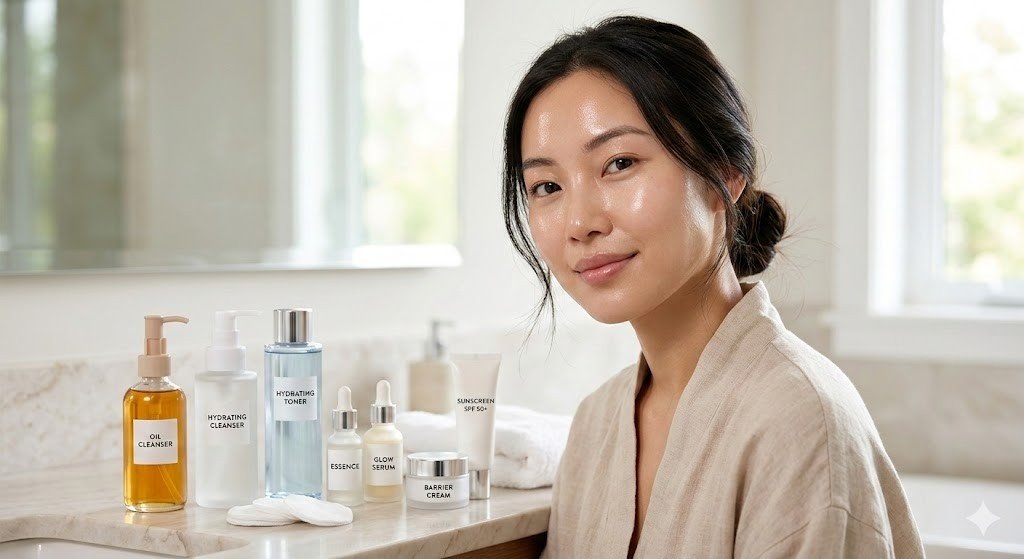
Achieving smooth, luminous, and radiant skin is a beauty goal shared by people all over the world. In recent years, one skincare trend that has captured global attention is the glass skin routine. Originating from Korean beauty philosophy, glass skin refers to skin that appears clear, smooth, intensely hydrated, and reflective—almost like glass.
Unlike makeup trends that simply cover imperfections, the glass skin routine focuses on improving the health and hydration of the skin itself. The result is naturally glowing skin that looks fresh, plump, and youthful even without heavy makeup.
If you’re new to skincare or overwhelmed by complex beauty routines, this beginner-friendly guide will walk you through the glass skin routine step by step, explain the key ingredients, and share practical tips to help you achieve radiant skin.
In this detailed guide, you’ll learn:
- What glass skin really means
- Why the glass skin trend became popular
- The step-by-step glass skin routine
- Best ingredients for glowing skin
- Tips for beginners
- Mistakes to avoid
Let’s explore how you can achieve glowing, healthy skin.
What Is Glass Skin?
Glass skin is a skincare term used to describe perfectly hydrated, smooth, poreless, and radiant skin that reflects light like glass.
It’s not about using makeup to create the effect. Instead, glass skin is achieved through consistent skincare habits that deeply nourish and hydrate the skin.
Characteristics of glass skin include:
- Even skin tone
- Smooth texture
- Hydrated and plump appearance
- Minimal visible pores
- Natural glow
This trend gained popularity through Korean beauty routines that emphasize hydration, gentle care, and skin barrier health rather than harsh treatments.
Why the Glass Skin Routine Works
The glass skin routine focuses on layering lightweight skincare products that hydrate, nourish, and repair the skin barrier.
Instead of relying on a single product, the routine builds moisture through multiple steps. Each product has a specific purpose, helping the skin absorb hydration and maintain balance.
Benefits of the glass skin routine include:
- Deep hydration
- Improved skin texture
- Reduced dullness
- Healthier skin barrier
- Natural glow without heavy makeup
Over time, consistent care helps the skin look clearer, brighter, and more youthful.
Who Should Try the Glass Skin Routine?
The glass skin routine can benefit most skin types.
It is especially helpful for people who have:
- Dry or dehydrated skin
- Dull skin tone
- Uneven texture
- Fine lines caused by dehydration
- Lack of radiance
However, the routine can also be adjusted for oily, combination, or sensitive skin.
The key is choosing products suited to your skin type.
Step-by-Step Glass Skin Routine for Beginners
The traditional Korean skincare routine may include 8–10 steps, but beginners can start with a simplified version and gradually add more steps.
Below is the most common glass skin routine sequence.
Step 1: Oil Cleanser
The glass skin routine begins with double cleansing, a technique widely used in Korean skincare.
An oil cleanser removes:
- Makeup
- Sunscreen
- Excess sebum
- Pollution and dirt
Oil-based cleansers dissolve impurities without stripping the skin’s natural oils.
How to Use
- Apply oil cleanser to dry skin
- Gently massage for 30–60 seconds
- Add water to emulsify the oil
- Rinse thoroughly
Step 2: Water-Based Cleanser
The second cleanse removes remaining impurities and sweat.
A gentle water-based cleanser helps maintain the skin barrier while ensuring the skin is fully clean.
Tips
- Use a mild, sulfate-free cleanser
- Avoid harsh foaming products
- Choose hydrating formulas
Clean skin allows the following skincare products to penetrate more effectively.
Step 3: Exfoliation (2–3 Times Per Week)
Exfoliation removes dead skin cells that cause dullness and uneven texture.
This step is essential for achieving the smooth surface associated with glass skin.
Types of exfoliation include:
Physical Exfoliation
- Scrubs with fine particles
Chemical Exfoliation
- AHAs
- BHAs
- PHAs
Chemical exfoliants are usually preferred because they are gentler and more effective.
Benefits
- Brighter skin
- Improved product absorption
- Reduced clogged pores
However, exfoliating too often can damage the skin barrier, so moderation is key.
Step 4: Toner
A toner is an essential step in Korean skincare.
Unlike traditional toners that strip oil, modern hydrating toners add moisture and prepare the skin for the next steps.
Benefits of Toner
- Restores skin pH balance
- Hydrates the skin
- Improves product absorption
- Refreshes the skin
How to Apply
- Pat toner gently into the skin with your hands
- Avoid rubbing with cotton pads
Some people apply multiple layers of toner, a technique called “toner layering.”
Step 5: Essence
Essence is a lightweight hydrating product that sits between toner and serum.
It is a signature step in Korean skincare and plays a major role in the glass skin routine.
Essences typically contain ingredients that improve:
- Skin hydration
- Cell turnover
- Skin elasticity
They are absorbed quickly and help the skin become plump and radiant.
Step 6: Serum or Ampoule
Serums contain concentrated active ingredients designed to target specific skin concerns.
Common goals include:
- Brightening
- Hydration
- Anti-aging
- Acne control
Popular ingredients include:
- Hyaluronic acid
- Niacinamide
- Vitamin C
- Peptides
Using a serum regularly helps improve the skin’s overall appearance.
Step 7: Sheet Mask (Optional)
Sheet masks are widely used in Korean skincare routines.
They provide intense hydration and nourishment.
Sheet masks are soaked in serums containing beneficial ingredients that quickly hydrate the skin.
How Often to Use
- 1–3 times per week
- Before special occasions
After removing the mask, gently pat the remaining essence into the skin.
Step 8: Eye Cream
The skin around the eyes is thinner and more delicate.
Eye creams help reduce:
- Dark circles
- Puffiness
- Fine lines
Use a small amount and gently tap it into the skin using your ring finger.
Step 9: Moisturizer
Moisturizer locks in hydration and prevents moisture loss.
This step is essential for maintaining the glass skin effect.
A good moisturizer should:
- Hydrate deeply
- Strengthen the skin barrier
- Leave skin soft and smooth
Choose lightweight gel moisturizers for oily skin and richer creams for dry skin.
Step 10: Sunscreen (Morning Routine)
Sunscreen is one of the most important skincare products.
UV damage can cause:
- Dark spots
- Wrinkles
- Dullness
- Loss of skin elasticity
Daily sunscreen helps protect the results of your skincare routine.
Use a broad-spectrum SPF 30 or higher every morning.
Key Ingredients for Glass Skin
Certain ingredients are especially helpful for achieving the glass skin look.
Hyaluronic Acid
A powerful humectant that attracts moisture to the skin.
Benefits:
- Deep hydration
- Plump appearance
- Reduced dryness
Niacinamide
A versatile ingredient that helps:
- Improve skin tone
- Reduce pores
- Strengthen the skin barrier
Vitamin C
Vitamin C brightens the skin and protects it from environmental damage.
Benefits include:
- Reduced dark spots
- Improved radiance
- Antioxidant protection
Centella Asiatica
A soothing plant extract widely used in Korean skincare.
It helps:
- Calm irritation
- Support skin healing
- Strengthen the skin barrier
Ceramides
Ceramides help maintain the skin’s protective barrier and prevent moisture loss.
They are especially beneficial for dry or sensitive skin.
Tips for Achieving Glass Skin
The glass skin routine works best when combined with healthy habits.
Stay Hydrated
Drinking enough water helps maintain skin hydration.
Get Enough Sleep
Quality sleep allows the skin to repair itself overnight.
Eat Skin-Friendly Foods
A balanced diet rich in antioxidants, fruits, and vegetables supports skin health.
Avoid Overusing Actives
Using too many strong ingredients can irritate the skin.
Focus on hydration and gentle care.
Be Consistent
Skincare results take time.
Consistency is the key to achieving glass skin.
Common Mistakes to Avoid
Even with the best intentions, beginners often make mistakes.
Using Too Many Products
Layering too many products can overwhelm the skin.
Start with a simple routine and add steps gradually.
Skipping Sunscreen
Sun protection is essential for maintaining clear and radiant skin.
Over-Exfoliating
Exfoliating too frequently can damage the skin barrier and cause irritation.
Limit exfoliation to 2–3 times per week.
Ignoring Skin Type
Choose products suited to your skin type for the best results.
How Long Does It Take to Achieve Glass Skin?
Results vary depending on skin type and consistency.
Typical timeline:
- 2 weeks: Improved hydration
- 4 weeks: Brighter skin tone
- 8–12 weeks: Smoother and clearer skin
Patience and consistency are essential.
Glass Skin Routine for Different Skin Types
Oily Skin
Use lightweight gel-based products and oil-free moisturizers.
Dry Skin
Focus on hydrating toners, rich creams, and nourishing serums.
Sensitive Skin
Use gentle, fragrance-free products with soothing ingredients.
Combination Skin
Balance hydration with lightweight formulas.
Final Thoughts
The glass skin routine is more than just a beauty trend—it’s a skincare philosophy that emphasizes hydration, gentle care, and skin health.
By following a structured routine that includes cleansing, hydration, targeted treatments, and sun protection, you can gradually achieve the smooth, radiant skin associated with the glass skin trend.
While the full routine may include multiple steps, beginners can start simple and build gradually.
With consistency, patience, and the right products, glowing, healthy skin is achievable for anyone.
FAQs About the Glass Skin Routine
What is the glass skin routine?
The glass skin routine is a skincare method focused on achieving smooth, clear, and deeply hydrated skin that looks luminous and reflective like glass. It usually involves multiple steps such as cleansing, toning, applying essence, serums, moisturizer, and sunscreen.
How many steps are in a glass skin routine?
A traditional glass skin routine can include 8 to 10 steps, but beginners can start with a simplified routine of cleanser, toner, serum, moisturizer, and sunscreen.
Can oily skin achieve glass skin?
Yes, oily skin can achieve glass skin by using lightweight, oil-free, and non-comedogenic skincare products that hydrate the skin without clogging pores.
Is the glass skin routine suitable for sensitive skin?
Yes, but people with sensitive skin should choose gentle, fragrance-free products and avoid over-exfoliating. Hydrating ingredients and soothing formulas work best.
Do you need Korean skincare products for glass skin?
No, you do not necessarily need Korean products. Any skincare products that focus on hydration, gentle cleansing, and skin barrier repair can help achieve the glass skin effect.
How often should I exfoliate for glass skin?
Exfoliating two to three times per week is usually enough to remove dead skin cells and maintain smooth, glowing skin.
Can makeup create the glass skin look?
Makeup can temporarily mimic the glass skin effect, but true glass skin comes from consistent skincare that improves hydration and skin health.
What ingredients help achieve glass skin?
Popular ingredients for glass skin include hyaluronic acid, niacinamide, vitamin C, ceramides, and centella asiatica, which hydrate and improve skin texture.
Is sunscreen necessary for the glass skin routine?
Yes, sunscreen is essential because it protects the skin from sun damage that can cause dark spots, wrinkles, and dullness.
How long does it take to see results from the glass skin routine?
Most people begin noticing improved hydration and glow within 2–4 weeks, while smoother and clearer skin may take 8–12 weeks with consistent skincare.
Also read :
Skin Cycling: Dermatologist-Approved Skincare Trend Explained