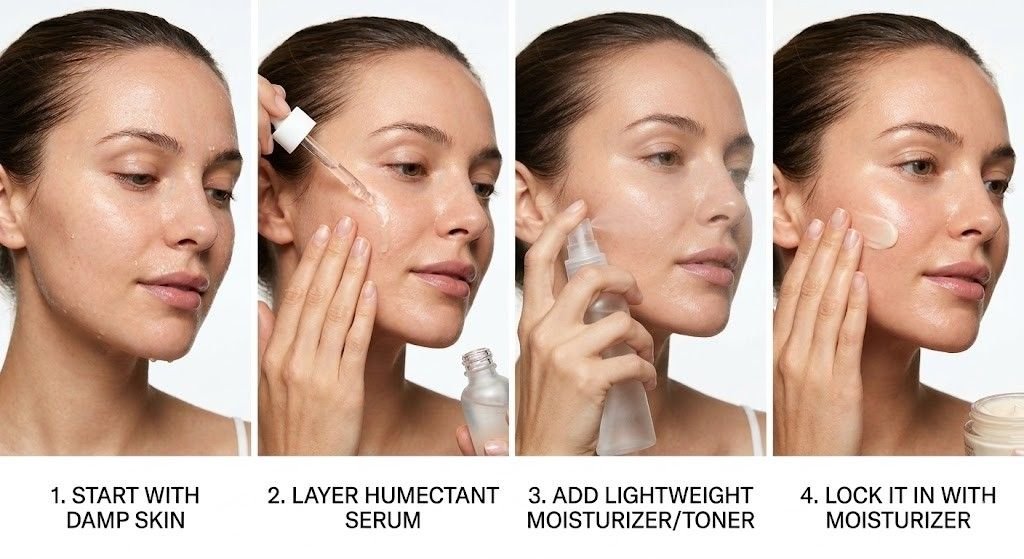
Skin Flooding Trend : The skincare world constantly evolves with new techniques, ingredients, and beauty trends appearing on social media. One trend that has recently gained massive popularity on platforms like TikTok and Instagram is skin flooding. Beauty influencers and dermatologists alike are discussing this hydration-focused routine that promises glowing, plump, and deeply moisturized skin.
But what exactly is skin flooding? Is it truly effective, or is it just another viral skincare trend?
In this detailed guide, we will explore what skin flooding is, how it works, its benefits, potential risks, and how to add it to your skincare routine properly.
What Is Skin Flooding?
Skin flooding is a skincare method that focuses on layering multiple hydrating products on damp skin to maximize moisture absorption. The idea behind the trend is to “flood” the skin with hydration so that it becomes deeply moisturized and plump.
Instead of applying products on dry skin, this technique emphasizes applying hydrating ingredients while the skin is slightly damp. This helps trap moisture and improves product absorption.
A typical skin flooding routine includes layering products in this order:
- Water or facial mist
- Hydrating toner or essence
- Hyaluronic acid serum
- Moisturizer
This layered hydration technique helps lock water into the skin and prevent dryness.
Why Skin Flooding Became a Viral Trend
Several factors contributed to the popularity of skin flooding.
Social Media Influence
TikTok and beauty influencers popularized the trend by demonstrating quick routines that visibly improve skin hydration.
Focus on Skin Barrier Health
Modern skincare is increasingly focused on repairing the skin barrier, and hydration plays a major role in maintaining healthy skin.
Korean Skincare Inspiration
Skin flooding is inspired by Korean skincare techniques such as the 7 Skin Method, which involves layering multiple hydrating toners.
Quick Visible Results
Hydrated skin appears smoother, brighter, and more radiant, making the results noticeable almost immediately.
How Skin Flooding Works
To understand skin flooding, it’s helpful to know how skin hydration works.
The outer layer of the skin, called the stratum corneum, acts as a barrier that retains moisture while protecting against environmental damage.
Hydrating ingredients known as humectants attract water to the skin. When applied to damp skin, they pull in moisture and help keep the skin hydrated.
Common humectants used in skin flooding include:
- Hyaluronic acid
- Glycerin
- Aloe vera
- Panthenol
- Sodium PCA
By layering these ingredients on damp skin, skin flooding enhances their ability to attract and retain water.
Benefits of Skin Flooding
1. Deep Hydration
The primary benefit of skin flooding is intense hydration. When the skin is properly moisturized, it appears healthier and more radiant.
2. Plumper Skin
Hydrated skin cells swell slightly, which makes the skin look smoother and fuller.
3. Improved Skin Barrier
Proper hydration supports the skin barrier, helping it protect against environmental stressors.
4. Reduced Appearance of Fine Lines
Fine lines often appear more noticeable on dry skin. Hydration helps soften their appearance.
5. Better Product Absorption
Applying skincare on damp skin can enhance ingredient absorption, making products more effective.
Step-by-Step Guide to the Skin Flooding Routine
If you want to try this trend, follow this simple routine.
Step 1: Start With a Gentle Cleanser
Clean skin ensures that hydrating products can penetrate properly.
Use a mild cleanser that does not strip natural oils.
Step 2: Apply Water or Facial Mist
After cleansing, leave your skin slightly damp or use a facial mist to add moisture.
This moisture acts as the base for the hydrating products that follow.
Step 3: Use a Hydrating Toner or Essence
Apply a toner or essence that contains hydrating ingredients like glycerin or aloe vera.
Pat it gently into the skin rather than rubbing it.
Step 4: Apply Hyaluronic Acid Serum
Hyaluronic acid is one of the most effective humectants.
Apply a small amount while the skin is still damp to attract moisture.
Step 5: Seal With Moisturizer
The final step is applying a moisturizer that locks hydration into the skin.
Look for moisturizers containing:
- Ceramides
- Squalane
- Shea butter
- Fatty acids
These ingredients help prevent water loss.
Best Ingredients for Skin Flooding
Some ingredients work particularly well with this technique.
Hyaluronic Acid
This ingredient can hold up to 1,000 times its weight in water, making it one of the most powerful hydrators.
Glycerin
A widely used humectant that helps attract moisture from the environment.
Aloe Vera
A soothing ingredient that hydrates and calms irritated skin.
Panthenol
Also known as vitamin B5, panthenol improves hydration and strengthens the skin barrier.
Ceramides
These lipids help seal moisture into the skin.
Who Should Try Skin Flooding?
Skin flooding works best for certain skin types.
Dry Skin
People with dry skin can benefit greatly from the extra hydration.
Dehydrated Skin
If your skin feels tight or dull, this method can restore moisture levels.
Mature Skin
Hydration helps improve elasticity and reduce the appearance of wrinkles.
Sensitive Skin
Gentle hydrating products can calm and soothe sensitive skin.
Who Should Be Careful With Skin Flooding?
While skin flooding can benefit many people, it may not be ideal for everyone.
Oily Skin
Excessive layering of products may feel heavy for oily skin types.
Acne-Prone Skin
Using too many products can clog pores if they are not lightweight and non-comedogenic.
Humid Climates
In very humid environments, heavy hydration layers may feel uncomfortable.
Common Skin Flooding Mistakes
Avoid these mistakes to get the best results.
Using Too Many Products
Skin flooding does not require a long routine. Too many layers can overwhelm the skin.
Skipping Moisturizer
Humectants attract moisture but do not seal it. Without moisturizer, hydration may evaporate.
Applying Products on Dry Skin
This defeats the purpose of the technique.
Using Harsh Ingredients
Avoid combining strong exfoliants or retinoids during skin flooding routines.
Skin Flooding vs Traditional Moisturizing
Both methods hydrate the skin, but they work differently.
| Skin Flooding | Traditional Moisturizing |
|---|---|
| Focuses on layered hydration | Focuses on single moisturizer |
| Applied on damp skin | Often applied on dry skin |
| Uses humectants heavily | May focus more on emollients |
Both approaches can work, but skin flooding emphasizes maximum hydration.
Is Skin Flooding Supported by Dermatologists?
Many dermatologists agree with the core idea behind skin flooding.
Applying hydrating ingredients on damp skin can enhance their effectiveness.
However, experts also emphasize simplicity and balance. Overusing products may lead to irritation or clogged pores.
The best skincare routine is one that suits your skin type.
How Often Should You Do Skin Flooding?
Skin flooding can be done:
- Daily for dry skin
- A few times per week for normal skin
- Occasionally for oily skin
The key is adjusting the routine based on how your skin responds.
Can Skin Flooding Replace Your Entire Skincare Routine?
Not completely.
Skin flooding focuses mainly on hydration, but a full skincare routine should also include:
- Sunscreen
- Antioxidants
- Exfoliation (occasionally)
- Targeted treatments
Think of skin flooding as a hydration technique, not a complete routine replacement.
Skin Flooding for Different Skin Types
Dry Skin
Use richer moisturizers and hydrating toners.
Oily Skin
Choose lightweight gel moisturizers and minimal layers.
Combination Skin
Focus hydration on dry areas while keeping oily areas lighter.
Sensitive Skin
Use fragrance-free and calming ingredients.
Final Thoughts about Skin Flooding Trend
The skin flooding trend highlights an important principle in skincare: hydration is essential for healthy skin.
By layering hydrating ingredients on damp skin and sealing them with moisturizer, this method can improve skin moisture levels and create a glowing complexion.
While skin flooding can be effective, it is not a miracle solution. The key to healthy skin is a balanced routine tailored to your skin type.
If used correctly, skin flooding can be a simple and effective way to boost hydration and enhance your skincare routine.
Additional FAQs: Skin Flooding Trend
1. What is the purpose of skin flooding?
The purpose of skin flooding is to maximize skin hydration by layering humectant-rich products on damp skin so they attract and retain more moisture.
2. Is skin flooding good for dehydrated skin?
Yes, skin flooding is especially helpful for dehydrated skin, which lacks water rather than oil. The technique helps replenish moisture levels and restore skin balance.
3. Can skin flooding improve glowing skin?
Yes. Proper hydration can make skin appear plumper, smoother, and more radiant, which often results in a natural glow.
4. What products are needed for skin flooding?
A basic skin flooding routine usually includes:
- Gentle cleanser
- Facial mist or water
- Hydrating toner or essence
- Hyaluronic acid serum
- Moisturizer
These products work together to hydrate and seal moisture in the skin.
5. Should skin flooding be done in the morning or night?
Skin flooding can be done both morning and night. Many people prefer doing it at night because heavier hydration layers absorb better during sleep.
6. Can skin flooding help with fine lines?
Hydration can temporarily plump the skin and soften the appearance of fine lines, making them less noticeable.
7. Can I use skin flooding with active ingredients?
Yes, but it is best to use active ingredients like retinol, exfoliating acids, or vitamin C separately to avoid irritation or product layering issues.
8. How long does it take to see results from skin flooding?
Most people notice immediate hydration and smoother skin, while consistent use over several weeks may improve overall skin texture.
9. Is skin flooding suitable for sensitive skin?
Yes, as long as you use fragrance-free and gentle hydrating products that do not irritate sensitive skin.
10. Can skin flooding replace a moisturizer?
No. Moisturizer is an essential step in skin flooding because it locks in hydration and prevents moisture loss.
11. Does skin flooding clog pores?
Skin flooding itself does not clog pores, but using heavy or comedogenic products may lead to breakouts, especially for oily or acne-prone skin.
12. Can skin flooding help repair the skin barrier?
Yes. Proper hydration combined with ingredients like ceramides and panthenol can help support and strengthen the skin barrier.
13. Is skin flooding the same as the 7 Skin Method?
Not exactly. Both techniques focus on hydration, but the 7 Skin Method involves layering toner multiple times, while skin flooding uses a combination of different hydrating products.
14. Can I use face oils in a skin flooding routine?
Yes. Face oils can be applied after moisturizer to help seal hydration and prevent moisture from evaporating.
15. Is skin flooding a long-term skincare routine?
Skin flooding is more of a hydration technique rather than a permanent routine. You can incorporate it whenever your skin needs extra moisture.
Also read :