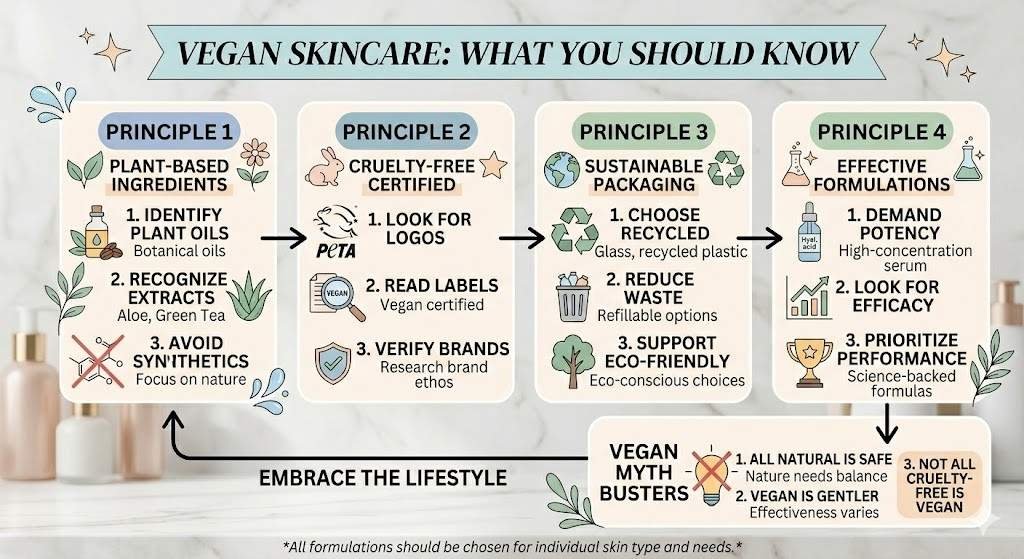
Vegan skincare has gone from niche to mainstream in the United States. From drugstore shelves to luxury beauty counters, products labeled “vegan” are everywhere. But what does vegan skincare actually mean? Is it better for your skin? Is it the same as cruelty-free? And does plant-based always mean safer?
In this complete guide, you’ll learn everything you need to know about vegan skincare — including benefits, myths, ingredients to avoid, and how to build a vegan routine that actually works.
What Is Vegan Skincare?
Vegan skincare refers to beauty and skincare products made without any animal-derived ingredients.
This means the product does NOT contain:
- Beeswax
- Honey
- Lanolin (from sheep’s wool)
- Collagen (animal-based)
- Carmine (from insects)
- Gelatin
- Tallow
Instead, vegan products rely on plant-based, synthetic, or lab-created alternatives.
It’s important to note:
👉 Vegan does not automatically mean cruelty-free.
Cruelty-free means the product was not tested on animals. Vegan means no animal ingredients were used. A product can be one, both, or neither.
Why Vegan Skincare Is Trending in the USA
The rise of vegan skincare in the U.S. is driven by:
- Increased ethical consumerism
- Environmental awareness
- Plant-based lifestyle growth
- Transparency in ingredient sourcing
- Social media education
Major retailers like Sephora and Ulta Beauty now have dedicated vegan beauty sections, showing how mainstream this movement has become.
Benefits of Vegan Skincare
1. Ethical and Animal-Friendly
The primary benefit is ethical alignment. Consumers who avoid animal products in food often extend that philosophy to beauty products.
2. Often Rich in Plant-Based Antioxidants
Many vegan products use botanical ingredients such as:
- Aloe vera
- Green tea extract
- Rosehip oil
- Vitamin C from fruits
- Centella asiatica
These ingredients can support hydration, repair, and antioxidant protection.
3. Environmentally Conscious
Animal agriculture contributes significantly to greenhouse gas emissions. Many vegan skincare brands emphasize sustainable sourcing and eco-friendly packaging.
However, vegan does not automatically equal sustainable — always check brand transparency.
4. Suitable for Sensitive Skin (Sometimes)
Some people find plant-based formulations gentler, but this depends on the specific ingredients. Natural extracts can still cause irritation.
Common Myths About Vegan Skincare
Myth 1: Vegan Means All-Natural
False.
A vegan product can still contain synthetic ingredients. Vegan simply means no animal-derived components.
Myth 2: Vegan Is Automatically Better for Skin
Not necessarily.
Effectiveness depends on formulation, stability, and concentration — not just whether it’s plant-based.
Myth 3: Vegan Products Don’t Contain Chemicals
Everything is made of chemicals — including water. Vegan skincare still uses preservatives and stabilizers for safety.
Ingredients to Watch For (Non-Vegan)
If you want to avoid animal-derived ingredients, check labels for:
- Beeswax (Cera alba)
- Honey
- Lanolin
- Collagen (unless labeled plant-based or synthetic)
- Carmine
- Gelatin
- Keratin (animal-derived)
Some ingredients may be synthetic versions, so brand clarification helps.
Powerful Vegan Skincare Ingredients
Here are effective vegan-friendly ingredients commonly found in skincare:
1. Plant-Based Retinol Alternatives (Bakuchiol)
Bakuchiol offers retinol-like benefits without animal sources.
2. Vitamin C (Ascorbic Acid)
Usually synthetic or plant-derived and vegan.
3. Hyaluronic Acid
Most modern hyaluronic acid is lab-produced and vegan.
4. Niacinamide
A vitamin B3 derivative that supports barrier repair.
5. Plant Oils
- Jojoba oil
- Rosehip oil
- Squalane (plant-derived)
Vegan vs Cruelty-Free: What’s the Difference?
| Term | Meaning |
|---|---|
| Vegan | No animal ingredients |
| Cruelty-Free | Not tested on animals |
For example:
- A product may be vegan but tested on animals.
- A product may be cruelty-free but contain honey or beeswax.
Look for certification logos for clarity.
Is Vegan Skincare Better for Acne?
It depends on the formulation.
Some vegan products focus heavily on plant oils, which can be comedogenic for acne-prone skin. Others use effective acne-fighting ingredients like:
- Salicylic acid
- Niacinamide
- Azelaic acid
The key is ingredient balance, not just the vegan label.
Is Vegan Skincare Good for Anti-Aging?
Yes, if it includes clinically proven ingredients such as:
- Retinol alternatives (bakuchiol)
- Peptides
- Vitamin C
- Hyaluronic acid
Plant-based antioxidants can help protect against environmental damage, a major contributor to aging.
How to Build a Vegan Skincare Routine
Step 1: Understand What “Vegan” Really Means
Before building your routine, make sure you understand the label.
- Vegan = No animal-derived ingredients
- Cruelty-free = Not tested on animals
Retailers like Sephora and Ulta Beauty clearly label vegan products, making shopping easier.
Look out for non-vegan ingredients such as:
- Beeswax
- Honey
- Lanolin
- Carmine
- Collagen (unless plant-based)
Now, let’s build your routine.
Step 2: Identify Your Skin Type
Before choosing products, determine your skin type:
- Oily skin – shiny, enlarged pores
- Dry skin – tight, flaky
- Combination skin – oily T-zone, dry cheeks
- Sensitive skin – easily irritated
- Acne-prone skin – frequent breakouts
Your routine should match your skin’s needs — not just trends.
Step 3: Build Your Core Vegan Skincare Routine
A simple routine includes:
- Cleanser
- Treatment (optional but recommended)
- Moisturizer
- Sunscreen (morning only)
Let’s break it down.
Morning Vegan Skincare Routine
1. Gentle Vegan Cleanser
Purpose: Remove oil and sweat without stripping skin.
Look for:
- Aloe vera
- Glycerin
- Plant-based surfactants
Avoid harsh sulfates if you have sensitive or dry skin.
2. Antioxidant Serum (Optional but Recommended)
A vitamin C serum helps:
- Brighten skin
- Reduce hyperpigmentation
- Protect against pollution
Most vitamin C formulations are vegan (lab-created).
Alternative options:
- Niacinamide
- Green tea extract
- Bakuchiol (plant-based retinol alternative)
3. Vegan Moisturizer
Choose based on skin type:
- Oily: Lightweight gel moisturizer
- Dry: Cream with plant oils
- Sensitive: Fragrance-free formula
Look for:
- Hyaluronic acid
- Plant-derived squalane
- Ceramides (synthetic/vegan)
4. Sunscreen (Non-Negotiable)
Choose broad-spectrum SPF 30 or higher.
Mineral sunscreens using zinc oxide are typically vegan, but always confirm ingredients.
Sunscreen protects your skin from:
- Premature aging
- Dark spots
- Skin cancer risk
Night Vegan Skincare Routine
Your nighttime routine focuses on repair.
1. Cleanser
If wearing makeup, double cleanse:
- Oil-based vegan cleanser
- Follow with gentle cleanser
Plant oils like jojoba or sunflower oil work well.
2. Treatment Serum
Choose based on your skin concern:
For Acne:
- Salicylic acid
- Niacinamide
- Azelaic acid
For Anti-Aging:
- Bakuchiol
- Peptides
- Vitamin C
For Dryness:
- Hyaluronic acid
- Panthenol
3. Moisturizer
Use a slightly richer moisturizer at night to support repair.
Optional:
- Plant-based face oil (rosehip, jojoba, squalane)
Step 4: Add Weekly Treatments (Optional)
1–2 Times Per Week:
- Vegan exfoliating acid (AHA or BHA)
- Clay mask (kaolin or bentonite)
- Hydrating mask
Avoid over-exfoliation — more is not better.
Step 5: Check Ingredient Transparency
Even if labeled vegan, verify:
- Full ingredient list
- No hidden animal derivatives
- Clear sourcing information
Brands stocked at retailers like Sephora often include vegan badges for easier identification.
Potential Downsides of Vegan Skincare
While vegan skincare has benefits, there are some considerations:
- Some plant extracts may irritate sensitive skin
- Not all vegan products are sustainable
- Marketing claims can be misleading
- Some natural preservatives may have shorter shelf life
Always patch test new products.
How to Identify Truly Vegan Brands
Look for:
- Clear ingredient transparency
- Vegan certification labels
- Cruelty-free certification
- Brand sustainability reports
Retailers like Sephora clearly label vegan products in-store and online to make shopping easier.
Vegan Skincare and Sustainability
Many vegan brands focus on:
- Recyclable packaging
- Refillable containers
- Carbon-neutral shipping
- Responsibly sourced botanicals
However, synthetic lab-made ingredients can sometimes have lower environmental impact than harvesting rare plants. Sustainability depends on sourcing practices.
Who Should Consider Vegan Skincare?
You may benefit from vegan skincare if:
- You follow a plant-based lifestyle
- You prioritize ethical consumption
- You prefer botanical formulations
- You want transparency in ingredients
Who Might Not Need It?
If your main concern is clinical effectiveness (acne treatment, prescription-grade anti-aging), ingredient performance matters more than vegan labeling.
Dermatologist-recommended products may or may not be vegan.
Final Thoughts
Vegan skincare is more than a trend — it reflects changing consumer values around ethics, sustainability, and transparency.
However, vegan does not automatically mean better, safer, or more effective. The key to great skin remains the same:
- Understand your skin type
- Choose evidence-backed ingredients
- Patch test new products
- Wear sunscreen daily
If ethical sourcing matters to you, vegan skincare can align with your values while still delivering results — as long as you choose well-formulated products.
Frequently Asked Questions (FAQs) About Vegan Skincare
1. What is vegan skincare?
Vegan skincare refers to products made without any animal-derived ingredients such as beeswax, honey, lanolin, collagen, or carmine. These products rely on plant-based or synthetic alternatives instead.
2. Is vegan skincare the same as cruelty-free?
No. Vegan means no animal ingredients are used. Cruelty-free means the product was not tested on animals. A product can be vegan, cruelty-free, both, or neither. Retailers like Sephora often label both categories separately to help consumers choose.
3. Is vegan skincare better for your skin?
Not automatically. The effectiveness of skincare depends on the formulation, concentration of active ingredients, and your skin type—not just whether it’s vegan.
4. Can vegan skincare help with acne?
Yes, if the product contains proven acne-fighting ingredients like salicylic acid, niacinamide, or azelaic acid. The “vegan” label alone does not guarantee acne treatment benefits.
5. Is hyaluronic acid vegan?
Most modern hyaluronic acid used in skincare today is lab-produced through fermentation and is vegan-friendly. Always check brand transparency to confirm.
6. Does vegan skincare contain chemicals?
Yes. Everything, including water, is a chemical compound. Vegan skincare can include synthetic ingredients and preservatives for safety and stability.
7. Are vegan skincare products more expensive?
Not necessarily. While some premium vegan brands may cost more, many affordable drugstore options are available in the U.S. market.
8. Is vegan skincare good for sensitive skin?
It can be, but not always. Some plant-based extracts and essential oils may cause irritation. Always patch test new products before full application.
9. How can I tell if a skincare product is truly vegan?
Look for:
- Clear ingredient list
- Vegan certification logos
- Brand transparency about sourcing
If unsure, contact the brand directly.
10. Is vegan skincare environmentally friendly?
It can be, but vegan does not automatically mean sustainable. Environmental impact depends on ingredient sourcing, packaging, and manufacturing practices.
11. Can vegan skincare be anti-aging?
Yes. Many vegan products contain effective anti-aging ingredients like vitamin C, peptides, bakuchiol, and plant-derived antioxidants.
12. Should I switch to vegan skincare?
If ethical sourcing and animal-free ingredients matter to you, vegan skincare may align with your values. However, focus on ingredients that suit your skin type and concerns first.
Also read :