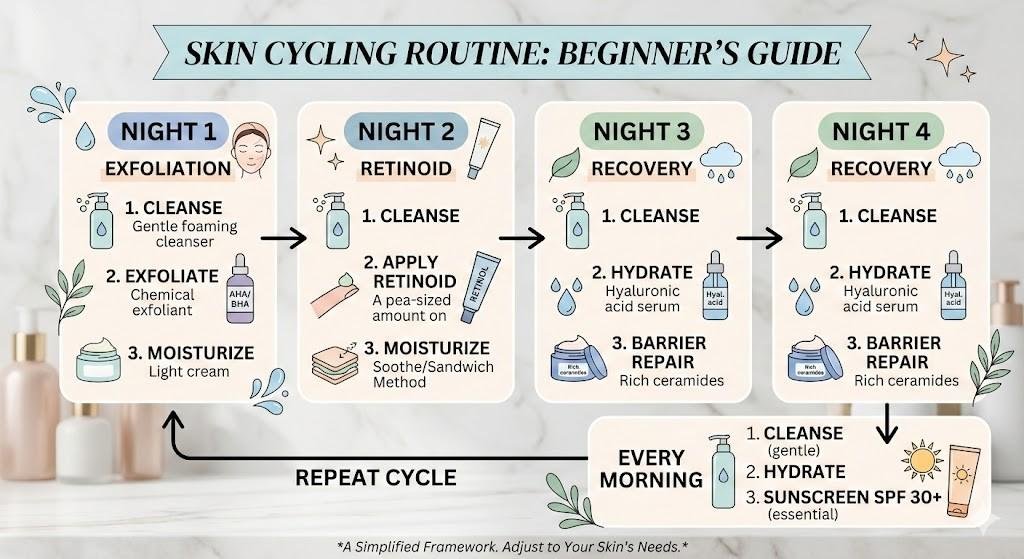
Skin Cycling Routine: If you’ve spent any time on skincare TikTok or dermatology Instagram, you’ve probably heard about skin cycling. Unlike complicated 10-step routines, this method simplifies your nighttime skincare into a structured rotation that balances powerful active ingredients with intentional recovery days.
The concept was popularized by board-certified dermatologist Dr. Whitney Bowe, who introduced skin cycling as a smarter way to use exfoliants and retinoids without damaging your skin barrier.
In this complete beginner’s guide, you’ll learn:
- What skin cycling is
- The science behind it
- Step-by-step 4-night routine
- Best ingredients for each step
- How to customize it for your skin type
- Common mistakes to avoid
- FAQs
Let’s break it down.
What Is Skin Cycling?
Skin cycling is a 4-night rotating skincare routine designed to maximize results from active ingredients while minimizing irritation.
The Classic 4-Night Cycle:
- Night 1 – Exfoliation
- Night 2 – Retinoid
- Night 3 – Recovery
- Night 4 – Recovery
Then repeat.
Instead of applying exfoliating acids or retinol every night (which often leads to redness and sensitivity), skin cycling builds in recovery days to support the skin barrier.
Why Skin Cycling Routine Became So Popular
In recent years, skincare consumers have layered multiple actives:
- AHAs + BHAs
- Retinol + Vitamin C
- Peptides + acids
- Toners + serums + treatments
The result? Over-exfoliated, inflamed, irritated skin.
Skin cycling became popular because it:
- Reduces barrier damage
- Simplifies routines
- Works for beginners
- Helps sensitive skin tolerate retinol
- Saves money on unnecessary products
It’s especially appealing to people new to retinoids or those who have experienced “retinol burn.”
The Science Behind Skin Cycling Routine
Your skin barrier (stratum corneum) protects against moisture loss and environmental damage. When overused, exfoliants and retinoids can:
- Disrupt barrier lipids
- Increase transepidermal water loss
- Cause inflammation
Recovery nights restore hydration and barrier lipids using ingredients like:
- Ceramides
- Glycerin
- Hyaluronic acid
- Niacinamide
This structured alternation allows active ingredients to work without overwhelming the skin.
The Complete Step-by-Step Skin Cycling Routine
Night 1: Exfoliation Night
Purpose: Remove dead skin cells and prep skin for retinoid night.
Step 1: Gentle Cleanser
Use a sulfate-free, non-stripping cleanser.
Step 2: Chemical Exfoliant
Choose ONE:
- AHA (glycolic or lactic acid) – for dullness
- BHA (salicylic acid) – for acne-prone skin
- PHA – for sensitive skin
Apply to dry skin after cleansing.
Step 3: Moisturizer
Seal with a hydrating moisturizer.
Avoid:
- Physical scrubs
- Mixing exfoliant with retinol
- Over-application
Night 2: Retinoid Night
Purpose: Stimulate collagen and improve skin texture.
Step 1: Cleanser
Step 2: Retinoid
Start with:
- Over-the-counter retinol (0.25%–0.5%)
Use a pea-sized amount for entire face.
Step 3: Moisturizer
If sensitive, use the “sandwich method”:
Moisturizer → Retinol → Moisturizer
Benefits of retinol:
- Reduces fine lines
- Improves acne
- Fades hyperpigmentation
- Smooths texture
Night 3 & 4: Recovery Nights
Purpose: Repair and hydrate.
Step 1: Cleanser
Step 2: Hydrating Serum
Look for:
- Hyaluronic acid
- Glycerin
- Panthenol
Step 3: Barrier-Repair Moisturizer
Key ingredients:
- Ceramides
- Niacinamide
- Cholesterol
- Fatty acids
Optional:
- Face oil (for dry skin)
Recovery nights are essential — they prevent long-term sensitivity.
Morning Routine During Skin Cycling
Keep mornings simple:
- Gentle cleanser
- Vitamin C (optional)
- Moisturizer
- Sunscreen SPF 30+
Sunscreen is critical. Both exfoliants and retinol increase sun sensitivity.
How to Customize Skin Cycling Routine
For Oily / Acne-Prone Skin
- Use BHA on exfoliation night
- Lightweight gel moisturizer
- Oil-free sunscreen
For Dry Skin
- Use lactic acid instead of glycolic
- Add hydrating toner on recovery nights
- Consider cream-based retinol
For Sensitive Skin
- Extend to 5-day cycle
- Use lower-strength retinol
- Skip exfoliation every other cycle
For Mature Skin (40+)
- Focus on consistent retinol night
- Add peptides on recovery nights
Common Mistakes Beginners Make
Using exfoliant and retinol together
Skipping recovery nights
Using too much retinol
Not wearing sunscreen
Adding new actives during cycle
Expecting overnight results
Consistency > intensity.
How Long Before You See Results?
- Week 2: smoother texture
- Week 4: fewer breakouts
- Week 6–8: brighter skin
- Week 12: visible wrinkle improvement
Retinoids require patience.
Benefits of Skin Cycling Routine
Skin cycling isn’t just a social media trend — it’s a structured, dermatologist-backed approach to skincare that focuses on balancing powerful actives with proper recovery time. Popularized by Dr. Whitney Bowe, this method is designed to improve results while protecting your skin barrier.
Here are the major benefits of skin cycling:
1. Reduces Skin Irritation
One of the biggest benefits of skin cycling is minimizing irritation.
Many beginners overuse exfoliants and retinoids, which can lead to:
- Redness
- Peeling
- Burning sensation
- Sensitivity
By spacing out active ingredients and adding recovery nights, skin cycling gives your skin time to heal and adjust.
2. Strengthens the Skin Barrier
Your skin barrier protects against moisture loss and environmental damage. Over-exfoliation weakens this barrier.
Skin cycling includes two recovery nights specifically to:
- Restore hydration
- Rebuild lipid layers
- Prevent transepidermal water loss
- Reduce inflammation
A stronger barrier means healthier, more resilient skin.
3. Maximizes Retinol Benefits
Retinol is one of the most effective skincare ingredients for:
- Fine lines and wrinkles
- Acne
- Uneven skin tone
- Texture issues
However, many people quit retinol because of irritation. Skin cycling improves tolerance, allowing you to continue using retinoids consistently — which leads to better long-term results.
4. Prevents Over-Exfoliation
Over-exfoliation is extremely common, especially among beginners.
Symptoms include:
- Tight, shiny skin
- Stinging when applying products
- Increased breakouts
- Dry patches
Skin cycling limits exfoliation to once per cycle, reducing the risk of damaging your skin.
5. Beginner-Friendly Structure
Instead of guessing which product to use each night, skin cycling follows a simple 4-night rotation:
- Exfoliation
- Retinoid
- Recovery
- Recovery
This clear schedule removes confusion and makes it easier to stay consistent.
6. Improves Skin Texture and Glow
With proper exfoliation and retinol use, you may notice:
- Smoother texture
- Brighter complexion
- Reduced clogged pores
- More even skin tone
Because your skin isn’t constantly inflamed, improvements appear more gradually but more sustainably.
7. Helps Acne-Prone Skin
For mild to moderate acne, skin cycling can be very helpful.
- Exfoliation night clears pores
- Retinoid night prevents new breakouts
- Recovery nights calm inflammation
This balanced approach reduces irritation-related acne flare-ups.
8. Supports Anti-Aging Goals
Retinoids stimulate collagen production, which can help:
- Reduce fine lines
- Improve elasticity
- Minimize enlarged pores
Skin cycling allows consistent retinoid use without excessive dryness, making it easier to maintain anti-aging benefits long-term.
9. Saves Money on Skincare
You don’t need:
- Multiple exfoliants
- Daily strong treatments
- Complicated layering routines
A simplified routine with fewer active products can be more cost-effective and easier to manage.
10. Works for Most Skin Types
Skin cycling can be customized for:
- Oily skin
- Dry skin
- Sensitive skin
- Combination skin
- Mature skin
You can adjust the strength of actives or extend recovery days depending on your skin’s needs.
11. Encourages Consistency
Consistency is more important than intensity in skincare. A structured rotation helps you stick to a long-term routine instead of constantly switching products.
Is Skin Cycling Better Than Daily Retinol?
For beginners and sensitive skin — yes.
Advanced retinoid users may tolerate daily use without needing recovery nights.
However, many dermatologists agree barrier health should always be prioritized.
Who Should Avoid Skin Cycling Routine?
- People prescribed daily tretinoin
- Severe acne patients under medical supervision
- Those using strong chemical peels
Consult a licensed dermatologist if unsure.
Sample Weekly Schedule
| Day | Night Routine |
|---|---|
| Monday | Exfoliation |
| Tuesday | Retinol |
| Wednesday | Recovery |
| Thursday | Recovery |
| Friday | Exfoliation |
| Saturday | Retinol |
| Sunday | Recovery |
Can You Add Other Ingredients?
Yes, but carefully.
Safe additions:
- Peptides (recovery nights)
- Hyaluronic acid (any night)
- Niacinamide (most nights)
Avoid combining:
- Retinol + exfoliating acids
- Retinol + benzoyl peroxide
- Multiple strong acids
Skin Cycling for Acne
Skin cycling works well for mild to moderate acne because:
- BHA clears pores
- Retinol prevents clogged pores
- Recovery nights reduce inflammation
Severe acne may require prescription treatment.
Skin Cycling for Anti-Aging
Retinoids remain the gold standard for anti-aging.
Combined with consistent sunscreen use, skin cycling can:
- Improve elasticity
- Reduce wrinkles
- Boost collagen production
Final Thoughts about Skin Cycling Routine
Skin cycling isn’t just another social media trend — it’s a thoughtful, dermatologist-backed approach to skincare that prioritizes balance over overload.
By rotating exfoliation, retinoids, and recovery nights, beginners can enjoy smoother, clearer, healthier-looking skin without the irritation that often comes with active ingredients.
If you’re overwhelmed by complicated routines or struggling with sensitivity, this simple 4-night method may be exactly what your skin needs.
Start slow. Be consistent. Wear sunscreen daily.
Your skin barrier will thank you.
Frequently Asked Questions (FAQs) About Skin Cycling Routine
1. What is a skin cycling routine?
A skin cycling routine is a 4-night rotating skincare method that alternates between exfoliation, retinoid use, and recovery nights. The method was popularized by Dr. Whitney Bowe to reduce irritation while maximizing skincare results.
2. Is Skin Cycling Routine good for beginners?
Yes, skin cycling is ideal for beginners because it prevents overuse of active ingredients like retinol and exfoliating acids. The built-in recovery nights make it easier for new users to avoid redness and peeling.
3. How long does it take to see results from skin cycling?
Most beginners notice smoother skin within 2–4 weeks. Visible improvements in fine lines, acne, and pigmentation may take 8–12 weeks with consistent use.
4. Can I use vitamin C while skin cycling?
Yes. Vitamin C is best used in the morning routine, followed by sunscreen. It does not interfere with the nighttime skin cycling schedule.
5. Do I need to exfoliate every cycle?
Not necessarily. If you have sensitive or dry skin, you can exfoliate every other cycle or choose a gentler acid like lactic acid or PHA.
6. Can I use prescription tretinoin in a skin cycling routine?
If you are using prescription tretinoin, consult your dermatologist first. Some people may need a modified version of skin cycling depending on their skin’s tolerance.
7. What happens if my skin becomes irritated?
Stop active ingredients immediately and switch to recovery nights only. Focus on hydration and barrier-repair ingredients like ceramides and niacinamide until your skin calms down.
8. Is skin cycling suitable for acne-prone skin?
Yes. Using salicylic acid on exfoliation night and retinol on retinoid night can help unclog pores and reduce breakouts. However, severe acne may require medical treatment.
9. Can I shorten or extend the skin cycling routine?
Yes. Some beginners extend it to a 5-day cycle (1 exfoliation, 1 retinol, 3 recovery nights). Advanced users may reduce recovery nights if their skin tolerates actives well.
10. Is sunscreen necessary during skin cycling?
Absolutely. Exfoliants and retinoids increase sun sensitivity. Daily broad-spectrum SPF 30 or higher is essential to protect your skin and prevent damage.
11. Can I use other active ingredients like niacinamide or peptides?
Yes. Niacinamide and peptides are safe to use, especially on recovery nights. Avoid combining strong acids and retinoids on the same night.
12. Is skin cycling safe during pregnancy?
Retinoids are not recommended during pregnancy. If pregnant or breastfeeding, consult a healthcare provider before starting any retinol-based routine.
Also read :