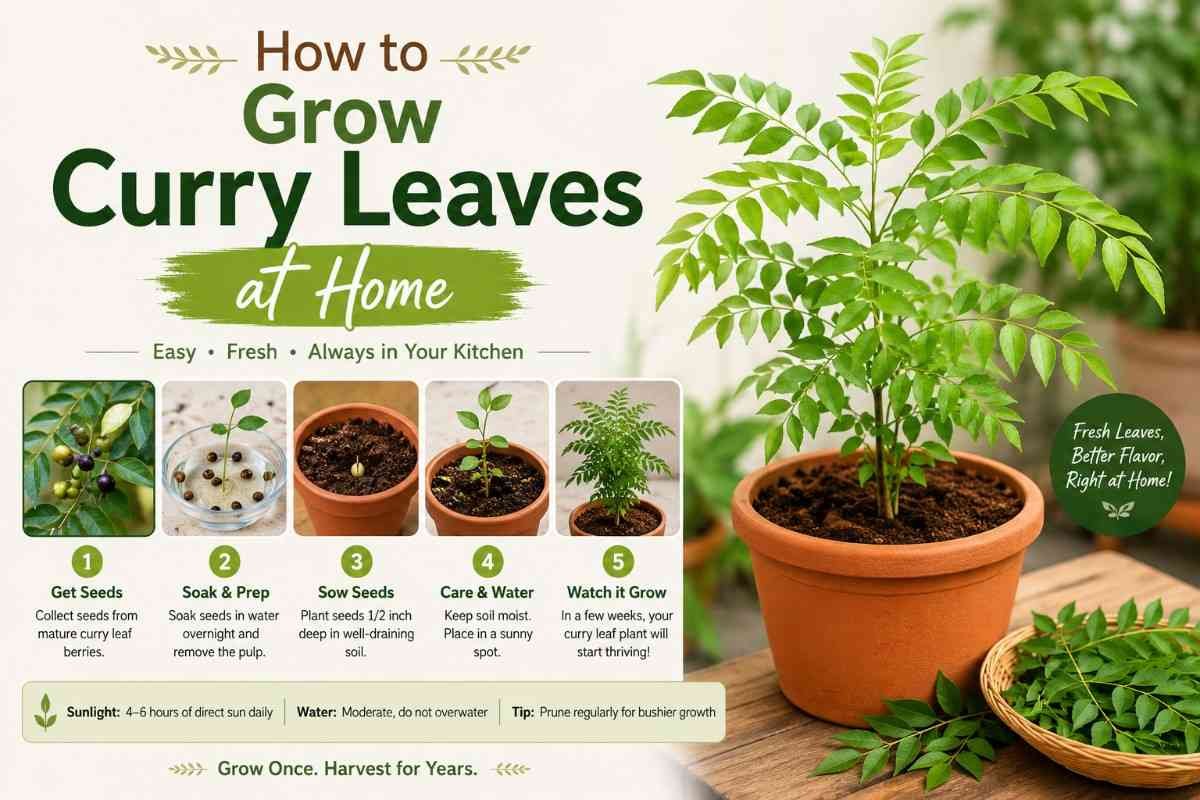
Curry leaves are one of the most important herbs used in Indian, Sri Lankan, and South Asian cooking. Known for their distinctive aroma and flavor, curry leaves are commonly added to curries, chutneys, soups, rice dishes, and spice blends. Beyond their culinary uses, curry leaves have been valued in traditional practices for centuries and are appreciated for their nutritional content and pleasant fragrance.
Growing curry leaves at home is easier than many people think. Whether you have a backyard garden, terrace, balcony, patio, or even a sunny window, you can successfully cultivate a healthy curry leaf plant with proper care. Freshly harvested curry leaves are more flavorful and aromatic than store-bought alternatives, making home cultivation a rewarding experience, you may also enjoy reading about How to Start Small Herb Garden and Aloe Vera Plant Care.
This comprehensive guide will teach you everything you need to know about how to grow curry leaves at home, including planting, watering, soil preparation, sunlight requirements, fertilizing, pruning, pest control, harvesting, and maintenance.
What Are Curry Leaves?
Curry leaves come from the curry leaf tree, scientifically known as Murraya koenigii. The tree belongs to the citrus family and is native to India and surrounding regions.(How to Grow Curry Leaves at Home)
Characteristics of Curry Leaf Plants
- Aromatic green leaves
- Small white flowers
- Dark purple or black berries
- Fast growth in warm climates
- Long lifespan
The leaves are widely used as a seasoning ingredient and are valued for their unique flavor that cannot easily be replaced by other herbs.
Benefits of Growing Curry Leaves at Home
Fresh Supply
Having a curry leaf plant at home provides a continuous source of fresh leaves whenever needed.
Cost Savings
Growing your own curry leaves reduces the need to purchase them regularly from stores.
Better Flavor
Freshly picked curry leaves often have a stronger aroma and flavor than packaged leaves.
Attractive Plant
The curry leaf plant adds greenery and beauty to gardens, balconies, and indoor spaces.
Easy Maintenance
Once established, curry leaf plants require relatively simple care.
Fresh curry leaves can be used in herbal drinks and healthy recipes. Pairing them with proper hydration habits can support overall wellness. Learn more in our guide on 15 Best Morning Drinks for Gut Health .
Choosing the Right Growing Location
Selecting a suitable location is one of the most important factors for success.
Outdoor Growing
Curry leaf plants thrive outdoors in warm climates.
Ideal locations include:
- Gardens
- Patios
- Balconies
- Terraces
Indoor Growing
Indoor growing is possible if sufficient sunlight is available.
Place the plant near:
- South-facing windows
- Sunny balconies
- Bright indoor spaces
You can also explore:
Best Indoor Plants for Clean Air
Climate Requirements
How to Grow Curry Leaves at Home: Curry leaf plants prefer tropical and subtropical conditions.
Ideal Temperature
The best temperature range is:
- 20°C to 35°C (68°F to 95°F)
Cold Weather Considerations
The plant does not tolerate frost well.
In colder regions:
- Move containers indoors during winter
- Protect plants from freezing temperatures
Choosing Between Seeds and Saplings
Growing from Seeds
Advantages:
- Affordable
- Natural growth process
- Educational experience
Disadvantages:
- Slower growth
- Lower germination rates
Growing from Saplings
Advantages:
- Faster results
- Easier for beginners
- Earlier harvests
For most gardeners, starting with a healthy sapling is the easiest option.(How to Grow Curry Leaves at Home)
A healthy diet includes a variety of nutrient-rich foods and herbs. You may also be interested in learning about Chia Seeds and their nutritional benefits.
Selecting the Right Pot
Container gardening works very well for curry leaf plants.
Pot Size
Young plants:
- 8–12 inch pots
Mature plants:
- 16–20 inch pots
Drainage Holes
Always choose pots with proper drainage.
Good drainage prevents:
- Root rot
- Waterlogging
- Fungal problems
Pot Materials
Suitable options include:
- Terracotta
- Clay
- Plastic
- Ceramic
Best Soil for Curry Leaves
How to Grow Curry Leaves at Home: Healthy soil supports strong root development.
Soil Characteristics
The soil should be:
- Well-draining
- Fertile
- Loose
- Rich in organic matter
Ideal Soil Mix
A common mixture includes:
- Garden soil
- Compost
- Sand
This combination promotes drainage and nutrient availability.
How to Plant Curry Leaves
Step 1: Prepare the Pot
Fill the container with prepared soil.
Step 2: Dig a Hole
Create a hole large enough for the root ball.
Step 3: Position the Plant
Place the sapling upright.
Step 4: Cover the Roots
Fill the hole gently with soil.
Step 5: Water Thoroughly
Water immediately after planting.(How to Grow Curry Leaves at Home)
Sunlight Requirements
Sunlight is essential for healthy growth.
Daily Sunlight
Curry leaf plants prefer:
- 6 to 8 hours of sunlight daily
Benefits of Proper Sunlight
Adequate sunlight promotes:
- Faster growth
- More leaves
- Stronger stems
- Better aroma
Signs of Insufficient Light
- Slow growth
- Yellow leaves
- Sparse foliage
Watering Curry Leaf Plants
How to Grow Curry Leaves at Home: Proper watering is critical.
Watering Frequency
Water when the top layer of soil feels dry.
Summer Watering
During hot weather:
- Water more frequently
Winter Watering
During cooler months:
- Reduce watering
Signs of Overwatering
- Yellow leaves
- Root rot
- Fungal growth
Signs of Underwatering
- Wilting
- Dry leaves
- Stunted growth
Fertilizing Curry Leaves
Nutrients help support healthy foliage production.
Organic Fertilizers
Recommended options include:
- Compost
- Vermicompost
- Cow manure
- Organic plant fertilizers
Fertilizer Schedule
Apply fertilizer every 4–6 weeks during active growth periods.
Benefits of Fertilization
Proper feeding encourages:
- Faster growth
- Dark green leaves
- Increased leaf production
Pruning Curry Leaf Plants
Pruning encourages bushier growth.
Why Prune?
Benefits include:
- More branches
- More leaves
- Better shape
- Increased productivity
How to Prune
- Remove weak stems
- Trim leggy branches
- Cut damaged growth
Use clean gardening tools.(How to Grow Curry Leaves at Home)
Growing Curry Leaves Indoors
How to Grow Curry Leaves at Home: Indoor cultivation requires special attention.
Provide Maximum Sunlight
Place the plant in the brightest available location.
Improve Air Circulation
Good airflow reduces disease risk.
Rotate the Pot
Rotating the container helps ensure even growth.
Use Grow Lights
Grow lights can supplement natural sunlight when necessary.
Common Problems and Solutions
Yellow Leaves
Possible causes:
- Overwatering
- Poor drainage
- Nutrient deficiencies
Leaf Drop
Possible causes:
- Sudden temperature changes
- Stress
- Watering issues
Slow Growth
Possible causes:
- Lack of sunlight
- Poor soil quality
- Nutrient deficiencies
Pest Management
Curry leaf plants can occasionally attract pests.
Common Pests
- Aphids
- Mealybugs
- Scale insects
- Spider mites
Natural Solutions
- Neem oil spray
- Insecticidal soap
- Hand removal
Regular inspections help prevent infestations.
Seasonal Care
Spring
- Fertilize plants
- Repot if necessary
- Encourage new growth
Summer
- Increase watering
- Monitor for pests
Autumn
- Reduce fertilization
- Prepare for cooler weather
Winter
- Protect from cold
- Reduce watering
Repotting Curry Leaf Plants
How to Grow Curry Leaves at Home: Repotting becomes necessary as the plant grows.
Signs Repotting Is Needed
- Roots emerging from drainage holes
- Slow growth
- Root-bound conditions
Best Time to Repot
Spring is usually ideal.
Repotting Steps
- Remove plant carefully.
- Loosen roots gently.
- Place in a larger container.
- Add fresh soil.
- Water lightly.
Harvesting Curry Leaves
How to Grow Curry Leaves at Home: Harvesting correctly encourages continued growth.
When to Harvest
Begin harvesting once the plant is well established.
How to Harvest
- Pick mature leaves
- Cut small stems if necessary
- Avoid excessive harvesting
Harvesting Tips
Regular harvesting encourages fresh growth.
Storing Fresh Curry Leaves
Refrigeration
Store leaves in an airtight container.
Freezing
Frozen leaves retain flavor for longer periods.
Drying
Dried leaves can be stored in sealed containers for future use.(How to Grow Curry Leaves at Home)
Benefits of Homegrown Curry Leaves
Freshness
Harvest leaves as needed.
Sustainability
Reduce packaging waste.
Convenience
No need for frequent grocery store purchases.
Better Flavor
Fresh leaves offer superior aroma and taste.(How to Grow Curry Leaves at Home)
Common Mistakes to Avoid
Overwatering
The most common problem among beginners.
Poor Drainage
Waterlogged soil can damage roots.
Insufficient Sunlight
Results in weak growth.
Excessive Fertilizer
Too much fertilizer may harm plants.
Ignoring Pests
Early treatment prevents larger problems.
How Long Does It Take Curry Leaves to Grow?
How to Grow Curry Leaves at Home: Growth rates vary.
From Seeds
Several months to establish.
From Saplings
Harvesting may begin within a few months under favorable conditions.
Patience and consistent care are important.
Why Grow Curry Leaves at Home?
How to Grow Curry Leaves at Home: Growing curry leaves at home offers many rewards:
- Fresh ingredients
- Attractive greenery
- Easy maintenance
- Cost savings
- Gardening enjoyment
The plant is suitable for both beginner and experienced gardeners.
Conclusion
How to Grow Curry Leaves at Home: Learning how to grow curry leaves at home is a valuable skill for anyone who enjoys gardening and cooking. With proper sunlight, well-draining soil, regular watering, and occasional fertilization, curry leaf plants can thrive for many years and provide a steady supply of fresh, aromatic leaves.
Whether you grow your plant in a garden, on a balcony, or indoors near a sunny window, curry leaves are a rewarding addition to any home garden. By following the tips in this guide, you can enjoy healthy growth, abundant harvests, and the satisfaction of cultivating one of the most useful culinary herbs right at home.
Growing curry leaves at home is an easy and rewarding way to enjoy fresh herbs year-round. With proper sunlight, watering, and care, your plant can thrive for many years. To learn more about healthy living and natural nutrition, explore our related guides:
FAQs
How do I start growing curry leaves at home?
Answer: You can start growing curry leaves from seeds, saplings, or cuttings. For beginners, using a healthy sapling is usually the easiest and fastest method. Choose a pot with drainage holes, fill it with well-draining soil, place the plant in a sunny location, and water it lightly after planting.
What type of soil is best for curry leaf plants?
Answer: Curry leaf plants grow best in well-draining, fertile soil rich in organic matter. A mixture of garden soil, compost, and sand works well because it provides nutrients while preventing waterlogging.
How much sunlight do curry leaf plants need?
Answer: Curry leaf plants thrive in bright sunlight and generally need about 6 to 8 hours of sunlight each day. Adequate sunlight helps the plant grow faster, produce more leaves, and develop a stronger aroma.
How often should I water a curry leaf plant?
Answer: Water the plant when the top layer of soil feels dry. During hot summer months, watering may be needed more frequently, while in winter, watering should be reduced. Avoid overwatering, as soggy soil can lead to root rot and yellowing leaves.
Can curry leaf plants be grown indoors?
Answer: Yes, curry leaf plants can be grown indoors if they receive enough sunlight. Place the plant near a south-facing window or another bright location. Good air circulation and occasional rotation of the pot also help indoor plants grow evenly.
How long does it take for curry leaves to grow?
Answer: The growth rate depends on whether you start from seeds or saplings. Plants grown from saplings usually establish faster and may be ready for light harvesting within a few months, while seed-grown plants can take longer to develop.
When can I start harvesting curry leaves?
Answer: You can start harvesting curry leaves once the plant is well established and has enough healthy foliage. Harvest mature leaves or small stems regularly, but avoid removing too many leaves at once to keep the plant healthy and productive.
Why are my curry leaf plant’s leaves turning yellow?
Answer: Yellow leaves are often caused by overwatering, poor drainage, lack of sunlight, or nutrient deficiencies. Checking the soil moisture, ensuring proper drainage, and providing enough sunlight usually help resolve the problem.
What fertilizer should I use for curry leaf plants?
Answer: Organic fertilizers such as compost, vermicompost, cow manure, or organic plant food work well for curry leaf plants. Feeding the plant every 4 to 6 weeks during the growing season can encourage healthy, dark green foliage.
How do I make my curry leaf plant bushier?
Answer: Regular pruning encourages the plant to branch out and become bushier. Trim weak or leggy stems and pinch off growing tips occasionally to promote fuller growth and more leaf production.
Can curry leaf plants survive winter?
Answer: Curry leaf plants prefer warm climates and do not tolerate frost well. In colder regions, move container plants indoors during winter or protect them from freezing temperatures to prevent damage.
What are the common pests that affect curry leaf plants?
Answer: Common pests include aphids, mealybugs, scale insects, and spider mites. These pests can usually be managed with neem oil spray, insecticidal soap, or gentle hand removal.
Do curry leaf plants need large pots?
Answer: Young plants can grow in smaller pots, but mature curry leaf plants benefit from larger containers that allow root expansion. A pot with adequate drainage and enough space for growth helps keep the plant healthy over time.
Can I grow curry leaves from kitchen stems or leaves?
Answer: Growing curry leaves directly from detached kitchen leaves is usually not successful. Propagation is best done using seeds, healthy cuttings, or saplings from an established plant.
What are the benefits of growing curry leaves at home?
Answer: Growing curry leaves at home provides a fresh, aromatic supply for cooking, saves money, reduces dependence on store-bought herbs, and adds attractive greenery to your home or garden. Freshly harvested curry leaves also offer better flavor and aroma than packaged alternatives.(How to Grow Curry Leaves at Home) .
About the Author
Hitasha is a health, wellness, and lifestyle content writer who creates easy-to-understand articles on gardening, nutrition, natural remedies, and healthy living.
Disclaimer
This article is for informational and educational purposes only. Growing conditions may vary based on climate, soil, and location. Always follow local gardening recommendations for the best results.
Sources & References
- University of Florida IFAS Extension – Curry Leaf Plant Care Guide
- The Old Farmer’s Almanac – Herb Gardening Tips
- Royal Horticultural Society (RHS) – Growing Herbs at Home
- Gardening Know How – Curry Leaf Tree Growing Guide
- Gardenia – How to Grow and Care for Curry Leaf Plants
- Missouri Botanical Garden – Plant Care Resources