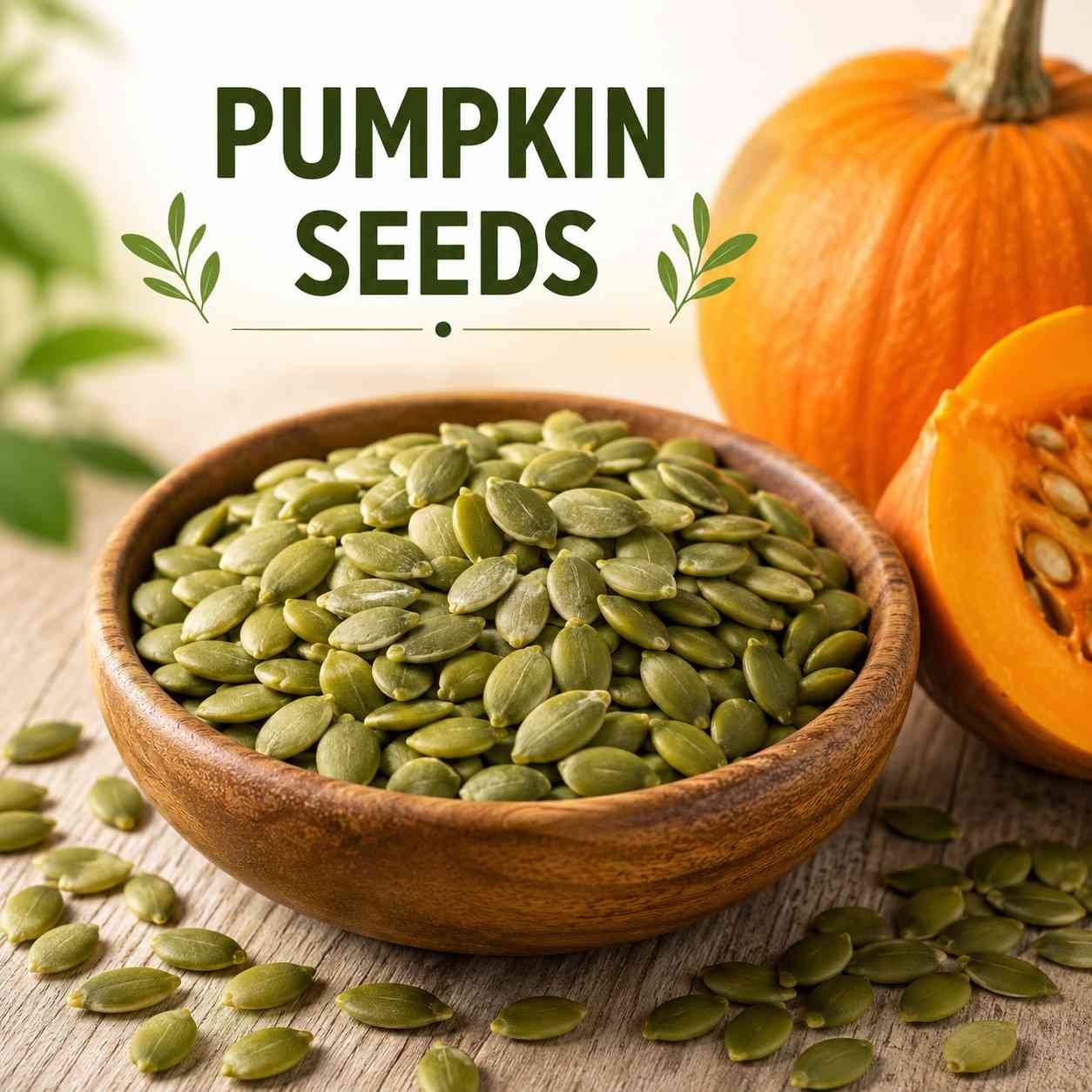
Pumpkin seeds are one of the healthiest seeds you can add to your diet. Also known as pepitas, these small green seeds are packed with protein, healthy fats, fiber, vitamins, minerals, and antioxidants. They are crunchy, tasty, and easy to include in everyday meals.
Pumpkin seeds are popular as a healthy snack and can be eaten raw or roasted. They also make a great topping for salads, yogurt, oatmeal, smoothies, and soups. Because they are rich in nutrients, pumpkin seeds may support heart health, digestion, immunity, and overall wellness.
In this guide, you’ll learn about pumpkin seed nutrition, 25 health benefits, weight loss, diabetes, heart health, the best ways to eat them, and possible side effects. If you enjoy healthy nuts and seeds, you may also like our guides on Watermelon Seeds, Almonds.
What Are Pumpkin Seeds?
Pumpkin seeds are the edible seeds found inside pumpkins. After cleaning and drying, they can be eaten raw or roasted. The shell can be removed to get the green seed inside, known as a pepita.
These seeds have a mild, nutty flavor and are a rich source of plant-based protein, healthy fats, magnesium, zinc, iron, and antioxidants.
Pumpkin Seeds Nutrition Facts
Approximate nutrition per 100 grams of dried pumpkin seeds:
| Nutrient | Amount |
|---|---|
| Calories | 559 kcal |
| Protein | 30 g |
| Carbohydrates | 11 g |
| Dietary Fiber | 6 g |
| Total Fat | 49 g |
| Magnesium | Excellent source |
| Iron | Good source |
| Zinc | Excellent source |
| Phosphorus | Excellent source |
| Potassium | Moderate |
Main Nutrients
- Plant-based protein
- Healthy fats
- Dietary fiber
- Magnesium
- Zinc
- Iron
- Phosphorus
- Potassium
- Vitamin E
- Antioxidants
25 Health Benefits of Pumpkin Seeds
1. Rich in Protein
Pumpkin seeds are an excellent source of plant-based protein. Protein helps build muscles, repair tissues, and keeps you feeling full for longer.
Pumpkin seeds are a great source of plant-based protein. You can also enjoy our Protein Pudding recipe for another healthy, protein-rich snack.
2. High in Healthy Fats
They contain healthy unsaturated fats that support heart health and provide lasting energy.
3. Excellent Source of Magnesium
Magnesium supports healthy muscles, nerves, bones, and energy production.
4. Supports Heart Health
Healthy fats, magnesium, and antioxidants work together to support normal heart function and overall cardiovascular health.
5. Helps Maintain Healthy Blood Pressure
Pumpkin seeds contain magnesium and potassium, which help support normal blood pressure.
6. Supports Bone Health
Magnesium and phosphorus help keep bones strong and support normal bone function.
7. Rich in Zinc
Zinc plays an important role in immune health, wound healing, and healthy skin.
8. Good Source of Iron
Iron helps the body produce healthy red blood cells and transport oxygen throughout the body.
9. Supports the Immune System
Pumpkin seeds provide zinc, iron, vitamin E, and antioxidants that help support a healthy immune system.
10. Promotes Healthy Digestion
The fiber in pumpkin seeds supports regular bowel movements and helps maintain a healthy digestive system.
11. Rich in Antioxidants
Antioxidants help protect your body’s cells from damage caused by free radicals.
12. May Support Healthy Blood Sugar
The protein, fiber, and healthy fats in pumpkin seeds may help support healthy blood sugar levels when eaten in moderation.
13. Helps with Weight Management
Pumpkin seeds help keep you full, making it easier to control hunger and reduce unhealthy snacking.
14. Provides Lasting Energy
Their combination of protein, healthy fats, and minerals provides steady energy throughout the day.
15. Supports Healthy Cholesterol
Healthy fats and fiber may help maintain healthy cholesterol levels as part of a balanced diet.
Pumpkin Seeds for Weight Loss
Pumpkin seeds can be a healthy snack for people trying to lose weight. Their protein, fiber, and healthy fats help you stay full for longer, reducing the urge to snack on unhealthy foods.
Although these super seeds are nutritious, they are also high in calories. Eating about 25–30 grams (one handful) per day is enough for most adults.
Pumpkin Seeds and Diabetes
Pumpkin seeds may be a good choice for people with diabetes because they contain protein, healthy fats, fiber, and very little sugar. These nutrients help slow digestion and may support healthy blood sugar levels.
Choose plain or lightly roasted pumpkin seeds without added sugar. Always follow your healthcare provider’s advice for managing diabetes. Pair these super seeds with other fiber-rich foods and healthy drinks. Read our guide on Best Morning Drinks for Gut Health for more healthy ideas.
Heart Health Benefits
Pumpkin seeds contain several heart-friendly nutrients, including:
- Healthy unsaturated fats
- Magnesium
- Potassium
- Fiber
- Antioxidants
These nutrients support a healthy heart when included as part of a balanced diet.
Bone Health Benefits
These super seeds are rich in magnesium and phosphorus, two minerals that play an important role in keeping bones strong. Eating mineral-rich foods along with regular exercise can help support healthy bones.
Other mineral-rich foods like Walnuts can also support healthy bones as part of a balanced diet.
16. Supports Healthy Skin
Pumpkin seeds contain vitamin E, healthy fats, and zinc, which help keep your skin healthy. These nutrients protect skin cells and support a natural glow.
17. May Support Healthy Hair
The protein, zinc, iron, and healthy fats in these super seeds help nourish hair and support a healthy scalp.
18. Helps Keep You Full
Pumpkin seeds are rich in protein and fiber, which help you feel satisfied after meals and may reduce unnecessary snacking.
19. Supports Better Sleep
Pumpkin seeds contain magnesium and tryptophan, nutrients that help relax the body and support healthy sleep.
20. Supports Brain Health
Healthy fats, magnesium, and antioxidants help support normal brain function and nerve health.
21. Supports Muscle Function
Magnesium and protein help muscles work properly and support recovery after physical activity.
22. Supports Energy Production
Pumpkin seeds contain B vitamins, iron, and magnesium that help the body convert food into energy.
23. Easy to Add to Your Diet
Pumpkin seeds are versatile and can be added to salads, yogurt, oatmeal, smoothies, soups, and baked foods.
24. Naturally Gluten-Free
Pumpkin seeds are naturally gluten-free, making them a healthy option for people following a gluten-free diet.
25. Supports Overall Health
When eaten as part of a balanced diet, these super seeds provide important nutrients that support heart health, digestion, bones, immunity, and overall wellness.
Skin & Hair Benefits
Pumpkin seeds are rich in nutrients that help maintain healthy skin and hair.
Skin Benefits
- Helps keep skin soft and healthy
- Supports healthy skin cells
- Provides antioxidant protection
- May help reduce dryness
Hair Benefits
- Supports healthy hair growth
- Helps maintain a healthy scalp
- Provides nutrients for stronger hair
For more natural beauty tips, explore our article on Rice Water for Skin and Hair.
Best Time to Eat Pumpkin Seeds
You can enjoy these super seeds at any time of the day.
Morning
Add them to oatmeal, cereal, or yogurt for a nutritious breakfast.
As a Snack
A handful between meals helps control hunger and provides lasting energy.
Before Exercise
These super seeds provide protein and healthy fats for sustained energy.
After Exercise
Enjoy them with fruit or yogurt to support muscle recovery.
Recommended Daily Serving
Most healthy adults can enjoy 25–30 grams (about one handful) of these super seeds each day.
If you are new to eating these super seeds, start with a smaller amount and increase gradually.
Ways to Eat Pumpkin Seeds
There are many delicious ways to enjoy these super seeds:
- Eat them raw
- Roast them for a crunchy snack
- Sprinkle over salads
- Mix into yogurt
- Add to oatmeal
- Blend into smoothies
- Use in homemade trail mix
- Add to granola
- Top soups
- Mix into muffins, bread, or cookies
Easy Pumpkin Seed Recipes
1. Roasted Pumpkin Seeds
Ingredients
- 1 cup pumpkin seeds
- 1 teaspoon olive oil
- A pinch of salt
Method
Mix the seeds with olive oil and salt. Roast at 325°F (160°C) for 15–20 minutes, stirring halfway through. Cool before serving.
2. Pumpkin Seed Smoothie
Ingredients
- 1 banana
- 1 cup milk or plant-based milk
- 1 tablespoon pumpkin seeds
- ½ cup yogurt
- Ice cubes
Blend until smooth and enjoy.
3. Healthy Trail Mix
Mix these super seeds with:
- Almonds
- Cashews
- Walnuts
- Sunflower seeds
- Raisins
- Dried cranberries
Store in an airtight container for a healthy snack.
Raw vs Roasted Pumpkin Seeds
| Raw Pumpkin Seeds | Roasted Pumpkin Seeds |
|---|---|
| Soft texture | Crunchy texture |
| Mild flavor | Rich, nutty flavor |
| Great for smoothies | Great as a snack |
| Keeps natural taste | More flavorful |
Which Is Better?
Both raw and roasted these super seeds are healthy. Raw seeds retain their natural nutrients, while roasted seeds have a crunchier texture and richer flavor. Choose unsalted or lightly roasted seeds for the healthiest option.
Side Effects & Precautions
These super seeds are safe for most people when eaten in moderation.
Keep these tips in mind:
- Eat moderate portions because they are high in calories.
- Eating too many may cause bloating or stomach discomfort.
- Choose unsalted seeds to reduce sodium intake.
- Store them in an airtight container in a cool, dry place.
- If you have a seed allergy or another medical condition, speak with your healthcare provider before adding them to your diet.
FAQ
Are pumpkin seeds healthy?
Yes. these super seeds are rich in protein, healthy fats, magnesium, zinc, iron, fiber, and antioxidants.
Can I eat pumpkin seeds every day?
Yes. Most healthy adults can enjoy 25–30 grams daily as part of a balanced diet.
Are roasted pumpkin seeds healthy?
Yes. Roasted these super seeds retain most of their nutrients and make a healthy snack, especially when lightly salted or unsalted.
Can pumpkin seeds help with weight loss?
Yes. Their protein and fiber help you feel full longer, which may reduce overeating.
Are pumpkin seeds good for people with diabetes?
These super seeds may fit into a diabetes-friendly diet because they contain protein, fiber, and healthy fats. Eat them in moderation and follow your healthcare provider’s advice.
Can children eat pumpkin seeds?
Yes. these super seeds can be enjoyed by children in age-appropriate portions. Younger children should be supervised while eating them.
Do pumpkin seeds contain protein?
Yes. Pumpkin seeds are one of the best plant-based sources of protein.
How should pumpkin seeds be stored?
Store these super seeds in an airtight container in a cool, dry place. Refrigeration helps keep them fresh for longer.
Conclusion
Pumpkin seeds are a small but powerful superfood packed with protein, healthy fats, fiber, magnesium, zinc, iron, and antioxidants. They may support heart health, bone strength, healthy digestion, weight management, healthy skin, and overall wellness.
These nutritious seeds are easy to add to your daily diet. Enjoy them raw, roasted, mixed into trail mix, sprinkled over salads, blended into smoothies, or added to oatmeal and yogurt.
For most adults, 25–30 grams per day is enough to enjoy their nutritional benefits. Choose plain or lightly roasted pumpkin seeds and include them as part of a balanced, healthy lifestyle. Read our guide on Hemp Seeds vs Chia Seeds.
About the Author
Hitasha is a health and nutrition content writer who creates easy-to-understand, evidence-based articles on healthy foods, nuts, seeds, superfoods, weight management, and wellness. Her goal is to help readers make informed nutrition and lifestyle choices through practical, research-backed content.
Medical Disclaimer
The information in this article is for educational and informational purposes only and is not intended as medical advice. It should not be used to diagnose, treat, cure, or prevent any disease. Always consult a qualified healthcare professional or registered dietitian before making changes to your diet, especially if you are pregnant, breastfeeding, have a medical condition, or take prescription medications.