Almonds are among the most popular tree nuts in the world. Known for their crunchy texture and mild flavor, almonds are packed with essential nutrients that support overall health. Whether eaten raw, roasted, soaked, or blended into almond milk, these versatile nuts have earned a place in healthy diets across the globe.
From supporting heart health to promoting healthy skin and weight management, almonds offer numerous benefits. They are also easy to incorporate into meals, snacks, and beverages.
In this comprehensive guide, we’ll explore almond nutrition, health benefits, uses, potential side effects, and frequently asked questions. If you enjoy learning about nutrient-rich foods, you may also be interested in our guides on Tiger Nuts .
What Are Almonds?
Almonds are edible seeds that grow on the almond tree (Prunus dulcis). Although commonly referred to as nuts, almonds are technically seeds found inside the fruit of the almond tree.
They originated in the Middle East and South Asia but are now cultivated worldwide, especially in California, which produces the majority of the world’s Badam.
Badam can be consumed in several forms:
- Raw Badam
- Roasted Badam
- Soaked Badam
- Almond butter
- Almond flour
- Almond milk
- Almond oil
Almond Nutrition Facts
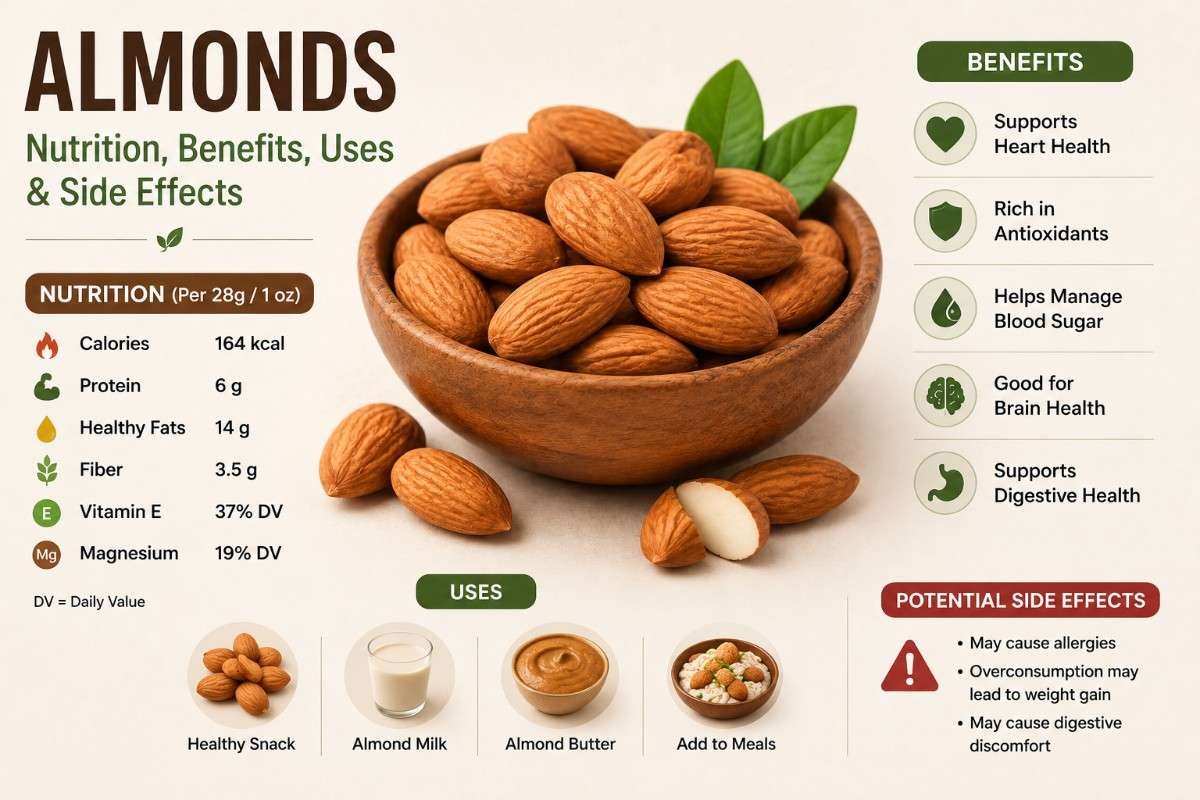
A 1-ounce (28-gram) serving of almonds contains approximately:
- Calories: 164
- Protein: 6 grams
- Fat: 14 grams
- Carbohydrates: 6 grams
- Fiber: 3.5 grams
- Vitamin E: 37% of Daily Value
- Magnesium: 19% of Daily Value
- Calcium: 8% of Daily Value
- Riboflavin: 23% of Daily Value
- Phosphorus: 14% of Daily Value
Badam 4also contain antioxidants, healthy monounsaturated fats, manganese, copper, and zinc.
25 Benefits of Almonds
1. Rich in Nutrients
Almonds provide a wide range of vitamins and minerals essential for overall health.
2. Excellent Source of Vitamin E
Vitamin E acts as a powerful antioxidant that helps protect cells from oxidative stress.
3. Supports Heart Health
The healthy fats in Badam may help support cardiovascular wellness.
4. Rich in Antioxidants
Badam contain antioxidants that help combat free radicals.
5. Supports Healthy Cholesterol Levels
Regular almond consumption may contribute to maintaining healthy cholesterol levels.
6. Promotes Healthy Blood Sugar Control
The fiber, protein, and healthy fats in almonds may support stable blood sugar levels.
7. Supports Weight Management
Badam can help increase feelings of fullness.
Badam can help increase feelings of fullness. For more weight-management strategies, check out our guide on Volume Eating.
8. High in Fiber
Fiber supports digestive health and regular bowel movements.
9. Supports Gut Health
The fiber in almonds may help nourish beneficial gut bacteria.
10. Provides Plant-Based Protein
Badam are a valuable protein source for vegetarians and vegans.
If you’re looking for additional protein-rich foods, read our article on What Is Protein Pudding? for a delicious high-protein snack option.
11. Supports Bone Health
Calcium, phosphorus, and magnesium contribute to strong bones.
12. May Support Brain Function
Almonds contain nutrients associated with cognitive health.
13. Helps Maintain Healthy Skin
Vitamin E may help protect the skin from environmental damage.
14. Supports Healthy Hair
Nutrients in almonds contribute to hair health.
15. Promotes Healthy Aging
Antioxidants may help reduce oxidative stress.
16. Supports Muscle Function
Magnesium plays a role in muscle contraction and relaxation.
17. Helps Maintain Energy Levels
Almonds provide a combination of healthy fats, protein, and carbohydrates.
18. Supports Immune Function
Several nutrients in almonds contribute to immune health.
19. May Reduce Hunger Cravings
Protein and fiber promote satiety.
20. Supports Metabolic Health
Nutrient-rich foods like Badam can support overall metabolic wellness.
21. Convenient and Portable Snack
Badam are easy to carry and consume anywhere.
22. Naturally Low in Sugar
They contain very little natural sugar.
23. Supports Healthy Pregnancy Nutrition
Badam provide nutrients important during pregnancy.
24. Versatile in Cooking
They can be used in both sweet and savory dishes.
25. Delicious and Satisfying
Their taste and texture make them a popular healthy snack.
How to Use Almonds
Eat Them Raw
Enjoy a handful as a nutritious snack.
Soak Overnight
Many people prefer soaked Badam for easier digestion.
Add to Smoothies
Blend Badam or almond butter into smoothies.
Use Almond Flour
Perfect for gluten-free baking.
Make Almond Milk
A popular dairy-free beverage alternative.
Sprinkle on Salads
Adds crunch and nutrition.
Mix Into Oatmeal
Enhances flavor and nutrient content.
Use Almond Butter
Spread on toast or add to recipes.
Almonds for Weight Loss
Badam may support weight management because they are rich in protein and fiber, helping increase fullness and reduce hunger between meals.
Almonds for Skin Health
Vitamin E and antioxidants may help maintain healthy-looking skin by supporting the body’s natural defense against oxidative stress.
Almonds for Hair Health
The protein, healthy fats, and vitamins in almonds contribute to healthy hair growth and maintenance.
Badam contain vitamin E, which may support healthy skin. You may also enjoy our article on Rice Water for Skin and Hair for additional natural beauty tips.
Potential Side Effects of Almonds
1. Nut Allergies
Individuals with tree nut allergies should avoid Badam .
2. Digestive Discomfort
Eating excessive amounts may cause bloating or digestive issues.
3. High Calorie Intake
Overconsumption can contribute to excess calorie intake.
4. Medication Interactions
Certain nutrients may interact with specific medications.
5. Kidney Stone Concerns
People prone to kidney stones may need to moderate intake due to oxalates.
How Many Almonds Should You Eat Daily?
Most experts suggest a serving size of approximately 23 Badam (about one ounce) per day as part of a balanced diet.
Conclusion
Almonds are one of nature’s most nutritious foods. Rich in healthy fats, protein, fiber, vitamins, and minerals, they can support heart health, digestion, weight management, and overall wellness. Whether enjoyed as a snack, added to meals, or incorporated into beverages, Badam are a simple and delicious way to boost nutritional intake.
Badam are a nutritious and versatile food packed with protein, healthy fats, fiber, and essential vitamins. To continue your wellness journey, explore our articles on Hemp Seeds vs Chia Seeds, Black Garlic .
FAQs
Are almonds healthy?
Yes, almonds are nutrient-dense and provide healthy fats, protein, fiber, vitamins, and minerals.
Is it good to eat Badam every day?
Moderate daily consumption can be part of a healthy diet.
How many Badam should I eat daily?
A serving of about 23 Badam is commonly recommended.
Are soaked almonds better than raw Badam ?
Both are nutritious, though some people find soaked Badam easier to digest.
Can almonds help with weight loss?
Their protein and fiber content may help promote fullness and support weight-management goals.
About the Author
Hitasha is a health and wellness writer passionate about nutrition, natural remedies, fitness, and healthy living. She creates research-based content to help readers make informed lifestyle choices.
Disclaimer
The information in this article is for educational purposes only and should not be considered medical advice. Consult a healthcare professional before making significant dietary or lifestyle changes. The author, Hitasha, and this website are not responsible for any outcomes resulting from the use of this information.
Sources & References
- Comprehensive nutritional data on almonds, including calories, protein, healthy fats, fiber, vitamins, and minerals.
- Evidence-based information on the health benefits of nuts, including almonds.
- Expert-reviewed guidance on healthy eating patterns and nutrient-rich foods.
- Educational resources on heart health, nutrition, and healthy snacks.