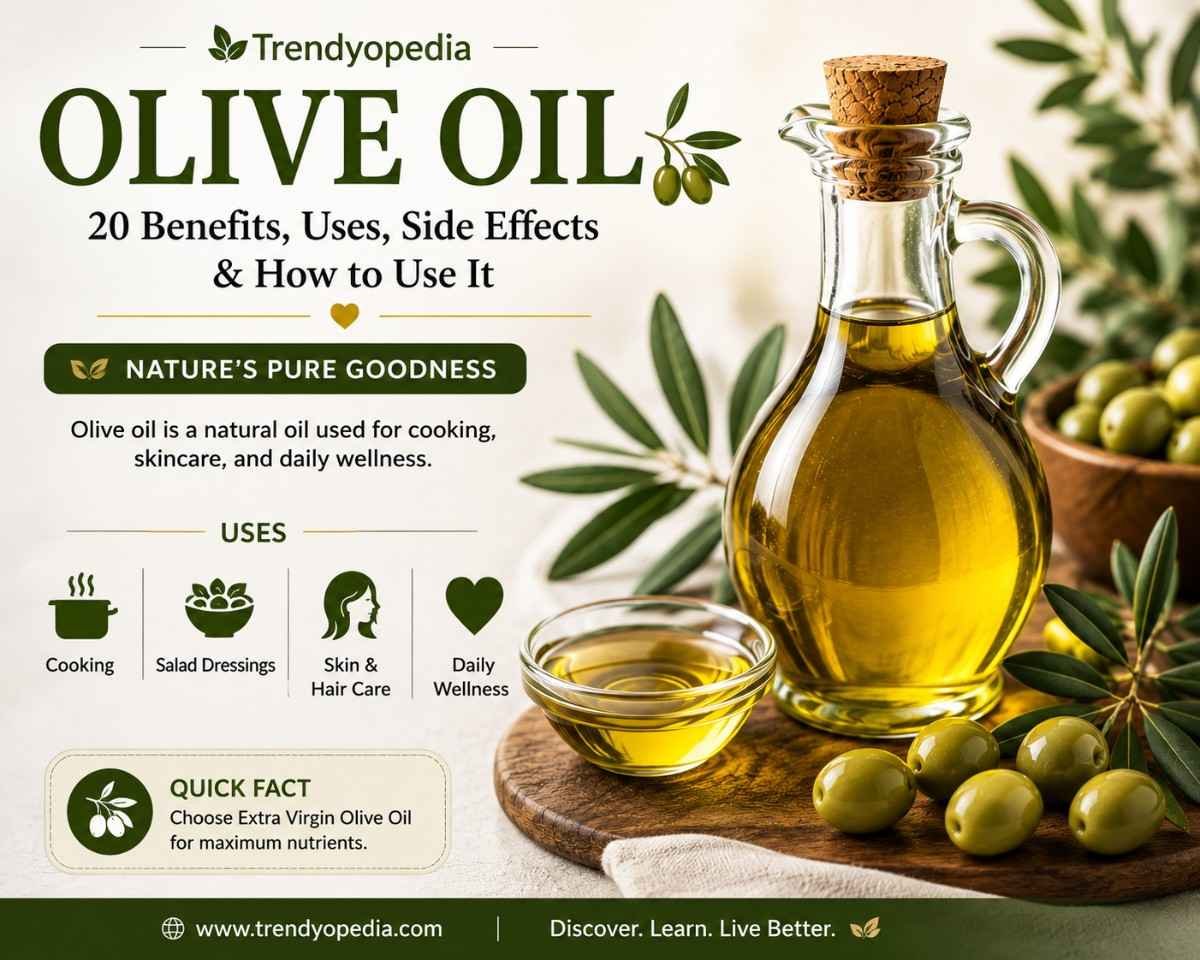
Olive oil is one of the world’s most celebrated natural oils, valued for its culinary, skincare, and hair care benefits. Extracted from the fruit of the olive tree (Olea europaea), it has been a staple of the Mediterranean diet for thousands of years. Rich in heart-healthy monounsaturated fats, vitamin E, and plant antioxidants called polyphenols, olive oil is widely used in kitchens, beauty routines, and wellness practices around the world.
Among its different varieties, extra virgin olive oil (EVOO) is considered the highest-quality form because it is minimally processed and retains more of its natural nutrients and antioxidants.
In this guide, you’ll discover the science-backed olive oil benefits, nutrition facts, uses for skin and hair, cooking tips, possible side effects, and how to choose the best This oil for your needs.
If you’re interested in natural oils, explore our detailed guides on Onion Oil, Neem Oil .Each oil offers unique benefits for healthy skin, hair, and overall wellness.
What Is Olive Oil?
Olive oil is a natural fat obtained by pressing olives, the fruit of the olive tree. It has been a key ingredient in Mediterranean cuisine for centuries and is also widely used in cosmetics, soaps, massage oils, and hair care products.
This oil is commonly used for:
- Cooking and salad dressings
- Baking and roasting
- Hair conditioning
- Skin moisturizing
- Massage
- DIY beauty treatments
Types of Olive Oil
1. Extra Virgin Olive Oil (EVOO)
- Highest-quality This oil
- Cold extracted without chemical refining
- Rich in antioxidants and polyphenols
- Best for dressings, dipping, and low- to medium-heat cooking
2. Virgin Olive Oil
- Slightly more processed than extra virgin
- Good flavor and aroma
- Suitable for everyday cooking
3. Refined Olive Oil
- Processed to remove impurities
- Milder taste
- Higher smoke point than extra virgin olive oil
4. Olive Pomace Oil
- Produced from the remaining olive pulp after pressing
- Further refined before use
- Often used for high-heat cooking
Olive Oil Nutrition Facts
Per 1 Tablespoon (13.5 g)
| Nutrient | Amount |
|---|---|
| Calories | 119 |
| Total Fat | 13.5 g |
| Monounsaturated Fat | 10 g |
| Saturated Fat | 2 g |
| Polyunsaturated Fat | 1.5 g |
| Vitamin E | 1.9 mg |
| Vitamin K | 8 mcg |
| Carbohydrates | 0 g |
| Protein | 0 g |
A balanced diet includes healthy beverages as well as nutritious fats. Pair This oil with hydrating drinks like Apple Cider Vinegar Water, Cucumber Water Benefits for a well-rounded wellness routine.
The American Heart Association recommends replacing some saturated fats with unsaturated fats, such as those found in This oil, as part of an overall healthy eating pattern.
Key Nutrients in Olive Oil
Extra virgin olive oil naturally contains:
- Oleic acid
- Polyphenols
- Vitamin E
- Vitamin K
- Squalene
- Plant antioxidants
These compounds contribute to This oil’s stability and nutritional value.
20 Olive Oil Benefits
1. Rich in Heart-Healthy Monounsaturated Fats
This oil is naturally rich in oleic acid, a monounsaturated fat that can be part of a heart-healthy eating pattern when used in place of saturated fats.
2. Contains Powerful Antioxidants
Extra virgin olive oil contains naturally occurring polyphenols and vitamin E, which help protect the oil from oxidation and contribute to its nutritional profile.
3. Supports a Mediterranean-Style Diet
This oil is a cornerstone of the Mediterranean diet, a dietary pattern associated with overall health and longevity.
4. Helps Moisturize Dry Skin
This oil works as an emollient that softens and smooths dry skin by helping reduce moisture loss.
5. Nourishes Dry Hair
Applying This oil to hair may improve softness, shine, and manageability.
6. Helps Condition the Scalp
This oil may help relieve scalp dryness and improve the appearance of healthy-looking hair.
7. Supports the Skin Barrier
Its emollient properties help reduce water loss and keep skin feeling hydrated.
8. Rich Source of Vitamin E
Vitamin E helps protect skin from oxidative stress and is commonly found in many skincare products.
9. Softens Rough Areas
Regular use may help soften dry elbows, knees, hands, and heels.
10. Works as a Natural Makeup Remover
This oil can help dissolve makeup before cleansing the skin.
11. Helps Condition Cuticles
Applying a small amount to cuticles may help keep them moisturized.
12. Gives Hair a Healthy Shine
This oil smooths the hair surface, making hair appear shinier.
13. Helps Reduce Hair Frizz
A few drops can tame flyaways and improve manageability.
14. Supports Beard Care
Many beard oils include This oil to help soften facial hair.
15. Moisturizes Dry Lips
This oil is commonly used in homemade lip care products.
16. Helps Maintain Soft Hands
Using This oil after washing hands may reduce dryness.
17. Popular Massage Oil
Its smooth texture makes it suitable for body massage.
18. Suitable for DIY Beauty Recipes
Olive oil blends well with other botanical oils and natural ingredients.
19. Versatile Cooking Ingredient
This oil is widely used for sautéing, roasting, baking, marinades, and salad dressings.
20. Multipurpose Household Staple
One bottle of This oil can be used in cooking, skincare, hair care, and homemade beauty products.
Olive Oil for Hair
This oil has long been used as a natural conditioner for dry and damaged hair.
Potential Benefits
- Helps soften hair
- Adds natural shine
- Reduces frizz
- Improves manageability
- Moisturizes dry hair
- Conditions the scalp
How to Use
- Warm 1–2 tablespoons of This oil slightly.
- Massage into the scalp and hair.
- Leave on for 30–60 minutes.
- Wash thoroughly with a gentle shampoo.
Olive Oil for Skin
This oil is commonly used as a body moisturizer because it helps reduce moisture loss and leaves skin feeling soft.
Benefits
- Moisturizes dry skin
- Softens rough patches
- Helps maintain the skin barrier
- Supports smooth-looking skin
People with oily or acne-prone facial skin should patch test first, as This oil may not suit every skin type.
Olive Oil for Face
If you use This oil on your face:
- Apply only a small amount.
- Use mainly on dry skin.
- Cleanse thoroughly afterward.
- Avoid using it if it causes breakouts or irritation.
Olive Oil for Cooking
Extra virgin olive oil is ideal for:
- Salad dressings
- Vegetable dishes
- Pasta
- Soups
- Marinades
- Bread dipping
- Light sautéing
It can also be used for roasting and baking, depending on the recipe.
How to Use Olive Oil
Hair Mask
Massage into the scalp and hair once or twice a week before shampooing.
Body Moisturizer
Apply after bathing while the skin is still slightly damp.
Lip Care
Use a small amount to moisturize dry lips.
Nail Care
Massage a few drops into nails and cuticles.
Cooking
Use in moderation as part of a balanced dietary pattern rich in fruits, vegetables, whole grains, legumes, and lean proteins.
DIY Olive Oil Hair Mask
Ingredients
- 2 tablespoons extra virgin olive oil
- 1 tablespoon jojoba oil
- 1 tablespoon hibiscus oil
- 1 vitamin E capsule (optional)
Directions
- Mix all ingredients thoroughly.
- Apply from the scalp to the ends of your hair.
- Leave on for 30–45 minutes.
- Wash with a mild shampoo.
Olive Oil vs Coconut Oil
| Feature | Olive Oil | Coconut Oil |
|---|---|---|
| Main Fat | Monounsaturated fat (Oleic acid) | Saturated fat (Lauric acid) |
| Best For | Heart-healthy cooking, skin care | Hair care, body moisturizing |
| Texture | Light to medium | Medium to thick |
| Cooking | Excellent for dressings, sautéing, roasting | Suitable for baking and moderate-heat cooking |
Olive Oil vs Castor Oil
| Feature | Olive Oil | Castor Oil |
|---|---|---|
| Texture | Lightweight | Thick |
| Hair Use | Daily conditioning | Deep conditioning treatments |
| Skin Use | Daily moisturizer | Dry areas and scalp care |
| Feel | Smooth | Heavy |
Olive Oil vs Jojoba Oil
| Feature | Olive Oil | Jojoba Oil |
|---|---|---|
| Best For | Dry skin and hair | Oily and combination skin |
| Texture | Rich | Lightweight |
| Face | Better for dry skin | Better for daily facial care |
| Hair | Deep conditioning | Scalp balancing |
Best Time to Use Olive Oil
Morning
- Moisturize dry skin after showering
- Use in salad dressings or breakfast recipes
- Apply a small amount to dry hair ends
Evening
- Overnight hair treatment
- Massage into dry elbows, knees, and heels
- Apply to dry cuticles before bed
How Often Should You Use Olive Oil?
| Purpose | Frequency |
|---|---|
| Hair Mask | 1–2 times per week |
| Body Moisturizer | Daily |
| Face (Dry Skin Only) | 2–3 times weekly |
| Lip Care | Daily |
| Nail & Cuticle Care | 2–3 times weekly |
| Cooking | Daily in moderation |
Possible Side Effects
This oil is generally safe for most people, but it may cause:
- Skin irritation in sensitive individuals
- Breakouts in some acne-prone skin types
- Greasy hair if too much is applied
- Allergic reactions (rare)
- Excess calorie intake if consumed in large amounts
Precautions
- Perform a patch test before first use.
- Avoid overapplying to oily or acne-prone facial skin.
- Store in a cool, dark place away from heat and sunlight.
- Choose high-quality extra virgin olive oil whenever possible.
- Consume as part of a balanced diet rather than in excessive amounts.
FAQs
Is extra virgin olive oil better than regular olive oil?
Extra virgin This oil is the least processed form and generally contains higher levels of natural antioxidants and polyphenols than refined This oil.
Can olive oil help dry hair?
Yes. This oil can help moisturize dry hair, reduce frizz, and improve softness and shine.
Is olive oil good for the skin?
This oil is an effective moisturizer for many people, particularly those with dry skin. Those with acne-prone skin may wish to patch test first, as it may not suit everyone.
Can I cook with olive oil every day?
Yes. This oil can be used daily as part of a balanced diet and is a key component of the Mediterranean dietary pattern.
Can olive oil help hair growth?
This oil helps condition and protect hair, but there is limited evidence that it directly stimulates hair growth. Healthy hair growth also depends on genetics, nutrition, and overall scalp health.
Conclusion
Olive oil is one of the most versatile natural oils available. From supporting a heart-healthy eating pattern to moisturizing dry skin and conditioning hair, it offers many practical uses in everyday life. Choosing extra virgin olive oil and using it appropriately can help you enjoy its nutritional and cosmetic benefits.
For a complete natural wellness routine, explore our articles on, Rosehip Oil, Hibiscus Oil, Moringa Oil, Tulsi Oil on Trendyopedia.
Author
Author: Hitasha
Hitasha is a wellness and beauty writer at Trendyopedia, specializing in evidence-based nutrition, skincare, hair care, and natural remedies. Her goal is to simplify health information into practical, easy-to-follow guides that help readers make informed lifestyle choices.
Disclaimer
This article is for informational and educational purposes only and should not be considered medical advice. Individual responses to olive oil may vary. If you have allergies, persistent skin conditions, or dietary concerns, consult a qualified healthcare professional before making significant changes to your skincare routine or diet.